

Kyle Fritz started his business with two hot dog carts in downtown Appleton that served the late-night crowd.
As one of the first mobile food vendors in the area, he says local officials were uncertain of how the business was regulated.
Municipalities, state and federal government have realized since that the food truck industry is well established and will continue to flourish. While the businesses have been welcomed, there also has been an increase in regulation, taxes and fees.
“Every year there is more to it,” says Fritz, who is president of the 27-member Fox Valley Food Truck Association. Other local groups include the Green Bay Area Food Truck Coalition and Fork Yeah Fox Valley.
They all share similar missions of connecting food vendors with customers and educating and advocating for the industry.
“Our mission is to cultivate meaningful partnerships between food trucks and the communities they serve,” says Fritz, who owns On the Fritz Concessions.
That can include holding events with community partners, helping people book food trucks and helping members navigate various aspects of running their business.
According to Fritz, booking a food truck requires alerting the local health department, completing fire and safety inspections, verifying insurance, and obtaining state, federal and local permits as required.
“Those are all the things that we can navigate. Since we do this on basically a daily basis, we have direct lines and streamlined procedures,” says Fritz.
The Fox Valley Food Truck Association tries to be a one-stop service for people trying to book a mobile food vendor. Bookings can include everything from employee recognition and company celebrations to festivals and even weddings.
Fritz says vendors often work with nonprofits for fundraisers as well. Fritz says fewer nonprofit groups are using food service as a fundraising activity and in some cases turning instead to professionals including mobile food vendors.
Shannon Huepel of the Dough Shoppe, who also sits on the Green Bay Food Truck Coalition board, says having to go through multiple inspections for each jurisdiction can create barriers.
Recognizing this burden, area fire departments began offering unified fire inspections this year. Fire Departments in Appleton, Fond du Lac, Fox Crossing, Grand Chute, Green Bay, Harrison, Kimberly, Neenah-Menasha and Oshkosh issued annual compliance stickers they all recognize following one inspection in a participating community.
Alex Quintana, a fire inspector for the Appleton Fire Department, says the process makes it easier for both fire departments and vendors. She says there have been instances in the past where a vendor set up at a large event and was unable to open because of a failed inspection.
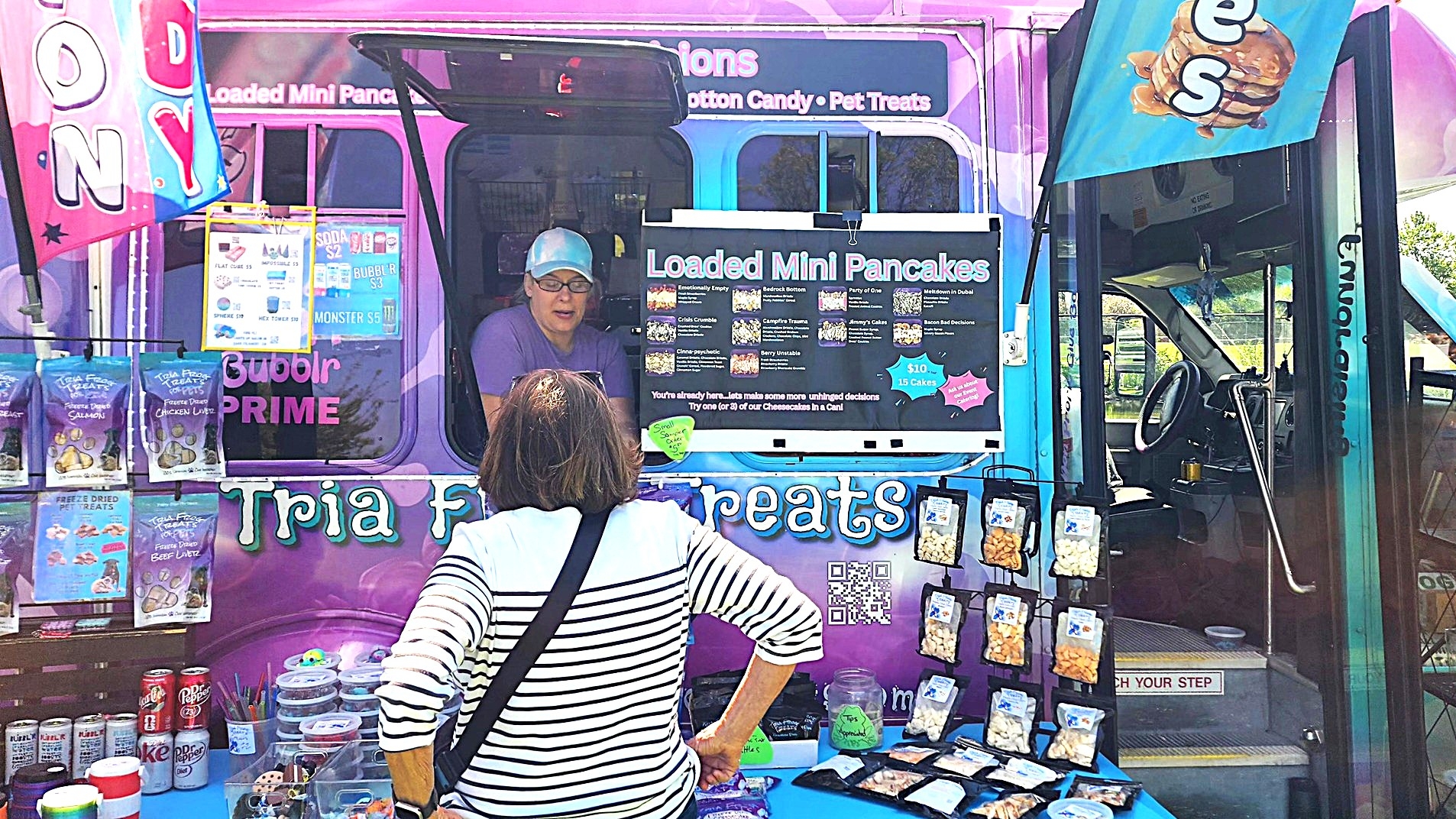
“I do a lot of big events,” says Tricia Hermsen of Tria Frog Treats of Greenville, who is a member of Fork Yeah. “I don’t ever want to be at an event and get shut down. There’s a lot of time and money and effort that goes into preparing for these events.”
Huepel says some communities have instituted fee structures that are protective of mobile food vendors based in their community or much higher than neighboring communities.
Hermsen says those fees cut into already tight margins.
“People see the lines and the prices … but in the food industry you’re lucky if you’re putting pennies per dollar in your pocket,” says Fritz.
He says higher prices for fuel and food are among the short-term challenges, but the initial investment is substantial too.
“A food truck is very expensive to build. You have to do it right,” he says.
They must meet food service and fire codes, and mobile food vendors must lease or own a commissary kitchen where they can prepare, store and clean up. The trucks themselves become part of the marketing with colorful paint schemes, menus and lighting.
For those reasons, some vendors will build a brand through a food truck before moving into a brick-and-mortar operation, while others will start mobile food vending after they have an established food service business.
Either way, Fritz says “It can be very, very hard if you’re starting a new food truck right now.”
Huepel adds, “The newness has kind of expired.”
Fritz estimates there are more than 200 established mobile food vendors in the greater Fox Valley area and says it might take a specialized product offering to break into the market.
“It can be a tough industry to break into,” Fritz says. “I’ve seen a lot of food trucks come and go through my years in this industry.”

