
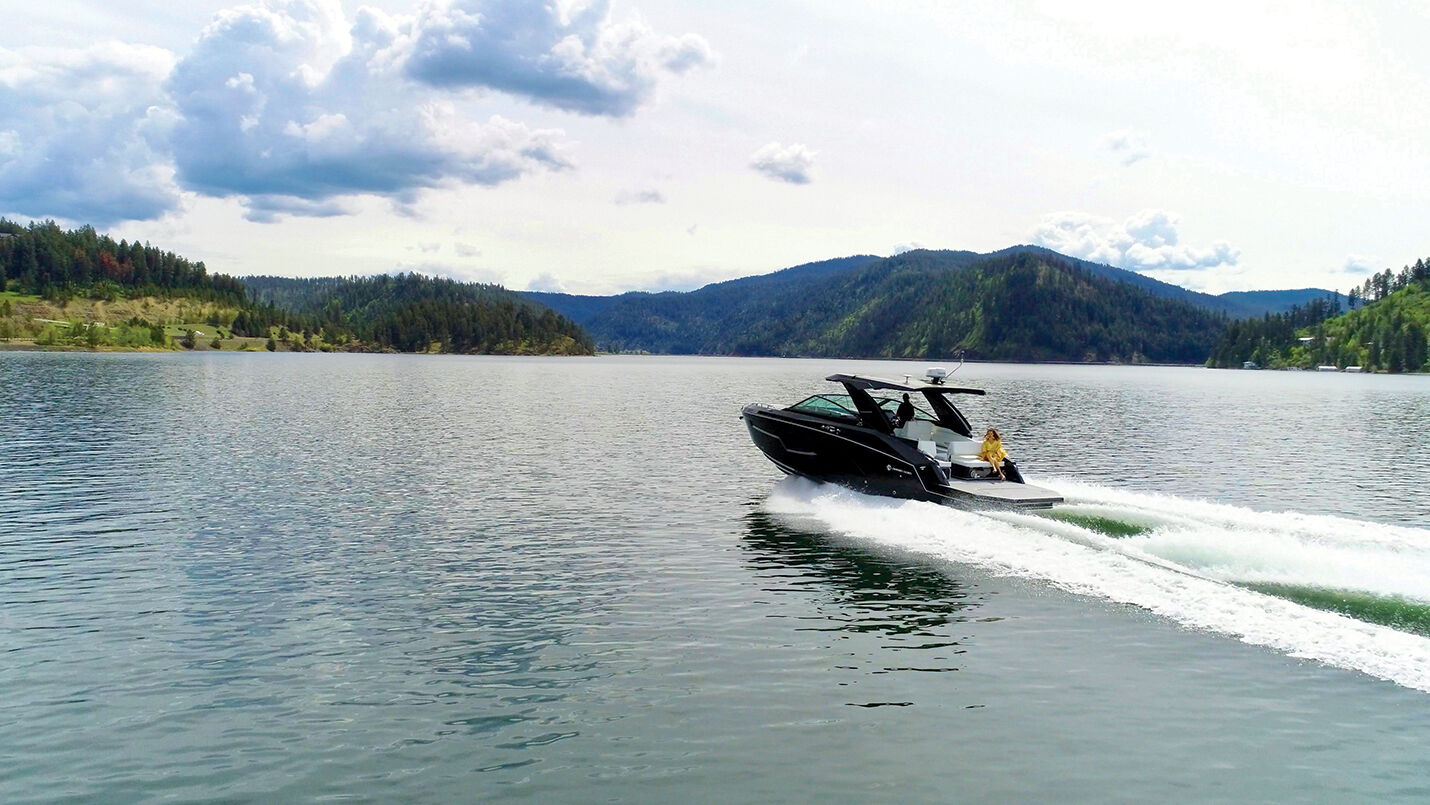

Cruisers Yachts’ 34 GLS
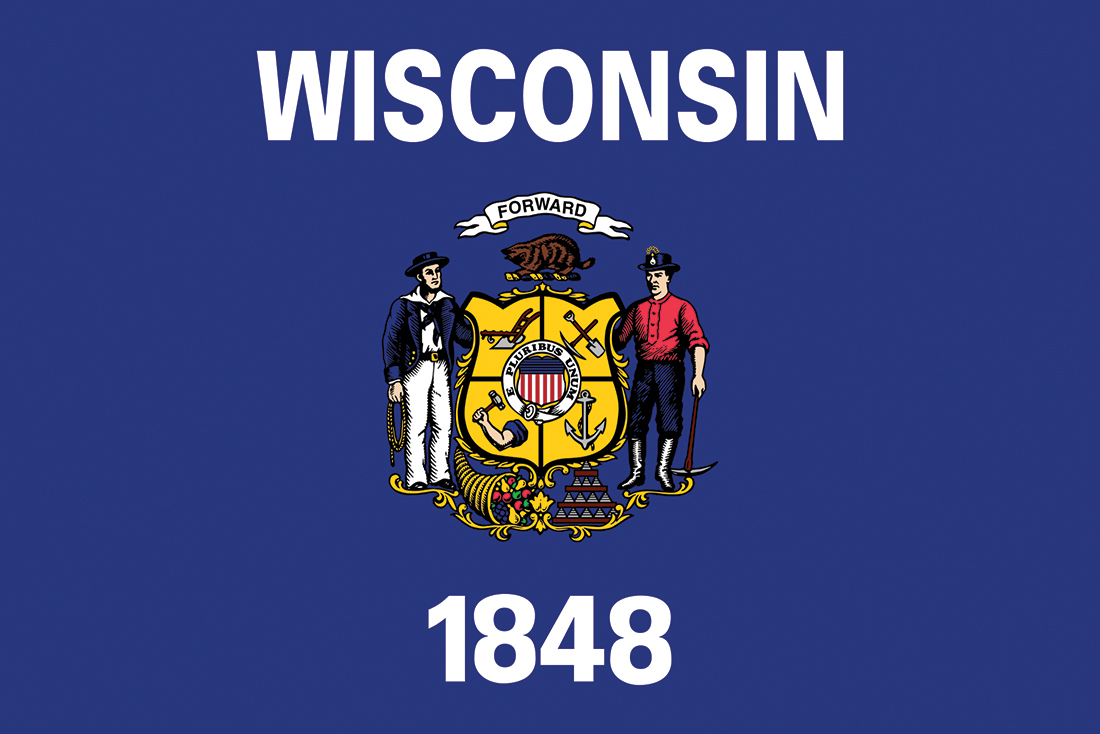
To fully grasp the impact of the marine industry on Wisconsin’s history and economy, all you have to do is look at the state flag. On it, representatives of two of Wisconsin’s earliest industries — a mariner and a miner — flank a golden seal of trades. The mariner symbolizes Wisconsin’s contributions to the Great Lakes shipping trade and shipbuilding throughout the 19th century, which laid the groundwork for what has become a thriving marine industry today.
Northeast Wisconsin, also known as the “North Coast region,” employs more than 6,000 people in the marine manufacturing industry and is home to seven of the Great Lakes’ eight shipbuilders. The American domestic maritime industry contributes $2.2 billion annually to the Wisconsin economy, including $635.3 million in labor income and 9,670 related industry jobs, according to the American Maritime Partnership.
And the industry is growing — in 2021, the national marine economy experienced a 7.4% growth in its contribution to GDP and a 10.5% increase in sales. The tourism and recreation sector exhibited the largest growth, increasing by 27.3% or $49.8 billion, according to Marine Economy Satellite Account data.
Kevin Cullen, deputy director and chief curator of the Wisconsin Maritime Museum in Manitowoc, says the Great Lakes region has been a leader in marine innovation since pre-Wisconsin statehood, thanks to its prime real estate along the largest freshwater lakes system in the world as well as the innovations of Native Americans and early settlers from Ireland, Germany and Scandinavia.
“A lot of these folks were coming from immigrant families and shipwrights that were coming with that knowledge from either the East Coast or from Europe and then transforming it into businesses here,” Cullen says. “That successfully got adopted and those companies, if maintained well, continued to grow. That’s why shipbuilding still is such a vital part of our economy.”
Anchored in history
It’s nearly impossible to talk about the marine industry’s growth in Northeast Wisconsin without understanding from where it came.
Ranked among the top 20 states in the nation for maritime careers, Wisconsin has more than 1,000 miles of coastline on Lake Michigan and Lake Superior. From this “fresh coast” sprung shipyards, shipwrights and suppliers essential to the marine supply chain.
In the 1830s, Manitowoc started to become established as a shipbuilding hub, home to some of the state’s earliest shipyards. Shipyards and port facilities were also established along Lake Michigan in Sheboygan and Sturgeon Bay. By the turn of the 20th century, Manitowoc shipyards had produced more than 200 schooners, tugs and steamers.
“The 1840s were really our watershed moment in terms of shipbuilding in Wisconsin,” Cullen says. “The 100 years between the 1840s and 1940s saw hundreds of ships being built in the state.”
Military contracts during World War II helped further ground local shipbuilders, but they were awarded them because they were already well-established, Cullen says. In the 1940s, the Manitowoc Shipbuilding Company cranked out 28 submarines for the United States Navy — finishing one about every three weeks.
“That’s an incredible story in and of itself — the fact that so many ships that served in the Pacific and Atlantic Theatre of World War II came out of ports here and along the shoreline of Lake Michigan,” Cullen says.
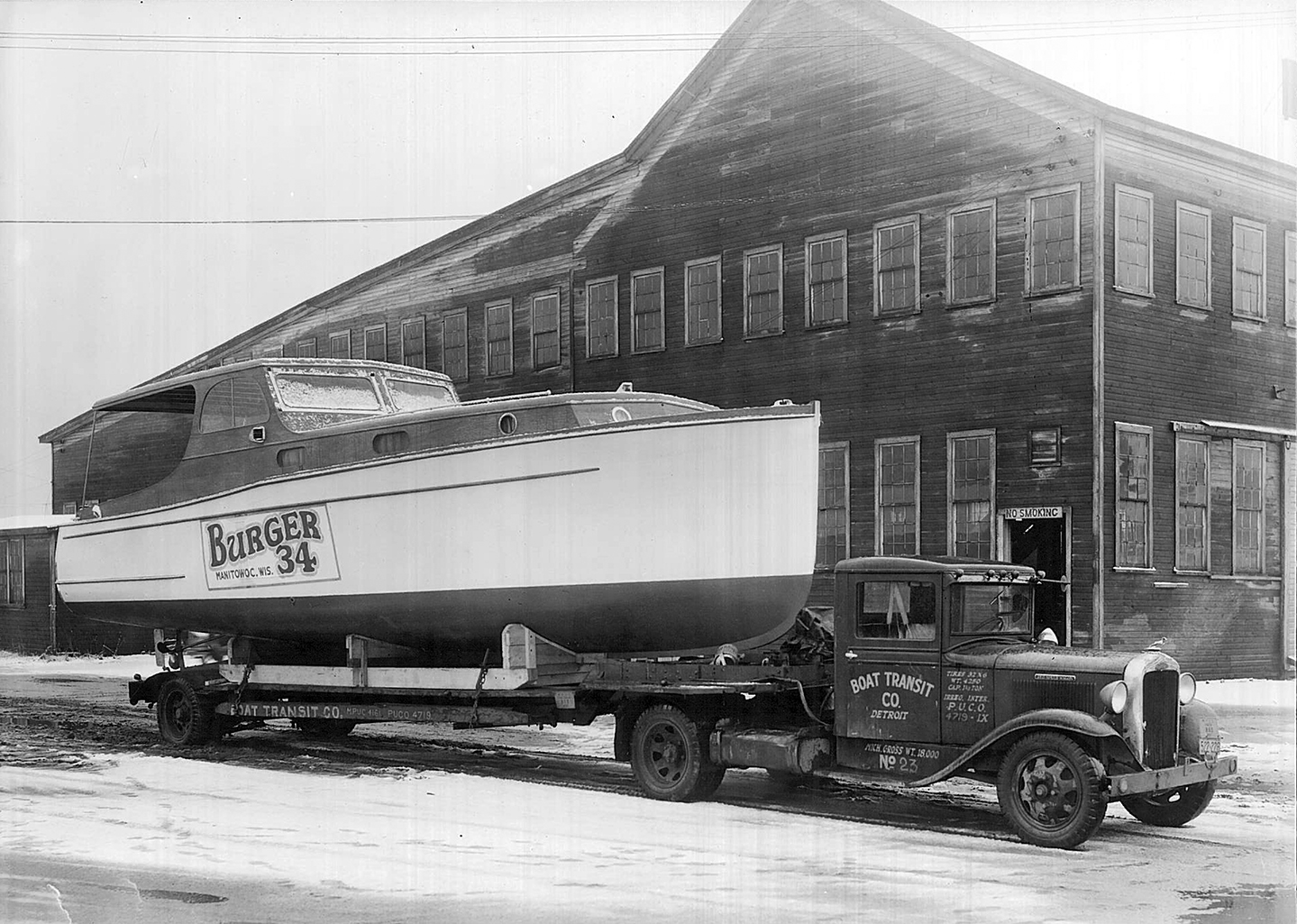
One of the region’s boat building pioneers was Henry Burger, a German immigrant who founded Burger Boat Company in Manitowoc in 1863, primarily constructing Mackinaw fishing boats for commercial fishermen.
Ronald Cleveringa, vice president of sales and marketing for Burger Boat, has been with the company for 23 of its 160 years. He says Burger Boat has prevailed by adapting to industry changes over its long history.
During lean times of the Great Depression, Burger built many wood and welded steel fishing tugs that operated throughout the Great Lakes. During war times, military vessels were the focus.
When the yacht market dried up during the Great Recession of 2008, Burger again turned to its foundation in commercial vessels. This resulted in the construction of four passenger vessels for use in Chicago, two research vessels used on the Great Lakes and one car ferry for use in the Upper Peninsula of Michigan. Burger was also contracted to fabricate the hull and superstructure modules for the Maid Of The Mist passenger vessels at Niagara Falls.
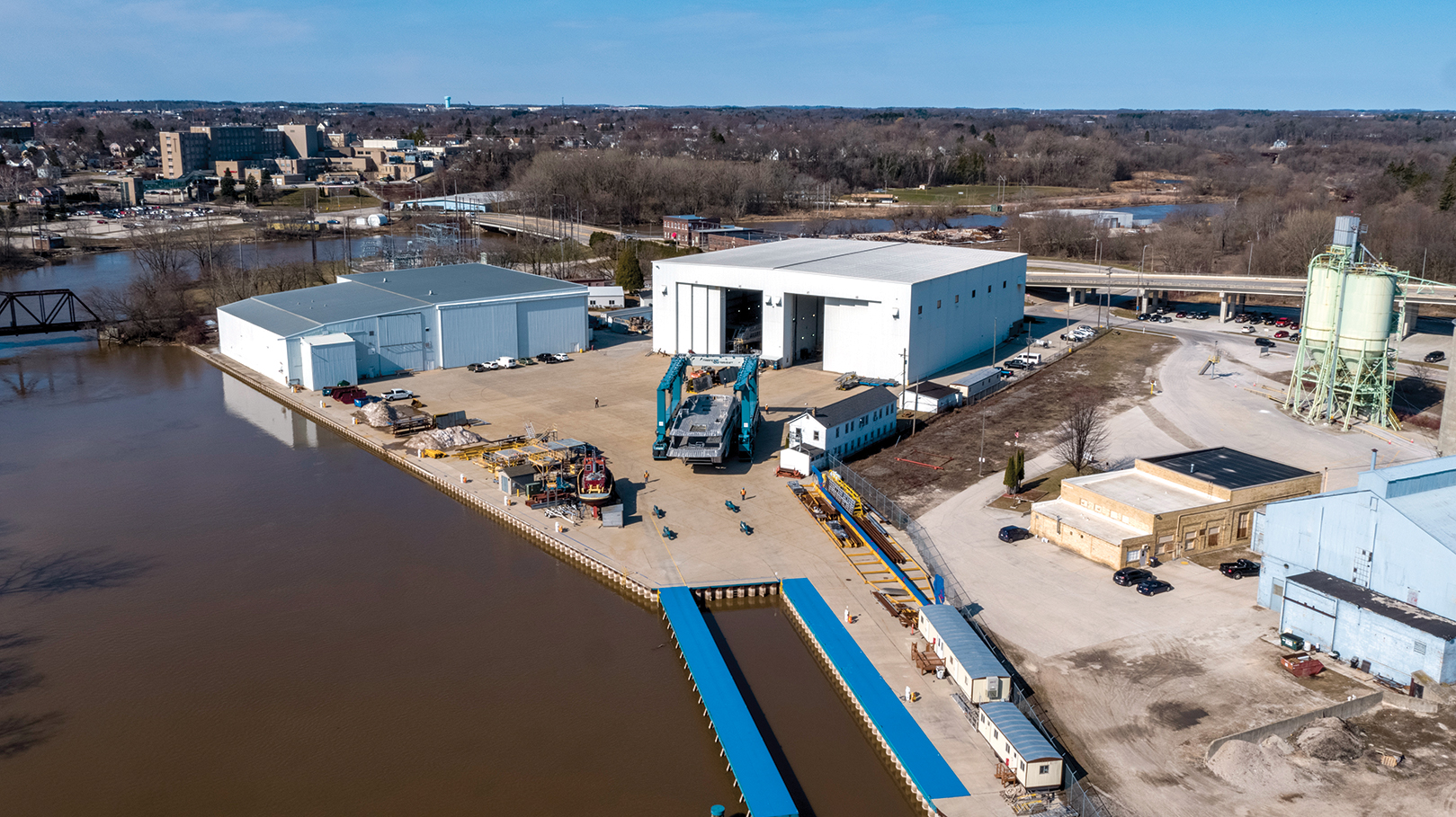
Today the custom yacht builder employs about 150 people at its state-of-the-art shipyard and joiner facility. “Now we are a good mix of commercial and pleasure [boats],” Cleveringa says.
Burger’s evolution in Manitowoc is a testament to the generational nature of the marine industry, Cullen says.
“They’re still making these innovative, luxury vessels for a clientele that’s willing to pay for it because of that skill set, because of that attention to detail and expertise,” he says.
Propelling the industry
Tourism and recreation and national defense contribute the most gross domestic product of all marine sectors to the national economy each year — $153 billion and $140 billion respectively, according to Marine Economy Satellite Account data.
These same sectors also lead in the New North region, where recreational boating has seen significant growth and multiple naval contracts have been awarded to local shipbuilders.
In May, the Department of Defense announced that Fincantieri Marinette Marine (FMM) was awarded a $526 million contract to build a fourth Constellation-class frigate. The frigates will be used for various operations including anti-air, anti-surface, anti-submarine, electromagnetic warfare, intelligence, surveillance and reconnaissance. Construction on the first frigate began in late August last year in Marinette, and FMM is scheduled to deliver the future USS Constellation in 2026.
FMM, Wisconsin’s largest employer in shipbuilding, received the contract for the first-in-class Constellation-class frigate in April 2020, and since then the Navy has exercised three options for follow-on vessels. The contract has a total value of $5.5 billion.
“That’s where we have a national stage. A billion-dollar contract to build state-of-the-art fighting vessels for the U.S. Navy, that puts Wisconsin into a high level of respect when it comes to fulfilling these contracts and still being a relevant superpower in ship manufacturing,” says Cullen, who notes the increased security of shipbuilding on the inland Great Lakes is attractive to the Department of Defense.
In addition to high-end military contracts like those awarded to FMM, recreational boating grew post pandemic as more consumers invested in socially-distanced outdoor recreation.
The National Marine Manufacturers Association (NMMA) recently announced new data from its 2023 Economic Impact Study of the Recreational Boating Industry. The recreational boating industry has seen incredible growth since 2018. Nationally, it grew from $170 billion economic impact in 2018 to $230 billion in 2023. This jump in spending resulted in an increase of more than 120,000 jobs, for a total of 812,000 in 2023.
Recreational boating is an $8.4 billion industry in Wisconsin. In the state’s 8th congressional district covering Northeast Wisconsin, recreational boating has a $1.5 billion annual economic impact, supporting more than 8,000 jobs and 170 businesses.
Mark Pedersen is the president of Cruisers Yachts in Oconto, a longstanding manufacturer of luxury yachts specializing in models from 34 to 60 feet. He says the rise in outdoor recreational spending along with technological advancements have brought a new customer base to boating. Cruisers has doubled its production volume since 2021.
“With the changes in leisure hobbies and all the new technology, there’s many more new boaters coming into the industry,” Pedersen says. “I see that as a positive that this industry will keep growing.”
One technological advancement Pedersen points to is the advent of joystick controls. Joysticks make driving a boat more intuitive — something that comes in handy for new boaters, particularly while docking or maneuvering in tight spaces.
“A lot of people are apprehensive of [boating] because of the docking experience,” Pedersen says. “This joystick technology makes boating so much easier. You don’t have to work multiple controls. You just hit this button and you go into joystick boating.”
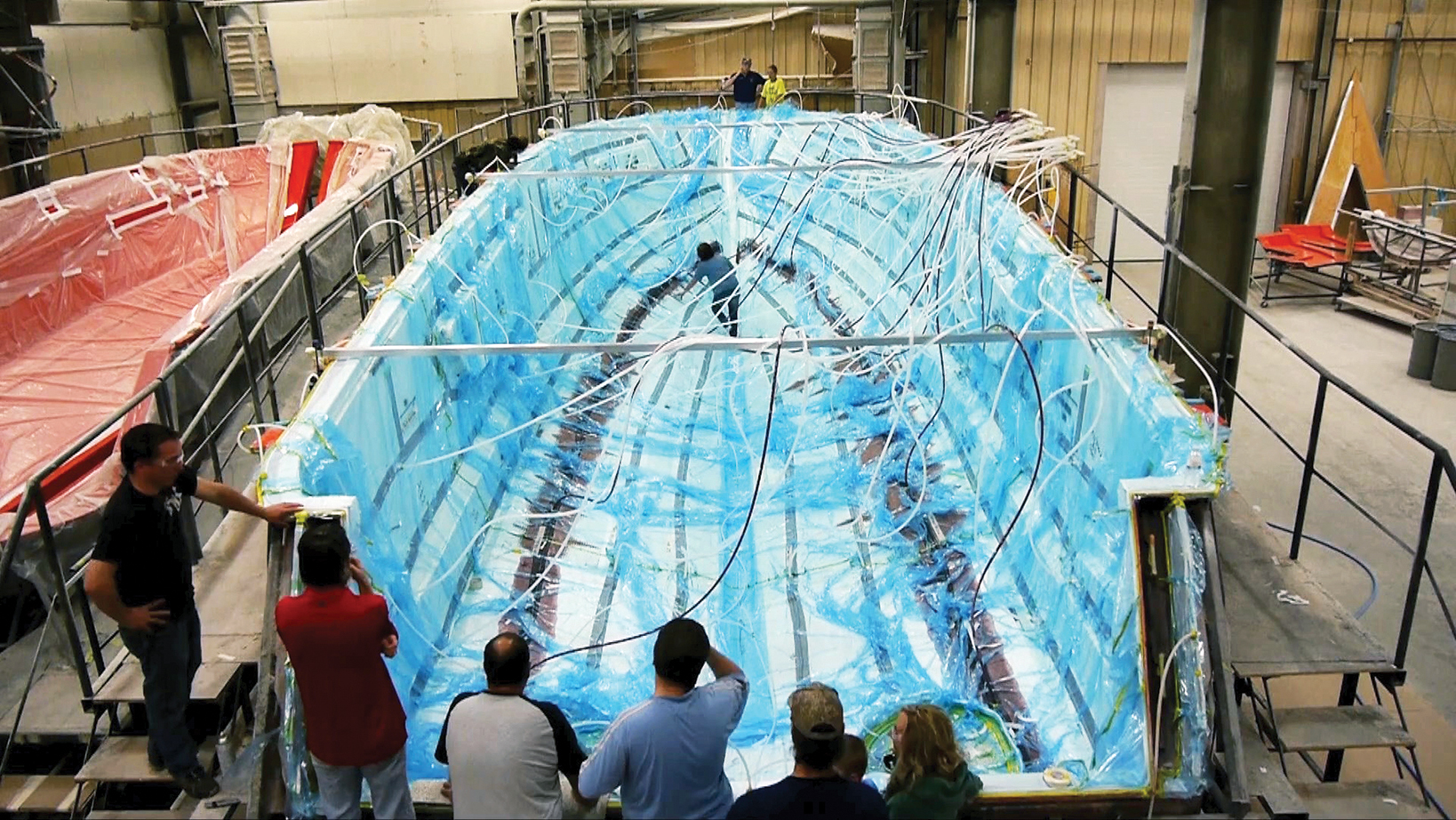
Boats are also getting bigger, as customers want to spend more time on the water entertaining guests. Due to this increased demand, Cruisers purchased a 100,000-square-foot manufacturing plant in Pulaski specifically for big boat production. Cruisers is currently building an additional 57,000 square feet of space at the Pulaski plant to support the 200 yachts constructed by its team of 540 employees annually.
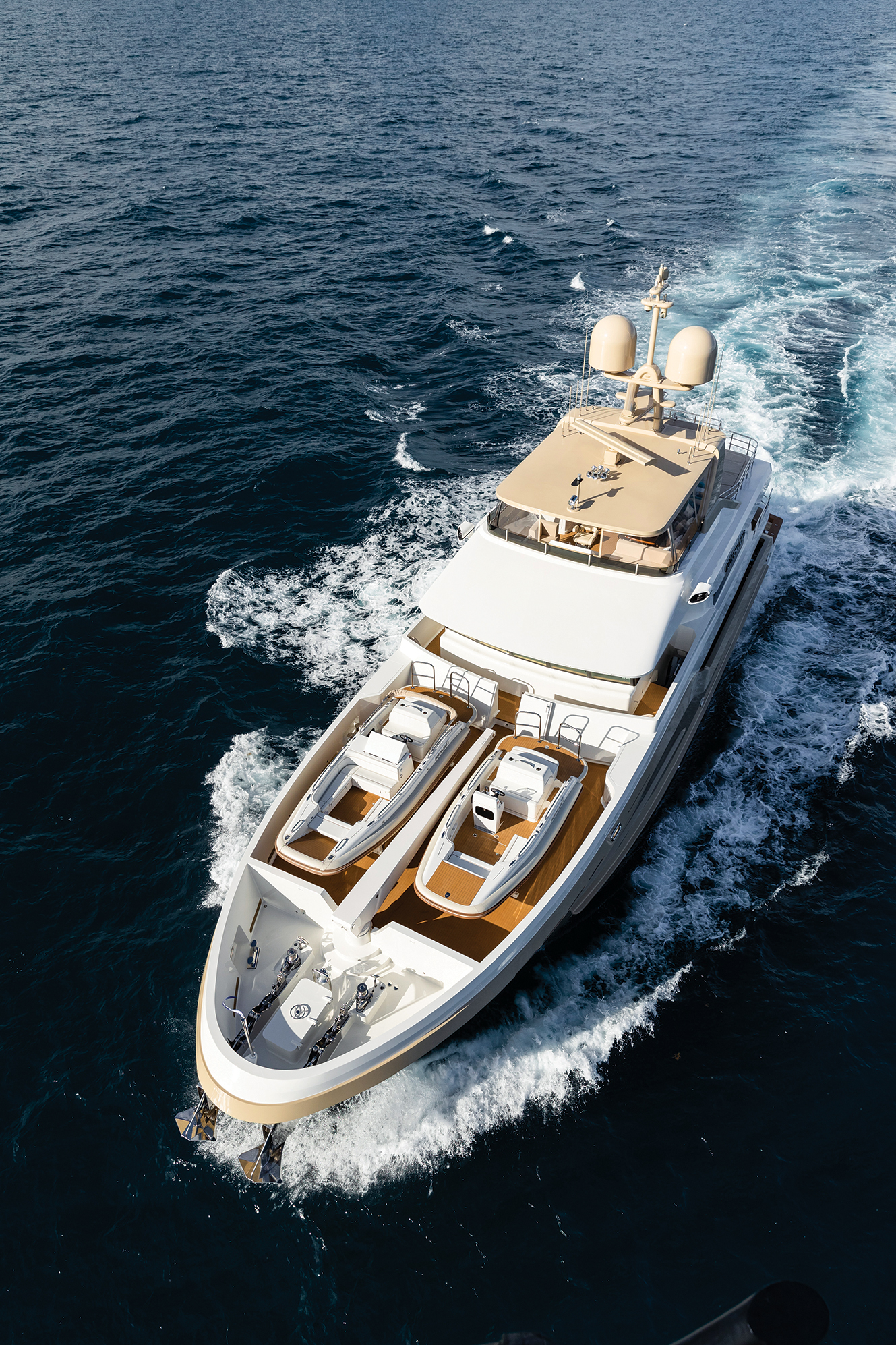
Over at Burger Boat, two 180-foot luxury motor yachts are currently under construction — one a speculative project and the other highly customized to its future owner’s specific design.
“The ongoing economic impact of one of these yachts is incredible. When we build a yacht, it puts 100-plus people to work for multiple years,” says Cleveringa, who estimates it takes two to three years to complete a yacht, depending on its size. “Then there’s the people who maintain it, the crew and people who supply provisions. It puts them to work for the life of the yacht.”
As Cleveringa points out, the marine industry’s impact goes further than the boat and shipbuilders themselves. A whole network of suppliers contributes to the New North marine economy as well.
Mercury Marine, a maker of marine propulsion systems headquartered in Fond du Lac, has a $5.4 billion annual economic impact on the local Fond du Lac community — an increase of almost 10% from just three years ago. This is according to a recent study conducted by Envision Greater Fond du Lac.
“Mercury Marine’s impact goes well beyond the impressive 4,200 employees, as the impact study shows,” Sadie Vander Velde, president and CEO of Envision Greater Fond du Lac, said in a statement. “Mercury Marine supports a number of indirect jobs, for example in grocery stores, health care, entertainment and retail. As Mercury continues to grow, it continues to positively impact our economy and improve our quality of life in Fond du Lac.”
Buoying the workforce
The marine industry’s continued success in Northeast Wisconsin has spurred creative partnerships between higher education and businesses to deliver customized employee training for the shipbuilding industry.
Northeast Wisconsin Technical College opened the North Coast Marine Manufacturing Training Center (NCMMTC) in 2012. Since opening, the center has trained more than 11,000 new hires and incumbent workers in a variety of programs and has helped deliver a pipeline of skilled maritime industry workers — many for FMM, which is located next to NCMMTC in Marinette.
The partnership between NWTC and FMM dates back to World War II. NWTC Vice President of College Advancement Meridith Jaeger says the college’s mission is to help industry partners like FMM by providing them with skilled workers and to help individuals by providing the education and skills training required for family-sustaining wages.
“It’s really taking those two parts of our mission and making sure that we’re connecting those dots and connecting those pieces for our industry partners and for individuals,” she says. “I think it is really important given the fact that shipbuilding and its supply chain are so critical to our region.”
Over the last two years NWTC has expanded its marine industry initiatives both in physical space as well as in the types of training offered. Last year NWTC expanded marine manufacturing training to its Sturgeon Bay campus. In partnership with Fincantieri Bay Shipbuilding (FBS), the expansion offers a five-week employee training program designed to increase the quality and quantity of skilled technicians in the local maritime manufacturing industry. The curriculum consists of advanced welding and fabrication techniques, with participants earning NWTC Welding Certificates upon completion. Since the launch, 97 participants have successfully completed the program.
FBS, part of Fincantieri Marine Group, is a 63-acre custom-built facility designed for efficient new construction, major conversions, repairs, and sustainment of commercial and government vessels. This month, NWTC and FBS announced an expansion of their partnership which includes higher student capacity, longer course curriculum and more. This expansion will support the years of work FBS has currently underway and in the pipeline, such as building additional LNG bunkering barges and SOVs.
While FMM’s impressive performance on government contracts is driving some of the college’s expansion in marine manufacturing training and upskilling, that’s only one piece of the puzzle.
“Boat builders, like Cruisers Yachts, have grown so much and their orders are growing a ton. It’s not just the Navy ships. It’s the commercial ships, too,” Jaeger says. “That coupled with the workforce shortages has really pushed us to expand and focus on this industry even more so than we have over the last 10 to 12 years.”
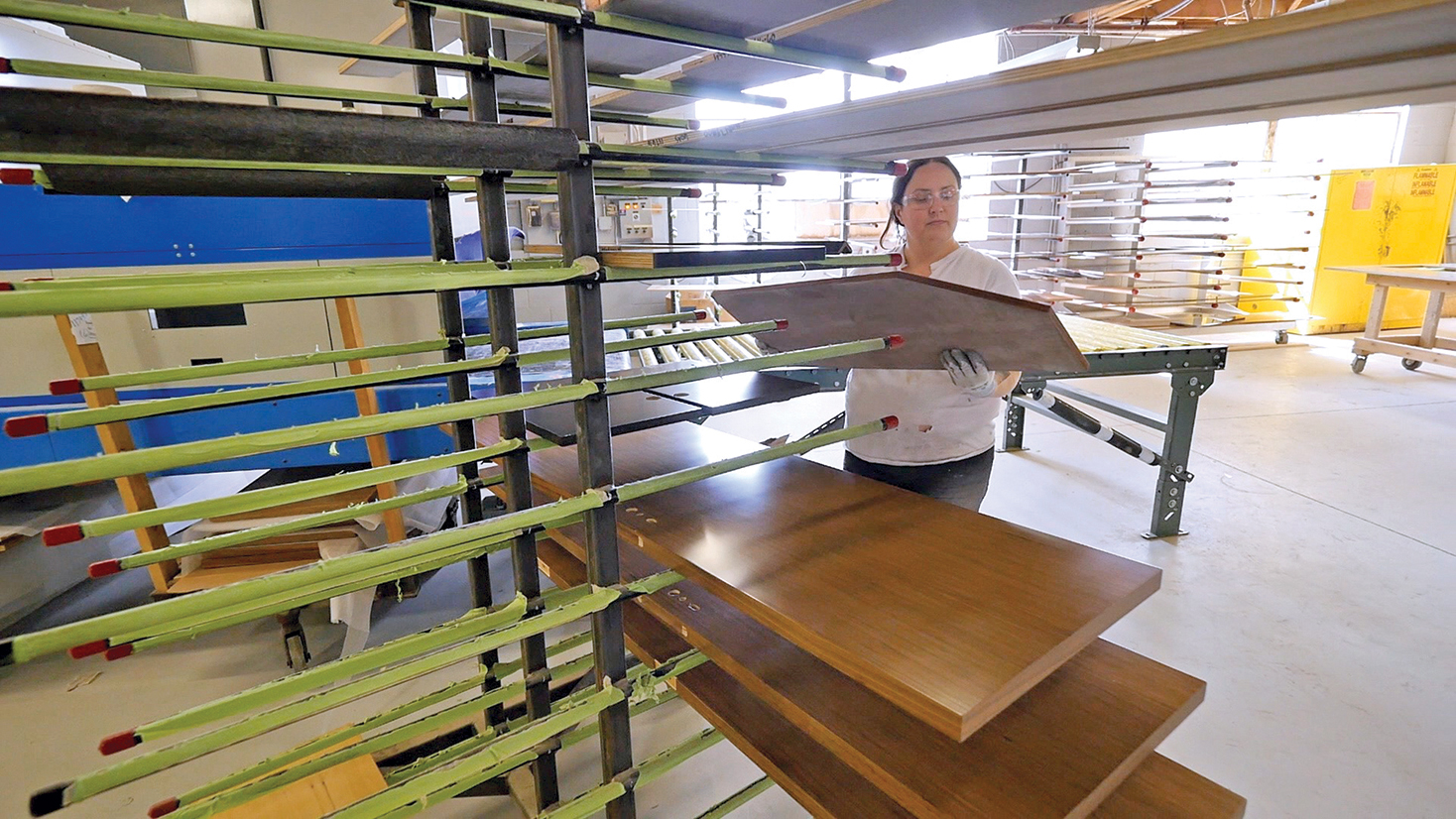
NWTC conducted a 2021 impact report that found that shoreside jobs account for the majority of maritime industry occupations in the Great Lakes region. Primarily found in ports, shipyards and marine manufacturing facilities, these occupations include diesel mechanics, welders, fitters, electricians, logistics coordinators, naval architects and designers, among others.
Jaeger says the advantage of these jobs is that they require skills and credentials that are varied and transferable. “Those are skills that they can use outside of the shipyard, too, if life takes them someplace else to continue their career,” she says.
As a member of both the North Coast Marine Manufacturing Alliance and the National Maritime Workforce Alliance, NWTC’s role in the shipbuilding industry goes beyond its training and workforce development efforts, Jaeger says.
“Our role is bigger than that in terms of helping to build awareness of the shipbuilding industry and awareness of the kinds of jobs and career opportunities for individuals within shipbuilding,” she says. “A lot of our work is starting to expand into K-12 and providing opportunities for them to learn about careers in shipbuilding.”
Planning for the next century of the North Coast’s marine industry — whether by preparing its future workforce or leading industry trends in manufacturing — is vital to its continued growth, Cullen says.
“The marine industry in Wisconsin is enduring, but it takes villages and cities and state budgets to make sure that it’s part of our identity, just like the mariner that’s on our state flag,” he says. “With our state motto ‘Forward,’ I would say that’s an apt metaphor that we’re moving the maritime industry forward, just like those early shipwrights did in the 19th century.”