
Though pandemic uncertainty and its accompanying economic implications continue to affect the commercial real estate sector, those factors aren’t stopping many business expansions and construction projects from progressing.
Todd Hietpas, client executive for architecture, engineering and design firm Performa|EUA, says many businesses that had started projects before the pandemic or soon after it started have followed through on completing them. However, demand is down overall for business and corporate office space. One exception to that is businesses that have an essential quality.
“If their business is thriving, they’ve got to do things to accommodate their business,” Hietpas says.
Performa|EUA has been working with some of those thriving businesses, including supplement manufacturer Nature’s Way and strategic transportation solutions firm Breakthrough, which is a subsidiary of U.S. Venture Inc.
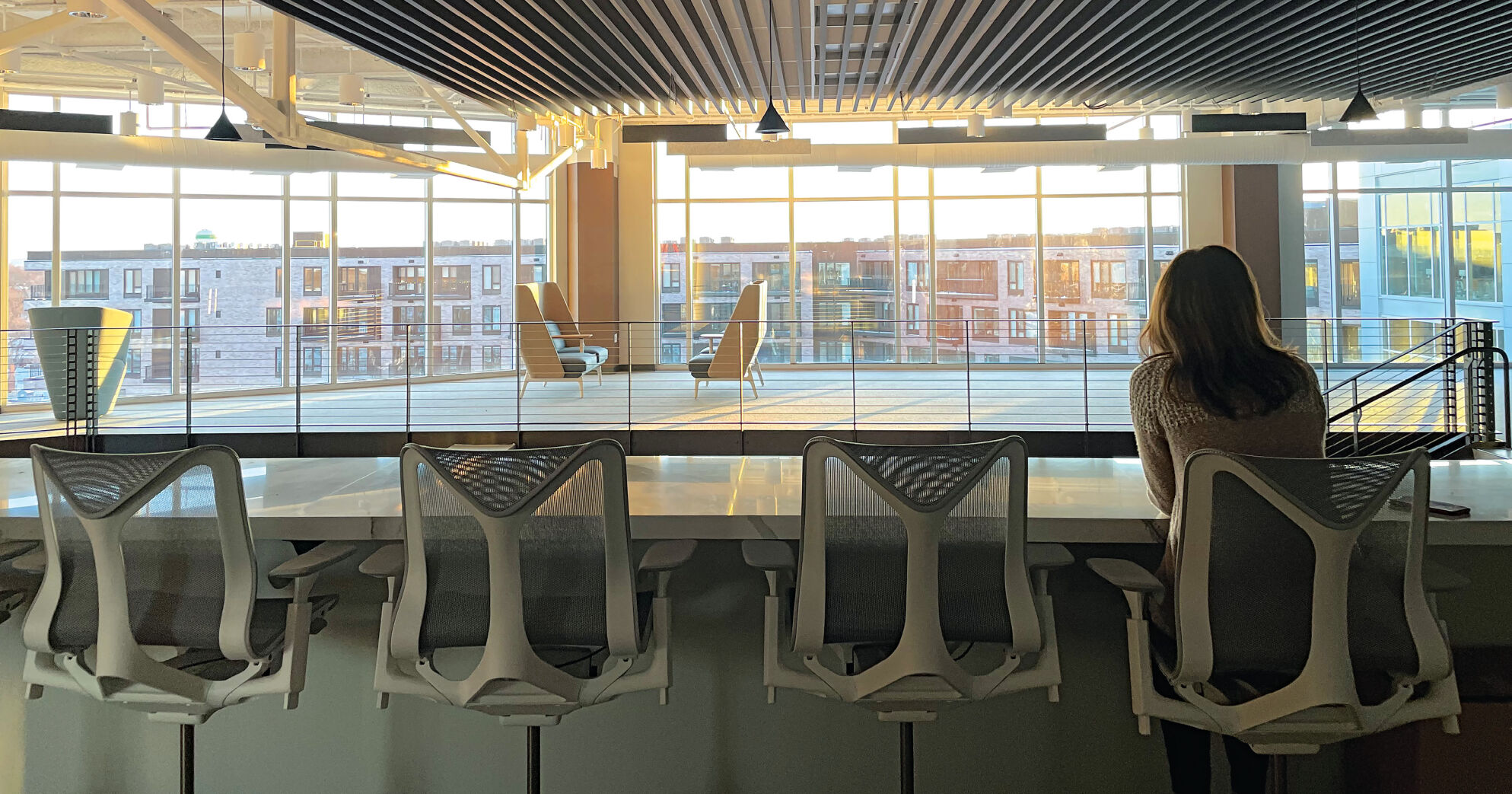
Nature’s Way has invested more than $75 million into its people, processes and facilities, including a new corporate headquarters and a second high-tech production facility to meet increased demand for the company’s gummy products. The Green Bay corporate office includes features designed to enhance employees’ collaboration, creativity and safety through a natural, well-lit and functional workplace.
Breakthrough is preparing to move into its new space in the Titletown office tower, now called the U.S. Venture Center. Hietpas says Performa|EUA worked with Breakthrough CEO Doug Mueller to devise design solutions to best meet the needs of a hybrid workforce.
Though Breakthrough employees maintained productivity while working remotely, Mueller also didn’t want to lose the company’s culture of collaboration. Performa|EUA worked with Breakthrough to design flexible spaces that allow employees to work wherever they want. That includes unassigned seating, traditional workspaces, collaborative meeting spaces and individual areas for focused work.
Hybrid is here to stay, Hietpas anticipates. “I think that businesses have realized through this … that employees can find a way to be productive and work almost anywhere, and with that, there’s been more acceptance of that,” he says.
With that shift, there’s also come a greater emphasis on adding technology solutions. For example, Performa|EUA clients have become accustomed to working with the company virtually, and the firm’s employees have found they can work more efficiently from their desks with Teams or Zoom than in a conference room with a group.
As businesses design new spaces, there’s also more consideration of how people flow through buildings and ways to allow for more distancing and less interaction. “I’m hearing a lot more about flow today than I did a few years ago,” Hietpas says.
‘Flight to quality’
On the commercial real estate sales and leasing side, Manny Vasquez, vice president of business development for NAI Pfefferle, is tracking several trends. This includes what he calls a “flight to quality” in office space.
“Lately, the trend has been companies looking for higher-end Class A office.
That type of space is performing better than B and C,” he says.
The desire for premium spaces comes back to talent attraction and retention, Vasquez says. Though many employees are still working remotely, companies recognize that the physical workspace is important and are investing in places that offer amenities including walkability, proximity to restaurants and cultural attractions, inviting cafeterias and fitness centers.
The vacancy rate for office is close to 10%, which Vasquez says is a bit high. Overall, vacancies are increasing and some businesses are subleasing space they were committed to. Return-to-office dates continue to get extended due to the ongoing pandemic, and that affects demand.
“I think a lot of companies are still on standby just waiting for things to settle down a little bit before they start making decisions,” Vasquez says.
On the industrial real estate side, vacancy levels remain at historic lows. Vasquez hears a lot of concerns from manufacturers looking for space to expand, with many resorting to reconfiguring space on their plant floors and building short-term additions.
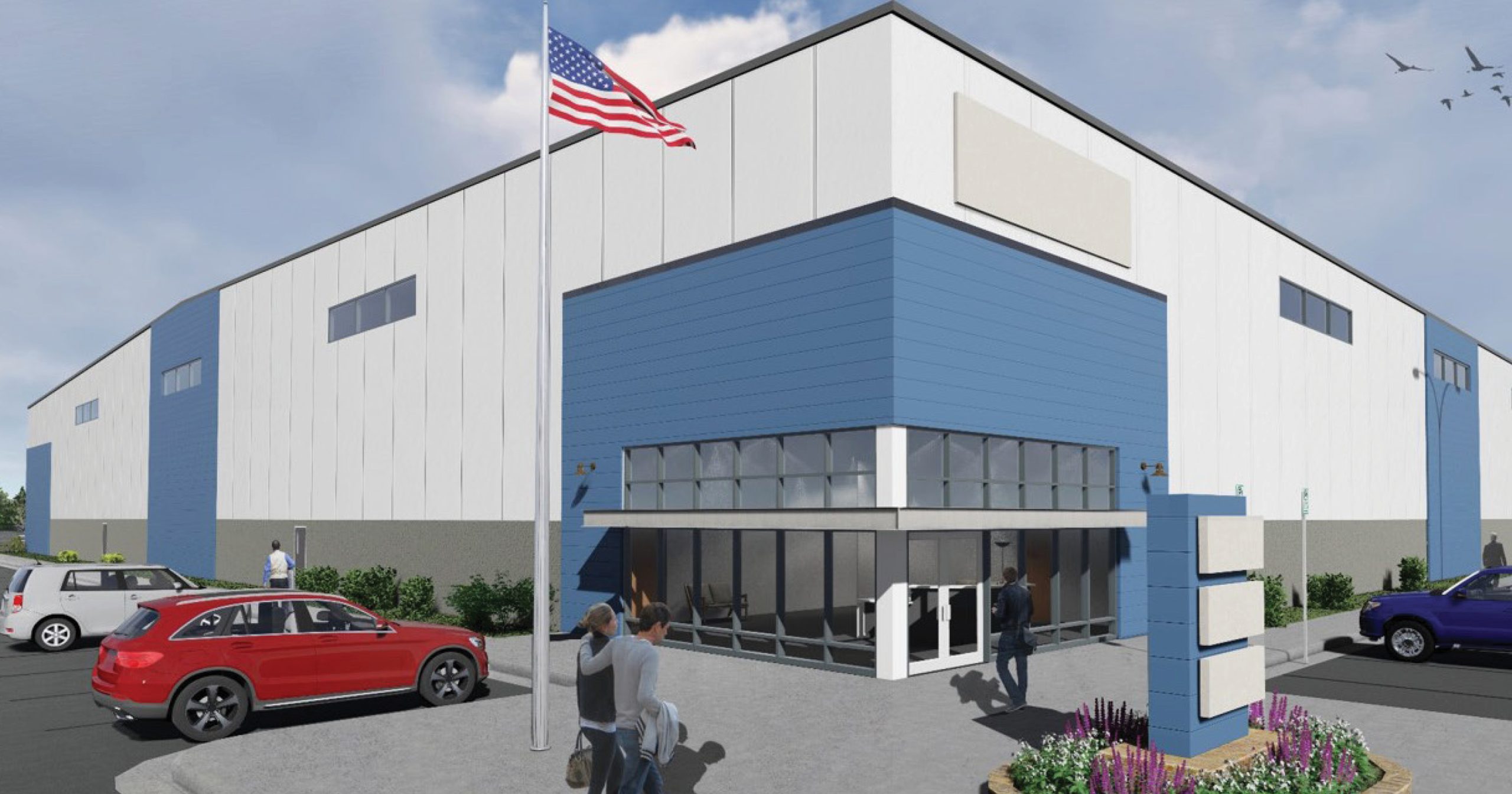
To help meet the need, two spec projects are in the works. The Airport Business Center in Greenville will offer up to 314,500 square feet of Class A industrial space with room for up to 106 dock doors. Construction is getting underway in March on a spec building on County Highway DDD in Wrightstown. It will offer 100,000 square feet of space with the option to add another 100,000 square feet. An out-of-state developer is taking up the Greenville project, while the Wrightstown developer is local.
Vasquez says he is optimistic both projects will succeed. “Because we hear of the demand and the ongoing need, we feel pretty confident that this will be filled,” he says.
On the retail front, Vasquez says he keeps hearing that people still appreciate brick-and-mortar shopping, and the data supports that. Downtowns continue to perform well, and many people want to support small businesses. That means businesses are looking for space, but it may be smaller or configured differently than in the past.
Big-box retail, on the other hand, is still declining, and that’s where adaptive reuse and development comes in. Many former large stores get converted into mini storage sites, including part of the former Shopko building in Kimberly.
Vasquez says it’s not a big trend in the region yet, but some larger communities are seeing former big-box stores converted into multifamily residential, with the opportunity to build “on top of the existing box.”
In January, KK Integrated Logistics of Menominee, Michigan, purchased the former Clearwater Paper Co. site in Fox Crossing and is considering turning some of the space into apartments.
The purchase includes a 1.2 million-square-foot mill site on the east side of Lake Street and a 250,000-square-foot warehouse on the street’s west side.
The company is considering turning a six-story section of the mill into apartments overlooking Little Lake Butte des Morts. The warehouse on the west side is being renovated for Trilliant Food & Nutrition, which will move into the building in April.
“There’s all kinds of creative things being done,” Vasquez says.