

The Wisconsin Department of Transportation (WisDOT) received approval from the U.S. Federal Highway Administration in September for its plan to expand electric vehicle charging stations under the National Electric Vehicle Infrastructure (NEVI) program.
In October, New North, Inc. partnered with St. Norbert College’s Center for Business & Economic Analysis to host its fall State and Regional Economic Intel Forum highlighting the sustainability movement and electrification of vehicles.
Business and community leaders from around the region gathered to learn how the Wisconsin Electric Vehicle (WIEV) Plan will work to develop an interconnected EV charging network throughout the state. To do this, it will establish a network of publicly accessible charging stations on Wisconsin’s interstates, alternative fuel corridors (AFCs) and significant regional routes.
During the forum at St. Norbert College, WisDOT Secretary Craig Thompson said the NEVI Plan will allocate more than $78 million in federal formula funds to Wisconsin over the next five years to expand the state’s EV charging infrastructure. Initial funding will support the development of EV charging stations every 50 miles along the state’s AFCs. The new charging stations must have at least four EV fast-charging ports.
The timing of this investment is critical. A new study by the car-buying app CoPilot found that the state of Wisconsin has the eighth-fewest EV chargers per capita in the country. There are currently 996 EV charging ports statewide.
Thompson said a robust and easily accessible EV charging network is crucial to the future of Wisconsin’s economy.
“If we want people to visit and explore Wisconsin, we don’t want them to have range anxiety,” he said, referring to the fear EV drivers experience when charging stations are not readily available.
Currently there are 1,967 miles of existing AFCs and 306 publicly accessible charging stations in Wisconsin. “Only four of those 306 are NEVI compliant, meeting the criteria for this new federal program, so we have a ways to go,” Thompson said.
EV adoption is growing as many car manufacturers transition to all-electric models. GM announced it would stop production of gas-powered cars and offer exclusively electric vehicles by 2035. Volvo has plans to be fully electric by 2030 and Jaguar by 2025. Toyota and Volkswagen have also announced plans to go all electric. Thompson said an estimated 150 new EV models are anticipated to hit the market between 2023 and 2028.
As of 2021, there were 9,330 registered EVs in Wisconsin. While that number is low compared to states like California, it represents a 48% increase in year-over-year growth, which indicates a strong upward trend in statewide EV adoption.
Wisconsin is projected to continue seeing steady increases in EVs on the road, with EVs making up 31% of the state’s total fleet by 2050. There have been two key drivers of this change, explained SNC Research Analyst Lydia Brosig.
“The chip shortage in the new vehicle market has caused excess demand to spill over into the used vehicle market, driving used vehicle prices closer to new EV prices,” she said. “The second main thing is EVs have been on the road long enough to trickle down into the used vehicle market, opening up a new demographic of potential EV owners.”
Prices in the used vehicle market have risen more than 50% since 2020. “It becomes a lot more viable to justify spending a little extra to get what [consumers] want since used vehicle prices are so expensive already,” Brosig said.
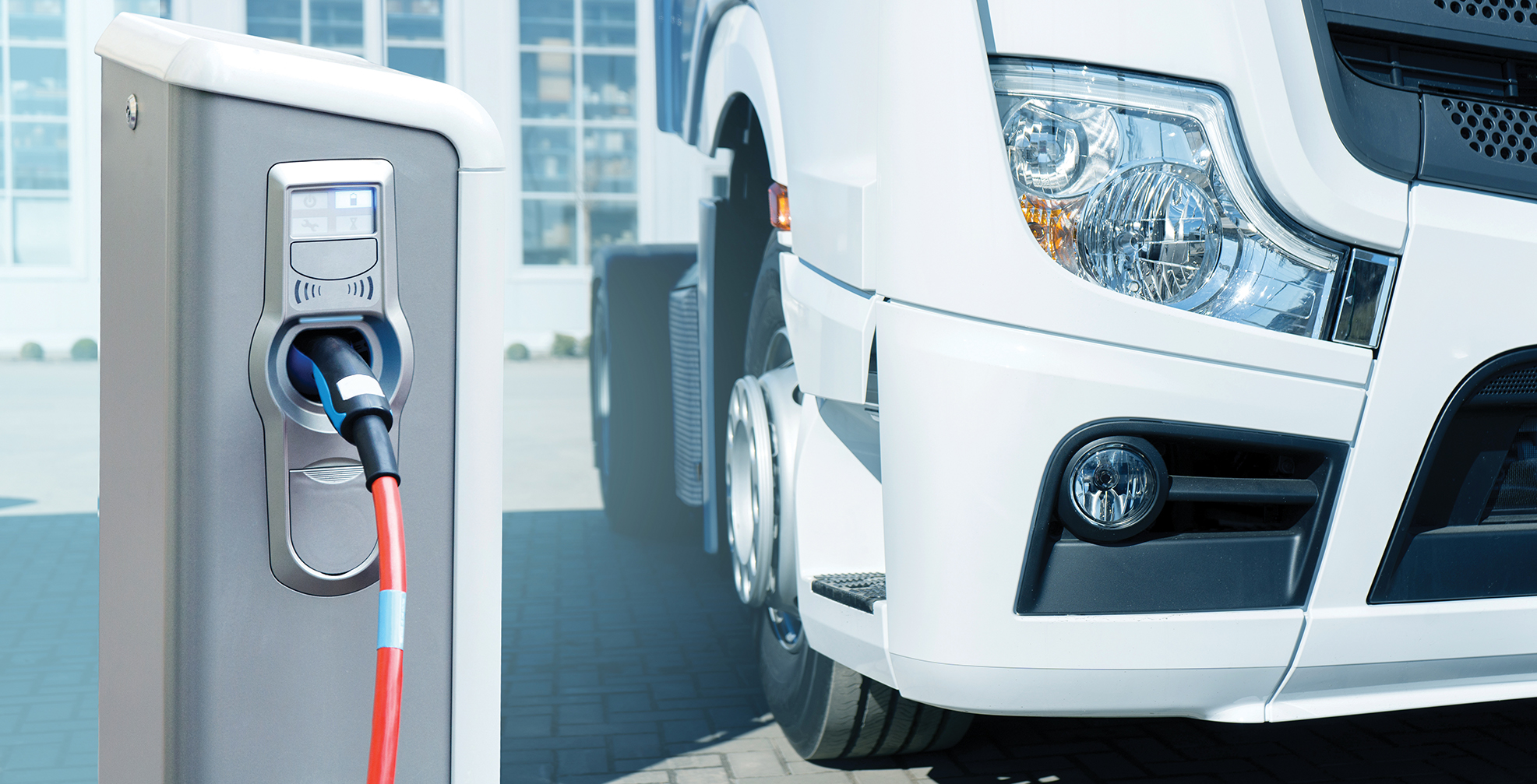
New North businesses in the heavy-duty transportation industry are also making EV investments. Schneider National is deploying 92 battery-electric Freightliner eCascadia trucks, making the company one of the largest electric truck fleet operators in North America. The new eCascadias have the potential to avoid more than 81,000 pounds of carbon dioxide emissions per day — the annual equivalent of removing 2,400 gas-powered cars from the road.
Jeremy Hock, equipment engineer at Schneider National, said the EV and alternative fuel space is a key component to achieving the company’s sustainability goals — such as reducing CO2 emissions by 60% per mile by 2035.
“That cannot be met today with diesel efficiency gains,” he said. “That has to take place with zero-emissions technology.”
For more information on the WIEV Plan, visit wisconsindot.gov

