
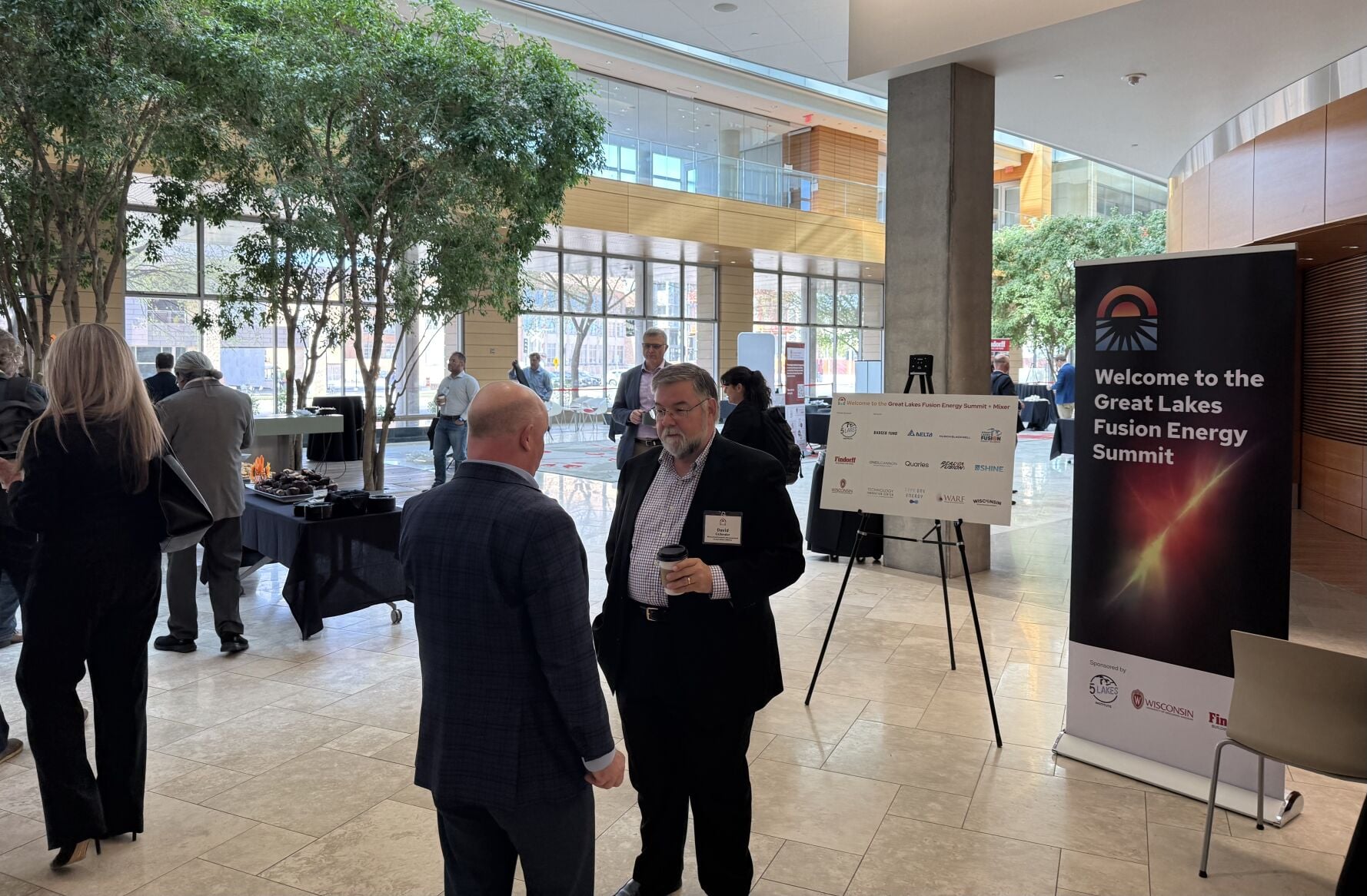

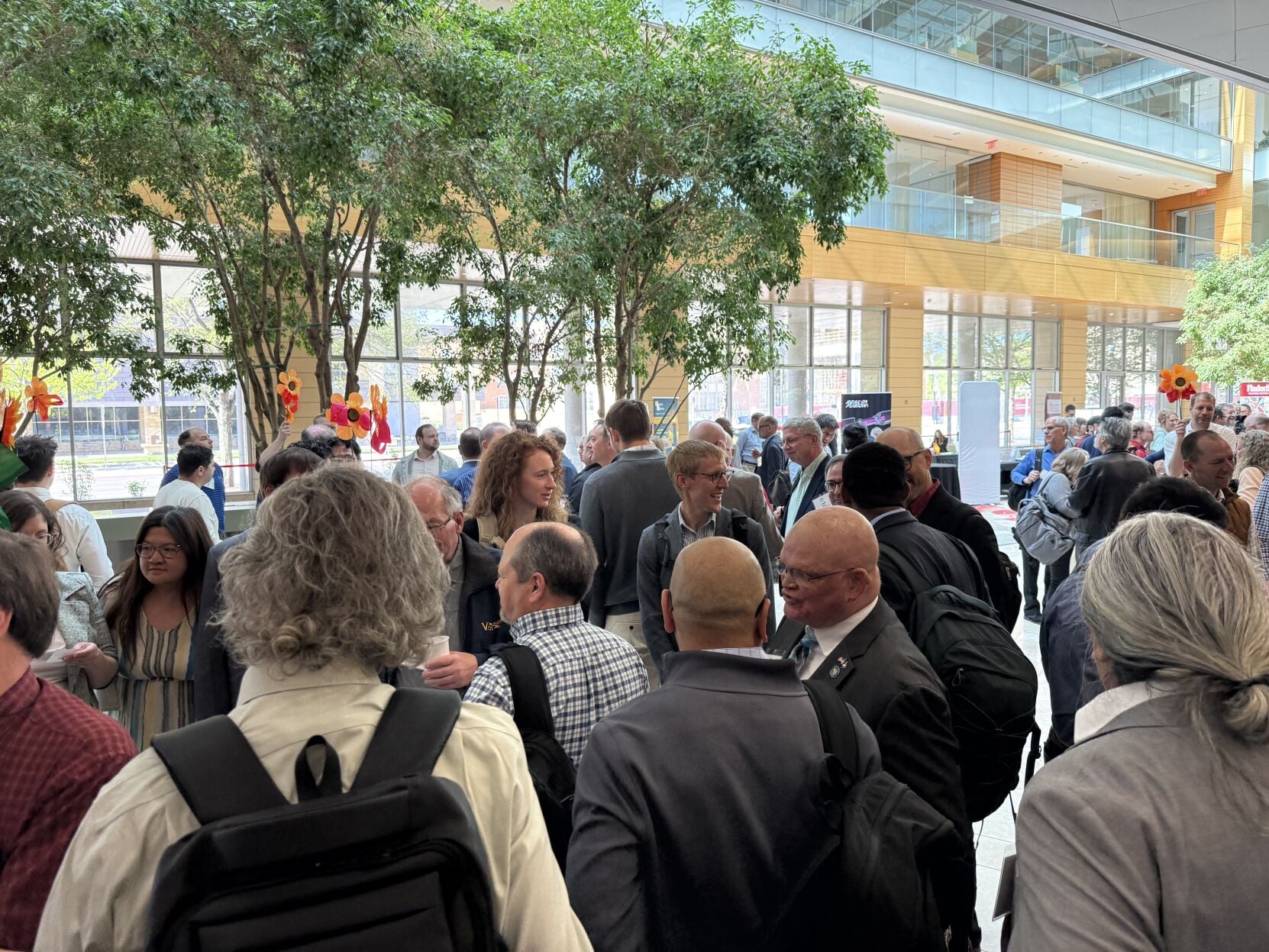
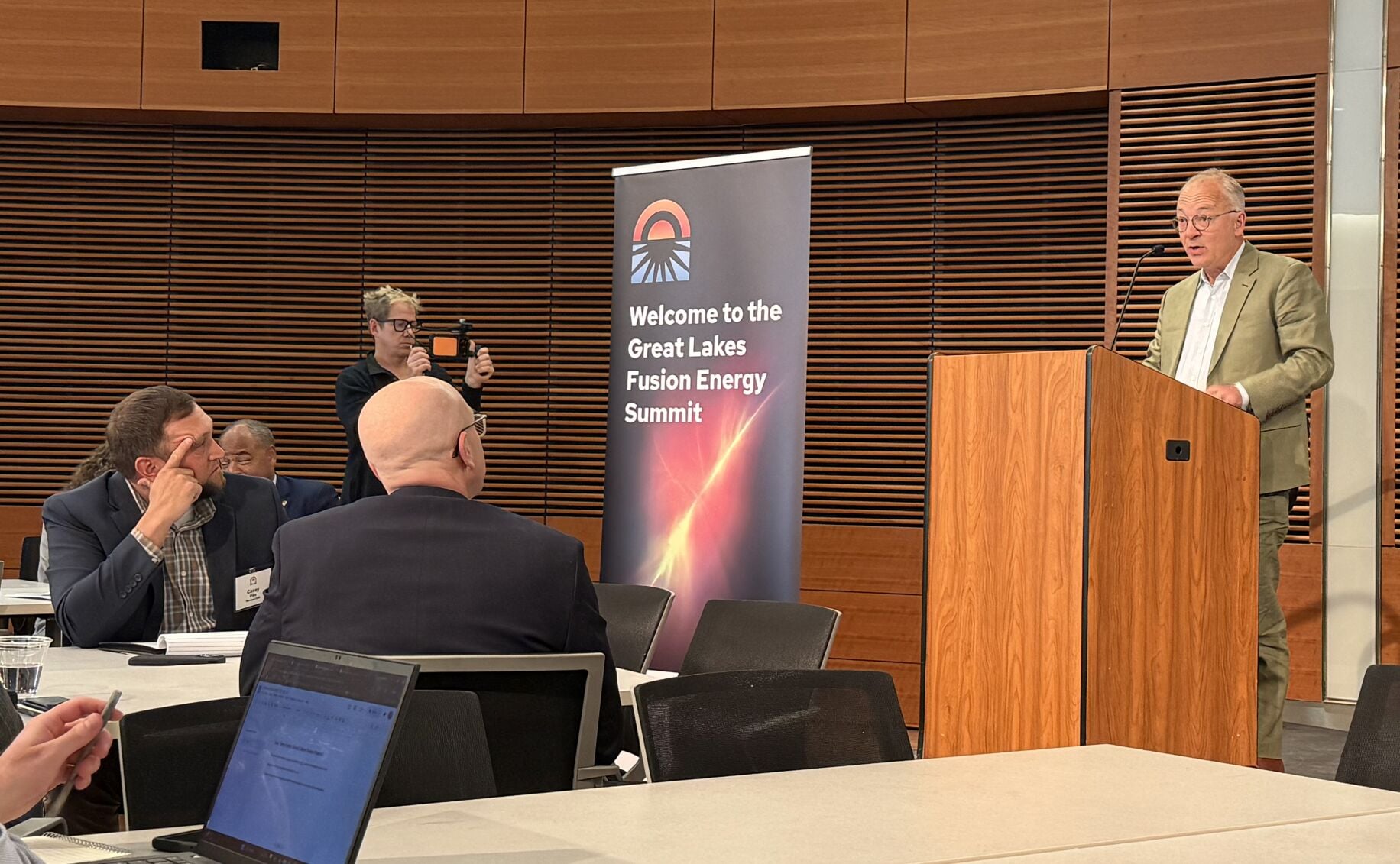
University of Wisconsin-Madison professors, scientists, investors, policymakers and leaders from across a myriad of industries gathered at the 2026 Great Lakes Fusion Energy Summit Tuesday at the Discovery Building on campus.
Organized by the 5 Lakes Institute — a collaborative network working to bolster the Great Lakes region’s high-tech economy — in partnership with the UW-Madison College of Engineering and other members of the fusion energy community, much of the annual event focused on the future nuclear fusion supply chain.
The event drew attendees from over a dozen states and several countries.
Nuclear fusion refers to the combining of atomic nuclei to release energy — a process that, if harnessed correctly, could yield a safe, virtually inexhaustible supply of clean energy without releasing long-lived, highly radioactive waste.
The first grid-scale fusion power plants are anticipated to be operational by the early 2030s.
Decades of pioneering research coming out of UW-Madison has fueled notable recent advancements at local companies Realta Fusion and Shine Technologies, which are among about 50 fusion companies worldwide.
On the cusp of a new era, in which fusion joins the global roster of renewable energy sources that could largely reshape world economies, summit speakers contended that the time to train tomorrow’s fusion workforce, strengthen partnerships between industry and academia and prepare the supply chain is now.
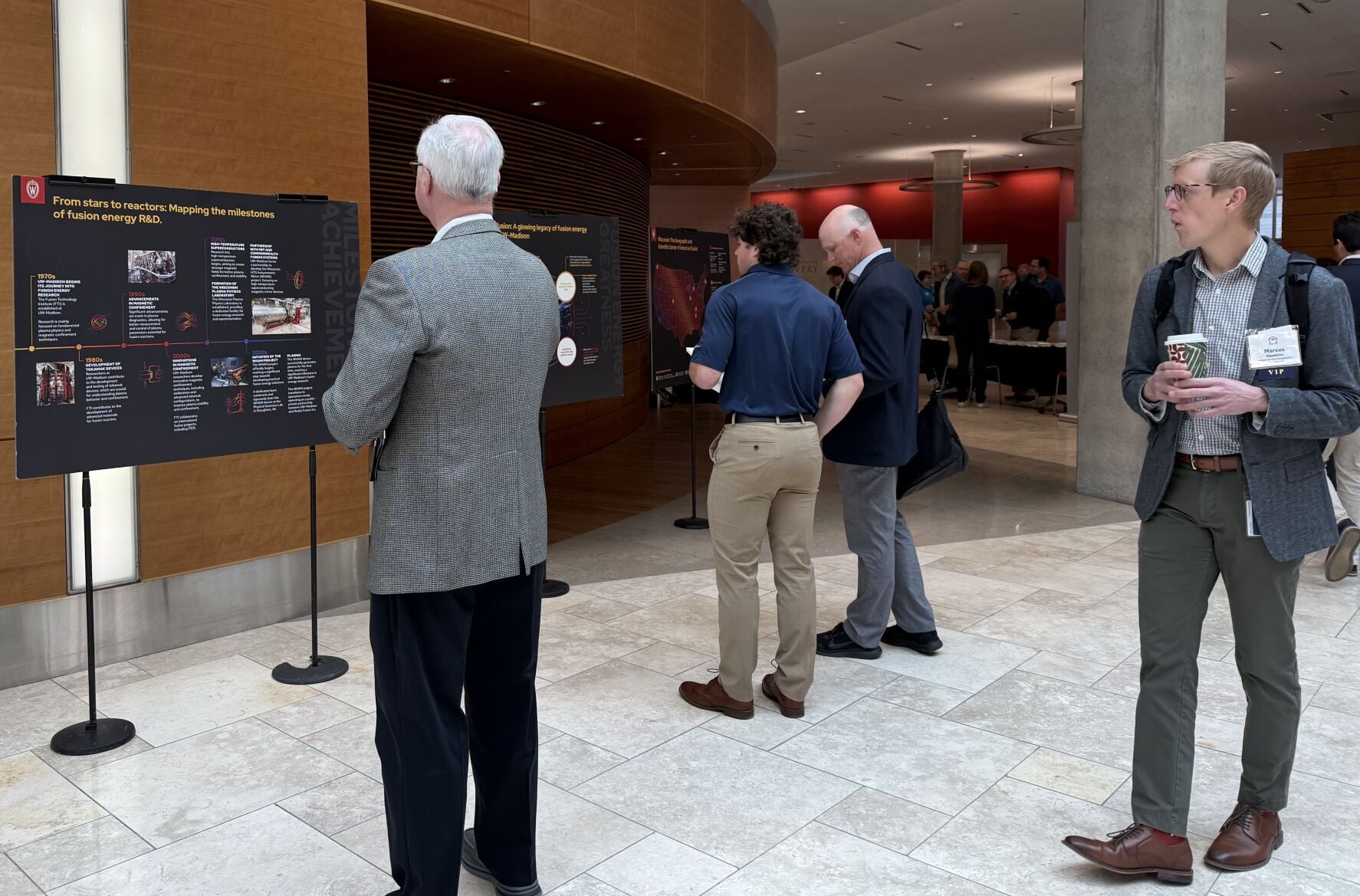
Many event speakers asserted that Wisconsin is uniquely positioned to lead the race to commercially viable nuclear fusion technology and to capitalize on the opportunities its proliferation will offer across the state’s trademark industries — manufacturing, in particular.
Why Wisconsin, and why now?
Already, over the last five years, the fusion industry has grown to employ over 4,600 workers and support almost 9,300 supply chain jobs, according to the Fusion Industry Association.
“The pace and scale of change in fusion is entering a new era,” said Eric Wilcots, UW-Madison’s interim chancellor and dean of the College of Letters & Sciences, who delivered the summit’s opening remarks. He said there is a huge opportunity for the state as it moves “from extraordinary science to practical fusion power.”
“It is about building the ecosystem that fusion now requires,” he said.
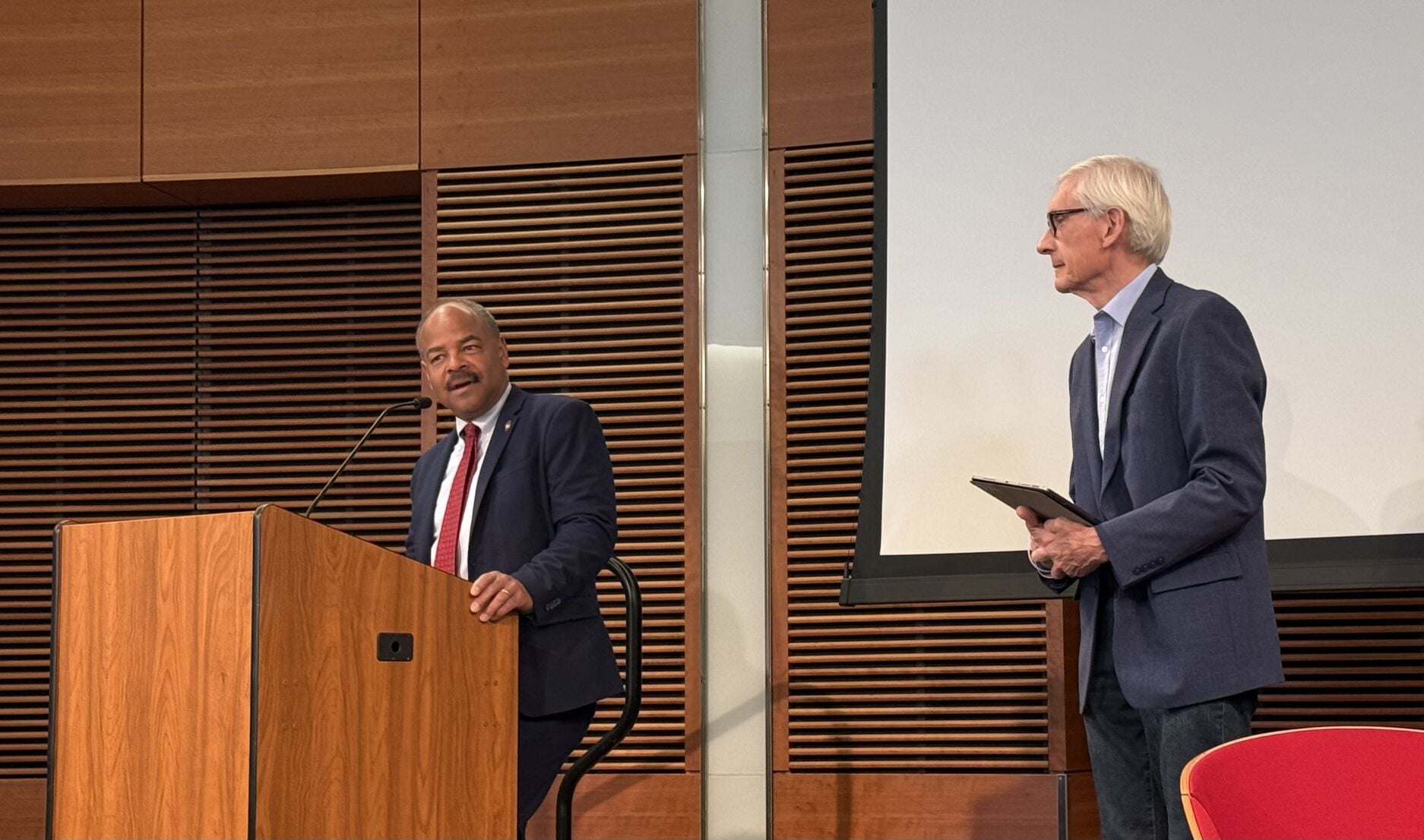
Gov. Tony Evers, who also spoke at the summit, highlighted some of the recent legislative steps his administration has taken to ready Wisconsin for a fusion-based future and support its biggest assets. He said these include research coming out of the university, a legacy in manufacturing and regional strengths.
In his State of the State address this year, Evers said fusion was a top priority in Wisconsin and announced a nuclear energy siting study, to be conducted by the state’s Public Service Commission in partnership with UW-Madison’s Department of Nuclear Engineering and Engineering Physics.
He also recently signed Wisconsin Act 165, which creates a sales and use tax exemption for materials, equipment and other items used exclusively in nuclear fusion technology projects.
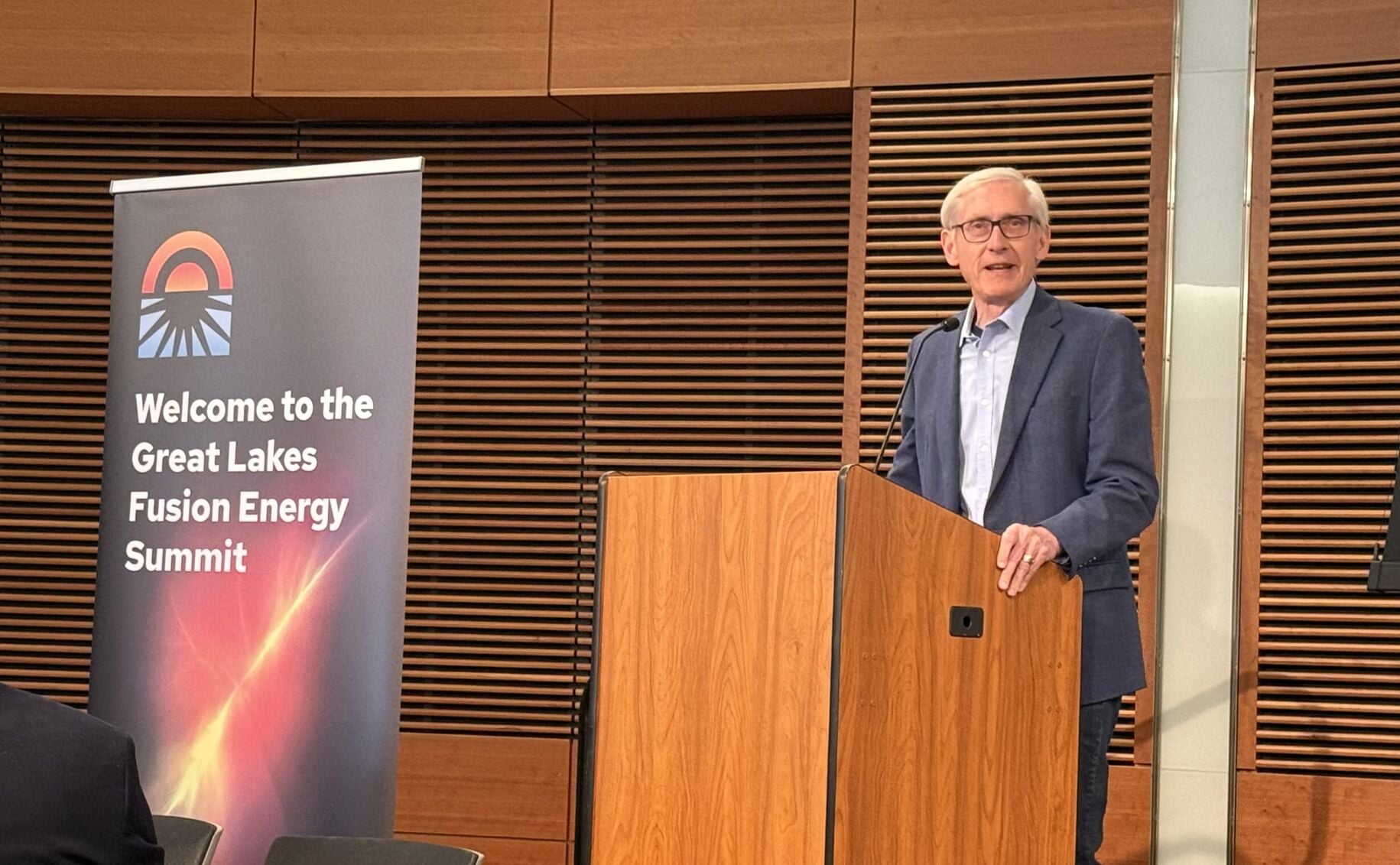
In addition, Evers noted that the Wisconsin Economic Development Corp. awarded a nearly $800,000 Ignite Wisconsin grant to the Wisconsin Fusion Energy Coalition to help establish the state as a national fusion energy commercialization hub.
“It excites me to think that here in Wisconsin and through the entire Midwest … we are engaging in groundbreaking research and applying it to real-life problems to revolutionize how our entire world is powered,” Evers said.
Touring today’s fusion tech developments
Summit attendees were broken into groups to tour fusion projects and labs — some around campus and some virtually.
UW-Madison professors Cary Forest, also a Realta Fusion co-founder, and Paul Wilson said today’s university research is helping to prepare the future fusion workforce and take on the material science challenges associated with deploying fusion technology at a commercial scale.
“Building devices (is) the only way to advance fusion technology,” said Forest. “We’re in an extraordinary moment. Private capital is building frontier machines at a pace the field has never seen. (The) university and labs still have a crucial role — to do open science, to train people, to ask questions that are too fundamental and too long-term for any one company and to make sure the public gets the full scientific return on this investment.”
He said building trust between universities, government, companies and the public is critical, along with developing the next generation of scientists, technicians, entrepreneurs and policymakers to carry the field forward.
Wilson said devices like those featured in the tour help train students to become leaders in fusion with hands-on experience. He added that many of the experiments seek to overcome the shortcomings of materials available to build them.
“All of these devices are pivoting from pure science devices … to understanding how they can support the technology’s development in the private sector,” he said. “We don’t really have a clear picture of what materials we can build a commercial fusion power plant out of today. We have some ideas, but we’ve never actually qualified those materials for operating in a commercial environment. … Once we have new alloys, new surface treatments, (we can) use them to build actual components.”
Many of the labs explored on the group tours focused on research that looks at manufacturing metal parts or coatings for fusion devices that have a high level of resistance to the extreme conditions they create.
Other tours looked at specific experiments pursuing variations of the magnetic confinement approach to fusion. In basic terms, magnetic confinement creates plasma and uses strong magnetic fields to contain and heat it until nuclei fuse and energy is released.
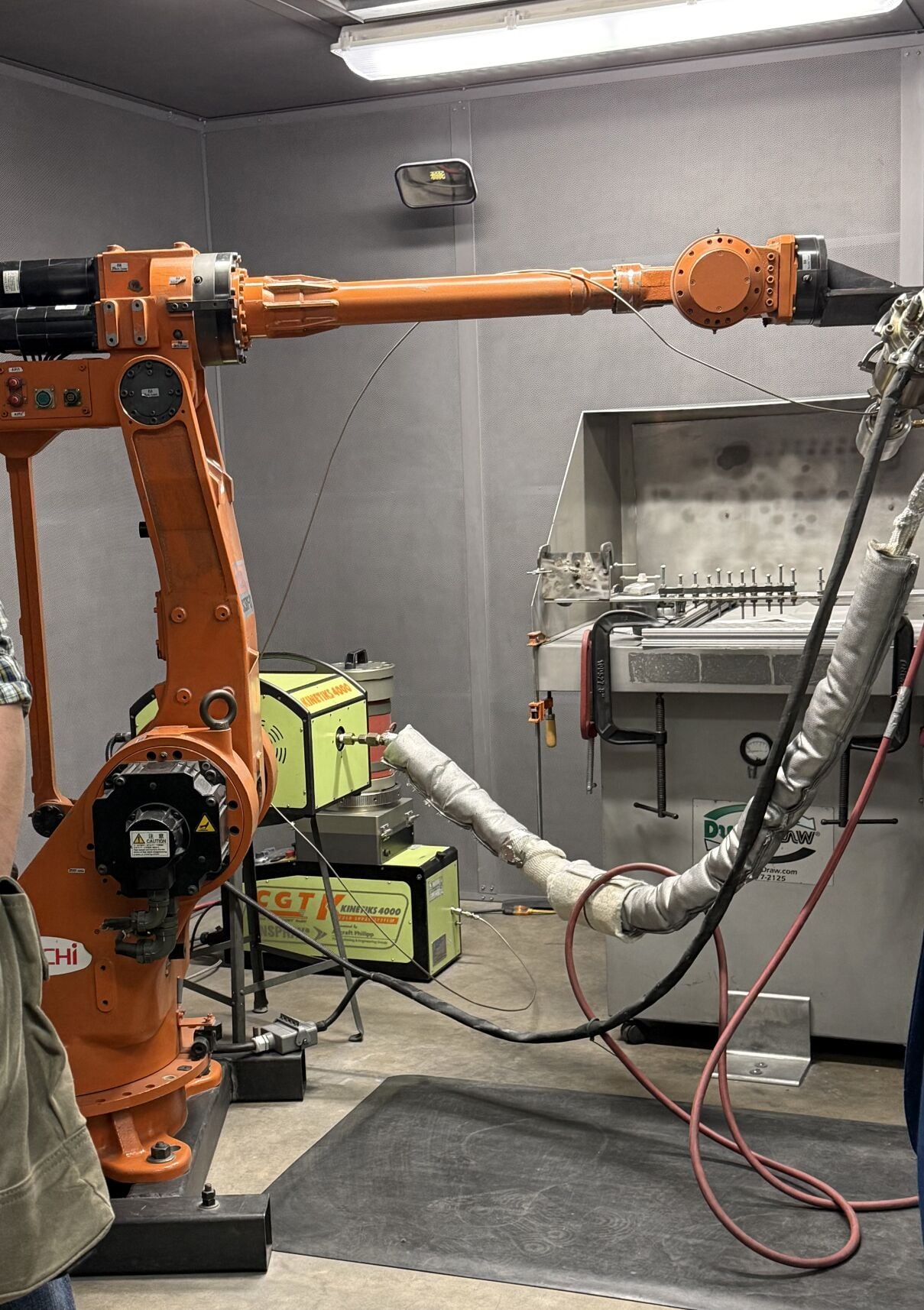
Experiments showcased during the tours included:
-
The Wisconsin Plasma Physics Laboratory’s Big Red Ball;
-
The HIDRA (Hybrid Illinois Device for Research and Applications) at University of Illinois Urbana-Champaign;
-
UW-Madison’s HSX (Helically Symmetric eXperiment);
-
The university’s MST (Madison Symmetric Torus);
-
Pegasus‑III (Pegasus Toroidal Experiment), also at UW-Madison; and
-
WHAM (Wisconsin HTS Axisymmetric Mirror), housed at the university’s Physical Sciences Lab in Stoughton.
Panels and pivotal partnerships
Following Tuesday’s tours were two keynote panels, the first discussing the opportunities and challenges of the fusion supply chain, and the second exploring how nuclear fusion could help satisfy surging energy demand in the U.S. and globally.
Moderated by journalist Tim De Chant of online technology news publisher TechCrunch, the first panel included Steffi Diem, an assistant professor at UW-Madison and the principal investigator of the university’s Pegasus-III Experiment; Kieran Furlong, co-founder and CEO of Realta Fusion and Chris Good, founding partner of Induction Partners, which invests in companies solving grid infrastructure constraints.
Panelists contended that Wisconsin manufacturers have a major opportunity to support and capitalize on the future fusion economy, but many are hesitant without the certainty of long-term demand.
Some panelists argued that to remain globally competitive, local and regional manufacturers — especially of superconducting materials — will need to scale up quickly.
The second panel was moderated by Kyle Crum, president of precision manufacturing company Infinity EDM, and featured Mark Chalmers, president and CEO of Denver-based Energy Fuels Resources Corp.; Steve Nieland, director of energy for Faith Technologies and Ross Radel, chief technology officer at Shine Technologies.
In discussion, panelists pointed to data centers as an emerging source of higher energy demand and said nuclear fusion could offer another source of renewable energy to help meet it.
They also highlighted the importance of forging and maintaining a level of public trust around fusion as a safe, reliable new energy source.
The last portion of Tuesday’s event offered attendees two separate tracks for additional discussions — Track 1-Fusion Forward and Track 2-Fusion Supply Chain — and concluded with a discussion on why companies should get involved in the fusion space, as well as strategies for building local and regional partnerships.
The first track’s panels included:
-
“Fusion Energy is Coming, but When?,” moderated by Jim Nelson of the Milwaukee Journal Sentinel and featuring Diane Demers of Xantho Technologies, Diana Grandas of the Electric Power Research Institute and Derek Sutherland of Realta Fusion’s research and development team.
-
“Building an Emerging Industry in an Increasingly Volatile Environment,” moderated by Tom Content of the Citizens Utility Board of Wisconsin and featuring Max Duckworth of MaSa Partners, Seth Hudson of UW-Stout’s Manufacturing Outreach Center, Ben Lindley of UW-Madison and Stephen Pounds of Vadar Alpha; and
-
“Opportunities for the Great Lakes Region,” moderated by Phil Vella of Start-Midwest and featuring Shayna Hetzel of WEDC, Dave Muir of Paragon D&E and Oliver Schmitz of UW-Madison.
Panels offered through the second track were:
-
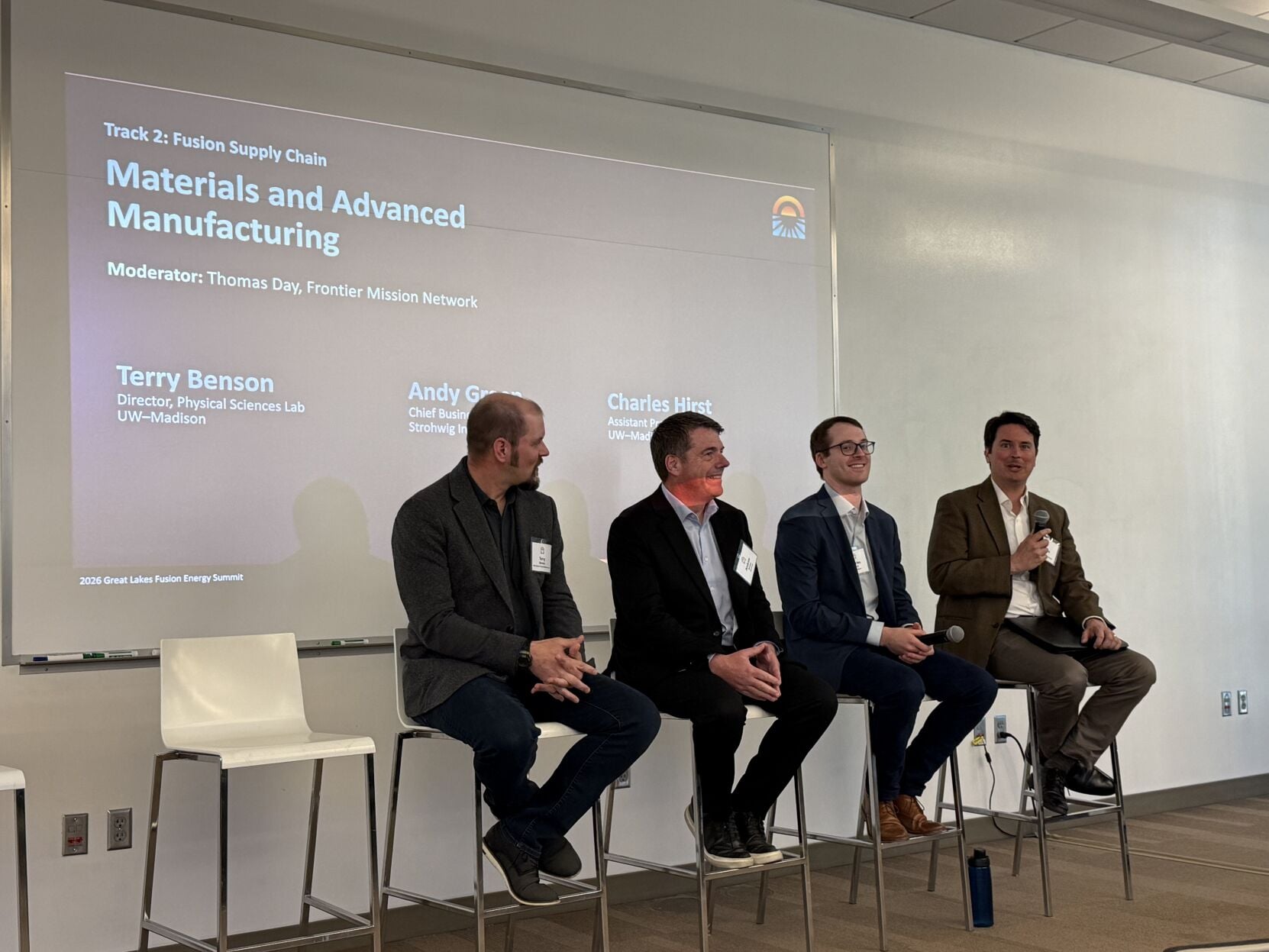
“Materials and Advanced Manufacturing,” moderated by Thomas Day of the Frontier Mission Network and featuring Terry Benson and Charles Hirst of UW-Madison and Andy Green of Strohwig Industries;
-
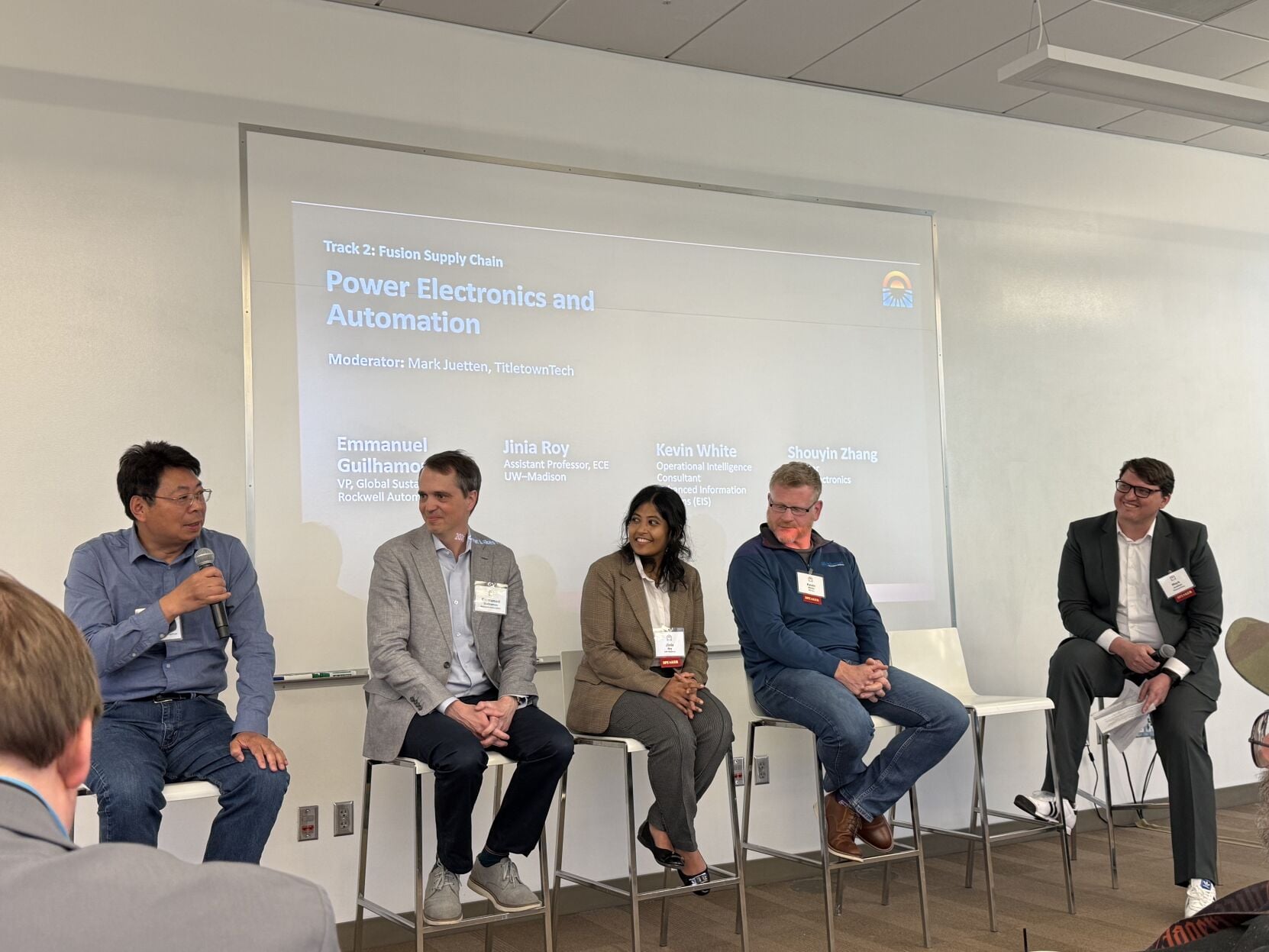
“Power Electronics and Automation,” moderated by TitletownTech’s Mark Juetten and featuring Emmanuel Guilhamon of Rockwell Automation’s global sustainability team, Jinia Roy of UW-Madison, Kevin White of Enhanced Information Systems and Shouyin Zhang of Delta Electronics; and
-
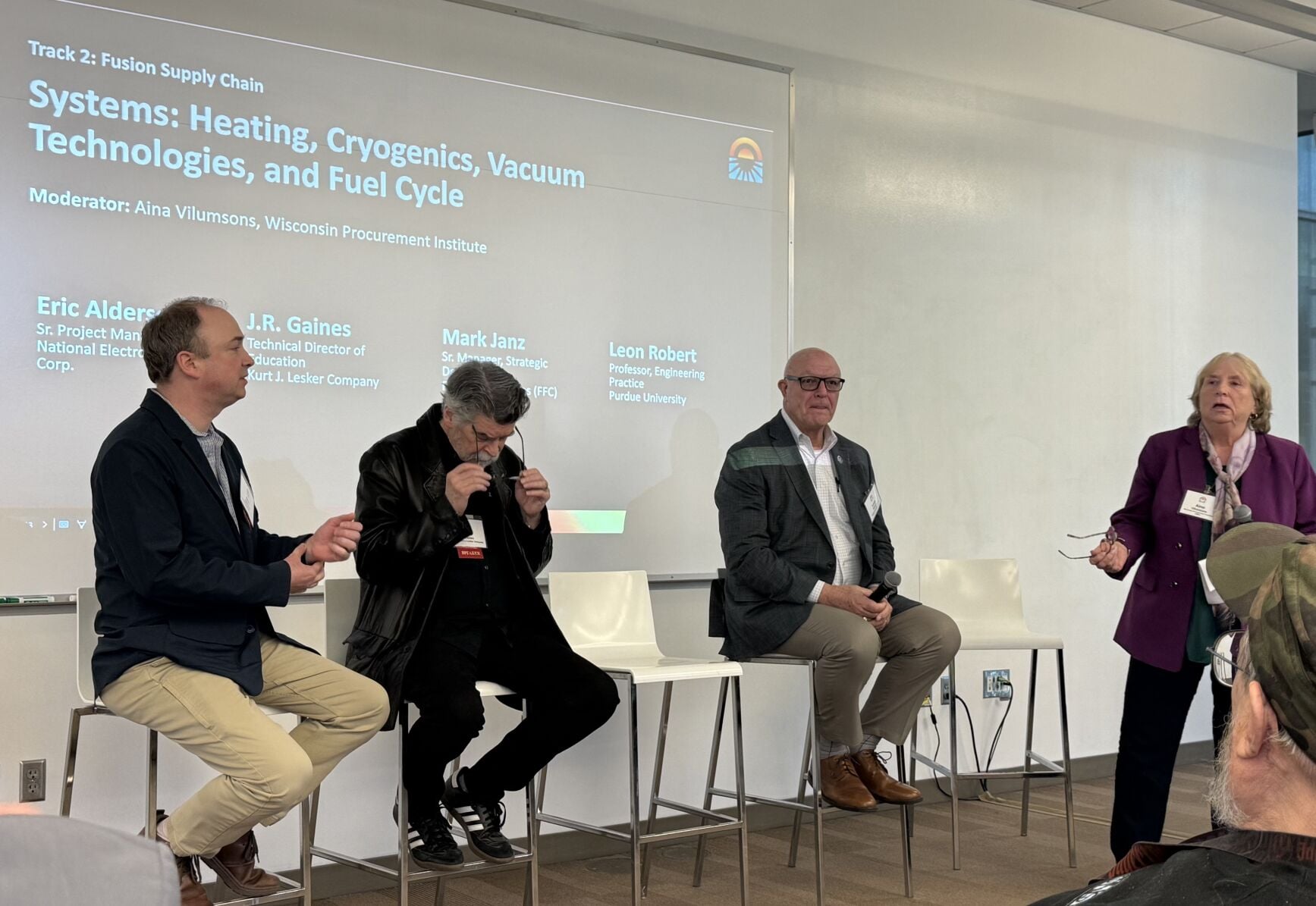
“Systems: Heating, Cryogenics, Vacuum Technologies and Fuel Cycle,” moderated by Aina Vilumsons of the Wisconsin Procurement Institute and featuring Eric Alderson of National Electrostatics Corp., J.R. Gaines of Kurt J. Lesker Co., Mark Janz of Fusion Fuel Cycles and Leon Robert of Purdue University.
Kathleen Gallagher, executive director of the 5 Lakes Institute, led a capstone chat with Greg Keenan, the senior director of WARF (the Wisconsin Alumni Research Foundation) Ventures and WARF Accelerator, and Dave Vasko, a senior fellow at the 5 Lakes Institute. Discussion focused on why and how Midwest companies should get involved with fusion.
“It’s clean energy. We see energy requirements maybe doubling or tripling in the short-term, and with fusion we see an opportunity to actually bring that to a lower cost point,” said Vasko. “But also just the opportunity for growth for companies involved in this.”
Vasko said events like Tuesday’s summits are important to draw together stakeholders in fusion and forge relationships between companies and academia.
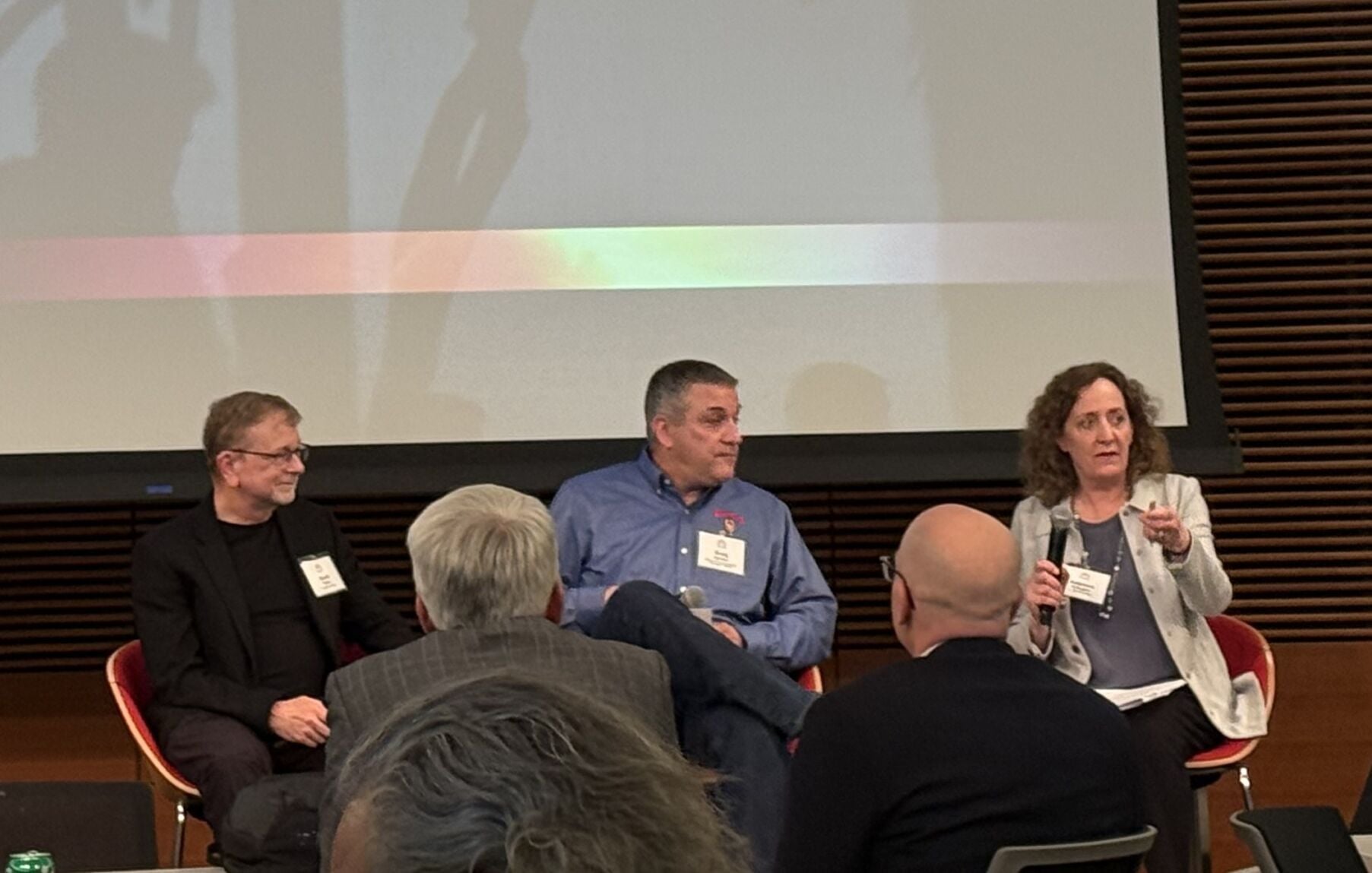
Keenan added that without companies, a successful fusion economy in Wisconsin and across the Great Lakes region won’t happen.
“Any of these technologies, whether it’s quantum, or fusion, absolutely, 100% require partnership from industry. There’s not enough talent, there’s not enough expertise to really build the systems that are required. … And the earlier, the better.”
Following Tuesday’s summit, Findorff held a Great Lakes Fusion Energy Mixer at its Madison headquarters.