

Photographs by Shane Van Boxtel, Image Studios

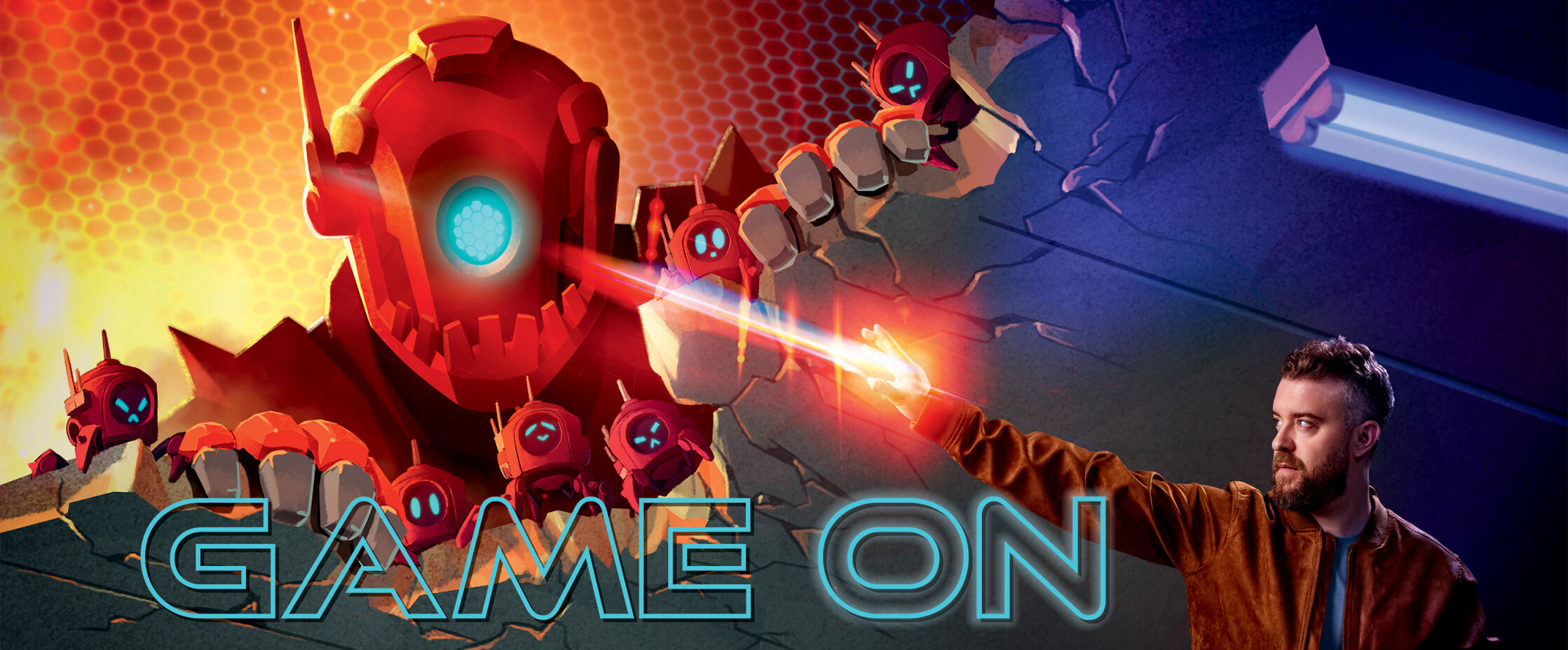
On May 12, 2023, Ben Kvalo left his high-profile job as the lead project manager of Netflix’s gaming division to bootstrap his own Green Bay-based video game publishing company focused on underrepresented regions.
With two-thirds of the U.S. gaming industry concentrated in just three states, this was a bold move fueled by Kvalo’s unrelenting belief in Wisconsin — and the broader Midwest — as an emerging tech and games hub.
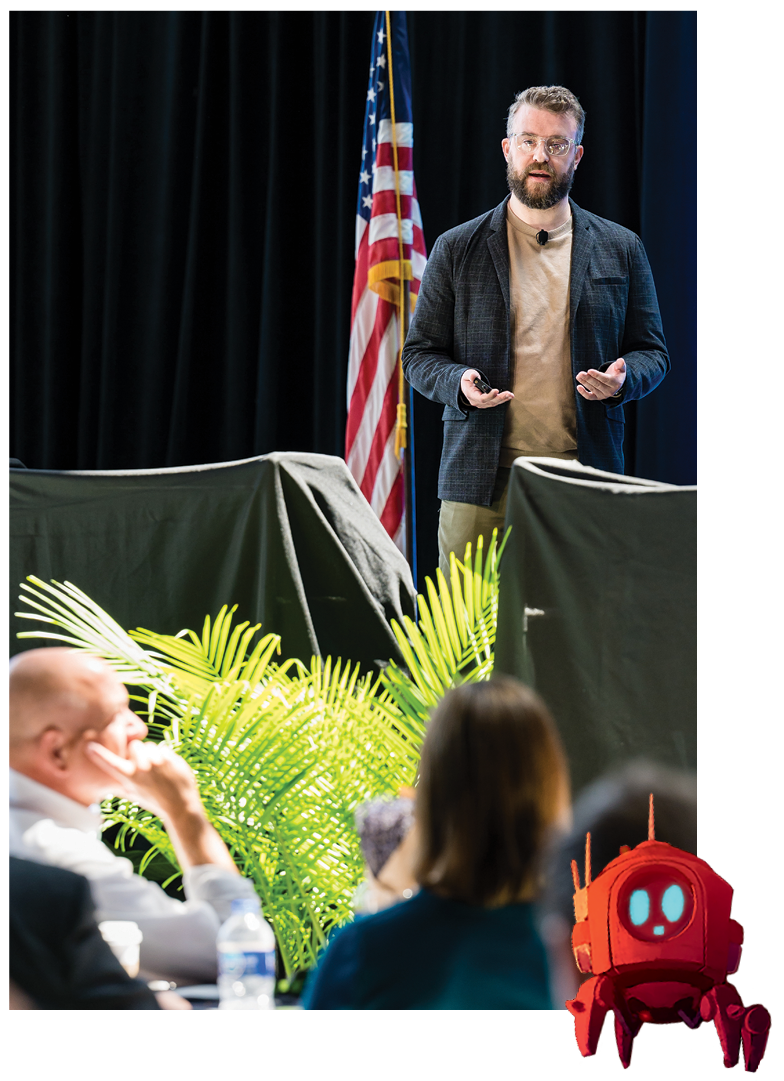
“This region is so overlooked and underserved, but it can be done here. There’s no reason it can’t,” says Kvalo, a Wisconsin native, University of Wisconsin-Green Bay alum and cheese curd enthusiast. “The next great game could come from Wisconsin, but we have to believe in it and we have to invest in it.”
Over the course of his career, Kvalo has helped build two of the world’s largest game publishers from the ground up, published more than 100 game titles and more than 50 films, and even led BlizzCon Esports, an annual gaming convention that draws upwards of 40,000 in-person attendees and around 20 million livestream viewers.
Kvalo says these types of opportunities don’t have to be limited to the coasts. Wisconsin is primed for a robust video game economy and his company, Midwest Games, plans to help build it.
“I’ve seen it in California; I’ve seen success. I’ve seen the growth,” he says. “And nothing is preventing it from happening here. In fact, I think there are some factors in play in Wisconsin and the Midwest that are going to help us have greater success — we just have to change our perception of where things are and where cool things can come from.”
“It’s a big deal for Midwest-based studios to have a publisher who is not only based in the Midwest but believes in Midwest talent.”
— Jennifer Javornik, board member, Wisconsin Games Alliance
State of the industry
Video gaming is big business. According to a report by the Entertainment Software Association, the video game industry has a $90.3 billion national economic impact. In 2022, U.S. consumers spent $56.6 billion on video games; this includes consoles, content and accessories like controllers and headsets. The vast majority of that — $47.5 billion — was spent on content.
Kelly Armstrong, vice president of economic development for the Greater Green Bay Chamber, says gamification has infiltrated many parts of everyday life, from education through apps like Duolingo and fitness through apps that reward users for exercising with badges and points.
“It’s so pervasive in our daily lives that we don’t think of it being part of the gaming industry and the economic potential that it has, especially for greater Green Bay, the surrounding region and the entire Midwest,” she says.
California, Washington and Texas currently dominate the U.S. game industry, accounting for 60% of the national economic impact.
This is problematic, Kvalo says, which is why he launched Midwest Games last August with the vision that great games can come from anywhere and that democratizing the industry is critical to its growth.
“There’s a very small amount of people in very few places making games, which is not reflective of the actual world around us,” he says. “We can better serve the world by having the world actually make these games.”
Not only will diversifying game development be good for the industry, it will also be good for underrepresented regions like the Midwest.
“I think the economic impact potential is exponential, and I feel very confident saying in the next five years that the gaming industry is going to grow significantly and continue to grow significantly,” Armstrong says.
Wisconsin is particularly poised for a game industry boom with its strong hub in Madison, which boasts the presence of five big industry players: Activision, EA, Bethesda, Gearbox Publishing and Krafton. According to the Wisconsin Economic Development Corp., there are about 70 game developers located in the state.
“There are gaming industry components in the state of Wisconsin, but they’re more well-known and focused in other areas,” Armstrong says. “Midwest Games’ intentional launch in Green Bay and their partnership with TitletownTech gives this area an opportunity to leverage that and really own the industry epicenter for the Midwest.”
But the global industry has faced challenges. Gaming saw explosive growth during the COVID-19 pandemic. As lockdowns persisted, game sales exploded and the industry saw record investment. When the pandemic lockdowns ended and game sales leveled off, companies that expanded quickly had to lay off employees or close completely. Axios reports more than 9,000 game industry workers were laid off last year.
Despite a tumultuous 2023, Kvalo says the gaming industry continues to grow and produce some of its most successful titles in decades.
“[2023] has been the biggest release year ever. The industry is doing well, but the way we work has to change,” he says. “There’s a lot of opportunity right now to look at alternate models, and one of them is a regional piece.”
Playing for keeps
Growing up in Portage, Kvalo dreamed of one day working for the Green Bay Packers. In fact, that’s what initially drew him to attend UWGB — proximity to his dream employer.
After graduating from UWGB, the business administration major landed a job in 2011 with 2K, a video game publisher near San Francisco. During the nearly six years he spent with the company, Kvalo worked on AAA, AA, and mobile game titles, facilitated international market operations and led global event strategy, managing Gamescom, Paris Games Week, Tokyo Games Show and other international events. He lived in London, Paris, Madrid, Munich, Amsterdam and Singapore to understand global game publishing, traveling to more than 20 countries.
Kvalo was recruited in 2017 by Blizzard Entertainment, where he spent a year building and directing a product management team before landing in Netflix’s fledgling films division.
“[Film] was brand new and they were looking for somebody who can come into the marketing organization and help build out the operation,” Kvalo says. “I ended up being the first hire into the marketing operations for film — [developing] how we operate, scale and build out the infrastructure for film at Netflix.”
Over three years, Kvalo managed global campaigns for more than 50 films, including “Bird Box,” “Extraction” and “Army of the Dead.”
When Netflix launched its games division in 2021, Kvalo was one of a few employees with experience in the game industry. So he made the transition and helped lead the rollout of Netflix’s games platform.
“We’re trying to help build an ecosystem, and publishing is a big piece of that.”
— Ben Kvalo, founder & CEO, Midwest Games
“I’m a builder. Every place I’ve gone, it’s been a building process. I got to a point at Netflix where the infrastructure was there, so I was starting to think what could be next,” he says. “Ultimately, I wanted to take more ownership in building my own company.”
Kvalo knew launching a regionally-focused video games publisher would be his next endeavor.
As a publisher, Midwest Games fills a gap in the New North ecosystem.
Video game publishers, much like book publishers, don’t create content themselves. Rather, they often fund game development, create marketing campaigns, manage promotions, handle physical and digital distribution, and oversee business strategies in support of those developing the games.
“We’re trying to help build an ecosystem, and publishing is a big piece of that,” Kvalo says. “No region in the world has succeeded without a publisher in that region; it’s just such an important lifeblood to the overall ecosystem.”
Jennifer Javornik, chief partnerships officer at Filament Games in Madison and board member of the Wisconsin Games Alliance, has pitched and received offers from publishers, but her geography is often viewed as an obstacle to overcome.
“Publishers are, in a way, placing bets on studios and games. There’s a known formula, and part of that formula is where you’re based,” she says. “Since we don’t conform to that formula, I have noticed that it’s the first hurdle in the conversation. But if you’re from the West Coast it’s not even part of the conversation. So it’s a big deal for Midwest-based studios to have a publisher who is not only based in the Midwest but believes in Midwest talent.”
Let the games begin
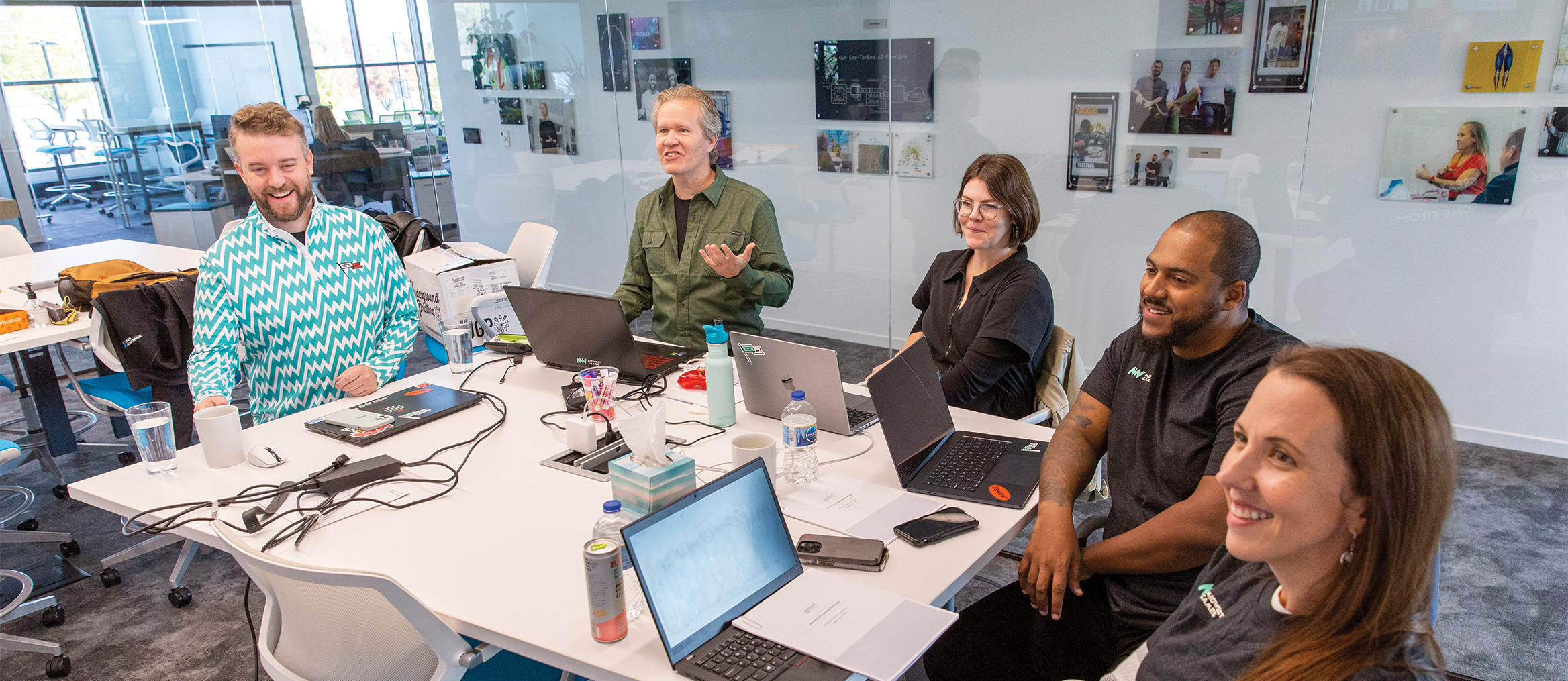
In a roundabout way, Kvalo’s dream of working with the Packers has come true. Midwest Games received investment from TitletownTech, a venture capital firm formed out of a partnership between the Packers and Microsoft. Kvalo works in residence at the TitletownTech offices near Lambeau Field.
TitletownTech led Midwest Games’ more than $3 million funding round, which concluded in September. Kvalo says most of the money raised will be used to fund game development and some will be used to expand the Midwest Games team.
TitletownTech Partner Cordero Barkley says surpassing the fundraising goal reveals the industry’s local potential.
“In this current environment, it’s hard to raise any money. So it’s a significant signal of Ben’s very strong team and the space they are approaching,” Barkley says. “He got titles earlier because of that capital. He’s been able to execute on titles quicker than most people thought.”
Challenging the conventional geographic limitations of the gaming industry not only diversifies its talent pool but also aligns with TitletownTech’s talent philosophy, Barkley says.
“Through some previous investments, [TitletownTech] had learned there are a ton of developers here, but a lot of that talent goes to the coasts because there wasn’t someone here to push the titles to a broader segment and potential consumers,” he says. “Ben’s focus is on the Midwest and underserved areas, and [on] building a robust pipeline of talent. We believe talent can be found anywhere, and Ben and his team are proving that.”
The $3 million raised included participation from Tundra Angels, Brightstar Wisconsin, Wisconsin Investment Partners, gaming industry veteran Erin Ashley Simon, and Larry Treankler — owner and CEO of Bay Tek Entertainment in Pulaski.
Bay Tek’s parent brand, The Village Companies, is a founding partner with TitletownTech and has invested in several of its portfolio companies. But Treankler says investing in Midwest Games provides Bay Tek with new opportunities for collaboration.
Much like video game publishers develop games for mobile platforms, consoles and PCs, Treankler says Bay Tek develops and manufactures games for arcades and other locations.
“But only four to six concepts a year make it to a physical game for the arcade environment,” he says. “Right now, when we say goodbye to a good idea it’s truly goodbye. That’s a heartbreak when we don’t turn it into a physical arcade game.”
Partnering with Midwest Games, Treankler says, could potentially turn that heartbreak into hope.
“Many of those early life [game concepts] we create could potentially port over to Ben’s world,” he says. “Ben can do a reverse pitch and pitch them to the developer to take it to the finish line. We’ve never had that pathway before.”
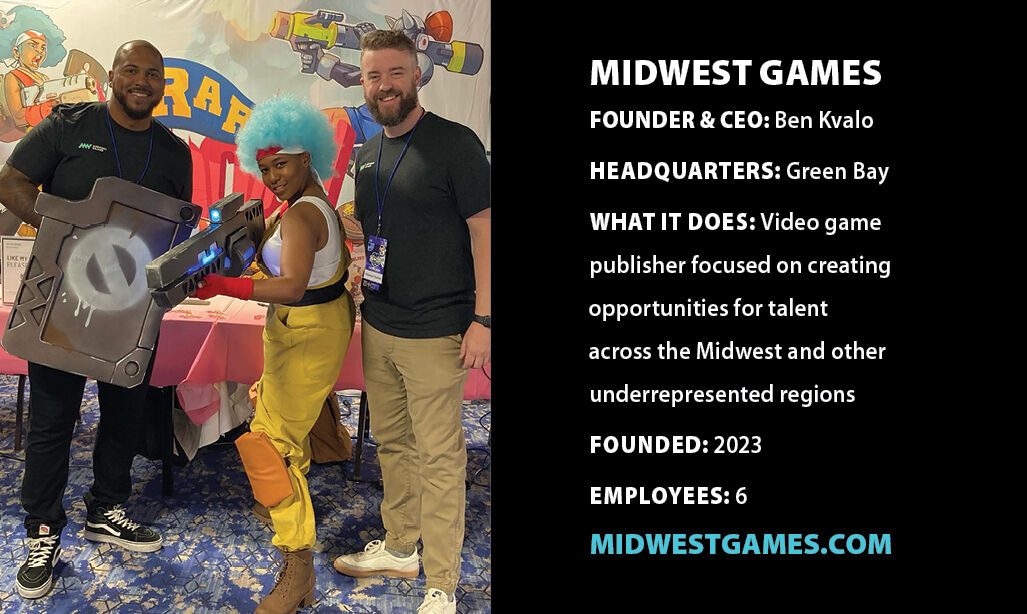
The reverse is also true. Bay Tek can offer Midwest Games opportunities in new markets.
“Most of what Midwest Games has been focused on is console or PC-based in-home games, but there’s an opportunity for us to bring that to the location-based, out-of-home entertainment space,” says Rick Hallet, director of R&D for The Village Companies.
Hallet says Bay Tek is also working with Midwest Games on promotional items, such as arcade-style game cabinets, for their title launch events.
“For a console game developer to have a physical cabinet for a product launch is a pretty neat thing,” he says. “It may open opportunities to get those titles not just on an Xbox, but out into a location-based entertainment space.”
Beyond their partnership, Hallet says the legitimacy Midwest Games can offer indie game developers is significant.
“Ben and his team have launched many successful large titles for AAA game companies,” Hallet says. “For them to bring that to smaller, independent studios and give them the time of day is really beneficial.”
This fall Midwest Games announced its first signed title RA RA BOOM, developed by Cincinnati-based Gylee Games. The four-player beat ’em up stars four ninja cheerleaders who are saving the world from AI robots gone rogue, and is set to release in late 2024.
With three additional titles signed, to be announced early 2024, and more than a dozen titles currently under review, Midwest Games is poised to make a significant impact in the gaming industry, proving its dedication to bringing new and diverse gaming experiences to the forefront. This momentum is not just about expanding the Midwest Games portfolio; it’s about shaping the future of gaming and championing talent that might otherwise remain undiscovered.
“I’ll continue to advocate no matter what,” Kvalo says, “because it’s bigger than just games.”