


Northeast Wisconsin companies that have been focused on improving sustainability through their environmental management systems sometimes hit a wall when it comes to new ideas for saving energy or reducing waste. But tools like the Wisconsin Department of Natural Resources’ Green Tier program can help them develop new sustainability innovations and set new goals.
Company leaders say continuous sustainability improvement both enhances operational efficiency and helps companies attract customers and supply chain partners, who are increasingly demanding more sustainable and green products.
“One of the things that we’re seeing now is that there’s pressure from supply chains, from different industries, from consumers and customers, too,” says Weston Wegener, business support coordinator for the Wisconsin DNR. “They want the businesses that they’re partnering with or that they’re buying from to be engaging in sustainable practices.”
A 2024 Manpower report shows that by 2030 “the green transition” is expected to create 30 million new jobs globally, and 70% of employers are currently recruiting or planning to recruit green talent.
Programs like Green Tier offer companies both resources and a valuable recognition that helps companies attract both customers and skilled workers, Wegener says.
Other benefits include having an individual DNR liaison like Wegener who can help company leaders identify new sustainability goals, answer questions about permits, “and really individualize the customer service for that company,” Wegener says.
Green Tier is built around a company’s environmental management system (EMS). Participants in program tiers 1 and 2 need to have an ISO 14001 certified EMS (or functional equivalent) to manage environmental impacts.
“It can really open doors for those that are looking to do trade with businesses in certain industries like the automotive industry or the electronics industry, or even if they’re looking to do trade with European organizations,” Wegener says.
Green Tier is set up to be individualized. “We don’t tell them what their goals have to be, so it’s an opportunity for the high achievers that really want to make progress on what their goals are,” Wegener says.
Currently the program has 40 Tier 1 participants, eight Tier 2 and seven in its charter program, which focuses on bringing different types of industries and municipalities together around a shared environmental goal.
Other sustainability programs offer opportunities for businesses, “whether they’re looking for a certification type of program, or recognition or guidance or just networking, there’s a lot of different options that they have available to them,” Wegener says.
One of those programs is Green Marine, which is similar to Green Tier but focuses on the maritime industry. Another is the Wisconsin Sustainable Business Council’s Green Masters program, which offers credentialing for environmental, social and governance (ESG) actions.
Winsert
Winsert, which makes specialty alloys for various industries, was an early adopter of Green Tier, joining in 2007 and having been certified ISO 14001 several years prior, says Jordyn Bretl, EH&S and training coordinator for the Marinette-based company.

Winsert sets environmental goals at the beginning of each year, “and we tailor them to what’s important to our community, our employees, and make sure that we have a goal in mind and that it’s attainable for us, and then we work on those goals throughout the year,” Bretl says.
Among its actions, Winsert recently implemented a coolant smart skim recycling system, which has reduced waste by 50%. Additionally, “there’s less transportation needed to get rid of the waste, and we can use it for a longer amount of time,” Bretl says.
Winsert also is considering implementation of facility-wide LED lighting to save more energy. The company captured waste heat to run under its sidewalks, eliminating the need to shovel or add salt to walkways. And its recent focus areas include beneficial reuse management projects, which divert foundry waste into products like asphalt.
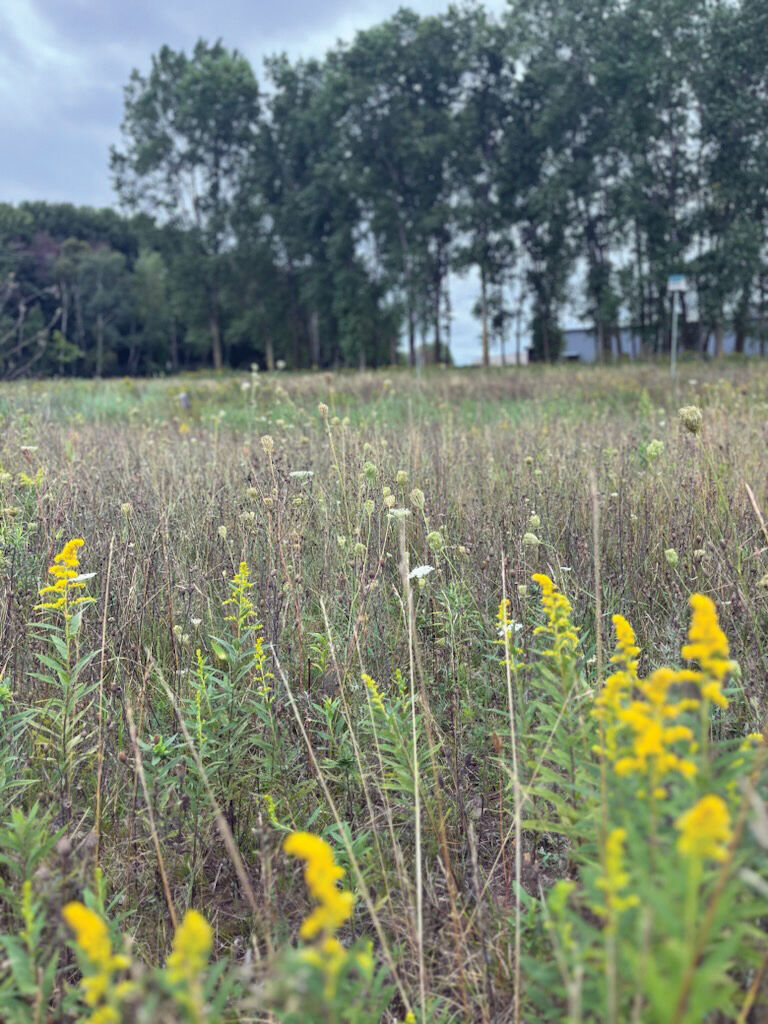
Winsert also has worked on its property to improve native habitat, including creating a wildlife field to improve biodiversity and make a feature for employees and customers to enjoy, Bretl says. The field is located on the west side of the main facility and the R&D building. The company also hosts Earth Week activities and recycling days as well as other efforts.
“We’re big on environmental awareness with our employees, because if your employees care about it, it’s going to be a success,” Bretl says.
Waupaca Foundry
Waupaca Foundry joined the Green Tier program’s Tier 1 and was the first company to sign on to Green Tier’s new Climate Action League.

Melting scrap metal into new products for customers can take heat up to 2,700 degrees Fahrenheit, so “we’re a pretty big consumer of energy just to handle the physics of what we do,” says Bryant Esch, corporate sustainability manager. Therefore, Esch says, one of Waupaca Foundry’s main focus areas has been to set aggressive goals for its energy efficiency: “All the while when we were doing our energy use reduction, we were reducing our carbon footprint. Now, we’re specifically not just looking at energy, but at carbon itself, how to get at it directly.”
Carbon dioxide emissions, which come from fossil fuels, account for the majority of greenhouse gases that heat the planet and contribute to climate change.
Waupaca Foundry was the first company to join Green Tier’s new Charter for Climate Action, launched in 2023 to build collaborative efforts between organizations, municipalities and other stakeholders to reduce greenhouse gases. The charter also looks at ways to help local communities to be resilient in the face of the impacts of climate change.
All of these efforts help the foundry keep up with the requirements of customers who are strongly into efforts to be sustainable.
“How do we give them parts that are ‘green’ parts, where they’re being manufactured to the best of our ability with the lowest burden on the environment?” Esch says. “And we’re seeing a lot of growing interest on that. It’s been there, but it’s getting really intense now over the last, I would say, five or six years.”
That interest has been fueled by those customers’ own customers, who are more often seeking products that carry a low energy burden or are considered sustainable.
The foundry took a deep dive into energy efficiency starting in 2004, when it replaced light fixtures with LEDs and replaced motors with more efficient models. Waupaca Foundry joined Green Tier in 2014 to help it reach the next level in its targets for energy and waste reduction, Esch says.
“You start off and you find things that are low-hanging fruit, but once you’ve been in it for years, it’s hard to find new things,” Esch says. “They get harder and harder, and more and more expensive as you go along.”
Among its efforts has been reducing water use by more than 80% by installing closed-loop systems, and the foundry has had beneficial reuse of spent foundry sands for more than 20 years, with “about 80 to 82% of our foundry byproducts actually getting recycled offsite somewhere,” Esch says. The foundry also achieved the ISO 50001 international standard for energy.
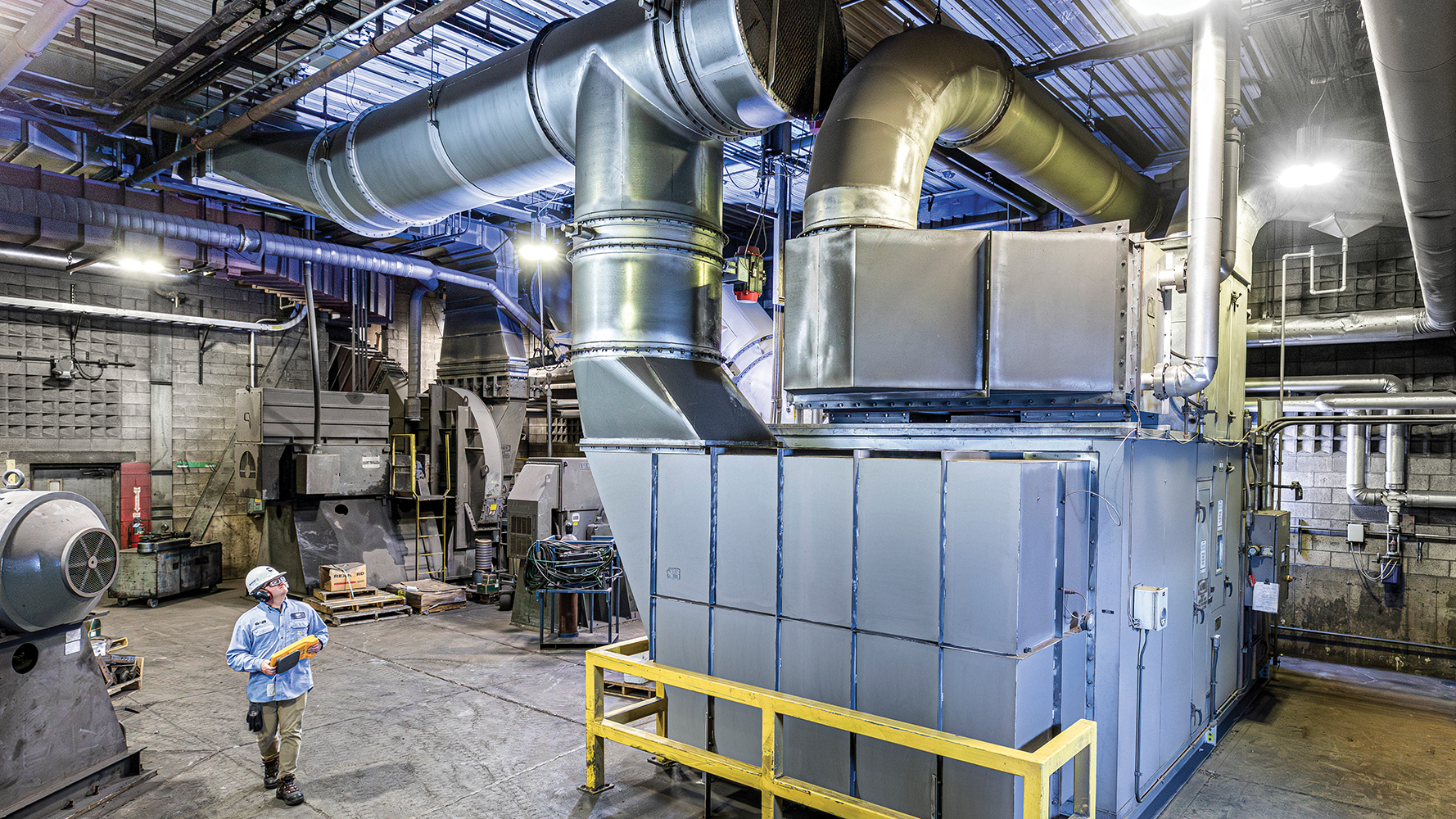
Another innovative change was adding a dehumidification system to reduce energy in drying the air in the foundry’s cupola, where iron is melted.
It all takes a careful engineering effort to determine ultimately what process will be best for the environment and what will save money in the end.
“Many times where you come out ahead environmentally, you also come out ahead on the dollars and cents of it,” Esch says. “And if you work for an organization where you want to have a green brand, it’s in your interest to go after these things and basically be a leader in that field.”
On the web

