
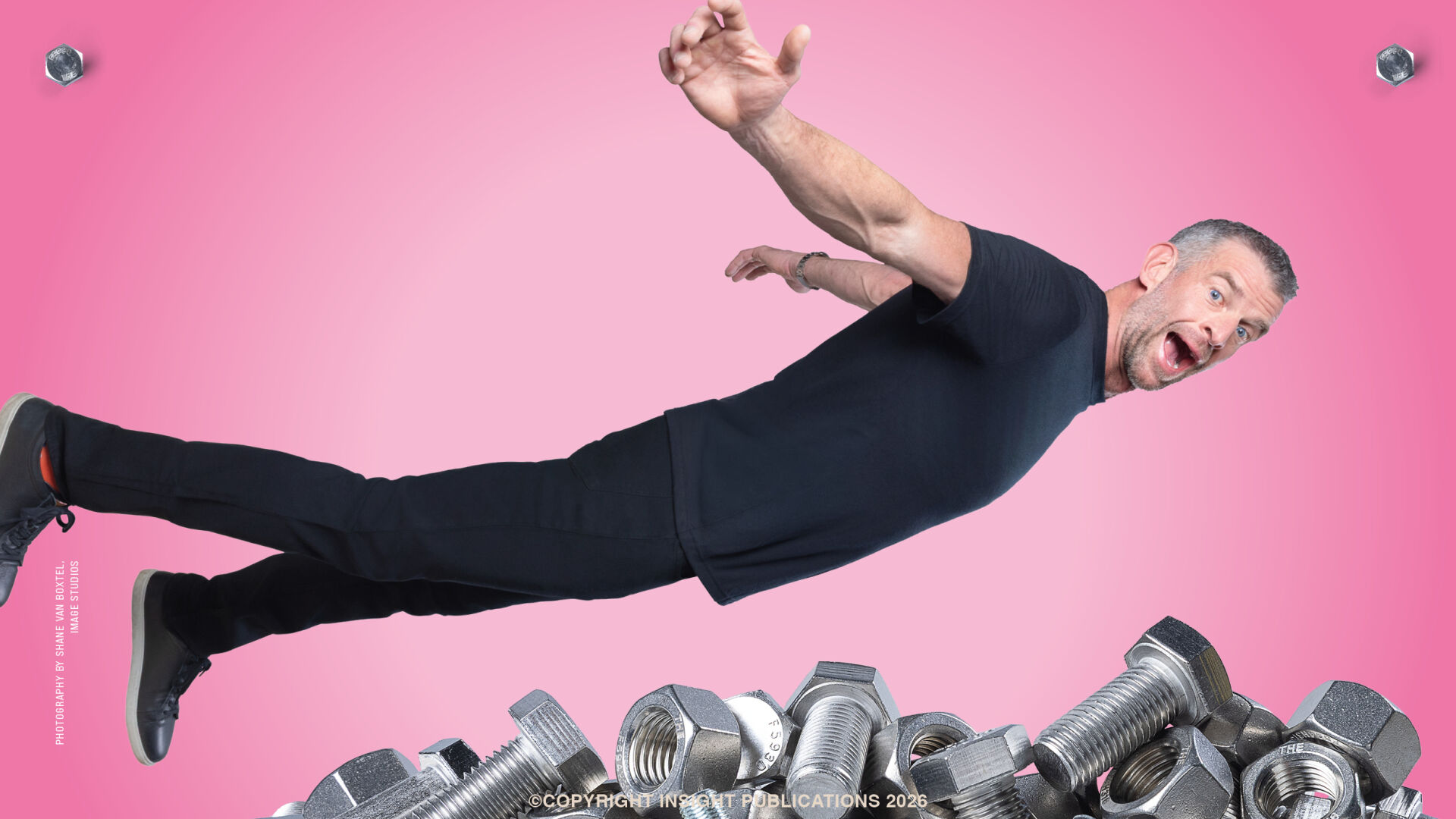

Nuts and bolts: They’re so basic they mean basic. So when you sell nuts and bolts — arguably the simplest things in the world — there’s no reason to take yourself too seriously.
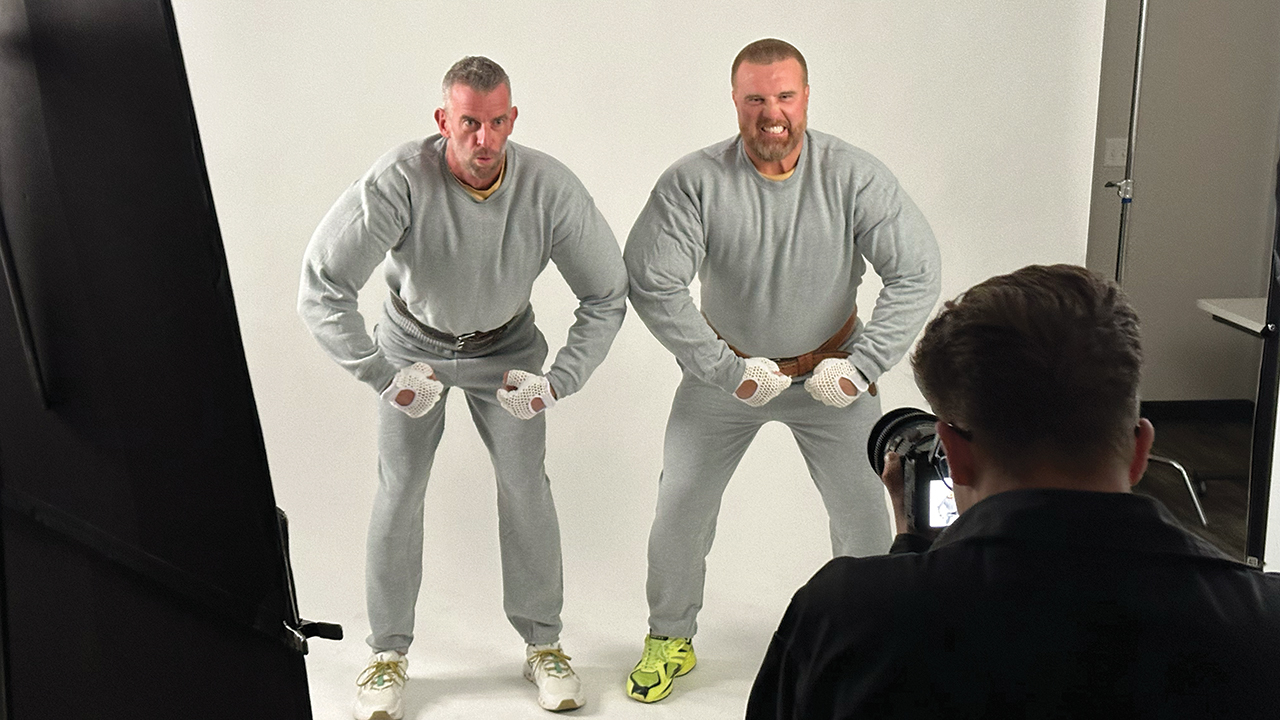
At least that’s the attitude of Packer Fastener CEO Terry Albrecht, who opened the business in 1998 with a cheeky sign that read, “We’ve got the biggest nuts in town.” That’s the same Terry Albrecht who dressed up as Hans from SNL’s “Hans and Franz” for a novelty wall calendar, and the same “Seinfeld” fan who has been dropping little boxes of Junior Mints into every order for more than 25 years.
But for all the little widgets and thingamajigs that come Albrecht’s way, he will never be anything but serious about company culture.
In 2015 the Packer Fastener team, then numbering just 25, set out to create what Albrecht termed an “intentional culture.” The result was a list of 14 values that make up “The Packer Fastener Swagger.”
Act with integrity. Practice generosity. Keep it fun. Challenge and change. Think like a customer and act like an owner. Become the expert. Work hard. We are a business family. Live healthy, live safe. Create leaders. Embrace opportunity. Make quality personal. Take what’s yours. Deliver results.
“We’ve put that above everything for the last 11 years,” Albrecht says. “All of a sudden we became an employer of choice. And then I learned, if we can win the war on talent we can win the war on business. My philosophy is quite simple: We take care of our team. Our team takes care of our customers. Our customers take care of our business. And we just put that formula in front of everything else.”

‘It’s our culture, and it’s everything.’
Sick of being just a number in the corporate world, Jason Olbrantz, who today serves as Packer Fastener’s senior contractor sales manager, interviewed 14 years ago in a dingy conference room for a small-business job where he’d make less money and have fewer perks. But as he shook Albrecht’s hand — a handshake so firm it re-injured the arm Olbrantz was too bashful to admit was actually broken — he knew he was standing at the bottom of a ladder he actually wanted to climb. He saw Albrecht’s vision and his talent for articulating it.
“It was like, ‘we’re gonna go here, here and here,’” Olbrantz remembers, “‘and eventually we’re gonna go here.’”
Seeing that growth vision play out as prescribed has kept Olbrantz happily employed at Packer, he says, but even more meaningful has been the company’s incredible culture.
“It’s a buzzword in a lot of places, but here it’s real,” Olbrantz says, gesturing to the wall on which Packer’s swagger principles are displayed. “When I bring any customer here, any supplier here, this is where I start. This is what gets you on the bus, and this is what gets you off the bus — our swagger. We live it, breathe it. It’s our culture, and it’s everything.”
Growing talent in-house, allowing employees to work their way up and creating roles that allow employees to do their best work are all part of Packer’s “Talent Playbook.” Albrecht is certified in behavioral sciences and says he always hires for cultural fit above everything else. Years ago, he did away with formal performance reviews because he says communication should instead be open and ongoing. Seven of Packer Fastener’s nine senior leaders today “started in the warehouse at 12 bucks an hour,” Albrecht says.
Trent Mellenberger spent almost five years in that warehouse — and honestly, he says, he loved it there. But leaders like Albrecht and Packer Fastener President Jason Ledvina, who is also a longtime family friend, pushed him to do more.
“It was a lot of pushes from the leadership that elevated me,” says Mellenberger, who today serves as sales operations manager. “Packer Fastener made me a more ambitious and motivated person. I think the inherent culture … of opportunity is what differentiates us from the others.”
There’s room for a wide variety of people at Packer, as long as they have the swagger.
“Some people don’t understand that they have gifts, and they always try to be like somebody else. But don’t be like somebody else,” Albrecht says. “Be the best version of you. We have the opportunity here where we can leverage those gifts for you to be successful in the organization, and that’s really powerful.”
The wins add up
Albrecht’s first job was working in a hardware store in his hometown of Kewaunee, which is also where he met and bartended with fellow Kewaunee native Ledvina.
“I had an aspiration of working there the rest of my life,” Albrecht says of the hardware store. “Second best job I ever had.”
But his parents made him go to college; Albrecht chose a two-year program at NWTC because it would allow him to “get back to the hardware store faster.” But that was the mid-1990s, when Home Depot, Menards and Lowe’s were running small-town hardware stores out of business. So by the time Albrecht was ready to go back to the store, his options had changed. He took a sales job with industry giant Fastenal, but like so many of the people he would go on to one day hire at Packer found himself quickly disenchanted with corporate America.
In 1998 he and some Fastenal coworkers, one of whom was a former Packers middle linebacker, dreamed up a smaller rival firm and “never looked back.”
The company started in 1,600 square feet on South Broadway and initially offered about 30 SKUs, Albrecht estimates. He was just 23 years old when he signed the lease, and when he wrote the first check to his landlord he realized he didn’t even know how to write a check for more than a thousand dollars.
“I was like, what am I getting myself into?” Albrecht recalls. “We were a scrappy little startup. I guess that still exists today, that mentality of ‘hey, we’re the underdog.’”
Over the course of more than three decades, Albrecht describes Packer’s growth as “hockey stick-like,” and in the last five years the handle has been shooting to the moon.
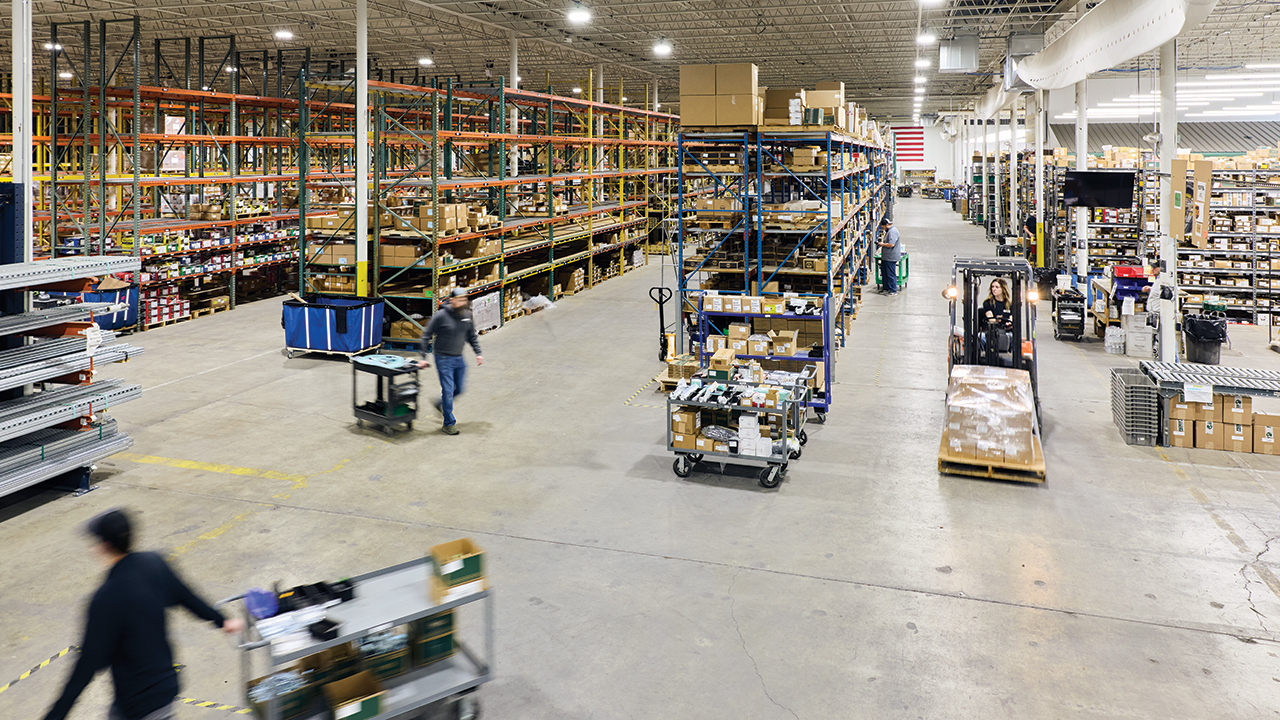
In 2021, it became obvious the company was outgrowing its space. Even though he admits it caused him to “lose all negotiating power,” Albrecht says, he began knocking on the door of every building in Green Bay’s Ashland corridor that was larger than 80,000 square feet. He eventually found a fit sharing space with Verhalen, Inc., and then a year ago when Verhalen built its new facility Packer took over the expansive yet humble complex on Pilgrim Way.
“We’ve been blessed with some recent growth, and we have space,” Albrecht says, adding that Packer is currently in the process of transitioning from 40,000 to 100,000 square feet of warehouse. “Now we’re starting to import more containers. Global procurement is becoming a larger part of our business … largely tied to the data center and renewable energy [booms]. It’s just on fire right now.”
There’s a number to “on fire:” Albrecht says Packer Fastener is currently experiencing year-over-year growth north of 90%. It’s the result of years of hustle and, well, swagger.
“Then you start to add up those wins every day that turn into every week that turn into every year,” Albrecht says. “And you wake up 28 years later, and you’ve got six distribution centers and 30,000 SKUs. It’s a long game.”

Toast-worthy growth
It was around 2005 that Packer Fastener experienced the first record-breaking month that inspired the popping of bottles.
“We didn’t have much money, so it was like ‘go buy a $5 bottle of champagne from the corner liquor store,’” Albrecht recalls, nudging a collection of Sharpie-labeled souvenir corks around a plastic container as he recalls the story. “And then the next month, we broke another record. It was like, ‘Hey, who’s getting the champagne?’ Right? When we went three in a row, that’s when I said, ‘Hey, does anybody even like champagne?’”
Packer Fastener’s employees had to admit: They preferred The Champagne of Beers.
Packer would go on to experience so many record-setting months that it eventually replaced the monthly beer run with a dedicated Miller High Life refrigerator. Now the collection of celebratory corks is intermingled with labeled bottle caps and the celebration isn’t just for sales milestones, but also Friday afternoon happy hours.
“There’s no other place I know of where you have people [at work] til 6 o’clock just hanging out … talking, chilling and being with each other,” Olbrantz says of his work environment. “There are so many memories.”
Packer’s renovated office includes a wall adorned with photos of “swagger” icons like Crocodile Hunter Steve Irwin, action star Chuck Norris and tennis great Serena Williams. The headquarters is also home to a full gym, a golf simulator and a batting cage used by employees and their families seven days a week.
And while the Green Bay headquarters is and will always be Packer’s flagship hub, it has grown in the last five years to include hubs and spokes across Wisconsin, as well as in eight other states.
Much of Packer’s growth is attributable to demand from loyal customers, who have asked the company to set up shop in areas where they are working on large projects, particularly data centers. Ledvina points to the company’s 2024 opening in Kansas City as a key turning point. Packer first entered that market after a Madison-based client picked up a 4 million-square-foot project there, and the relationships and reputation have grown since. Today, Packer Fastener can also be found in Minnesota, Illinois, Ohio, Georgia, Mississippi, Kansas and Iowa. An Indiana location came online last month. Texas, Utah and Nebraska locations are in the works.
“So just over the last three years, we’ve gone from being a Midwest company to a nationwide provider,” Albrecht says. “We will have almost full geographic coverage between the mountain ranges by the end of 2026.”
Until 2024, Ledvina says, Packer Fastener’s clients were about half in construction and half in manufacturing; now, because of the data center boom, the mix is about 75% construction and 25% manufacturing — but customer relationships remain at the heart of Packer’s success.
Ledvina describes Packer’s relationship with customers as one of “overserving:” “Are we making somebody’s day better? Are we making somebody’s day easier? What solutions do we have?”
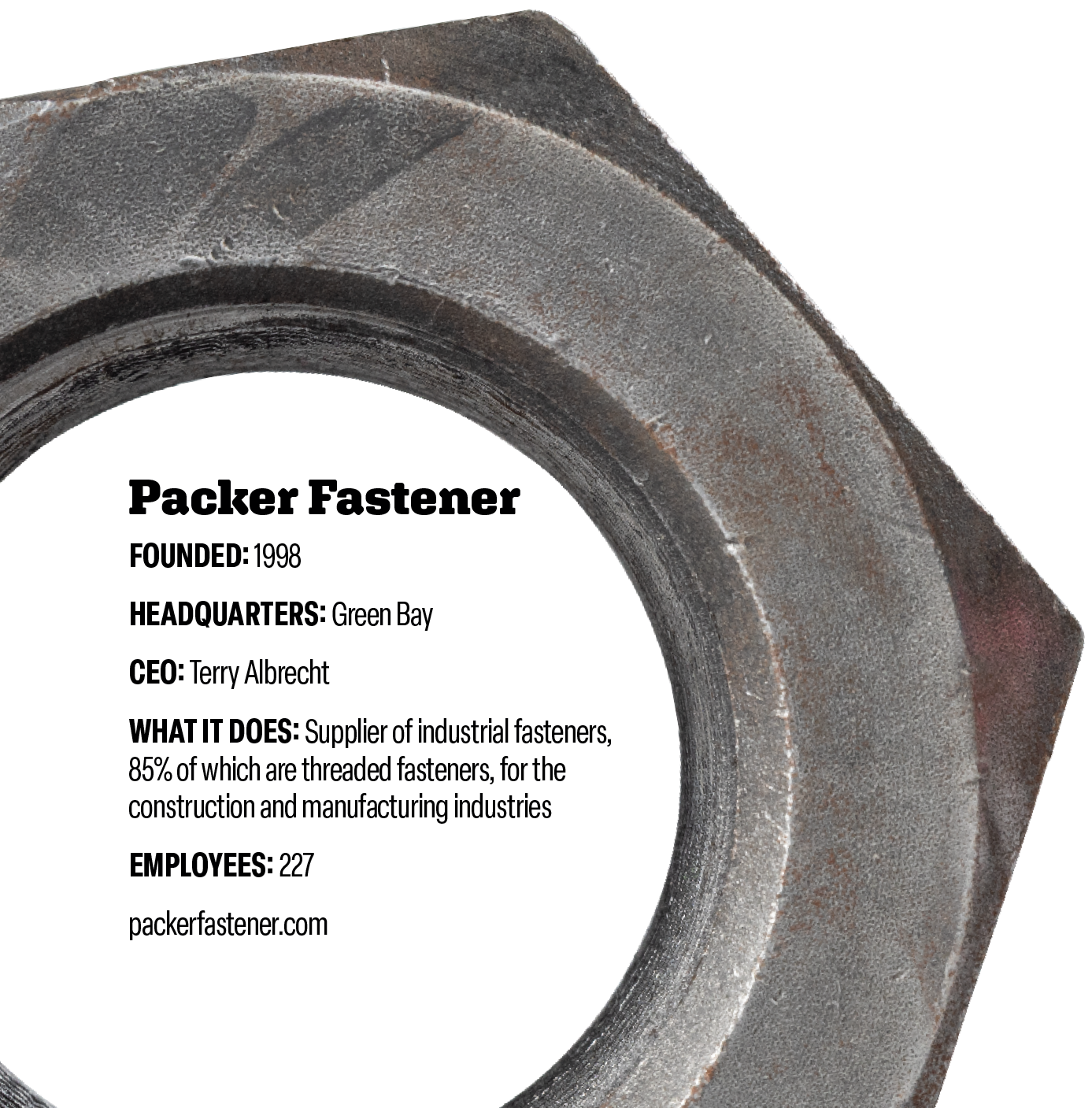
Joe Hruska, director of procurement for Robinson, Inc. — the company that also happens to be responsible for creating “The World’s Largest Hex Nut,” which is located outside of Packer HQ and is a destination in its own right — says Packer Fastener is among the most impressive suppliers with which he’s worked.
“When you’ve been around purchasing as long as I have you can kind of read when a supplier is just saying things to make you feel better with no intention of doing it,” says Hruska, who spent decades in supply chain roles with companies like Kohler, Korber and Barry-Wehmiller. “That’s not Packer. There may be companies with more buying power, but no one else has the spirit and the willingness to move mountains like Packer.”
Setting new standards
Rapid growth can sometimes come at a price, but Albrecht says he’s “learned over the last 11 years [that] you don’t have to sacrifice culture for growth. We’re growing at 90% year over year, and nobody’s working more than 45 hours a week.”
One of the ways Packer has distinguished itself as an employer of choice is through its wellness program, which involves an extensive partnership with Suamico-based Paramount Performance.
Paramount owner Bryan Schwebke says it only took him about 10 seconds on the Packer Fastener website to know it was a company he wanted to work with. Once Schwebke and Albrecht connected, everything clicked. Albrecht had known he wanted to create the best possible employee wellness program — “something other than counting steps and eating salads,” and Schwebke’s desire to train “industrial athletes” resonated. Now, Albrecht says, “we’re working together to come up with an out-of-the-box solution to corporate wellness.”
Through the partnership with Paramount, Packer Fastener provides every industrial athlete access to a coach — who serves as both a personal trainer and physical therapist — offering services, classes and sessions on site.
“He’s challenging other companies [to set] a new standard: This is what health care looks like. This is what benefits look like. This is how we take care of our people,” Schwebke says. “It’s cool to be part of that.”
Technology is another area where Packer Fastener is pushing ahead of the pack. The company recently worked with the Microsoft Co-Innovation Lab to build proprietary AI solutions, including a new quoting and ordering system that utilizes AI agents to cross-reference customer communications with Packer’s ERP and produce part numbers from even the vaguest of descriptions. The company’s CTO, Bill Feck, is currently working to further leverage the technology for applications like receiving.
In fact, Ledvina adds, Packer is currently pursuing 35 AI initiatives across six different departments. And because the company’s average employee age is only 34, it’s an excellent proving ground for technological innovation with eager adopters.
“It enriches so many people that are doing potentially a mundane task,” Ledvina says. “As long as it’s not replacing your job, this is going to put you on more meaningful stuff.”
Albrecht says it’s fun to reflect on how far Packer’s technology has come, from faxing orders and keeping inventory on canary legal pads to its cutting-edge AI adoption and explosive growth today.
“Our goal,” Albrecht says, “is to 2x the size of the company with the same number of FTE head counts in the back of the house.”
And with a strong track record of success, the Packer Fastener team has little doubt those goals are attainable.
“Everybody, when Terry speaks, listens,” Ledvina says. “Because not only has he literally built [Packer Fastener] from the ground up, but he still has the vision.”