


CEO Phil Lindemann and Marketing Director Mary Lindemann lead Pine River Cheese Spread in Newton, which has 206 awards — and counting — to its name.
PHOTOGRAPH BY SHANE VAN BOXTEL, IMAGE STUDIOS
The scenery along the road to Pine River Cheese Spread in Newton is about as quintessentially Wisconsin as the product in which the company specializes.
You’ll see the occasional hand-painted sign advertising a chili supper at the local church. Farm fields are dotted with snow-sprinkled hay bales that resemble giant pieces of frosted shredded wheat. Neon signs announce the roadside taverns are indeed open, beckoning travelers inside.
What Manitowoc County lacks in urban sprawl, it makes up for in expansive farmland and a concentration of dairy businesses that are among the most esteemed in the industry. And when it comes to cheese spread, none are more lauded than Pine River, which is situated just south of Manitowoc on Lake Michigan’s coastline.
The producer of cold pack cheese spread and shelf stable snack spread has 206 awards to its name — more than any other cheese spread producer in the world — and that’s not counting the awards won by the company’s private label customers.
But before the blue ribbons and gold medals, it all starts with premium Wisconsin-made cheese, says Pine River CEO Phil Lindemann.
“I’m known as the most picky person out there for purchasing cheese,” says Lindemann, whose family’s dairy industry heritage runs five generations deep. “Sometimes the suppliers get a little frustrated with me, but it has to be good to make great cheese spread.”
Carving a legacy
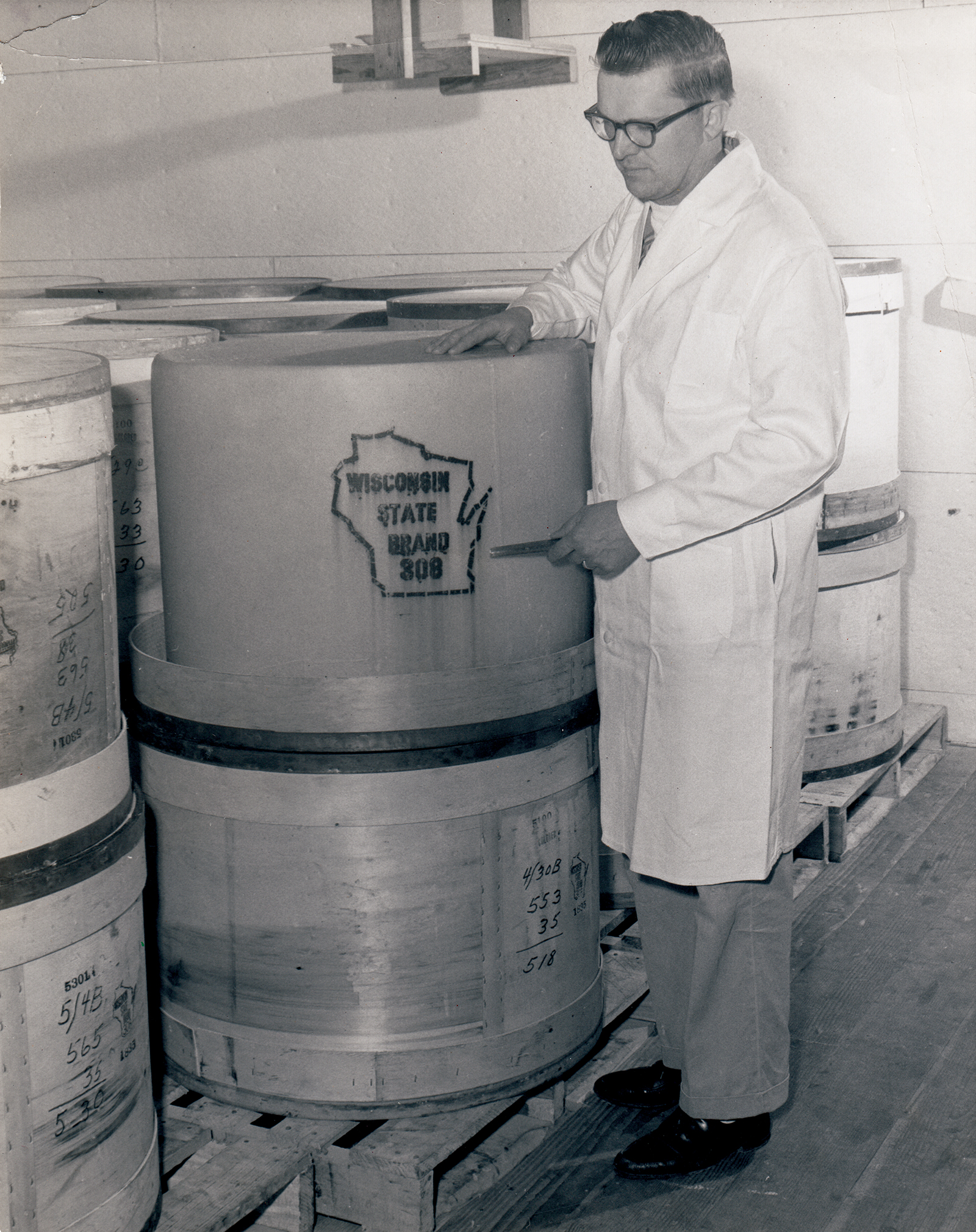
Phil belongs to the fifth generation of Lindemanns to work in Wisconsin’s dairy industry. His great-great-grandfather Herman Lindemann immigrated from Prussia in 1870 and later established his dairy farm in Liberty Township, not far from the current Pine River facility in Newton.
In 1907 his great-grandfather co-founded Northern Wisconsin Produce Co. in Manitowoc, which assembled, warehoused and sold Wisconsin cheese nationwide. His grandfather joined the family business in 1918, helping to expand it to include cold storage and the merchandising of cheese, butter, eggs and poultry.
But it was Phil’s father, Philip C. Lindemann, who started Pine River Pre-Pack in 1963 as a cut and wrap operation.
“In the old days, cheese blocks would go to stores and they would cut it up there. My dad did it before it got to the store — so ‘pre-packing’ it in smaller pieces to sell in stores,” Phil says.
Cutting the large blocks into retail-friendly-sized pieces resulted in extra bits of leftover cheese, called trim.
“That’s how we started making cheese spread. It was a way to use that extra material,” says Phil, who remembers being a preschooler tagging along with his father as he made repairs around the plant.
Throughout the 1960s and ’70s, Philip C. Lindemann, a licensed Wisconsin cheese grader, developed his own formulation for cheese spread and experimented with flavors and packaging technology. Phil says his father’s formula was tweaked for the last time in 1990 and is still used today.
“My dad would do all his calculating for vats and formulations on the edge of his newspaper,” he says. “You’d see his Wall Street Journal and it would just be covered in calculations all the way around the perimeter.”
Phil started with the company full-time in 1977. His brother, Barth M. Lindemann, was also a partner in the business from 1978 until 2016.
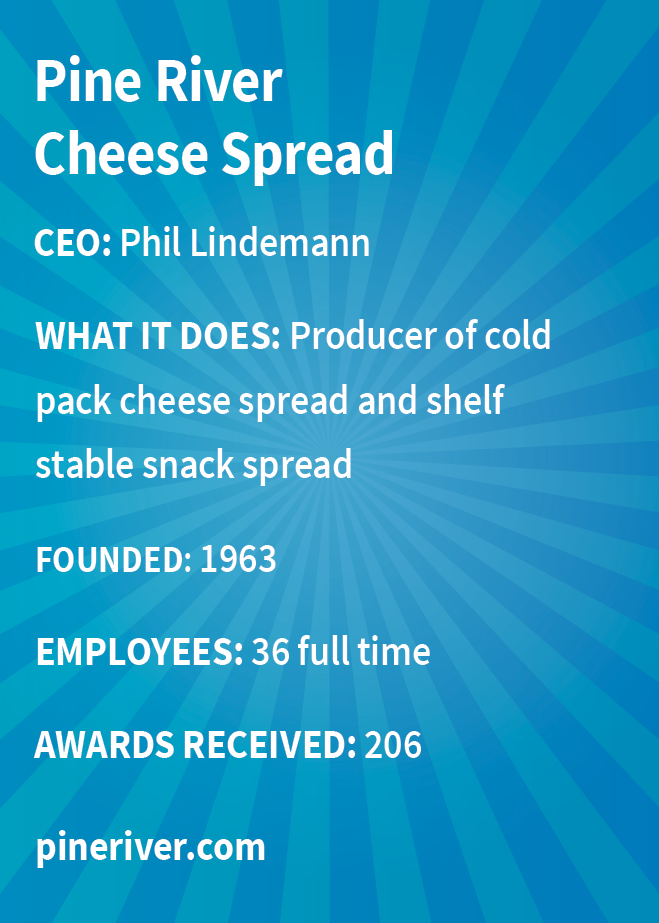
While Pine River offers both shelf stable spreads and cold pack spreads, it’s the latter that industry sources say is the company’s real triumph.
Cold pack cheese spread, which rivals brats and beer as Wisconsin’s most iconic food product, is made without the use of heat by blending natural-aged cheese with cream, butter and other ingredients. Because it isn’t heat-treated or cooked before packaging like processed cheese, cold pack cheese spread tastes like the authentic ingredients from which it is made.
A turning point in Pine River’s growth came in 1983, when the business began producing cheese spread for the fundraising industry.
“We felt like it could be a way to grow beyond Manitowoc County and become known nationwide,” says Mary Lindemann, Phil’s wife and Pine River’s marketing director.
“It took us to the next level,” Phil adds. “That was the transition for Pine River, when we went from a little company that wasn’t really growing to 10 times the size.”
By the 1990s, cheese spread had grown from a way to utilize extra material into Pine River’s core product. No longer were they relying on leftover bits and pieces of trim. Spread was made from 40-pound blocks of cheese, resulting in a more consistent product.
As the company’s concentration shifted, so did its name. Pine River Pre-Pack has become Pine River Cheese Spread to reflect its move in focus.
For many years, Pine River’s cheese spread sales were seasonal — busiest with fundraising orders in the late summer and fall, and holiday sales through December — which created staffing and efficiency challenges. Pine River President Ian Behm says the seasonality of the business has all but evaporated since he started with the company in 2009.
“When I started, we would be producing cheese spread maybe four to six times a month during the off-season, January through June,” he says. “Now we run a cheese spread line four to six times a week. It’s drastically changed our culture and the way we do business, for the better.”
The popularity of cheese spread ebbs and flows with time and trends, but demand is steady. In 2020, the state of Wisconsin produced more than 31 million pounds of cold pack cheese spread, a 24% increase from the previous year.
Pine River Founder Philip C. Lindemann passed away in 2007, but Phil thinks his dad would be proud of how the company has grown over the last 60 years.
“My dad said a long time ago, when we were a really small company, if we can make cheese spread four days a week, we will all be driving Ferraris,” he says with a laugh. “Well, I’m not driving a Ferrari, but [I have] a pretty nice car.”
The art of blending
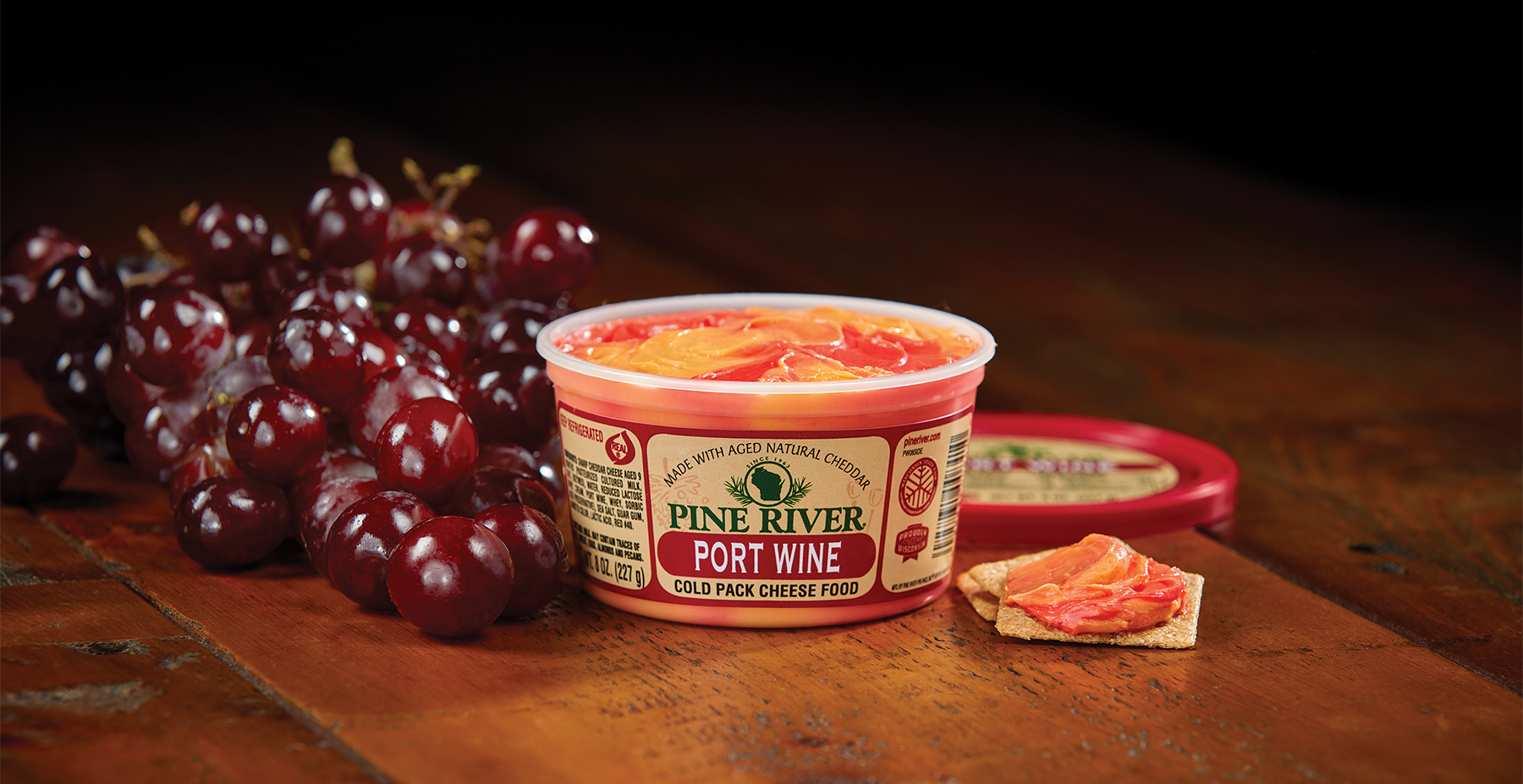
To get award-winning cheese spread, it’s imperative to start with the best ingredients. Wisconsin Grade A cheddar, whey powder and butter are the three main ingredients in Pine River’s cold pack cheese spread. The cheddar is aged in house and blended by the business’s specialized cheese spread makers.
“The blending of the ages of the cheese is what it’s all about in this world. We go from nine months to 16 months in our blends,” says Phil, noting the exception is Pine River’s limited edition 60-month cheddar made to honor the company’s 60th anniversary this year.
Pine River currently offers 21 varieties of cold pack spreads, from traditional favorites like pimento and port wine to more experimental flavors like mango habanero and ghost pepper. They also offer a clean label line of cold pack cheese spread that was introduced in 2017. The cheddar-based, clean label cold pack cheese line is crafted without preservatives, artificial flavors or colors or added hormones.
The ingredients are blended without heat in a giant bowl chopper before being packaged. Behm says not to be fooled — the process may sound simple, but it requires both scientific understanding and an artistic eye.
“There’s a lot of intricacies in how we add the ingredients and how long we mix them. It’s not just push a button, push another button, hit a lever and go,” he says. “The process is a little artistic. Our [employees] are cheesemakers in my eyes.”

Behm says the last couple years have shown growth in the private label business. Roughly half of Pine River’s business now comes from private label products for cheese makers and retailers nationwide — this includes celebrity cheesemakers and multinational grocery store chains alike.
Many of Pine River’s private label customers want to keep it that way — private — but one who is known to shout it from the rooftops is Joe Widmer, owner and master cheesemaker at Widmer’s Cheese Cellars in Theresa. He met Phil and Mary Lindemann at the 2001 International Dairy-Deli-Bakery Association annual convention, where the trio decided to partner in the creation of a spread using Widmer’s signature brick cheese. “I aged out some brick to give it a very strong flavor, but it was too strong for most people,” Widmer remembers.
Widmer received delivery of his first batch of aged brick spread Feb. 1, 2002. He had placed the minimum order (35 cases, at the time), unsure the product would sell.
“But it sold out,” Widmer says. “We got our second batch of 83 cases two weeks later. Phil was able to blend it with white cheddar to make a flavor that people just love. It came out to be a really unique tasting cheese and a real hit. Now we order 1,000 cases or more at a time.”
Pine River makes three cold pack cheese spreads for Widmer’s: aged brick, jalapeno brick and green olive brick. Last year the green olive brick spread took first place at the American Cheese Society competition, and Widmer says the three products have swept the cold pack cheese spread category at other competitions.
While the credit often goes to the cheesemakers, Widmer says blending cheese into spreads is an art all its own.
“Phil is someone I consider to be a master blender of cheeses. He only uses the best, high-end ingredients,” he says. “Widmer’s has been making world-class brick since 1922, but the real champ here is Phil for being able to blend cheese the way he does and make a perfect cheese that wins these awards.”
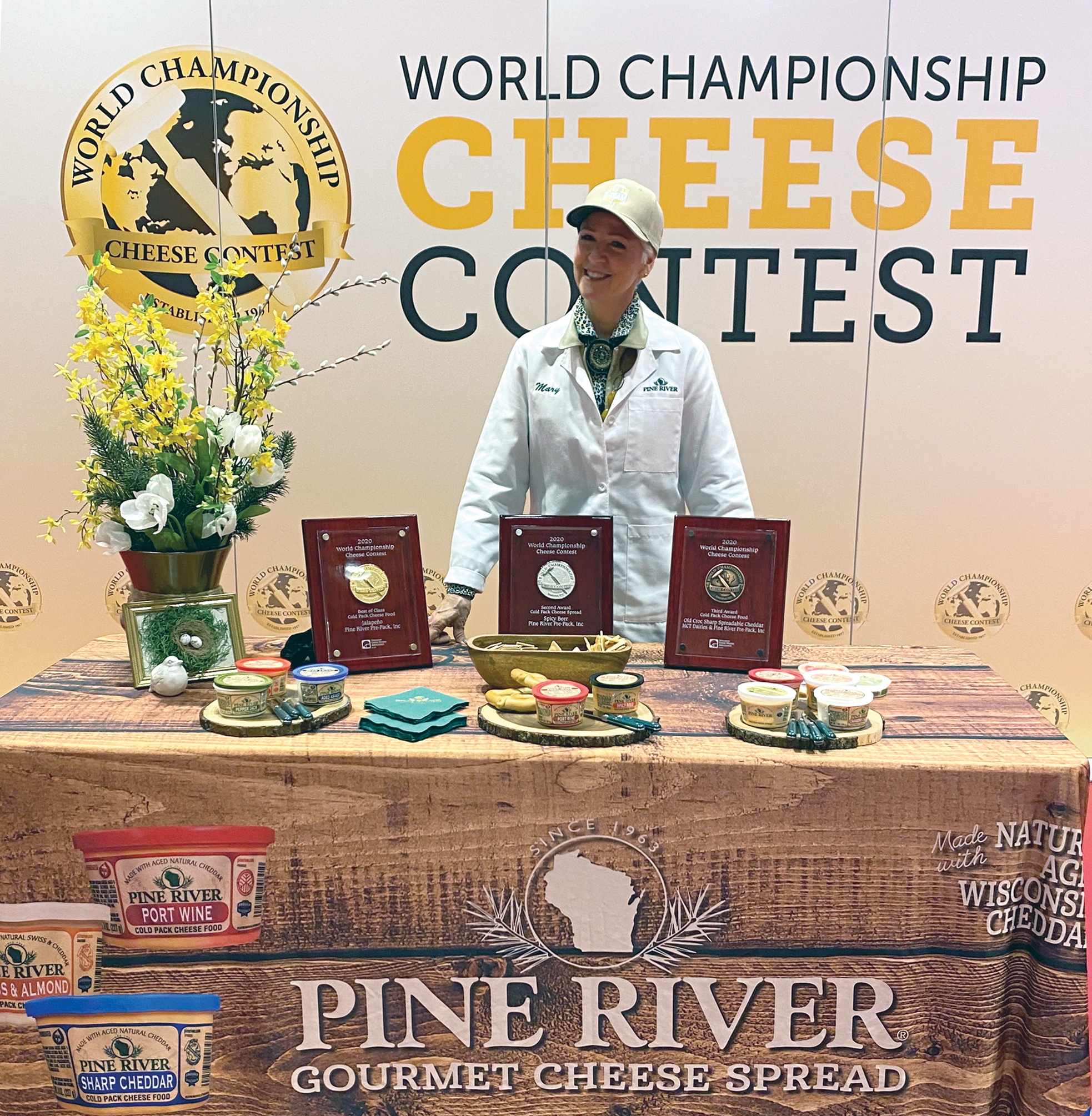
With more than 200 awards under its belt, one of Pine River’s most memorable honors came in 1999, Mary says, when they received the coveted Grand Master Cheesemaker Award at the Wisconsin State Fair — an award no other cheese spread producer has ever won.
“That one was a shocker,” she says, “but we never take any of this for granted.”
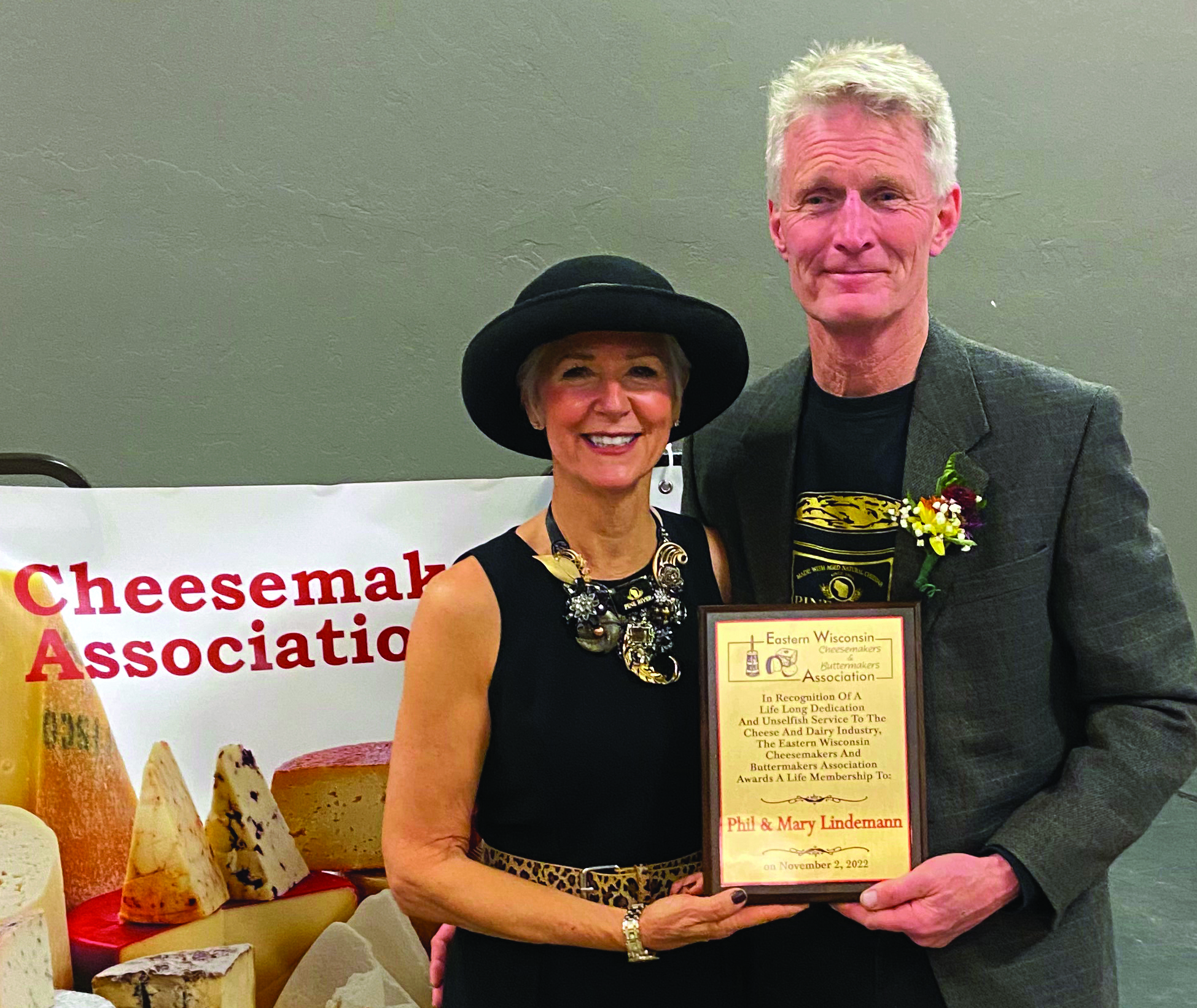
Spreading the love
As Pine River celebrates its 60th year in business, it also prepares for a transition in leadership. A team of four owners, including Pine River President Behm, will be taking over later this year. The other partners, who are all current employees, include Behm’s brother Chauncey Behm, Scott Caliebe and Cory Meyer.
The transition of ownership has been taking place since 2016, with the new partners running day-to-day operations, developing new flavors, driving sales at trade shows, leading the movement to automation and growing company culture.
Phil and Mary are members of the Wisconsin Cheese Makers Association (WCMA), which hosts both the United States and World Championship Cheese Contests.
WCMA Executive Director John Umhoefer says Pine River is known industry-wide for continuously innovating, designing new flavors and partnering with local cheesemakers to produce exclusive new products.
“Pine River has dominated dairy competitions nationally and internationally, and the hand-off from Phil and Mary Lindemann to the dynamic new leadership team promises another generation of great products from this Wisconsin original,” Umhoefer says.
Establishing the new leadership team has allowed the business to grow and identify necessary updates, from modernizing the food safety systems to automating processes.
“When Ian came on board, I was able to concentrate on building a new production area where we doubled our capacity. Mary and I were able to go on the road and sold a lot more contracts,” says Phil, who notes that automation has long been part of Pine River’s evolution but has made strides with Behm at the helm.
Behm says the company’s biggest advantage has been in the automation of its cup machines that fill, seal and put lids on the cheese spread containers. Since 2011, Pine River has increased its production capacity by four times through investments in automation.
“This is huge when it comes to capacity constraints, being able to make more product quicker,” Behm says. “And with that came more automation downstream, like with conveyors that put labels on the containers and automated case packers that put cups in boxes.”

Because the last five years have been spent addressing bottlenecks in production and increasing capacity, now attention is focused on improving operations for the employees who run the cheese mixers.
“The next two to five years we are figuring out how to make the job less demanding on employees who are physically moving product by hand,” Behm says. “Some days we make 50 batches of spread, so that’s 350 40-pound blocks of cheese they are moving.”
With an eye fixed on continuous improvement and efficiency, Behm says the industry recognition Pine River has received at competitions, particularly over the last five years, seems to be a natural byproduct of that commitment.
Pine River continues to dominate the spreadable cheese category in many competitions, earning the top three spots at the 2022 World Championship Cheese Competition, third place at the 2022 International Cheese & Dairy Awards, and two Best-in-Class awards at the 2020 World and 2019 U.S. Championship Cheese Contests.
Widmer, for one, isn’t surprised. He says the leadership team Phil and Mary Lindemann have cultivated is poised to keep Pine River in the winner’s circle.
“They have passed all their knowledge to the young people taking over,” he says. “Pine River will continue to be a high-end legacy in the cheese industry.”