
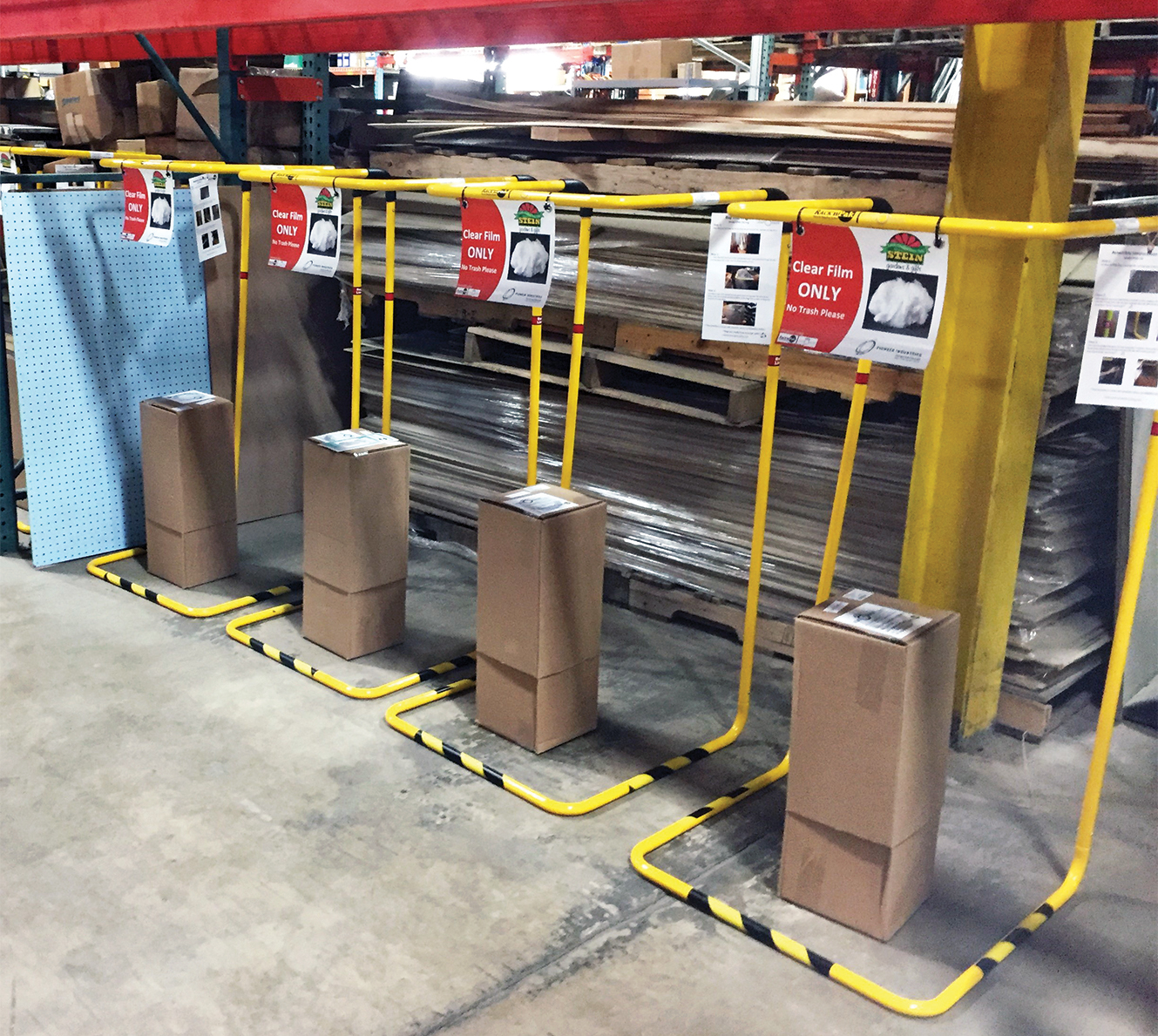

Jim Theodoroff and Jeff Haen, co-founders of PolyWrap Recycling, Inc. in Sheboygan, wanted to create a method that simplified how low-density polyethylene (LDPE) plastics — commonly referred to as plastic wrap or stretch film — were collected and recycled at manufacturing facilities, distribution centers and warehouses.
According to Theodoroff, only about 5 to 7% of plastic wrap and bags are recycled with the majority ending up in landfills, taking up space and wasting recyclable material.
But since Theodoroff and Haen launched the RACK’n Pak Recycle Bagging System in 2015, more than 220 million pounds of plastic film has been recycled using the system. And it’s just the start, Theodoroff says.
Prior to the RACK’n Pak, plastic wrap and stretch film were being inefficiently collected in Gaylord boxes, which take up valuable floor space and pose ergonomic issues for employees who must move plastic by hand from the box to a vertical bailer.
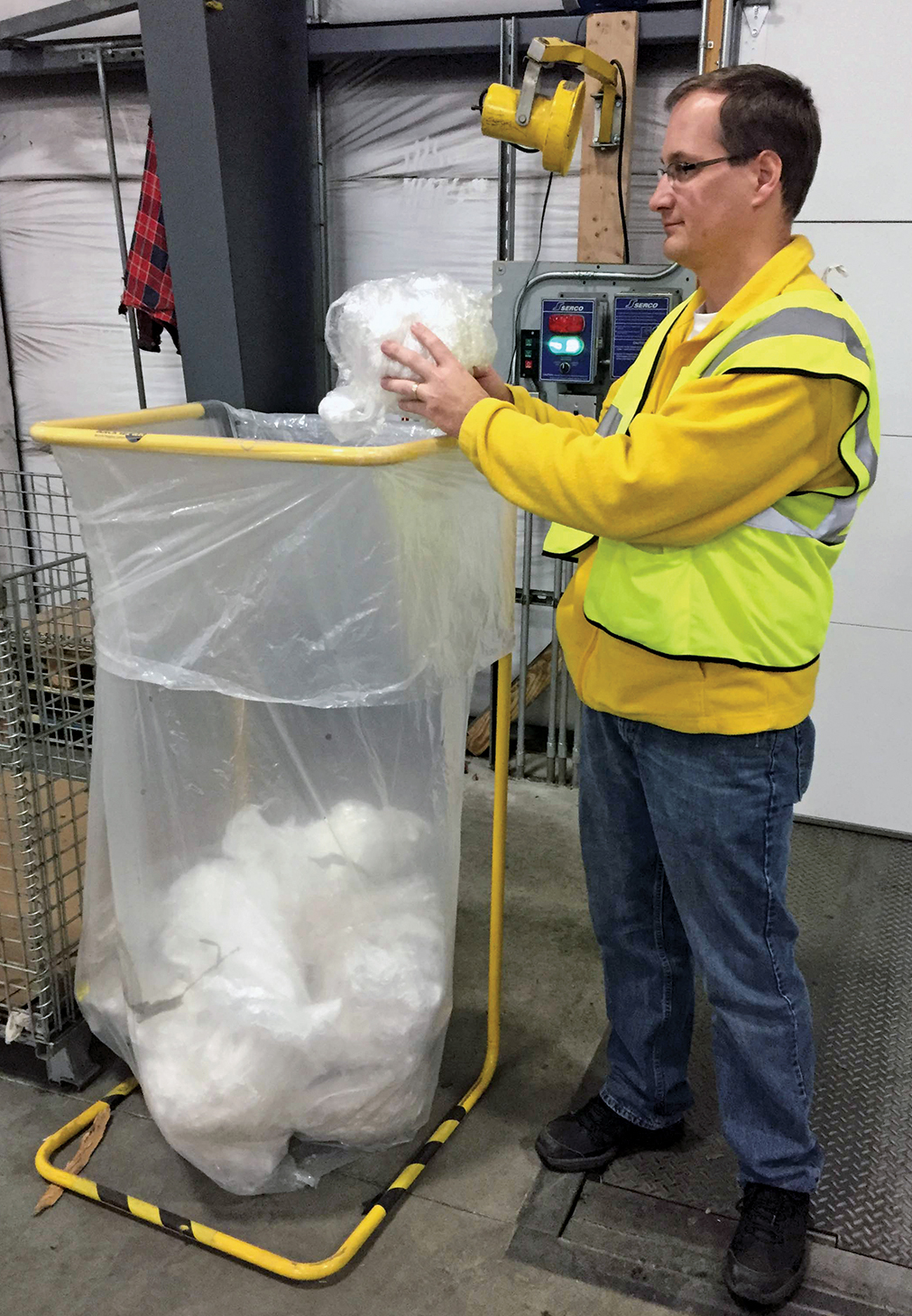
“The whole process seemed way too far in the past from where we should be as a manufacturing community. This process has been the same for 75 years,” Haen says. “It was very time consuming, and employees were very unhappy doing it.”
Theodoroff and Haen designed a system that was more employee friendly while reducing labor, maximizing floor space, and ultimately increasing the amount of material recovered.
The key to the product’s design, Theodoroff says, is the Vent Press Bag, with holes strategically placed to maximize the amount of air released for heavier bale weights with fewer air pockets. The bags are made with recycled LDPE plastic and can hold up to 40 pounds of material.
While manufacturing is a major industry serviced by the RACK’n Pak system, other customers include hospitals, large retailers, post offices, food and beverage distributors, and municipalities nationwide.
In addition to the environmental and labor benefits, many customers found their dumpsters fill up less quickly after they begin recycling LDPE plastic material, making it the economical choice as well. Some customers have reduced trash collection from three times a week to just once.
“You’re getting paid for the material when you sell it, so you are making income and at the same time you are reducing trash costs,” Haen says. “A lot of it is training companies to see the amount of waste their film is creating and helping them realize it’s worth their time to get it recycled.”