
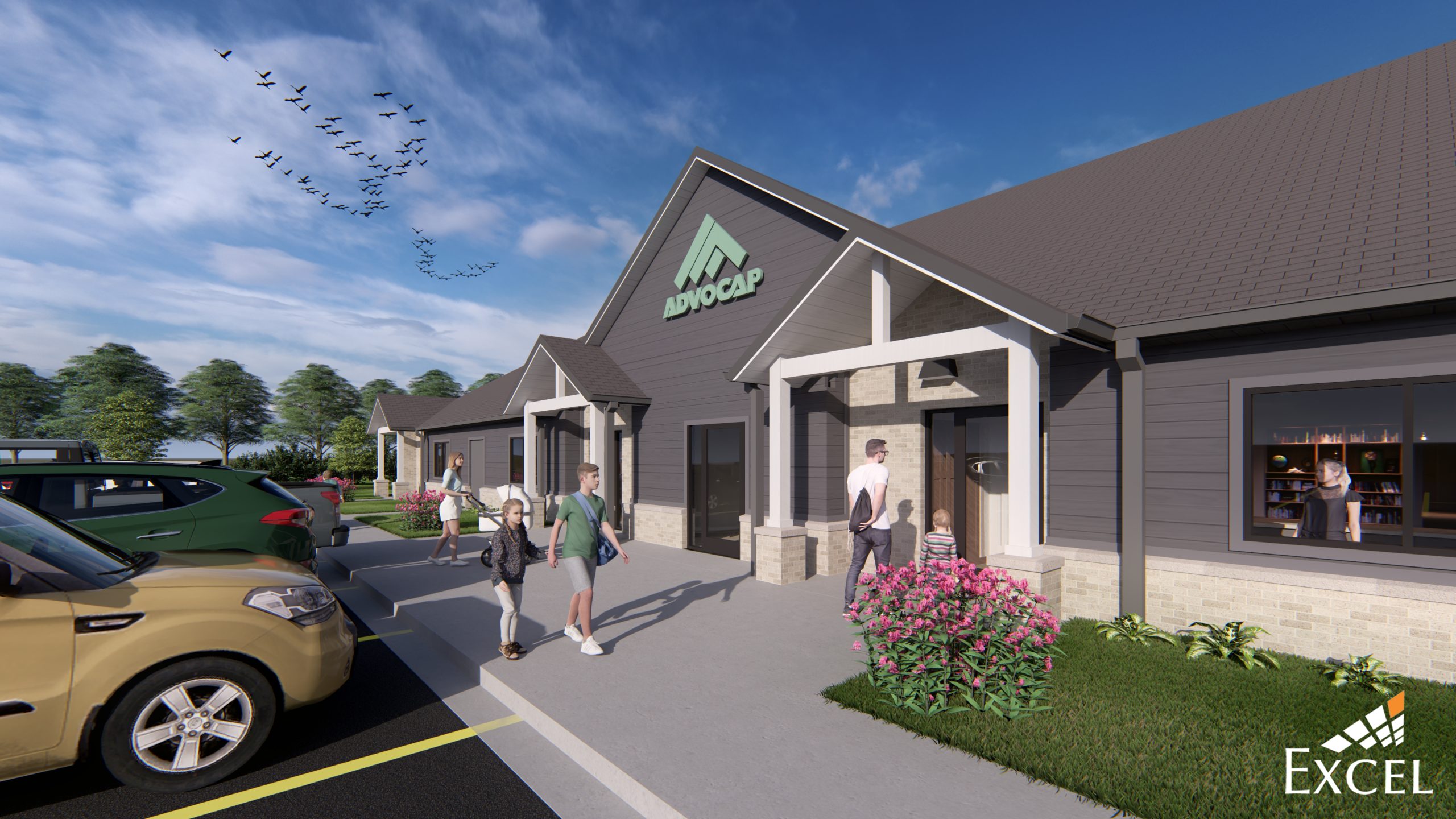

Ground will be broken Dec. 11 for a childcare incubator that once complete will help launch 4 to 12 childcare businesses in the Oshkosh area over the next three years.
ADVOCAP and Signature Homes are partnering with construction and design partners to provide startup space and business development resources. It is designed to help address the childcare shortage facing families and employers in the Oshkosh area, while also offering new opportunities for childcare entrepreneurs.
“The shortage of childcare in Winnebago County is reaching a critical point, affecting both families and local mbusinesses,” says Tanya Marcoe, ADVOCAP Executive Director. “By creating a supportive environment for providers to launch and thrive, we are investing in families, the workforce, and the long-term health of our community.”
Signature Homes, the project’s construction partner, is leading the development of the facility.
“Partnering with Tanya and ADVOCAP on this project has been an incredible opportunity to bring innovation to an issue that impacts so many families and small business owners,” says Glenn Elmer, Broker/Owner at Adashun Jones Real Estate & Signature Homes. “Being involved from the earliest stages — from site selection through design and build — has allowed our Signature Homes team to help shape something that truly strengthens our communities. This childcare incubator opens doors for entrepreneurs who might not otherwise have the opportunity to build a business in childcare, creating a model that’s both sustainable and scalable for the future.”
The childcare incubator was born three years ago out of a pressing need to address the escalating childcare needs in the region. ADVOCAP examined the root causes of the shortage ranging from workforce attrition to regulatory hurdles and lack of startup support for new providers.
That’s when the concept of a childcare incubator began to take shape. Modeled after business incubators that support startups, the vision is to create a structured, supportive environment where aspiring in-home childcare providers could receive the training, mentorship, and resources they need to become licensed and successful.
Stakeholders including childcare center owners, legislators, investors and other potential partners overwhelmingly supported the idea, according to ADVOCAP officials. People recognized the Incubator as a fresh, practical alternative to traditional childcare expansion models. It offered a way to empower individuals, especially women and underrepresented entrepreneurs, while directly addressing the shortage of care options for working families.
The ADVOCAP Childcare Incubator will make childcare delivery more equitable by removing the financial and logistical barriers that often prevent low-income individuals, especially women, from starting their own licensed childcare businesses. By offering shared space, startup support, and on-site technical assistance, the incubator creates access to entrepreneurship for people who have historically been excluded from the childcare market due to lack of capital, business training, or affordable facilities.
The incubator will make childcare more sustainable by changing the underlying economics of starting and running a childcare business. The incubator provides affordable space that reduces overhead costs, allowing providers to operate at a profit without charging unaffordable tuition. Centralized support such as licensing assistance, curriculum planning, and business coaching to reduce burnout and improve long-term stability. Additionally, by increasing the supply of childcare, the incubator strengthens the entire system’s resilience.
Finally, the incubator model is more responsive to the needs of families and providers. It’s designed with flexible hours and supports care during non-traditional work shifts, something many traditional centers can’t offer. It is also shaped by input from local families, stakeholders, and potential providers to ensure the services offered align with community needs. As providers grow their businesses, they retain autonomy to meet the unique needs of their neighborhoods and families, making care more culturally relevant, accessible, and personalized.