

While Wisconsin is surrounded by states that have legalized marijuana use in some form — with Minnesota, Iowa, Illinois and Michigan having legalized either medicinal or both medicinal/recreational use — the state has been a holdout.
Currently, both medical and recreational use of marijuana are illegal in Wisconsin. But those in the industry say both medicinal marijuana and recreational cannabis have the potential to create job growth and economic opportunities in Wisconsin.

The Wisconsin Wellness campaign says legalizing medicinal cannabis in the state has the potential to improve wellness and build sustainable economic opportunities for Indigenous people. The Wisconsin Wellness campaign is led by the Wisconsin-based national advocacy nonprofit Indigenous Cannabis Industry Association (ICIA) and the Wisconsin Tribal Task Force on Cannabis.
Indigenous nations have been leading the way on a lot of different policy initiatives across the country that focus on community wellness, such as restoring language, food sovereignty, health care and economic development to diversify “away from gaming and the things that we’ve sort of been handed,” says Rob Pero, who founded ICIA in 2022. “It’s been with keen eyes that the Nations have been looking at other ways to provide economic opportunities along with health and welfare benefits to just our community members that need medicine the most.”
Legalization of cannabis products have helped diversify industry for Indigenous communities elsewhere, such as for the Eastern Band of Cherokee in North Carolina.
“I think it sent a strong message about what sovereignty can look like,” Pero says. “And it took a lot of relationship-building to do what they did … they’re a great case study for what can happen with due diligence and the ability to self-regulate and self-govern and really become a value add to the larger state or even region as a whole.”
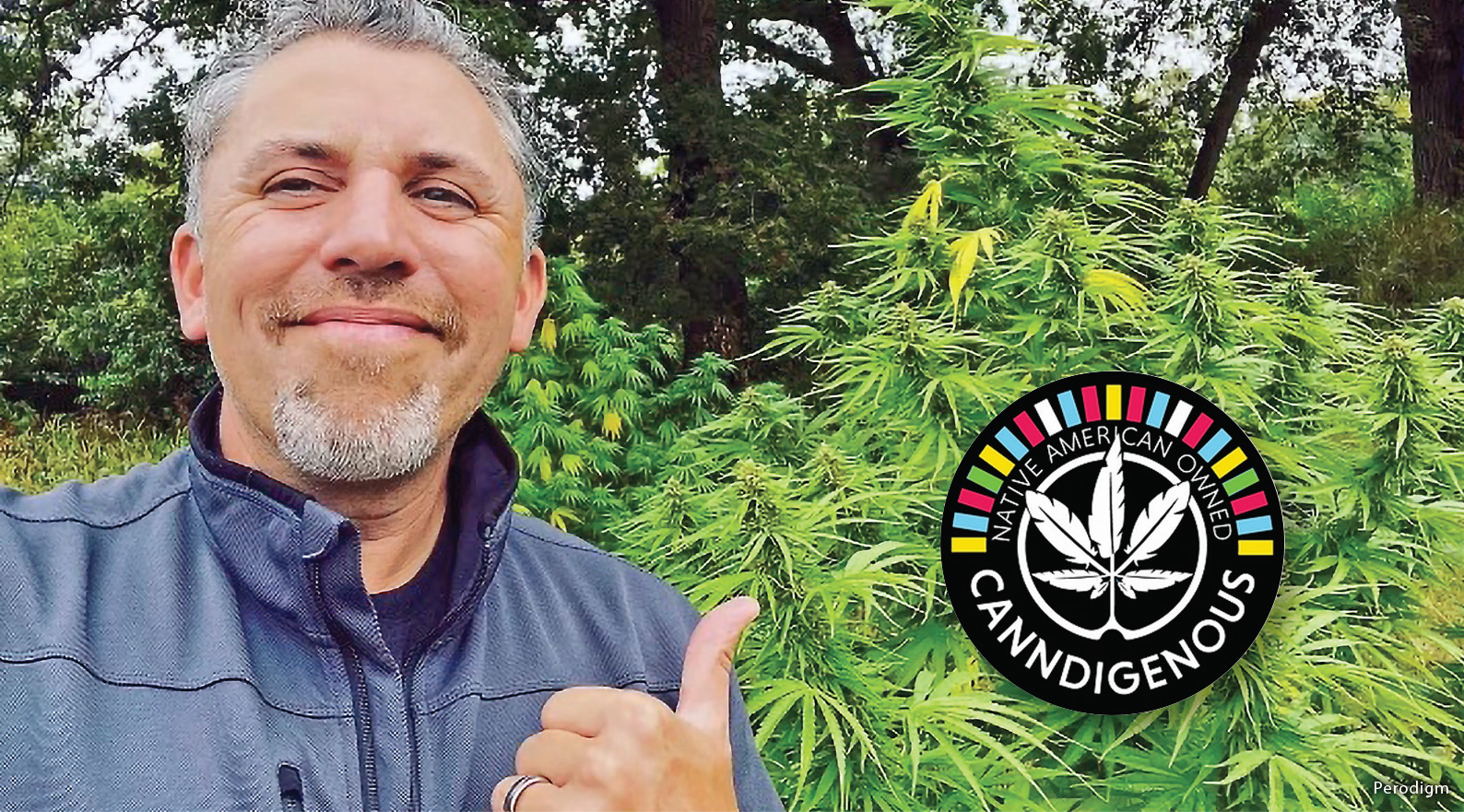
Pero, a member of the Bad River Band of the Lake Superior Tribe of Chippewa Indians, also founded Wisconsin’s first independent Indigenous-owned hemp company, Canndigenous. Pero’s farm grows a small batch of sun-grown CBD boutique flower, as well as a 50-acre area for cannabinoids, fiber and grain. Part of that crop was made possible by a climate-smart commodities grant through the USDA.
Hemp fiber can be sourced for rope, biofuels or biomass, helping to move away from “petrochemicals and lumber, along with providing quantifiable medicines that actually work in symbiosis with our endocannabinoid systems in our bodies,” Pero says. “There’s animal feed, bedding, all sorts of things you can do with it. People are building homes out of it in Minnesota at the Lower Sioux tribe, so it’s amazing.”
Wisconsin Wellness plans to use film production, statewide advertising, and educational tools to focus on community health and the need to increase accessibility to plant medicine.
People use medical cannabis for treating chronic pain, post-traumatic stress, and conditions like cancer without using opioids, which the state Department of Health Services reported in 2022 caused 1,464 deaths in Wisconsin, according to Wisconsin Wellness.
Wisconsin Wellness hopes to see support for legalization among new state representatives and have new legislation in place for 2025.
“It’s not about politics — it’s about wellness at this point, and how we can advance that conversation so that people have peace of mind knowing that public safety is the most important thing,” Pero says.
Legislative updates
Lawmakers on both sides of the aisle have previously proposed cannabis legislation in Wisconsin, including Gov. Tony Evers, who has proposed full legalization within his budgets. Earlier this year, the GOP proposed a limited bill that would allow five state-run dispensaries of medicinal marijuana only in pill form, which Evers said he would support.
“Now, as highly restrictive as that was, it was progress,” Pero says. “And when it got shot down, it was just sort of another case of two parties that really can’t find a way to compromise.”
In 2008, Michigan legalized medical marijuana followed by adult use legalization in 2018. In Minnesota, medicinal use was legalized in 2014 and legislation was passed in 2023 to legalize the adult use market.

The two states managed medicinal marijuana somewhat differently, says Jess Jackson, who became social equity director for the Minnesota Office of Cannabis Management in June, and previously worked as director of social equity for Common Citizen, the largest vertically integrated cannabis operator in Michigan.
“I think it’s unique in Minnesota because we only have two suppliers of medical cannabis (Leafline Labs and Minnesota Medical Solutions), whereas in Michigan we had a whole caregiver system,” Jackson says.
Caregivers in Michigan could grow up to 12 plants per patient, with a limit of five patients. Minnesota also has a similar caregiver program but with more limitations on growing (eight plants for each of up to two patients).
The medical market is focused on creating accessible medicine to patients, whereas the adult use market is an industry, she says. So there can be tension between these markets. “We saw as the adult use market came online in Michigan, that the medical market has dropped severely,” Jackson says.
Those complexities mean it’s important to talk about regulation and setting up the medicinal market in a way that continues to focus on helping patients, Pero says.
Job creation & economic growth
Evers has said marijuana legalization in Wisconsin could bring in $165 million in taxes and licensing revenue.
Examples from other states show the potential. Florida, for example, has one of the largest medicinal markets. “I think it’s like $2 billion a year, and they haven’t even gone recreational yet,” Pero says. “They’re expecting that to either be five to seven times.”
In 2023, Michigan had about $3 billion in sales and with $457 million in new taxes that went to local governments, Jackson says.
Minnesota’s adult use cannabis legalization is just getting underway, but 80% of adult use taxes are earmarked to go toward the state’s general fund, with 20% for local government. “So there’s opportunity for our adult use market here in Minnesota to create some tax revenue,” Jackson says.
Additionally, Jackson says when adult use marijuana is legalized, “we see thousands of jobs that are created across different sectors.” In Michigan, a March 2024 report showed that the industry employed about 46,000 full-time workers, she says.
That can include cultivators, attorneys, security, technology, plant geneticists, master growers, and processing/manufacturing experts. It also includes testing facilities, compliance, public safety/regulation, transportation from B2B and B2C, accounting services, and the government offices. Jackson’s department in Minnesota will reach 145 employees, she says, “so there’s so much job creation and so much intersection into other ancillary brands.”
The industry also needs HR professionals who understand cannabis — including challenges that some workers face, such as difficulty getting loans when banks consider the industry too risky.
And it needs expert marketing support, which must be done in “really innovative and unique ways because a lot of the marketing channels and marketing platforms that support traditional industries are not available to the cannabis industry,” Jackson says.
Public awareness & concerns
Those marketing the cannabis industry do have some challenges to overcome, including a concern about youth access to cannabis. But “it is the unregulated market that often creates more opportunities for youth to engage,” Jackson says.
There are some risks, including that cannabis is a cash-heavy business that makes dispensaries targets for break-ins. But with added security installed around these businesses, “there’s some research that shows that it decreases some of the criminal activities that are in the communities where they exist,” Jackson says.
Additionally, states must ensure adequate mental health services are in place to help people who turn to substances to cope.
“I think that our Minnesota government has done a really good job to provide funding toward some of those public health concerns, specifically around adverse effects, and research supporting that, and public education,” Jackson says.
In Minnesota, the ACLU published a report that Black people are more than five times more likely to be arrested for marijuana possession, despite comparable usage rates with white people, Jackson says. “I challenge people to really unpack … the root cause of the issues that folks have concerns about, instead of perpetuating antiquated and racist rhetoric against it,” she says.
Legalization of medicinal marijuana would have “a massive impact,” not just economically but also socially, including the expungement of certain marijuana-associated criminal records.
Research shows that the GDP would regain “about $87 billion if the 1.9 million people who have a criminal history were able to be back into the labor market in the workforce,” Jackson says.
Minnesota also wrote certain public benefits in its marijuana legislation, including grant programs like CanRenew, which in 2026 will send $15 million back into communities that have been disproportionately harmed by cannabis prohibition, creating more mental health resources, economic development, youth development and drug use prevention programs.
“This isn’t going away,” Pero says. “And the fact that tribal nations are getting organized and getting behind it for the betterment of the entire state is a precedent that we’ve never seen before.”
On the web: wisconsinwellness.info | indigenouscannabis.org