
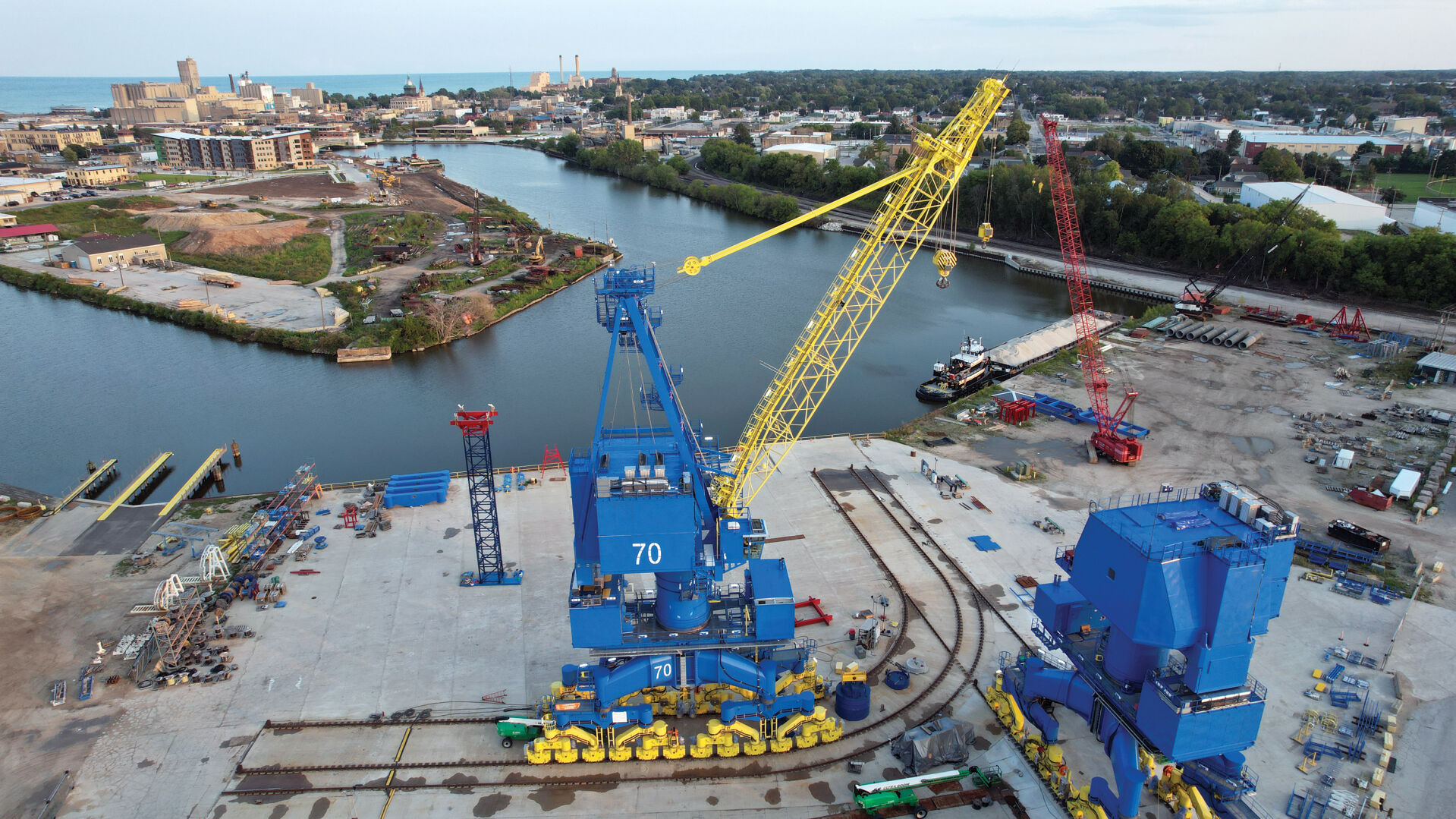

Crane 70, a 175-ton navy crane, will ship to Washington state when complete.
Photo courtesy of Broadwind Heavy Fabrications
Broadwind Heavy Fabrications in Manitowoc sits on hallowed ground — during the 1930s and ’40s it was home to Manitowoc Shipbuilding, which fabricated submarines to support the World War II effort. Today Broadwind works in partnership with Finnish company Konecranes to fabricate cranes for the U.S. Navy.
“I think it’s kind of cool that the facility that built submarines during World War II is now fabricating cranes that service submarines, 80 years later,” says Brett Hartman, director of business development at Broadwind. “It’s a testament to the skill set of the folks here in Northeast Wisconsin.”
It’s not just the history that’s cool — in 2021 Broadwind’s 140-ton crane was named The Coolest Thing Made in Wisconsin, a contest sponsored by the Wisconsin Manufacturers & Commerce and Johnson Financial Group.
Broadwind has three divisions and five locations around the country. Its Manitowoc facility, which employs about 150 people, fabricates large, industrial components for the mining, construction, oil and gas, and shipbuilding industries, as well as industrial wind towers.
Currently two 175-ton navy cranes are being assembled and prepared to launch in 2024. These cranes, which weigh more than 2 million pounds each, will travel 8,000 miles by barge fully assembled to their new homes in Washington state and Hawaii, respectively.
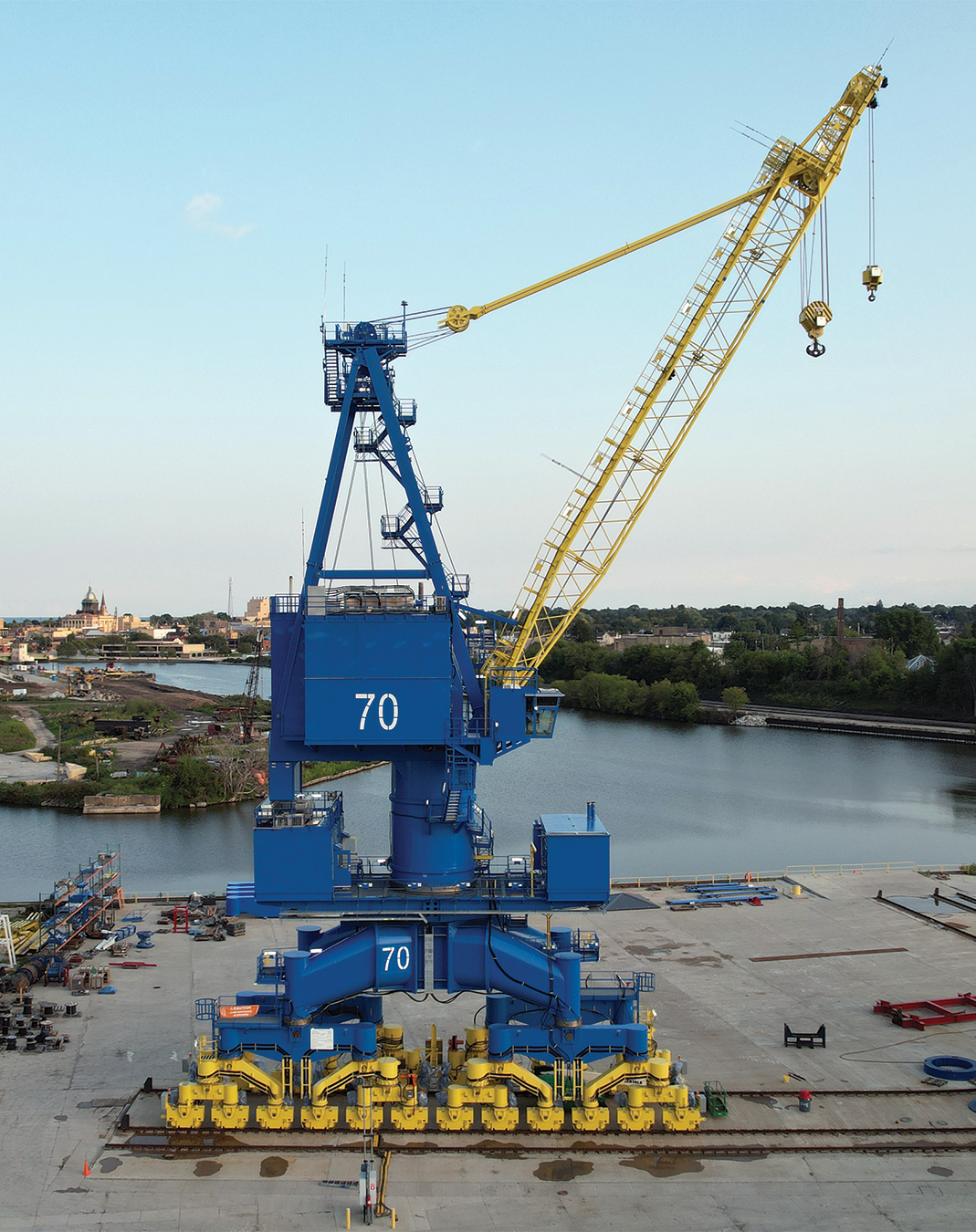
It takes upwards of 80 people the better part of a year to complete a crane, Hartman says. Konecranes designs and assembles the cranes, while the components are made by Broadwind.
Upon a crane’s completion, the team and its partners celebrate with a custom beer produced in partnership with a local brewery, Sabbatical Brewing Co. The custom brews pay homage to the crane’s destination — for example, they made a New England IPA for the 140-ton crane that traveled to the Portsmouth Naval Shipyard in Maine.
“We do this beer release, and we invite all the partners and anyone who worked on the crane and it’s created a unique community event,” Hartman says.
Hartman says the generational talent of the region is one of the reasons the companies are able to pull this level of work into the community.
“Back in World War II we were fabricating things that were getting shipped all over the world, and we can still do that today,” he says. “It’s a bit of a legacy project.”

