

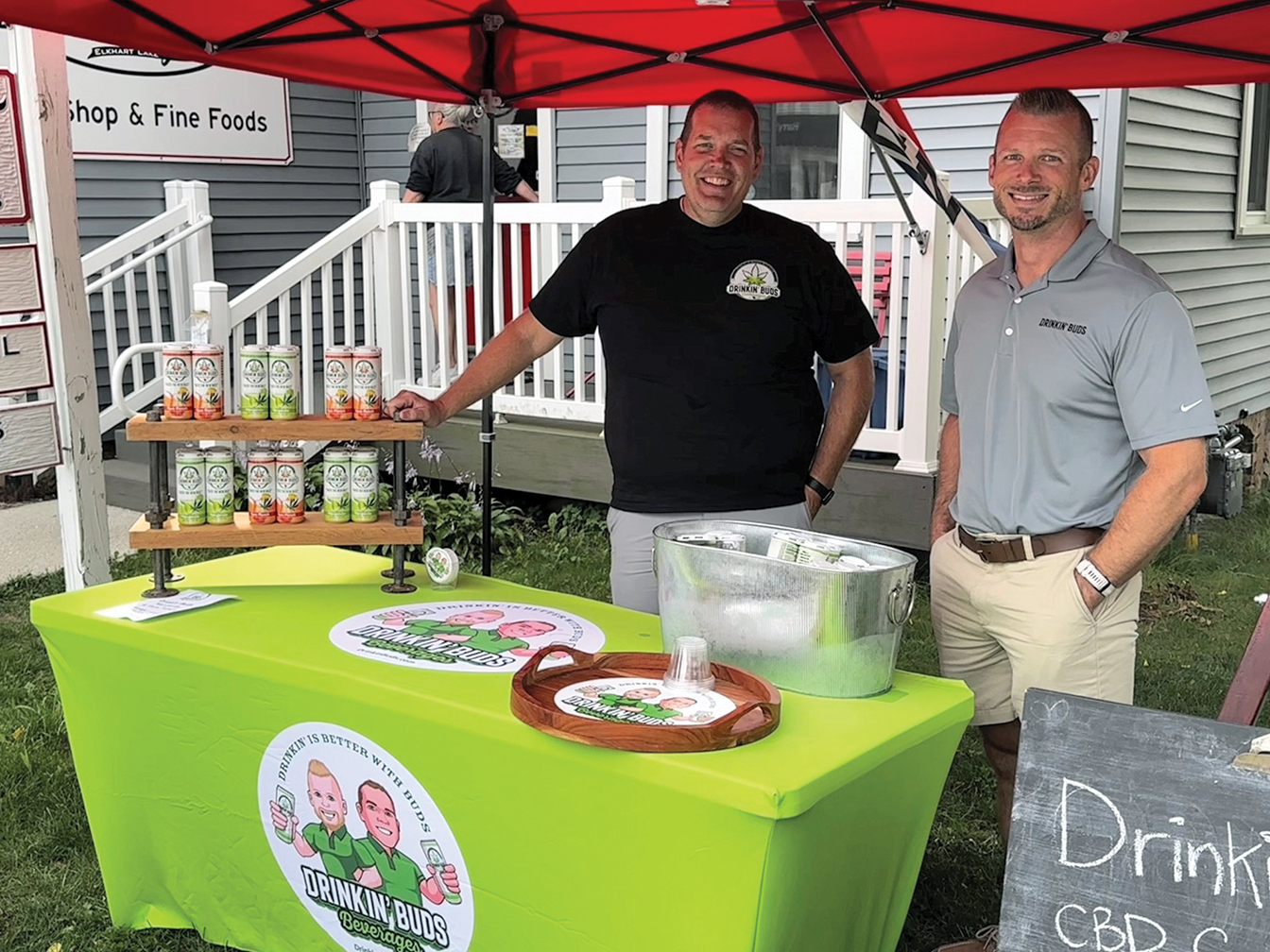
After the 2018 Farm Bill redefined hemp, buddies Matt Swanson and Justin Hopf thought it would be interesting to grow the crop and sell it as a commodity.
The two had experience working in agriculture and had access to land in Sheboygan County where they could give it a go. They planted their first crop in 2020 and launched their business as Drinkin’ Buds — named for their friendship more than their plans.
The Farm Bill allowed growers to plant hemp that contained small concentrations of Delta-9 tetrahydrocannabinol and differentiated the crop from marijuana. It made the crop open to U.S. Department of Agriculture programs and allowed for interstate commerce of hemp and hemp‑derived products.
Swanson says they thought it would be interesting to grow and sell hemp, but in 2023 commodity prices for hemp were dropping rapidly. After a day working in the field (hemp requires a great deal of manual labor), Swanson and Hopf were talking about what to do with the crop they were painstakingly cultivating.
It occurred to them that they could produce a dry old fashioned mix with the hemp, and Drinkin’ Buds Beverages was launched. They sold it at farm markets and quickly realized they had found a new market for their crop.
“We got the Drinkin’ Buds brand off the ground out of necessity — an economic need to create a finished product,” Swanson says.
Consumer tastes changing
Others throughout Wisconsin and the United States did the same, and hemp-based CBD and THC beverages started appearing on retail shelves. Consumers have embraced the products.
“It cannot be overstated how consumer tastes are changing,” says Chris Lackner, CEO and president of the Hemp Beverage Alliance. “People are looking for alternatives and this is an option for some. It also fits within the existing adult beverage system in most places.”
Craft breweries have been among the first to capitalize on the shift.
“The craft beer industry in particular has been in decline for several years, and small breweries are feeling this in a very acute way,” Lackner says. “This has really been a huge boost to their revenue.”
Wholesalers and retailers also recognized the opportunity, and Swanson says in most states it’s a “plug and play” option for the adult beverage industry. Wisconsin liquor wholesalers all have hemp beverages in their portfolios, and Fond du Lac-based Badger Liquor created GALA Ventures in 2024 to exclusively handle THC beverages.
Lackner says, “I think the distribution community recognizes the tremendous value of these products. For some distributors, this is 15 to 30% of their sales.”
Federal ban looms
All of that is threatened after a provision was inserted into the November budget bill that ended the government shutdown. The change essentially redefined hemp, making it impossible to produce a crop that would meet the legal requirements.
While it might be possible for some hemp beverage producers to function under regulations within their state, that is not the case for Drinkin’ Buds.
Although President Donald Trump rescheduled marijuana in December to allow for medical research and potentially medical applications, THC, regardless of its source, remains illegal at the federal level. Restrictions in banking and transportation remain in place.
“If we don’t have interstate commerce it’s going to be very difficult for the industry to move forward in a meaningful way. If nothing changes, businesses like ours will go away by next November,” Swanson says. “It’s really taken the wind out of our sails.”

Lackner explains that after 2018, hemp was completely legal as an agricultural product, but there was a gray area surrounding finished products. Many states created regulatory frameworks for hemp products to fill the gap. Wisconsin largely ceded control of the industry to the USDA.
Swanson and Lackner say while they realize there was always a looming regulatory threat for the industry, the way it came about was disappointing.
“This provision was tucked into a much larger bill to open up the government. The bill was to open up the government, not shut down the hemp industry,” Lackner says.
It threatens an industry that has growing consumer acceptance and a large supply chain. The Hemp Beverage Alliance has more than 375 member organizations in North America, about evenly split between beverage producers and supply chain support — including packaging, wholesalers, testing, retailers, legal and business services.
A silver lining
While the future remains unclear, Lackner believes the fight has already produced one positive result.
“If there is a silver lining that comes from this recent action, it has put hemp beverages and the hemp industry as a whole into the public discussion,” Lackner says. “There is a lot more awareness about the category.”
The association took the temperature of the industry after the legislation in November and found a spike in orders from producers that they attribute to the rising awareness.
Swanson says the legislative change has been a wake-up call.
“This category has gotten so large over the last couple years that consumers are really starting to push back. A lot of brands have loyalty, and they can ask their customers to call their Congresspeople,” he says.
Lackner says the recent change also has united the industry.
“Having the clock ticking has been motivating to have all the different interests in the hemp space come together,” he says.
Hemp has advantages
Lackner believes the low-dose hemp beverage industry has advantages for marketing, distribution and regulation that is leading to acceptance.
“You don’t bring a one hitter over to Grandma’s for Thanksgiving, but you can absolutely bring a four-pack of hemp seltzers to the table and nobody’s going to bat an eye,” he says.
He calls the dispensary model more challenging for THC products, which often contain higher concentrations of THC.
“The audience is much bigger for hemp beverages than it is for dispensaries,” Lackner says. “You have to keep in mind that this is not a cannabis consumer that is moving over into hemp beverages; this is an adult beverage or an alcohol consumer that is looking for something new. Oftentimes they are not cannabis consumers to begin with.”
That acceptance has driven legislators, both at the federal and state level, to recognize it is time to establish more regulations for a product that is already widely available at retail outlets. In Wisconsin, there are three bills proposed that range from an outright ban on hemp products similar to the federal bills that call for age restrictions, potency limits and excise taxes.
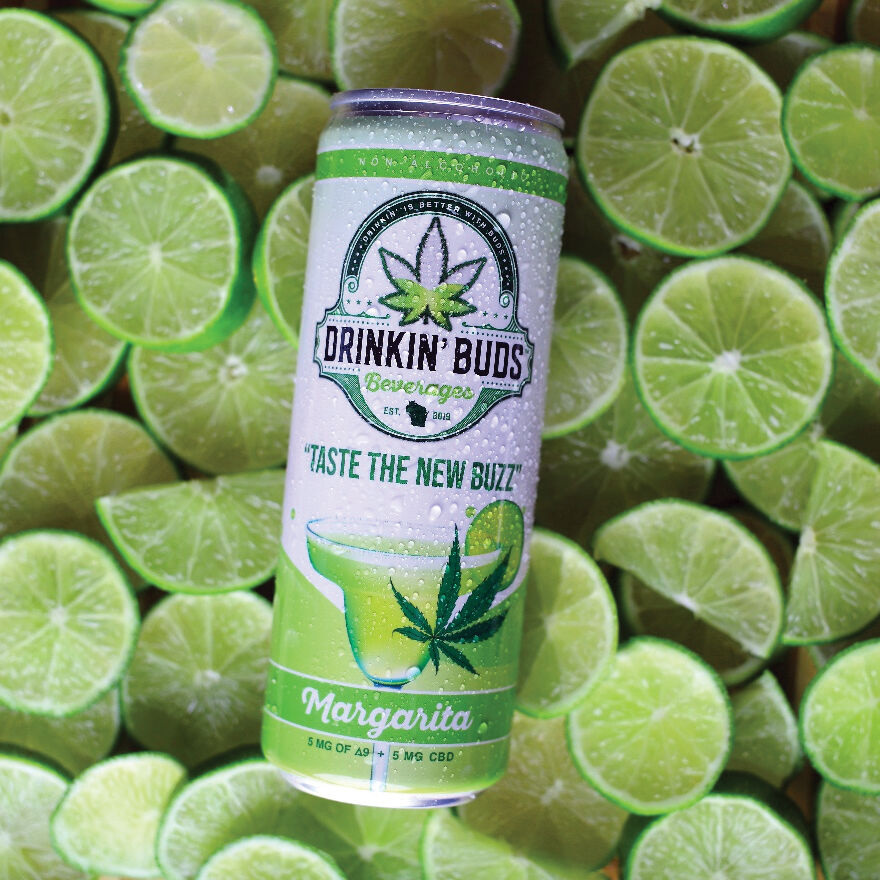
Swanson says he would welcome regulation and in particular sees value in regulations regarding ingredients, labeling and age limits. He says Drinkin’ Buds has intentionally created a label that makes it clear the product contains THC; he doesn’t want it to be confused with ready-to-drink alcoholic cocktails, seltzers or non-alcoholic drinks.
“I’m optimistic at this point,” Swanson says.
So is Lackner, who says the hemp industry has been given a one-year opportunity to get a federal regulatory framework in place.
In the meantime, he says, “It’s business as usual for folks that want to manufacture, distribute, sell and consume these.”