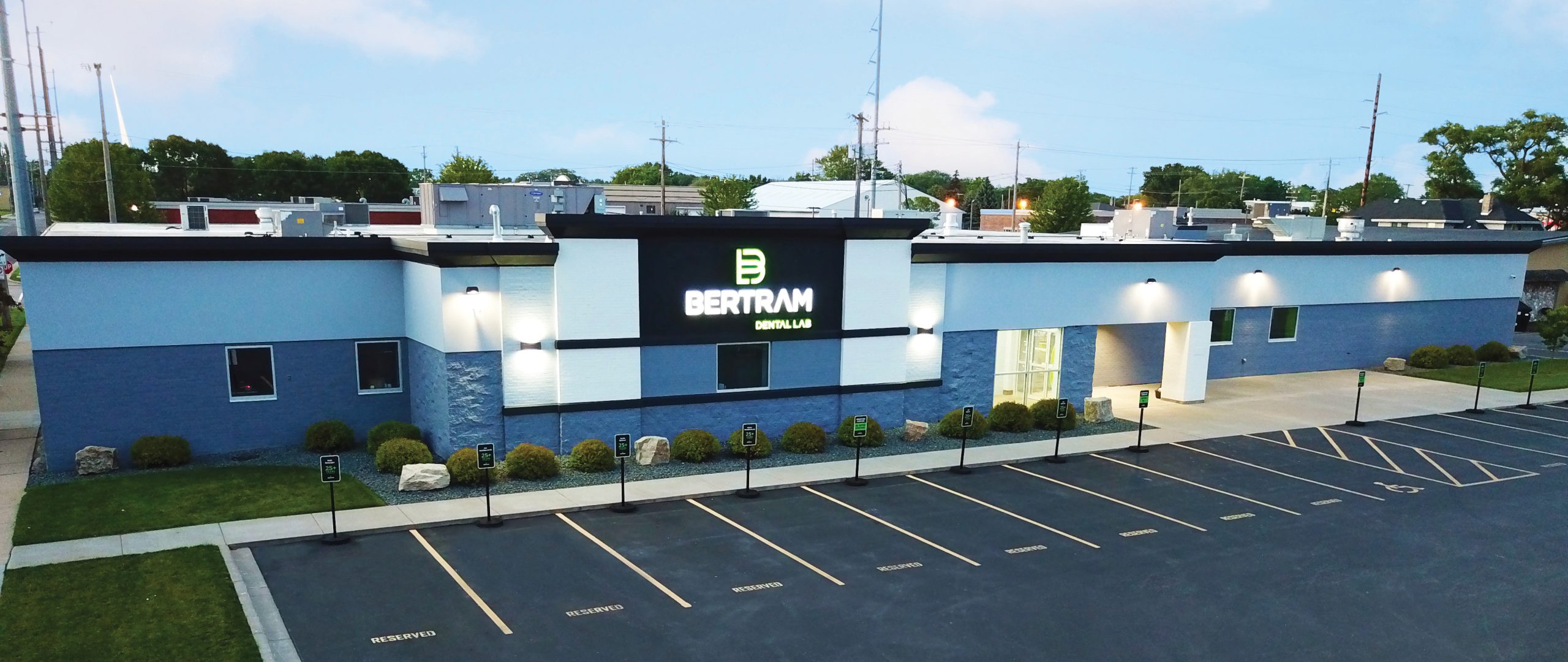
Despite its location in the middle of Menasha with a prominent sign reading “Bertram Dental Lab,” what goes on inside can be a bit of a mystery to local residents.
Co-owner Tim Bertram admits that sometimes they are contacted by someone who wants their dental partials repaired.
“That’s not really what we do; you have to go to your doctor,” Tim says.
What Bertram Dental Lab does involves million-dollar machines, experienced designers and proprietary technology to produce chrome frames for removable partial dentures. Their customers are other dental labs across the United States.
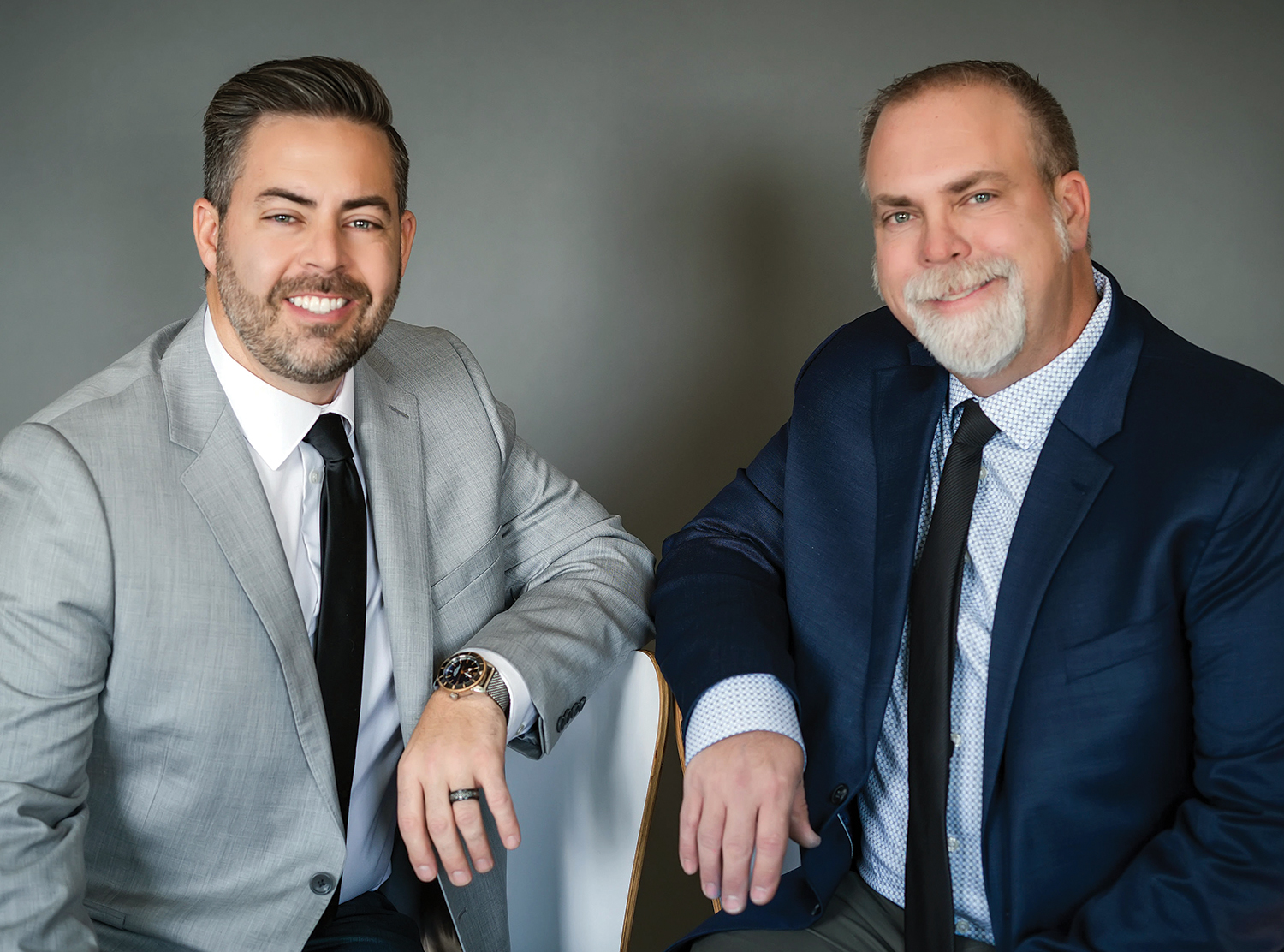
Tim and his cousin Joe Bertram, who is the other co-owner, grew up working in Bertram Dental Lab, which their dads founded in Appleton in 1976 and later moved to Neenah.
Joe says when he was in college, “My dad approached me and said we have a position open in designing, and he said that it provided a good life for him and people always need their teeth, so you’re always going to have a job.”
Tim took a little longer to return to the lab. Spurred in part by the lab’s growing use of CAD to design frames for dental partials, he came back in 2005.
In 2016, the lab purchased its first selective laser melting 3D printer.
“We took a risk to do it financially, but we had the perfect case where we had enough work to show the ROI,” Tim says. “Not a lot of [dental] labs would have the volume to show the ROI for that application.”
Tim and Joe took ownership of Bertram Dental in 2018 and relocated it to a former grocery store in central Menasha in 2019. The location was a good fit because they sought a site with good power sources, a loading dock, space to grow and near more amenities for staff than a typical industrial park offers. They credit Menasha for aiding the move with Tax Incremental Finance support.
When they moved, they purchased five new SLM printers (each named for a Star Wars character) and it fully established their digital workflow.
In that process, dentists take laser scans and send them to a lab. The lab contracts with Bertram Dental to produce the metal framework that will be used to build the partial. Its design team uses CAD to prepare the design for the SLM printer. They are printed and then post-processed in an oven before they are polished and shined.
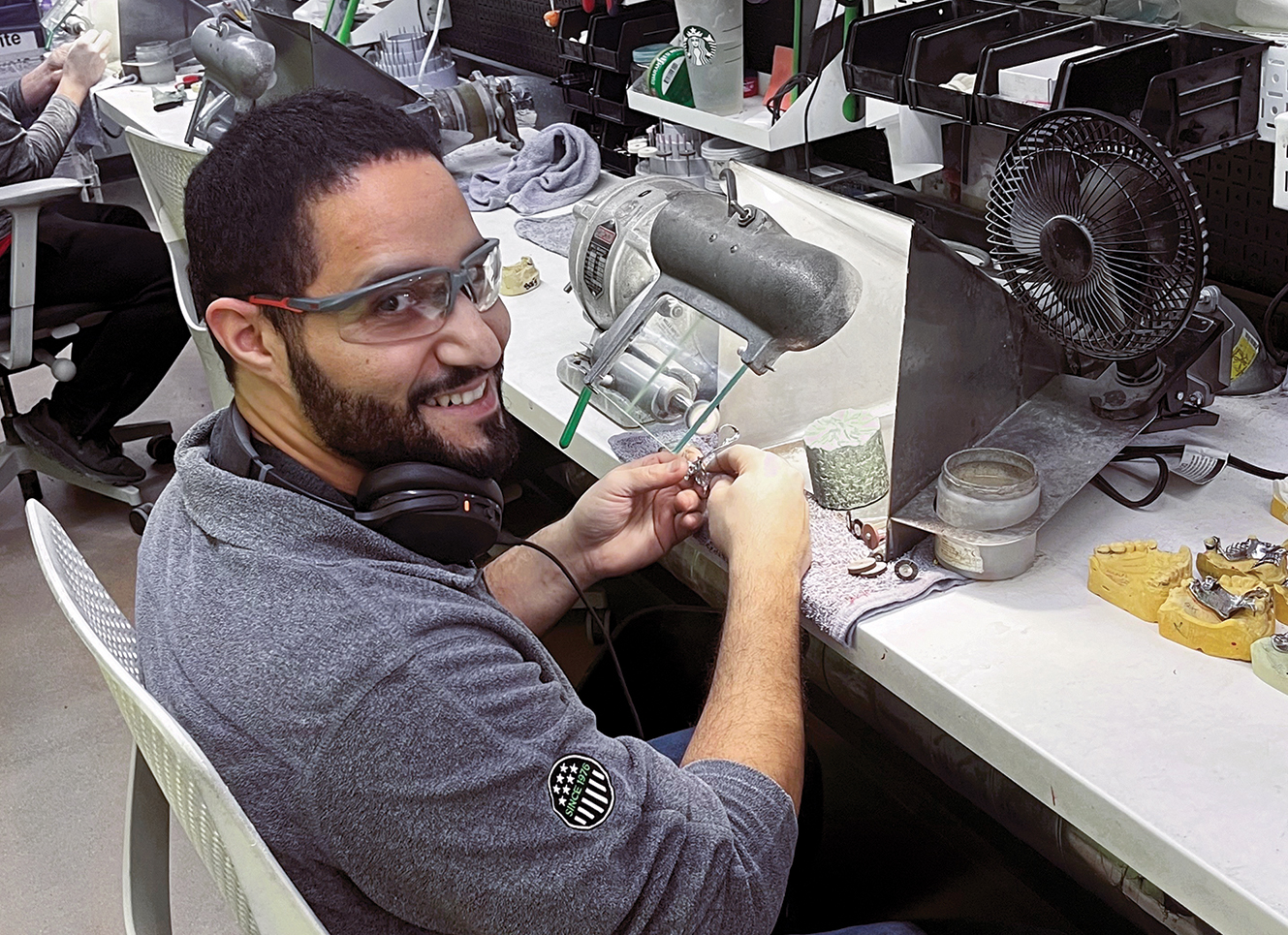
Bertram still maintains the capability to receive impression models and work through what it labels as the “analog” workflow in which lab technicians design and cast the frame by hand. It provides Bertram flexibility in managing the workflow and to continue working with orders that have not adopted the digital technology.
The digital workflow also allows the lab to contract manufacture for labs that do not have the equipment for SLM printing. Bertram can turn around a contract job in 72 hours and other orders take 4 to 5 days.
Tim and Joe say they differentiate themselves from competitors through high quality and rapid turnaround. Their polishing and shine process is proprietary and sets them apart, as does their highly-skilled design team.
“In the dental lab world, there’s very few technicians that know how to do a good partial design.
We end up training people from scratch,” Tim says.
The business currently employs about 70 people working across three shifts and recently added a human resources professional to help recruit and retain staff.
Tim and Joe see challenges in the industry as dental practices consolidate and dental service organizations move into the lab space. But the recent purchase of a neighboring building gives the business room to grow, and use of artificial intelligence has made SLM printing more efficient.
Tim says perhaps the biggest challenge is managing the volume of work so they can continue to meet customer expectations. It’s a process they’ll continue to polish.