
When workers think of entering college programs after they’ve already started their careers, one potential barrier is taking time off for classes that might be scheduled in the middle of their shifts.
Colleges and universities know that making it easier for workers to get an education will help meet the needs of industry, which always needs skilled labor, as well as boost enrollment for higher ed institutions, which need students. But to do that, leaders are recognizing the need to think outside the box — even rethinking the traditional credit‑based system and semester structure.
“What we’re starting to find out is that’s an archaic model,” says Aaron Sadoff, president of Marian University. “And what we have to start looking at is how can we bring value to different people and to the companies.”
Marian University was one of the first schools to offer completion degrees for working professionals who already have associate degrees, Sadoff says. If a worker can earn a bachelor’s degree, it might open more opportunities in their career, he says.
The university also has several accelerated graduate‑level programs and is looking at adding an accelerated MBA program,
Sadoff says.
“Forget what our structures are: How can we do things that would work best for your employees, and what would that look like?”
Education on demand
The first Wisconsin Drives Manufacturing Summit, which was held in Green Bay in June, brought together manufacturing leaders, innovators and educators to talk about and solve real industry challenges — among them, developing talent.
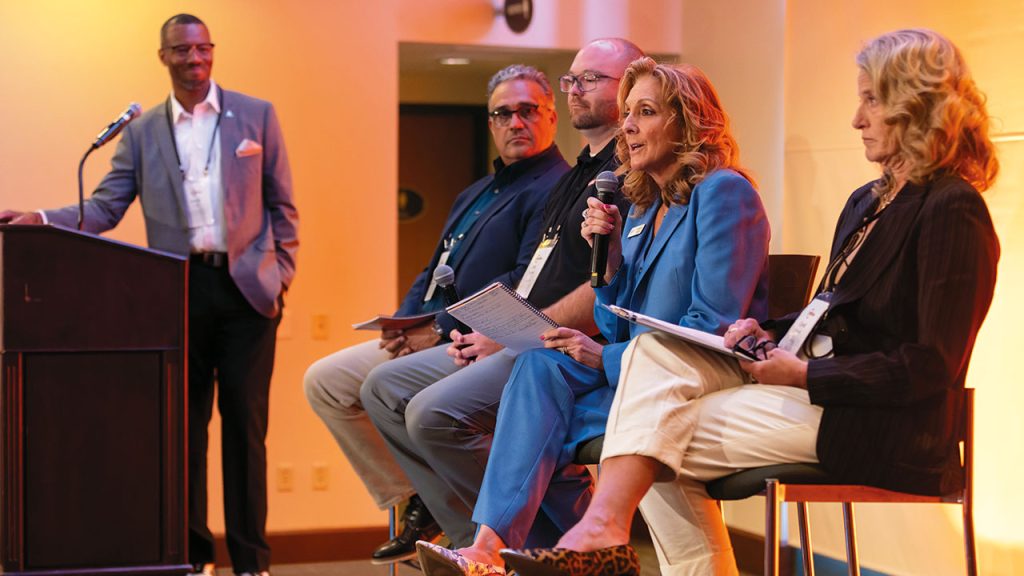
The summit included a panel discussion focusing on scalable education models across Wisconsin. Some Wisconsin manufacturers are shifting from degree‑based hiring to skills‑based talent development, which colleges are noticing.
Tracy Pierner, president of Blackhawk Technical College in Rock County, said that university classes aren’t currently preparing students adequately for industry needs in the workforce. Pierner himself is an electrical engineering graduate from UW‑Madison.
“I love my alma mater, but I wasn’t prepared to go to work,” said Pierner, who learned on the job from maintenance technicians at Rockwell Automation. “So, how do we transform? Well, it is incumbent on us to adapt to industry needs. Right now, the model is you conform to what we offer. That is unacceptable in every way.”
Pierner said Blackhawk’s mission is to deliver flexible education in a supportive environment. “What that really means is providing more and more on‑ramps to access education,” he said.
While technical colleges offer both an academic arm, with traditional semester‑long courses, as well as a customized training arm for industries, both models can be better. The customized training side is expensive, and the academic side often means buying into a long program when a worker only needs specific training, and it doesn’t often work on an industry’s timeline.
“You’re moving, you’re shaking and baking seven days a week, 24 hours a day, and we need to be able to respond to that,” Pierner said.
That doesn’t mean it’s easy: Pierner said higher education has to make those changes that are sustainable within their economic frameworks. “How do we do this? We’ve got to overhaul it from the bottom up. … You’re asking faculty to develop something they’ve never seen before. That is very difficult.”
Pierner said it means creating a competency‑based education that isn’t based on earning credits but focused on skills and skill development. “There essentially has to be on‑demand education. There is no such thing as semesters anymore. It is when you need it.” Additionally, colleges must stay on the leading edge. “We can’t be teaching you on yesterday’s technology; it has to be today’s, and maybe even tomorrow’s, because we need to be educating technicians that are going to help lead you when they get out of our classroom.”
Blackhawk has structured competency‑based education with one‑credit courses, which equals about 40 hours’ worth of work, he said.
“We’ve chunked all of our courses into one‑credit modules; they’re available when you need them … we’re able to easily customize those modules specifically for industry needs,” Pierner said.
Learning by doing
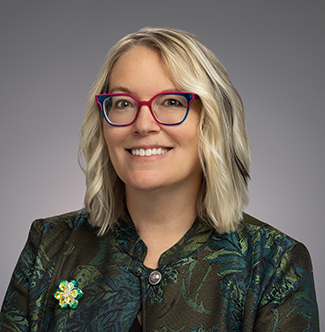
Increasing the availability of experiential learning opportunities inside local industries is also key. Panelist Stephanie Reisner, president and CEO of GPS Education Partners, said a recent poll showed that 79% of students want experiential learning, but even within manufacturing only 2% actually participate in youth apprenticeships or work‑based learning experiences.
“So the reality is that we really have to look at putting more opportunities available for students, opening up … those doors to different experiences for the students,” Reisner said.
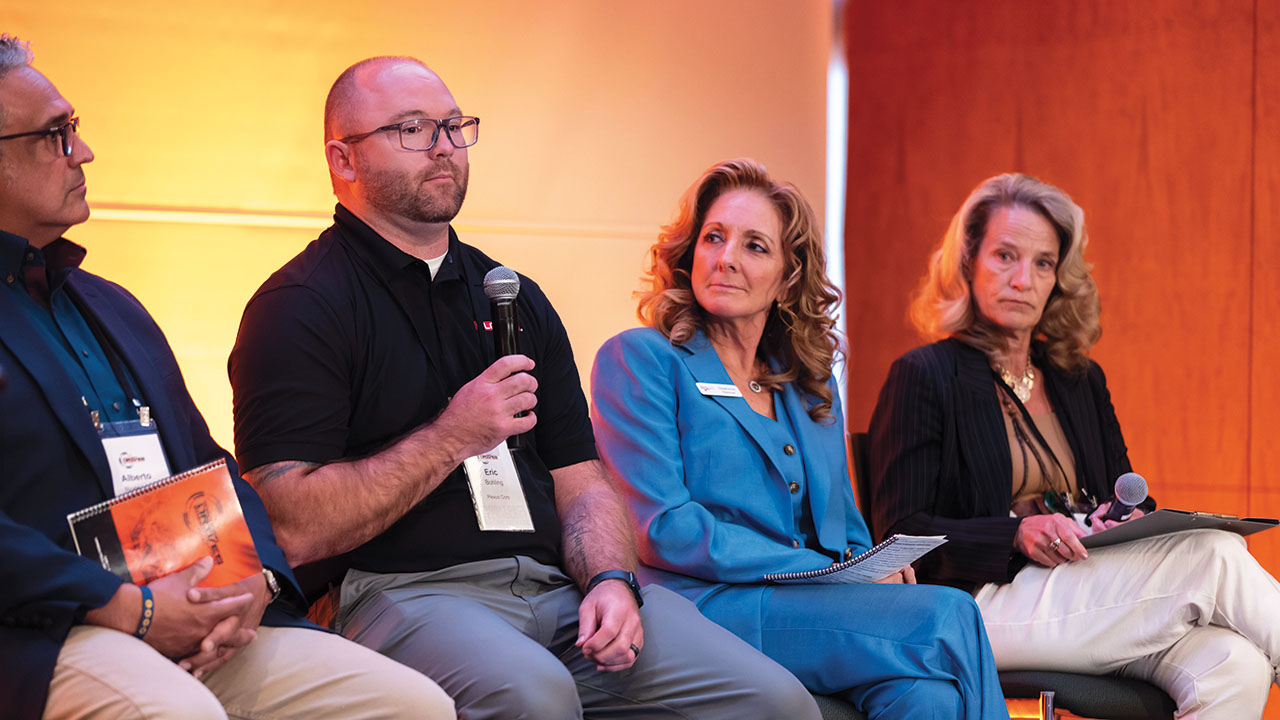
Panelist Alberto Rodriguez, program director for electrical engineering technology at Madison Area Technical College, said his institution is creating flexible opportunities for people who are already in the workforce, and it is strengthening apprenticeship programs, which help students feel confident that there will be a job waiting at the end of their education.
The college has created “stackable credentials” in which a two‑year program is broken into three segments, with the first focusing on hands‑on skills. Then once the student has been in the workforce a while, they realize they’re good at it and want to come back to MATC to earn more credentials and increase their pay.
“Sometimes it’s really difficult to tell somebody that you need four years to become an engineer and then get a job, but if you have the ability in academia to provide offerings for these students so that … they can just exit successfully at six months, one year, two years, et cetera, that gives them incredible opportunity,” Rodriguez said.
The college also has created flexible schedules so that if a worker can’t attend a traditional lecture, they can view it online later, and they can attend labs whenever it works for them.
“We allow you to take that lab whenever you want,” Rodriguez said. “So, if you want to take it at 5 p.m. on a Thursday, there’s going to be an instructor in that class who’s ready to help you go through the process. So, increasing flexibility while maintaining hands‑on training is extremely important.”
From the industry perspective, Eric Bohling, senior human resources manager for Plexus Corp., said with a “very tenured workforce” of people who may have been there for 30 or 40 years, it’s vital to create an environment where newer workers can grow their careers while learning skills necessary to build products for market sectors like aerospace, health care, semiconductors and others.
It’s also a commitment for employees working 40 hours a week to pursue a degree, whether it’s a one‑year program or a bachelor’s degree, Bohling said. “How are we meeting the needs of our future business, but as well as our employees? Our employees are wanting to get on with that education. We’re seeing it more and more … how do we make that flexible for them?”