

Residential development in Appleton’s downtown continues to grow. Since its 2017 housing study was completed, the city has seen 10 new housing developments that represent an additional $60 million in value and 466 new residential units in the downtown area.
Providing the right mix of housing in desirable locations is key to economic growth, says Karen Harkness, City of Appleton director of community and economic development.
“If we don’t have housing, we won’t have a workforce,” she says. “It all goes back to having the right kind of housing in the right spot.”
To determine future housing needs, the City of Appleton completed its College North Neighborhood Plan this summer. The plan, along with data from Outagamie County’s regional housing study, reveals what the community needs to remain competitive and attract residents.
Harkness says the data shows a need for 3,000 additional housing units in Appleton over the next 10 years — or 300 units annually.
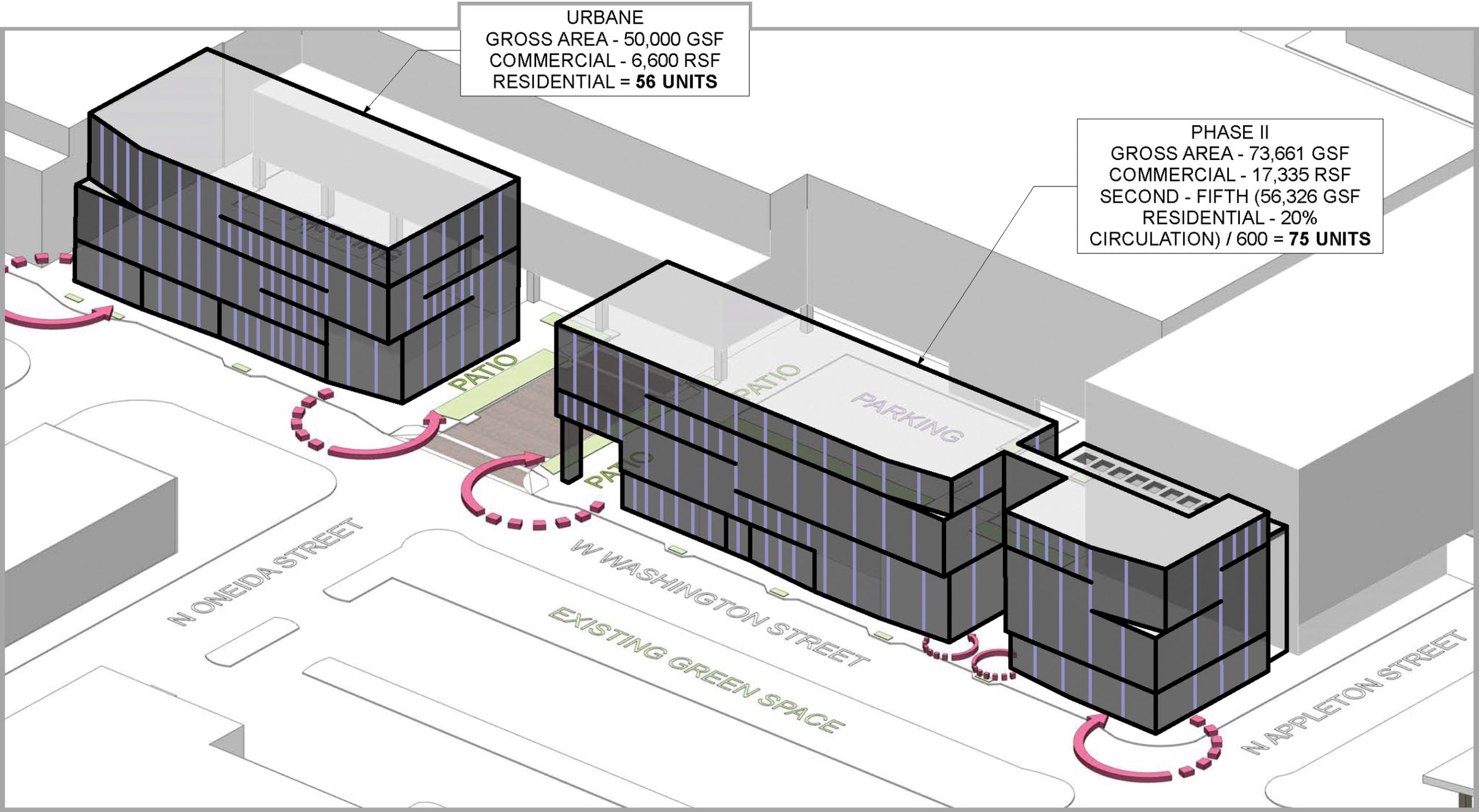
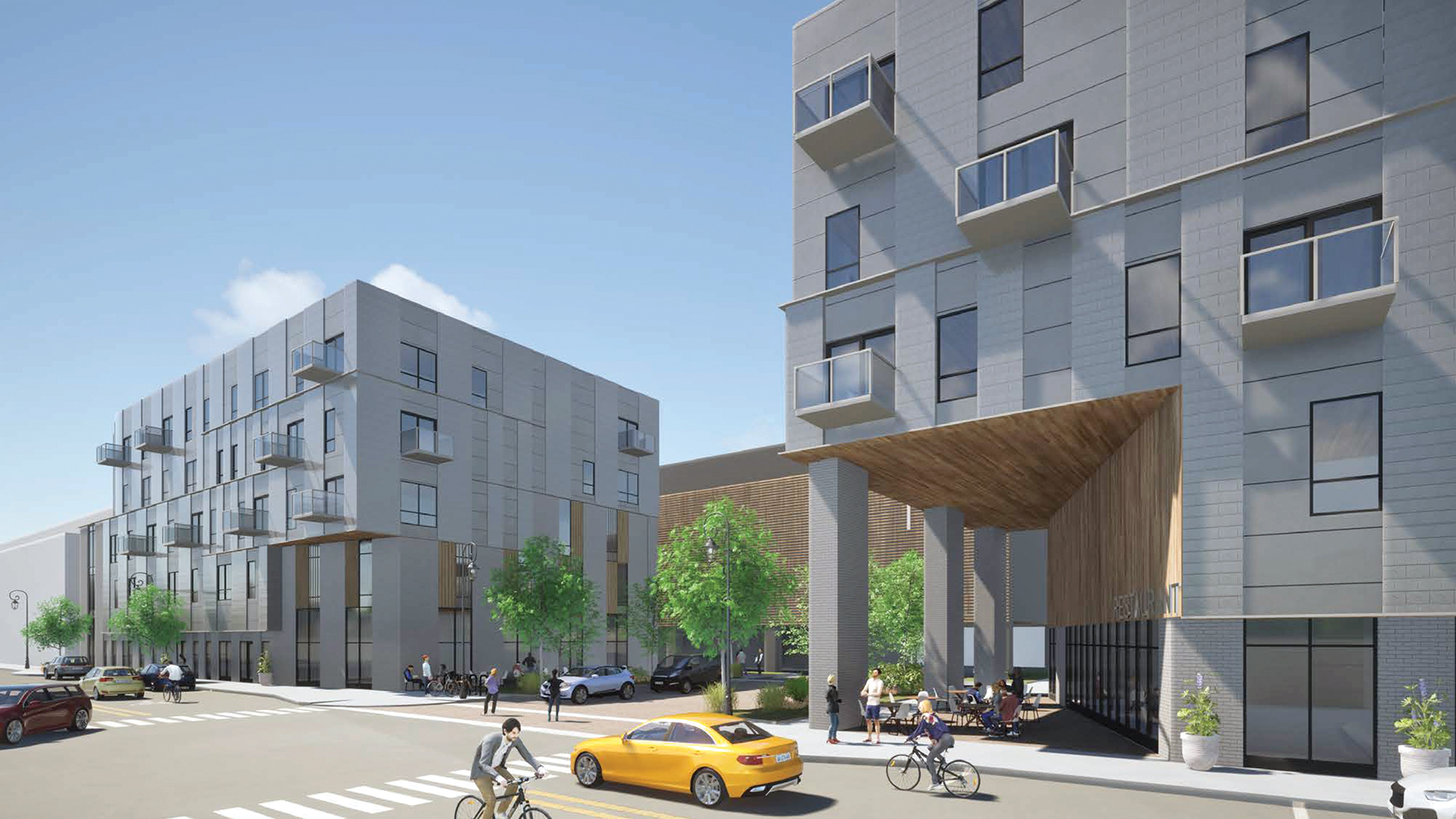
Several developments are currently under construction, including phase I of Merge Urban Development Group’s five-story, mixed-use building on the corner of N. Appleton St. and E. Washington St. The project includes 56 residential units and roughly 6,600 square feet of commercial space. Phase II is expected to begin construction in spring 2023 and will bring an additional 75 units.
In addition to increasing residential demand, industrial real estate activity is on the rise.
“There’s continued expansion and investment in the industrial sector, which we know has been a hot spot in the market, and we’re seeing that in Appleton as well,” says Matt Rehbein, City of Appleton economic development specialist.
Rehbein points to the city’s Southpoint Commerce Park, which recently saw the delivery of its first speculative industrial building by F Street Development — a privately-held investment group in Milwaukee. Rehbein says the 219,000-square-foot building on the 50-acre development was finished in October 2021 and is currently fully occupied.
This spring F Street broke ground on phase II, which is a 250,000-square-foot spec building adjacent to the first. It is anticipated to be completed in February 2023. Construction on phase III is slated to begin in March 2023.
In addition, Farrell Investments acquired a neighboring lot, which doubles the size of its existing facility in Southpoint. With an additional 37 acres currently under contract, the city is designing infrastructure to bring an additional 80 improved acres to the market to support growing demand for industrial and manufacturing land.
Child care crisis
While a lack of affordable child care continues to plague the nation, families in Appleton have recently been hit with an influx of service and operating hours reductions at child care centers due to what Judy Olson calls a “child care staffing crisis.”
According to Olson, executive director of Child Care Resource & Referral, child care is a basic need for employers, employees and job seekers; the lack of child care is a top barrier to the current and future workforce.
“The economic impact of child care helps to drive our local and state economies. When parents can access child care, they are more likely to enter the workforce and stay employed,” Olson says.
Child care centers face specific staffing challenges. Olson says it is difficult to cover classrooms when programs are short-staffed due to the age-based child-to-staff ratios programs must follow. In some cases, child care programs must choose between reducing the number of hours or days they provide care or closing classrooms completely, Olson explains.
CCR&R’s most recent child care capacity report, conducted in August, found there are currently 6,073 total regulated child care spots (including child care centers, family child care homes, preschools and school age programs) in Outagamie County. The 2020 KIDS COUNT report, a Project of the Annie E. Casey Foundation, shows there are 28,492 children ages 1 to 11 in Outagamie County.
This means there are only enough child care spots for roughly 21% of children in the county.
“This data shows the crisis families in our communities face — there are not enough regulated child care spots in our communities to serve the number of children that may need child care,” Olson says. “Families regularly speak with CCR&R referral specialists during child care follow-up calls and have shared that some child care programs have waiting lists until 2024.”
Sadly, the future doesn’t look much brighter. Rehbein, who serves on boards for both Bridges Child Enrichment Center and the Appleton YMCA, says when ARPA funding runs out at the end of the year, he anticipates even more child care providers limiting services.
“Right now child care is heavily subsidized with ARPA dollars and various grants associated with that. But once that’s out, you’re going to see a bunch of daycares that won’t be able to adjust,” Rehbein says. “Whether it’s closing on Fridays or limiting hours or however that looks, that’s on the horizon.”
But efforts are being made to increase access and strengthen the child care workforce. In November, the Outagamie County board approved its 2023 budget, which includes a 26% funding increase for child care services. In October, Wisconsin was awarded a $15 million grant from the U.S. Department of Labor that will be used to expand child care access and affordability across the state.
“We need to encourage lawmakers and representatives to push for public investment in child care and raise awareness that lack of child care slots is a social issue, not just a family issue,” Olson says. “By ensuring children begin their lives with the proper early education tools needed to succeed, we are supporting a generation that will become the economic backbone of society.”

