

Aaron Schuette wishes he could do more to help when he receives calls from families wanting to make the Village of Ashwaubenon home. From the highly-rated schools to the excitement of residing in Titletown, U.S.A., the demand is there — and growing. But supply of both land and housing is dwindling. The village has turned its focus to some impressive high-density projects, including the 145-unit Aldon Station development on the site of the former Schneider Trucking “pumpkin patch.” But when it comes to single-family homes, there’s another factor affecting the inventory: short-term rentals.
Schuette says changes in state laws limiting Ashwaubenon’s zoning authority have led to a buy-up of single-family homes in the neighborhoods around Lambeau Field over the last five years. As of November, Ashwaubenon was home to 53 licensed short-term rental properties, Schuette says — 40 of which are run by companies or LLCs. The ranch homes draw a high rate on peer-to-peer home rental platforms like Airbnb and VRBO for Packers home games and other major events held in Lambeau, Resch and Titletown. The rest of the time, they sit empty, which is a detriment to the village.
“Our school district boundaries are relatively small, and when all of a sudden these homes are being bought up by LLCs, obviously they don’t have kids going to the school district,” Schuette says.

Atticus Jaramillo, a visiting assistant professor in housing and urban development planning at the University of Wisconsin-Milwaukee, says Ashwaubenon is not alone in dealing with the fallout of housing conversions to short-term rentals. Places with strong tourism industries — including Door County, where supper club owner Paula Anschutz recently made headlines for buying resort cabins planned for demolition and relocating them to create workforce housing — are especially feeling the impact.
“Most Airbnbs are just taking homes off the market for anybody who lives there,” says Jaramillo, adding that some communities have tried imposing additional taxes on short-term rentals that are designated for an affordable housing fund or reworking zoning codes to limit conversions. “And it’s very hard to tell people what they can and cannot do with their properties. [Short-term rentals] are very lucrative.”
Short-term rentals, college housing, the buy-up of foreclosures during the Great Recession and zoning laws are all issues that have affected the availability of affordable single-family housing across the New North region over the last decade, but there’s also just the good, old-fashioned issue of construction not keeping pace with population growth.
“As the supply gets tighter, the biggest challenge is that folks at the top of the market can buy down … out-compete folks who have less income,” says Noel Halvorsen, president and CEO of the nonprofit housing organization NeighborWorks Green Bay. “That continues all the way down until you get to the housing vulnerable. They just don’t have any housing options.”
Jaramillo says the current shortage, exacerbated by the Great Recession, actually dates back to the decline of federal appropriations for public housing that started in the early 1970s.
“We’ve stopped building publicly-subsidized, affordable housing, and at the same time the private market hasn’t been producing enough,” Jaramillo says.
And when the private housing market does build, it has been primarily focused on large, high-end homes.
“We have very restrictive local zoning laws that will only allow you to build large lot single family homes, and for most cities that crowds out opportunities for new development,” Jaramillo says. “When the lots are very large, it just makes it harder to build housing in general.”
Fast forward
Financial advisor Don Hammond has watched Sheboygan County’s supply of affordable housing decline for 15 years. And when a major employer came to the Sheboygan County Economic Development Corporation, which Hammond has chaired since 2019, suggesting the problem could spur its relocation, SCEDC jumped to attention.
As home to some of the largest employers in the world, let alone Wisconsin, Sheboygan County has a lot at stake when it comes to housing availability. “We have an aging population, and a lot of employees need to come from outside the area because we’re a county of just 110,000 people,” Hammond says.
It was a company town problem seeking a company town solution. Enter the unique public/private partnership the Forward Fund — an effort to construct as many as 1,000 homes in Sheboygan Falls over the next five years. The project is spearheaded by SCEDC with donations of $2 million each from Masters Gallery Foods, Sargento Foods, Kohler and Johnsonville. The city will provide the land and infrastructure, builder proposals were under review in December, and SCEDC anticipates starting work this month.
Although the U.S. has a rich history of housing developments led by employers, Hammond says the ambitious project is basically uncharted territory in the modern era. He’s found no models to follow, and securing a capital stack to ensure buyer affordability is currently the project’s biggest challenge. But there are plenty of angles for success, he says.
“This rising tide lifts all boats, and if a business can attract workers to the area and they’ll stay because they have great housing, that’s a win-win,” Hammond says. “And from the municipality standpoint it’s an increase in tax base, so if we can pull it off it’s a win-win-win.”
Jaramillo says the Forward Fund model is indeed rare, but across the U.S. more state housing finance agencies are looking toward partnerships with regional employers.
“They’re starting to think about how we can meet their housing needs so we’re not seeing this loss of population, jobs and this vicious cycle that affects so many smaller, rural communities,” he says.
Adaptation
Over the last month, NAI Pfefferle’s residential management department has been flooded with requests for tours of The Residences at Zuelke, a labor of love for Indianapolis-based Tegethoff Development that is transforming a legendary Appleton office tower into luxury apartments in the heart of the city’s downtown. Jeff McLaughlin, manager of Pfefferle’s residential department, says companies seeking housing for both visiting and new employees, as well as retirees and remote workers looking to take advantage of the downtown’s entertainment amenities in the aftermath of COVID-19, are all attracted to the market-rate property.
The project is an example of adaptive reuse, which Tegethoff Managing Principal Matt Cremer says is a key part of his company’s core business strategy. And in a historic property like the Zuelke Building where things like antique brass and marble need to be repaired and maintained, Cremer says remodeling is actually more expensive than new construction. Thanks to historic tax credits from the State of Wisconsin and strong support from the city, however, the project has moved forward and is near completion.
“This is such an important building to the community that the outpouring of interest in it since we bought it has been pretty unbelievable — something I’ve never seen before,” Cremer says.
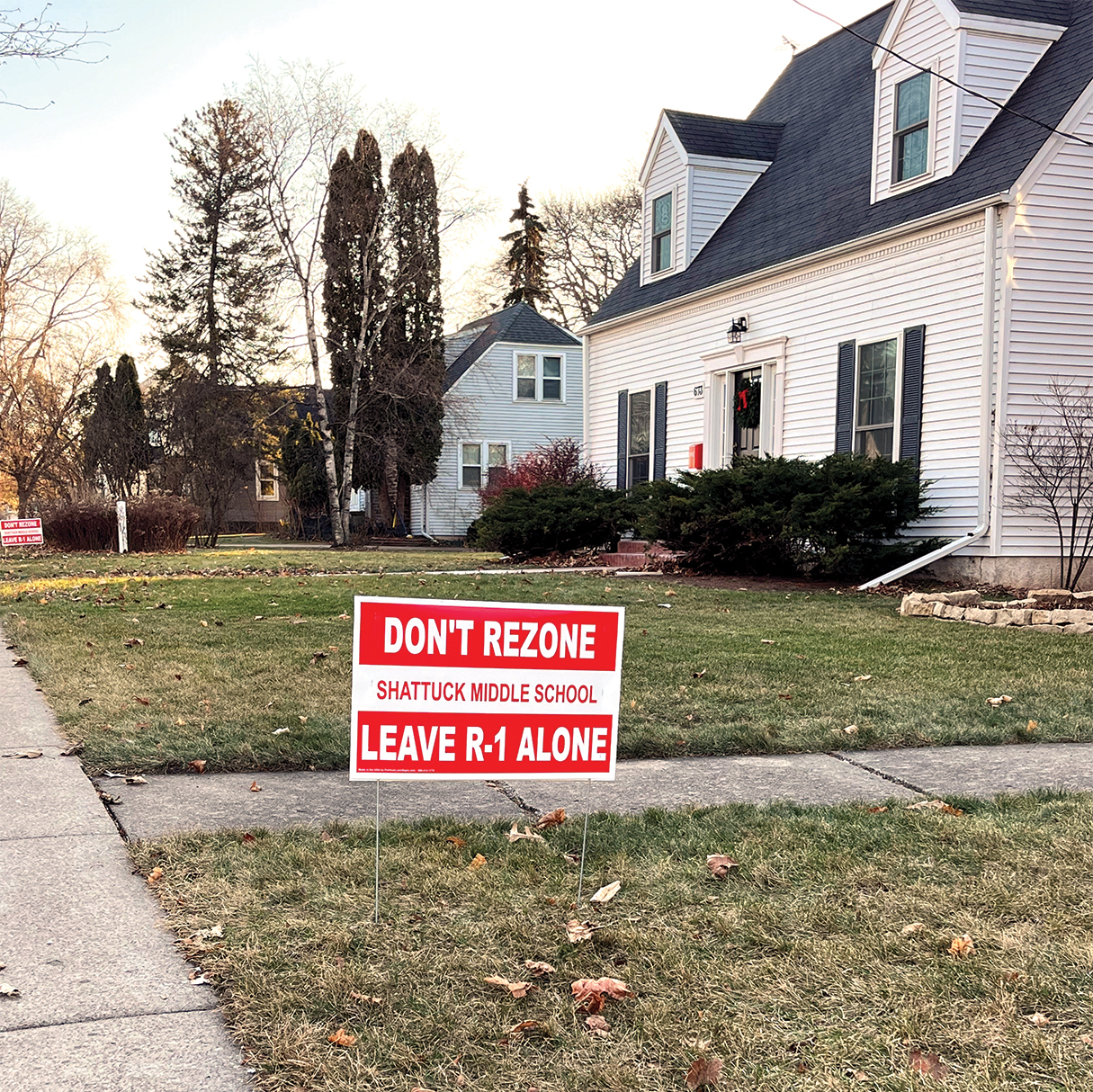
Meanwhile, on the other side of the Fox Cities, an outpouring from the community stopped the adaptive reuse of Neenah’s soon-to-be-shuttered Shattuck Middle School. Oshkosh-based Northpointe Development had an accepted offer to purchase the property for $500,000 and planned to remodel the 1928-vintage building into nearly 90 apartments, as well as add 49 single-family homes along Elm Street, starting this year. But neighbors aggressively campaigned against the development, and on Dec. 7 Northpointe backed out of the deal when Neenah’s Common Council rejected the proposal to rezone the property.
Jaramillo says community members tend to believe, often based on unfounded stigmas, that constructing multifamily housing in their districts will lead to lower property values and higher crime. Minneapolis made headlines in 2018 when it became the first major U.S. city to implement a ban on single-family zoning in every neighborhood.
As of press time, the Shattuck Middle School property was back on the market in Neenah.
Jaramillo says the Neenah case highlights how the nationwide prevalence of Euclidean, or single-use, zoning limits access to affordable housing.
“The trouble with this approach to zoning is that it rigidly defines acceptable land uses, which makes it difficult to repurpose land or buildings like schools for different uses,” he says.
Small solutions
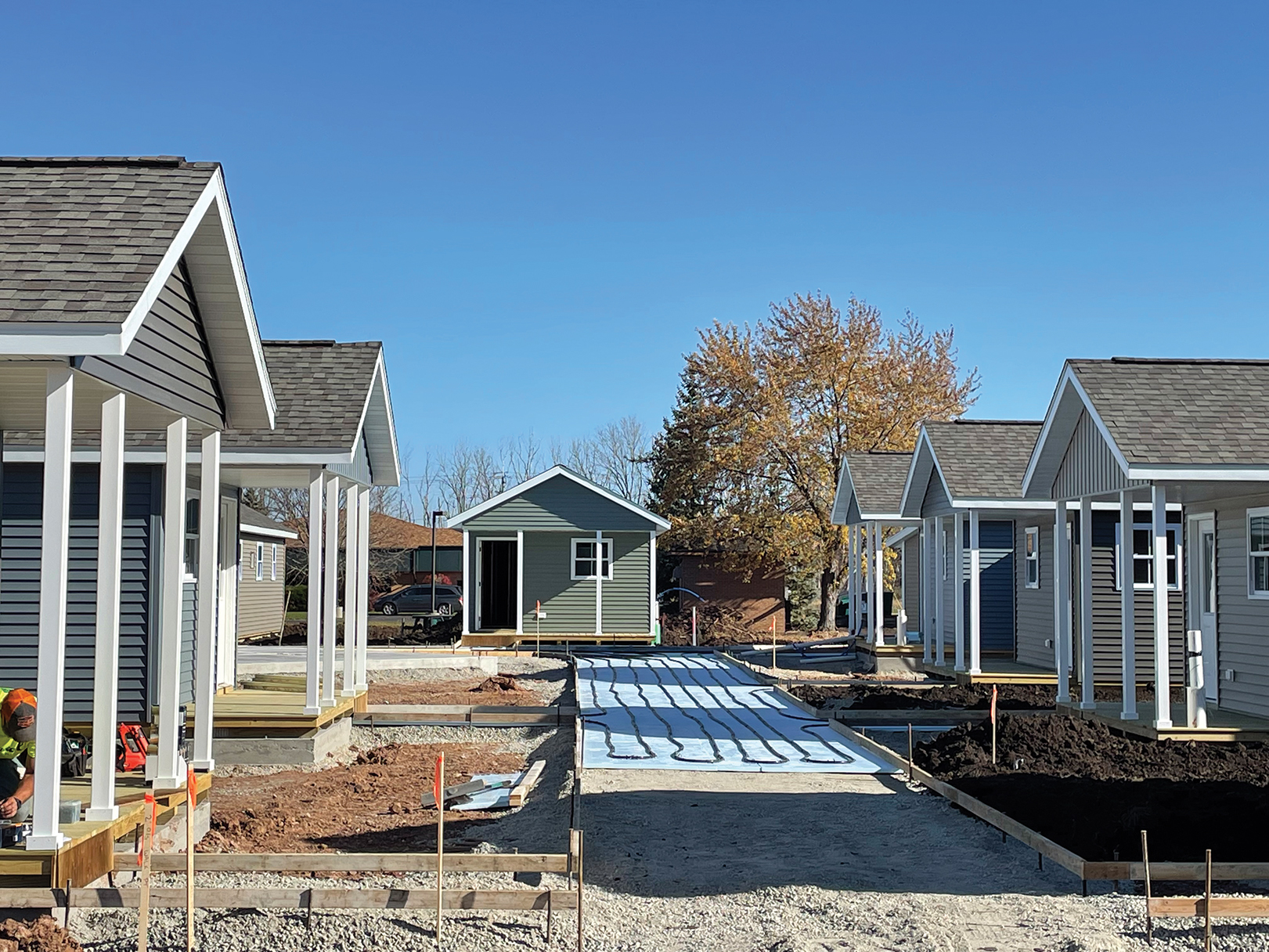
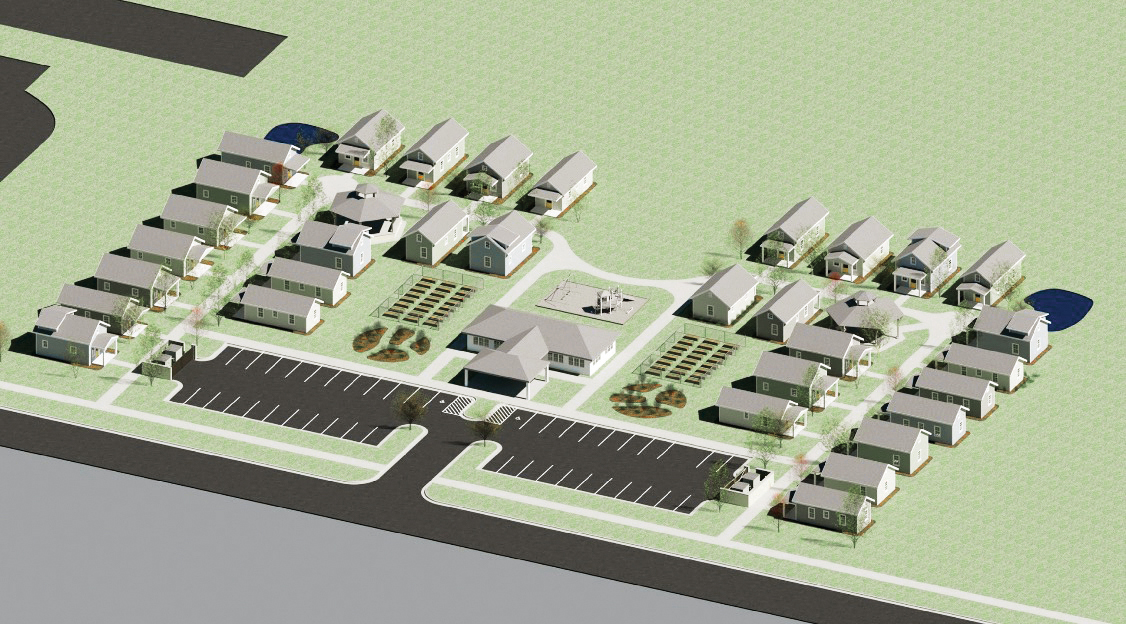
Solving the housing crisis means innovative reforms at every level — most importantly, for the New North’s homeless population. In June, Oshkosh Kids Foundation broke ground on a first-of-its-kind housing project that aims to provide shelter to roughly one-third of Oshkosh’s homeless youth population through the construction of a tiny house village.
The project was spearheaded by Oshkosh Kids Foundation co-founders Julie Dumke, a retired educator who now serves as the organization’s executive director, and Wilson Jones, the retired CEO of Oshkosh Corporation. The project’s lead donors were Oshkosh native T.J. Rodgers and his wife, Valeta Massey. Dumke says Rodgers has a passion for tiny houses and solar energy, and he wanted to support a similar effort in his current home state of California — but it was Oshkosh that proved to be more progressive and think outside the box on zoning and setbacks. Dumke says she believes Oshkosh is to be the first city in the nation to allow tiny houses for families; similar projects have sheltered mostly singles — veterans and seniors.
“This doesn’t fit any model that’s out there,” says Dumke, describing a neighborhood that includes a shared community center with services like laundry and rec space, as well as offices for programming from social services agencies like ADVOCAP. “What makes us different from other programs is that families are required to do services to stay here, and they’ll be here on site. All our partners are people who are already doing the work; we’re just providing a space.”
To be eligible for the two-year rental assistance program, families must have school-aged or younger children. Oshkosh Kids Foundation Board Chair Will Deppiesse says that over the last decade Oshkosh has averaged about 175 documented homeless children, so the need is strong — especially coming out of COVID-19 and the Biden Administration’s moratorium on evictions, which resulted in fewer housing vacancies.
“When you have very low vacancy rates, it’s very easy for a landlord to say ‘thanks, but no thanks,’” Deppiesse explains.
The tiny house solution, Deppiesse says, has many benefits: The space is small enough that guests and pets will be prohibited, allowing the families to focus on lifting themselves out of poverty. Experts say that shared walls, floors and ceilings are often the source of housing challenges. Having one’s own newly-constructed home can be a motivating sense of pride. And the model is scalable and repeatable.
And while Dumke and Deppiesse are quick to acknowledge that Oshkosh Kids Foundation is not going into the housing business long-term, they hope they’re creating a model that makes a real impact.
“It’s what’s needed in all our communities,” Deppiesse says, “more affordable housing at the lower income scale.”