

Economic opportunity comes in many forms.
Sometimes it’s public and obvious. Perhaps it’s an investment in a large company expansion, or infrastructure to support large economic projects. Or, it’s an investment in people, perhaps retraining grants for potential employees or employer tax credits to retain and grow a diverse workforce.
Then there are those times it’s very subtle, almost a butterfly effect or a distant domino beginning a chain reaction that doesn’t appear obvious at first, yet makes a critical impact for a community and the regional economy.
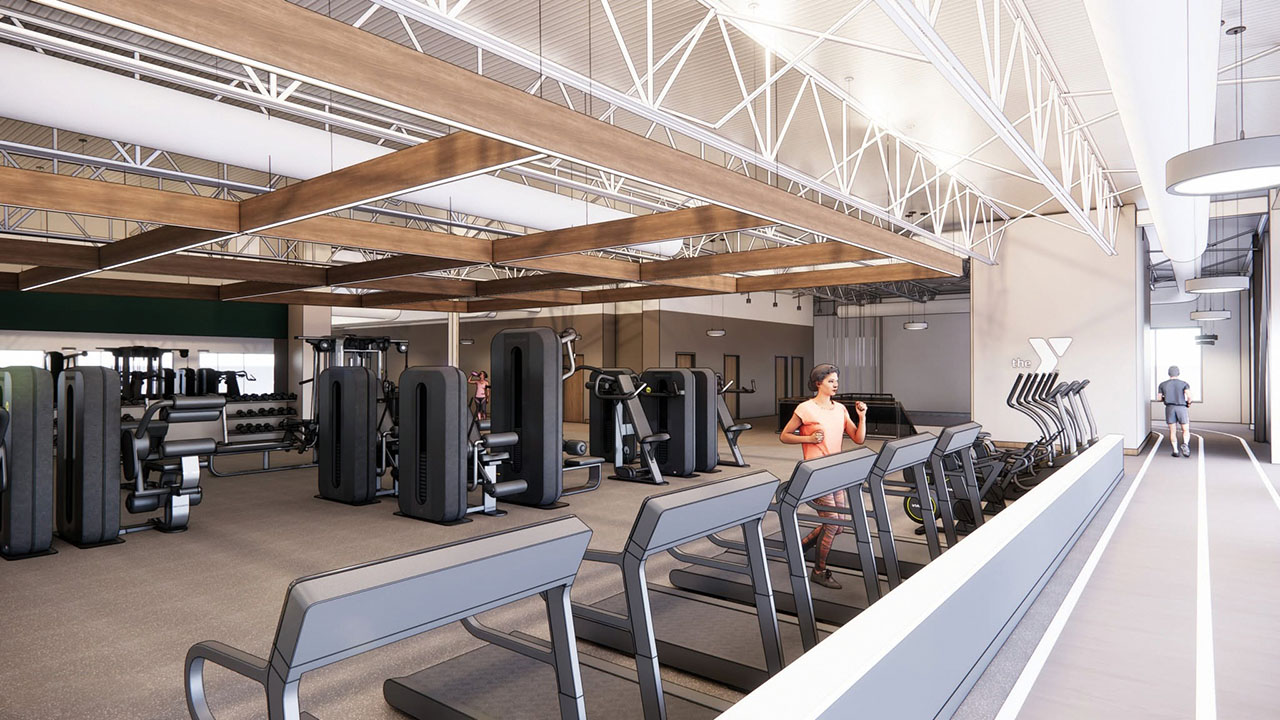
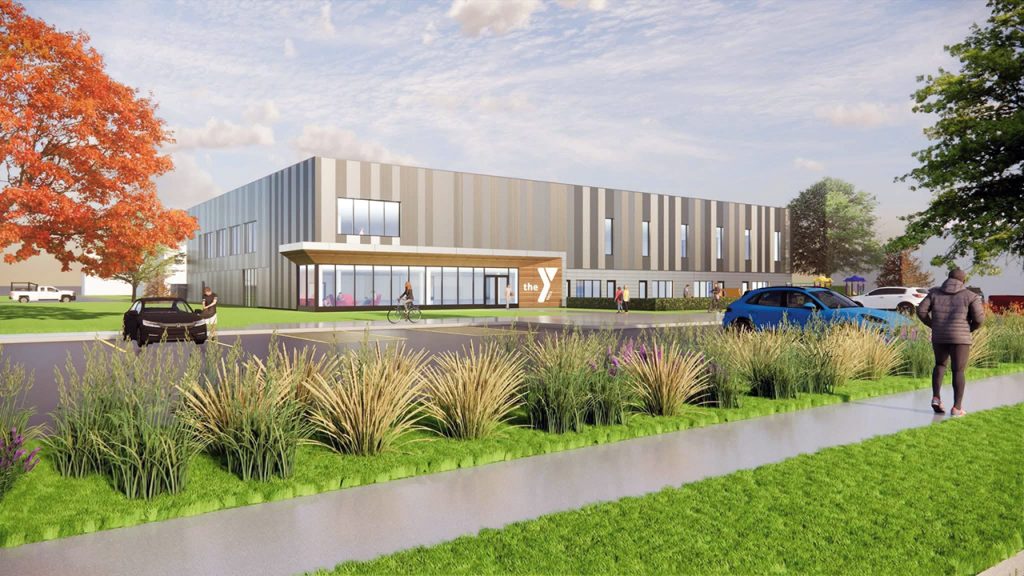
For Waushara County, one of those dominoes falls into place this September when a nearly $20 million YMCA opens its doors to the community.
“It’s kind of a unique, in‑between size as far as Y facilities we have around the state,” Ryan Zietlow, president and CEO of the Stevens Point YMCA, says of the new facility. “The studies told us there was a need; our task was to figure out how to meet those needs for the community and yet be sustainable for the community.”
The new Waushara County YMCA will operate as a satellite facility to the Stevens Point YMCA, another satellite facility in Plover and a YMCA camp under that umbrella. The project is the result of a major gift made to the Community Foundation of Central Wisconsin.
The foundation approached the YMCA about fulfilling the intention of the gift, and after several site visits around the country and an intensive feasibility study Zietlow says it was clear a YMCA facility could fulfill several unmet needs in Waushara County. Those include services for youth, family connections, child care and an aging population.
The next step was the capital campaign to leverage the gift and raise money to build the facility. The campaign was broken into two parts: phase 1, roughly $10 million for the main building; and phase 2, more than $5 million to add an aquatics center. Using a combination of major corporate gifts, community donations and state and federal grant programs, more than $16.5 million has been raised for the project.
A remaining gap needed to complete the project is expected to be closed shortly — perhaps even before the opening, Zietlow says.
The new Y is located in Wautoma on the site of the old Waushara County Courthouse — a gift from the county — and in addition to the direct jobs and spending from construction, the facility is expected to employ about 60 when fully operational.
Just as important, perhaps, is the softer community infrastructure it will provide that can support efforts to grow the county’s workforce. Largely rural, the county’s workforce is principally engaged in manufacturing, health care and agriculture. But it is an aging workforce; the median age surpasses 50, and services such as child care and youth and family programming that could help attract younger workers with families have not been available within the county — until now.
The domino effect will also play a role in one of Fond du Lac County’s latest ongoing redevelopment projects — the renewal of the former UW‑Fond du Lac campus buildings into office, meeting and senior living space.
The 67‑acre UW System campus closed in 2024. While the state operated the college, the county owned the land and buildings.
Fond du Lac County Executive Sam Kauffman was quick to react, proposing an aggressive plan for the site featuring consolidated government offices, meeting spaces and a renovated exercise complex that are available for rental, and a law enforcement training center.
The renovated campus had a public unveiling in May. The $2 million spent to breathe new life into the complex came from federal and state grants, and it is presently self‑sustaining, with no county tax money going toward its renovation or operation, Kauffman says. In addition to the public safety training center, the county consolidated its human services department in the renovated office space, and federal and state elected officials also have offices there.
The county recently finalized the sale of a parcel of land from the campus that will be developed into market‑rate senior housing, with potentially 90 units expected.
“We are pretty sensitive to what is happening in the private sector,” Kauffman says. “With the senior development, we see an opportunity as those folks are ready to downsize and come here; it opens up single‑family housing elsewhere that can support young families.”
While the county’s low unemployment rate of 3.4% is a positive indicator for the local economy, it also indicates a tight labor market.
Workforce development and growth is a central emphasis of Envision Greater Fond du Lac’s 2030 strategic plan. Some of the key components are housing and the social infrastructure that make the area attractive to workers and their families. The county has been enjoying a bit of a housing boom, with new subdivisions coming online in Ripon, Campbellsport and Waupun.
“Our five‑year plan emphasizes the roles that talent attraction, small business growth and workforce development play in overall community vibrancy,” Envision Greater Fond du Lac President and CEO Sadie Howell said when announcing the initiatives, “from infrastructure needs like roads and parks to livability issues addressing housing, child care and transportation to building a community that promotes public safety and services.”