


For Northeast Wisconsin companies looking to expand or consolidate locations, the options have been sparse.
That’s where speculative buildings — or “spec buildings” — can be an important asset to a community, helping to draw companies who want or need move-in-ready space. But even though there’s plenty of demand for the space, most developers haven’t been eager to make the commitment of constructing a large building without already having a tenant.
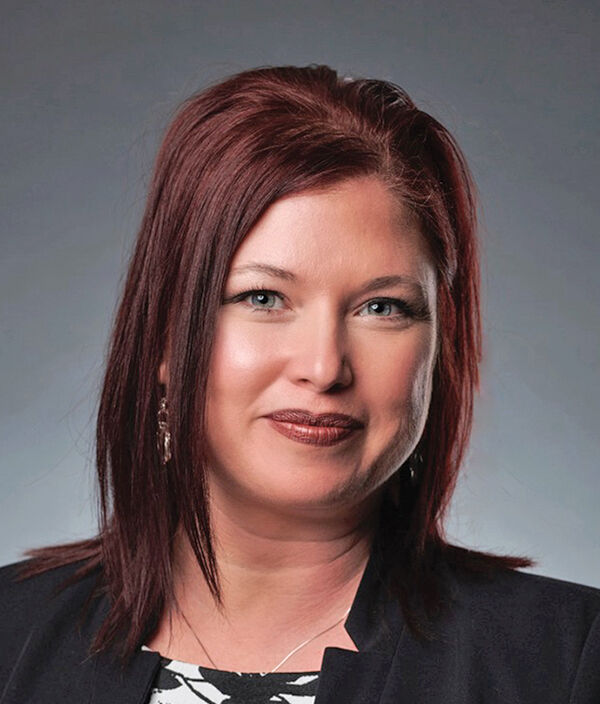
“What’s really exciting is that we have a great need,” says Kelly Armstrong, vice president of economic development for the Greater Green Bay Chamber. “We have seen in the area year-over-year growth of existing business expansion projects.”
In 2022, greater Green Bay saw 28 existing business expansion projects “and the number has increased year over year, even through COVID,” Armstrong says. Another factor speaking to the economic strength of the region is the diversity across manufacturing sectors, she says, “so we know we don’t live and die by one industry, which is really great. It makes us very resilient and strong. What that means, though, is that we have a need for space.”
While the size requirements run the gamut, “we do see kind of a general consensus around that [need for] 100,000 square feet of manufacturing space,” Armstrong says.
Last year, leaders were excited to see the first truly speculative building built in Brown County — meaning the structure was built without any leases signed or any potential clients in the pipeline, Armstrong says. The project came together through multiple private entities and investors who worked with the village of Wrightstown, making it a “really exciting public/private partnership” to Armstrong.
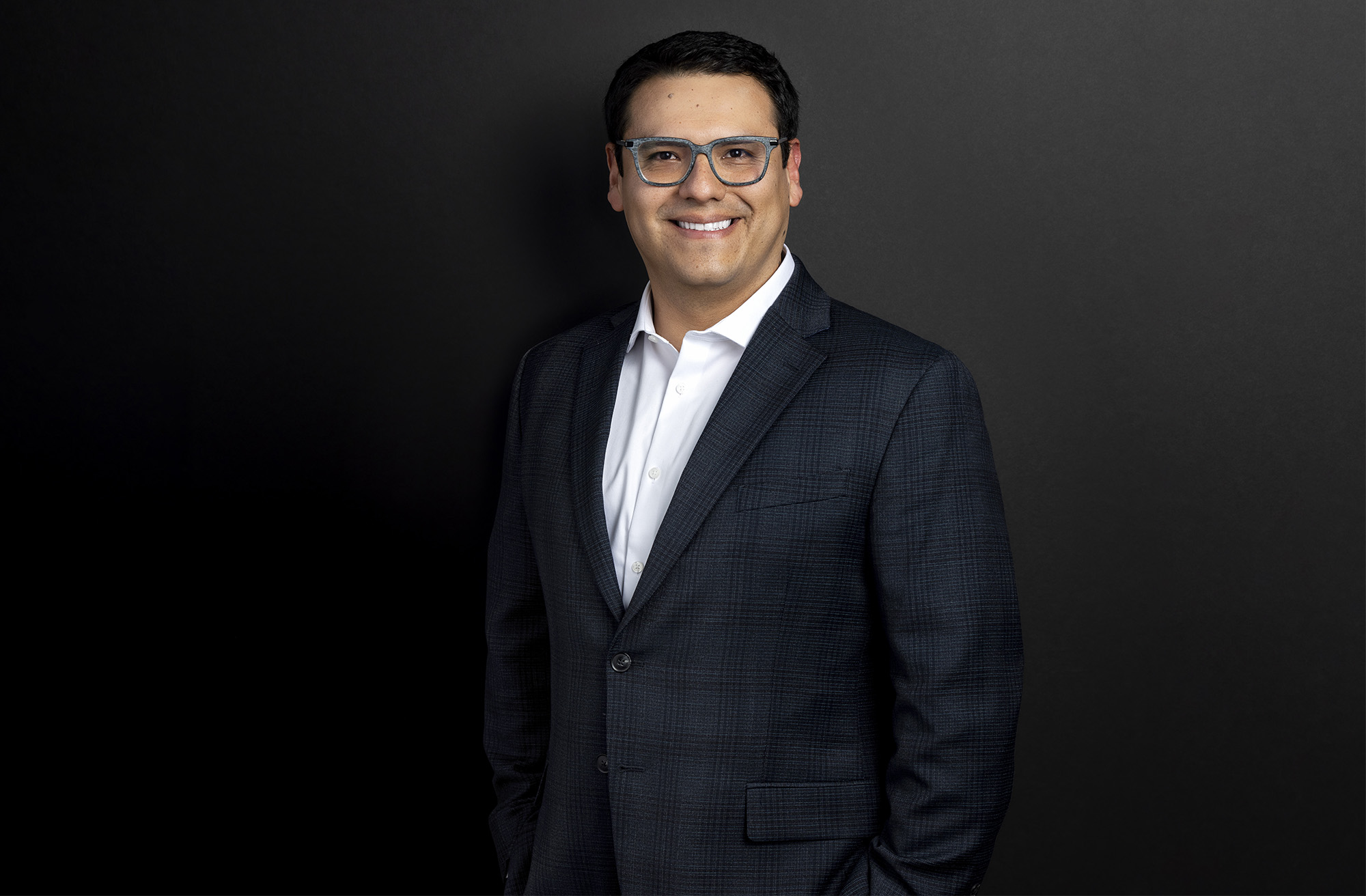
A local group identified Wrightstown as a good fit for a warehouse-type, light manufacturing facility that would be strategically located near Appleton and Green Bay and be able to also pull labor from both markets, says Manny Vasquez, vice president/partner at Pfefferle Companies. The 100,000-square-foot industrial space — a partnership of Consolidated Construction Co., Inc., NAI Pfefferle and a local development group — opened on Highway 41 in Wrightstown and has the potential to expand another 160,000 square feet.
Construction of that building ended at the end of 2022, and it’s now fully leased with three local-regional tenants that were expanding or consolidating and needed the space, Vasquez says. John’s Refrigeration is leasing one suite; Pieper Automation and Pieper Electric are leasing the other two.
“So that was a good example of one of the ways that you can solve the problem is by building speculative buildings,” Vasquez says. “I think now because of higher interest rates and higher cost and just the uncertainty of the economy, there’s been a slowdown of new projects, especially speculative projects.”
The availability of space-for-lease has been especially challenging for companies that are trying to expand or consolidate locations, Vasquez says.
“The need for industrial space, especially more modern and ready-to-go, to turnkey, has been pretty high,” he says. “I think demand has certainly been ahead of the limited inventory of existing industrial space that we have across the region.”
Northeast Wisconsin currently sees about a 2% vacancy rate on the industrial side compared with 4.5% at the national level, and, Vasquez says, “we’ve been there for the last decade. I think it’s an owner-occupant type of market — that’s sort of the DNA.”
Industrial space can include warehousing and distribution, heavy or light manufacturing, or assembly and flex space, which is a combination of office and industrial, he adds.
Other local projects include the development planned by Milwaukee-based F-Street Development, which is adding nearly a half-million more square feet of industrial space in the Southpoint Commerce Park in Darboy. That project includes planned phases of more than 200,000 square feet each, Vasquez says.
NAI Pfefferle is working on marketing another 100,000-square-foot building in Sheboygan’s SouthPointe Enterprise Campus which, like the Wrightstown project, is a true speculative project without tenants signed on. Construction is complete and the building is available for lease, and the property has enough land to expand the building to 200,000 square feet.
The company also is leasing two new, 12,000-square-foot Class A flex industrial buildings: one on Highline Road in Kaukauna that has two units, and one on Mayflower Drive and W. Clairemont Drive in Grand Cute that has four units.
“In both cases, as well as in other projects that we’ve been involved in, it was critical to have the existing infrastructure in place to spur new development,” Vasquez says.
NAI Pfefferle also is leasing an existing 38,830-square-foot manufacturing and distribution space near Jackson Street in Oshkosh.
“There is more product coming to the local market to address the ongoing need for industrial space, which is good news for companies looking to locate, expand or consolidate in the region,” Vasquez says.
Peter Thillman, chief economic development officer for Shawano County Economic Progress, Inc., says demand for industrial space is certainly high, particularly for companies that have outgrown their space. In September he was conducting site searches for three different companies seeking to rent space in the area. Of particular interest is manufacturing space between 10,000 and 40,000 square feet, but for most companies he says it doesn’t make sense for them to build right now.
“The cost of new construction is scaring them away,” Thillman says. “But some of them are looking at new construction just because they don’t have any other options, and we are seeing this strong demand from out-of-area businesses into Shawano, for expansion purposes or second locations, too.”

Steve Diedrich, senior vice president of economic development for Consolidated Construction, says with that strong demand for manufacturing and industrial space, local community leaders recognized the need and helped make the projects in Wrightstown and Sheboygan happen with tax incremental financing and other resources.
“There just hasn’t been a lot of manufacturing and industrial space built, especially on a lease-to-own basis or on a lease basis,” Diedrich says. “A lot of manufacturers have added on to their own facilities. For anyone that’s looking to maximize their internal rate of return, owning their own real estate isn’t always necessarily the best choice to make that happen.”
Diedrich says a lot of offshore manufacturing is returning, partially because of a recognition of supply chain issues that came to light during the pandemic, increasing the need for space stateside.
For new construction, “there’s an emphasis on ‘worker comfort,’” Diedrich says. “Think of the old dirty factory; that’s just not the case anymore. A lot of these facilities are climate controlled; they have facilities for employees — gyms, break rooms, solar facilities, all that kind of stuff that you wouldn’t expect to see in the manufacturing facility we saw built in the ’60s, ’70s and ’80s.”
From an economic development standpoint for the region, it makes sense to have a mix of properties available for companies seeking available space.
“There’s a risk of losing those companies or at least parts of a company to other locations that have that available space they’re looking for,” Vasquez says.
There’s also plenty of potential for adaptive reuse, considering the space left by retailers such as Shopko, Vasquez says. Such reuse offers another alternative to companies that may otherwise have trouble finding space.
Examples include Catalpa Health leasing the former Sears Outlet in Grand Chute and U-Haul purchasing the former K-Mart store on Fulton Street in Waupaca. That 80,000-square-foot space was developed by U-Haul into storage units with a loading and unloading zone, with a retail space for packing materials and moving truck rental in the former pharmacy area, The Waupaca County Post reported.
The National Association of Realtors says office space vacancy nationwide has grown from just over 9% in 2019 to more than 12% in Q4 2022, a trend fueled by the pandemic when many workers began working from home — and stayed there.
Locally, some office space has been converted to multifamily use, such as with the former Zuelke Building in Appleton, now converted into the Residences at Zuelke.
It all comes down to what’s the most cost-effective for the developer.
While speculative buildings are common across the United States — particularly in the southeast — they’re less common in Wisconsin, and a lot less common in Northeast Wisconsin, where developers are more prone to building for clients they already have in place, Armstrong says.
But “having the available space ready for someone to move or expand is really in our best interest as a community,” Armstrong says. “I think that the demand is there, the challenge is getting people to take the risk to make that investment.”