
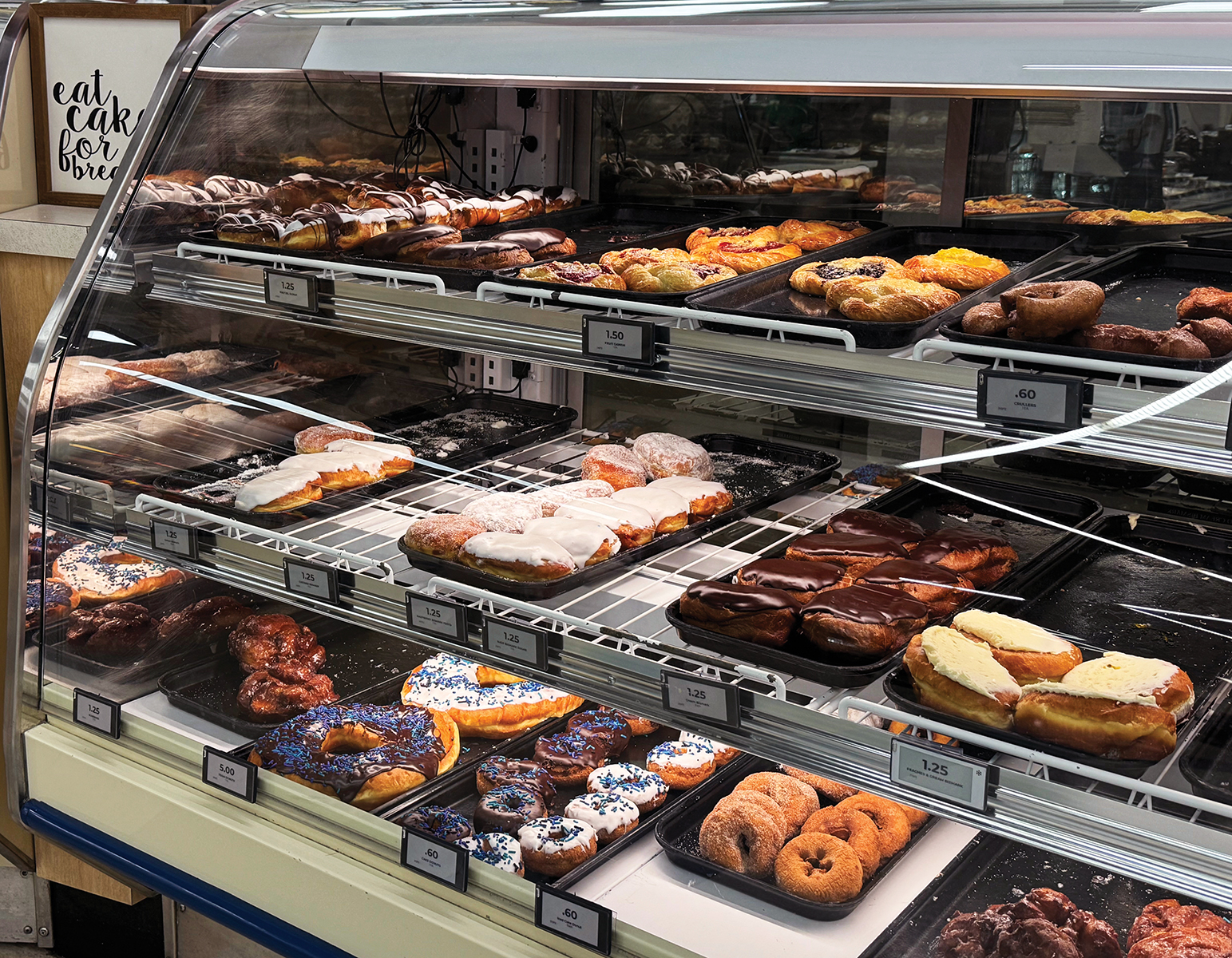

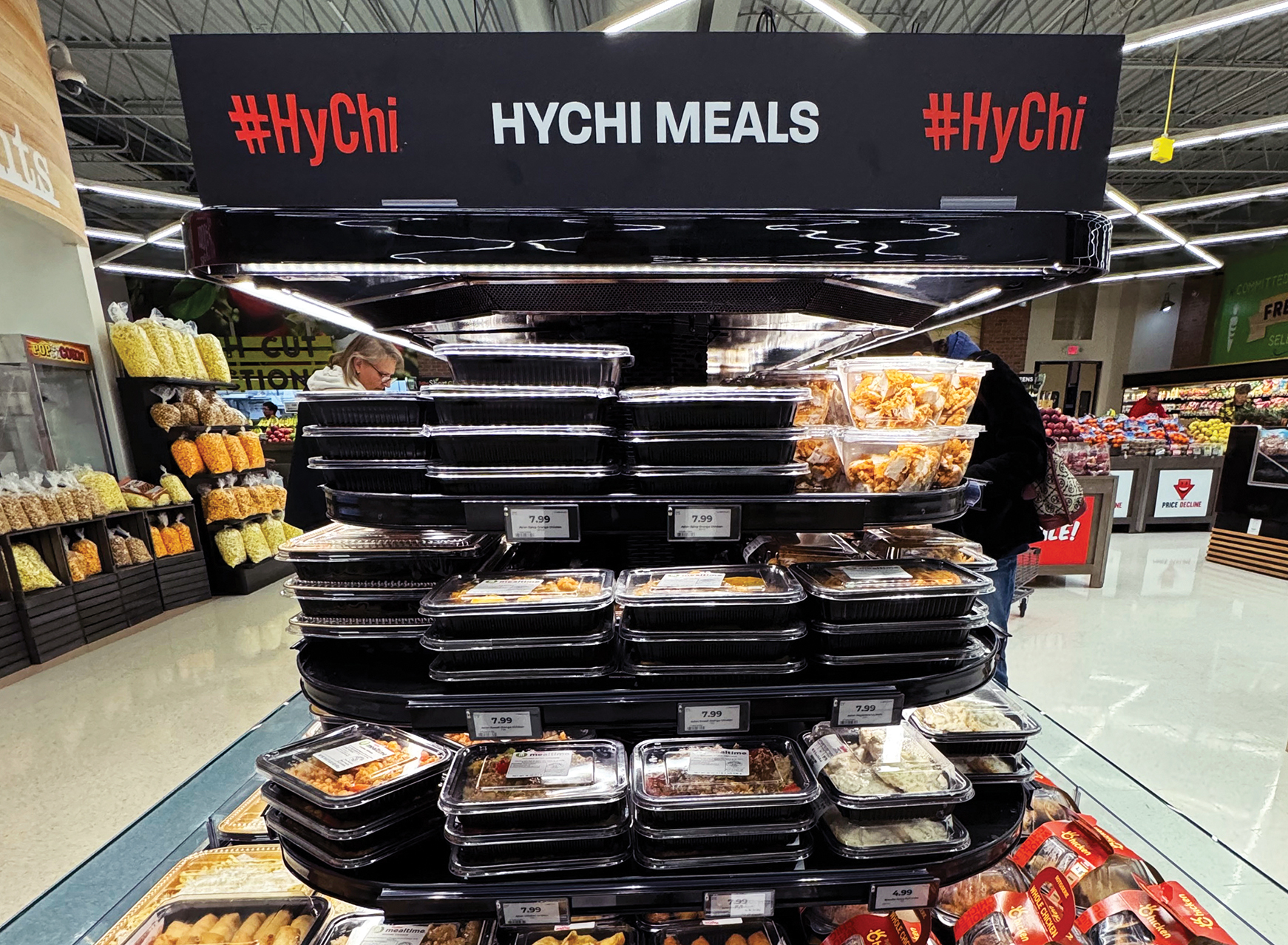
When you walk into the new Hy-Vee on Fond du Lac Street in Ripon, the air is still yeasty with the familiar scent of Webster’s Marketplace doughnuts. But round the corner, and you’ll see signs of the formerly independent grocery store’s new owner. You’ll find a cold case piled with prepared “HyChi” — short for Hy-Vee Chinese, which has gained a cult following among patrons of the Iowa-based grocer. As of Nov. 6, Webster’s employees don red Hy-Vee polos and nametags indicating their years of service. But the store remains airy, friendly and well-stocked, and there’s a sense of cautious optimism among Webster’s longtime fans, who were concerned this fall when the store’s sale was announced.
Tina Potthoff, Hy-Vee’s senior vice president for communications, says the chain had its eye on Webster’s Marketplace for some time; purchasing existing stores in advantageous locations is part of the company’s growth strategy.
One message Potthoff says was delivered loud and clear: Please don’t dare mess with the doughnuts.
“The store is absolutely amazing, and that was part of the reason we were attracted to it,” she says. “We’d been talking to the owner for a while, and [we] asked that when she was ready to sell to keep us top of mind.”
That owner, Candie Webster, didn’t take lightly the decision to hand over the keys to her family’s store to Hy-Vee last month. She said finding a buyer who would maintain the quality, service and community investment that made Webster’s beloved was an important consideration in choosing to sell. In a prepared statement, Webster described Hy-Vee as “committed to working with our community and making sure the store is embedded in the area,” making the transition “an even better fit.”
Big, bigger, biggest
Hy-Vee, which was recently voted as the Best Grocery Store in America by USA TODAY readers, is an employee-owned corporation that operates in nine Midwestern states. Its Wisconsin footprint was limited to Greater Madison, La Crosse and Eau Claire before it constructed a 125,000-square-foot flagship store in Ashwaubenon in 2022; the addition of the Ripon store now makes two for Hy-Vee in the New North region.
“We’ve started expanding a little further into Wisconsin over the past five years, so this made a nice addition to the portfolio,” Potthoff says. “With the location right between Madison and Ashwaubenon, it made sense when it came to looking at things like deliveries.”
And while Hy-Vee operates more than 570 business units and looks to continue its expansion into Wisconsin, it’s not by any means the country’s largest grocery chain. According to 2023 data from Solomon Partners, 61% of grocery market share in the U.S. is claimed by five companies: Walmart, Kroger, Costco, Albertsons and Amazon.
Five could soon become four, however. Cincinnati-based Kroger, which operates Pick ’n Save, Roundy’s, Metro Market and Copps grocery stores in Wisconsin, is currently seeking to merge with Boise-based Albertsons, creating the largest union of supermarkets in U.S. history. Citing concerns that the $24.6 billion merger would deliver too big a blow to competition, the Federal Trade Commission has worked to block the deal. Eight states and the District of Columbia signed onto the FTC’s lawsuit, while Colorado and Washington also filed separate suits. As of press time, judicial rulings were still being anticipated in all three cases.

Attorneys for Kroger have argued that merging with Albertsons will help more traditional grocery stores balance power against non-union players like Walmart, Costco and Amazon. Regulators, on the other hand, say the merger gives retailers less incentive to lower prices, which have jumped more than 21% since the pandemic.
And while Wisconsin has seen its share of mergers and acquisitions, the “backbone of the retail food industry in Wisconsin is still the independent grocer,” says Mike Semmann, president and CEO of the Wisconsin Grocers Association. “We’re seeing consolidation in a lot of different industries, and retail grocery is at a point where we’re hoping we could see the end of the rapid consolidation.”
Sticker shock
Green Bay resident Emily Bangen says spaghetti is a go-to “cheap” dinner at her household, and she’s noticed the price of the jarred sauce she buys has climbed “at least a whole dollar” in the past few years. She says she understands the economic factors that have led to the spike in grocery prices, but as a consumer of course she finds it frustrating.
She’s not the only one.

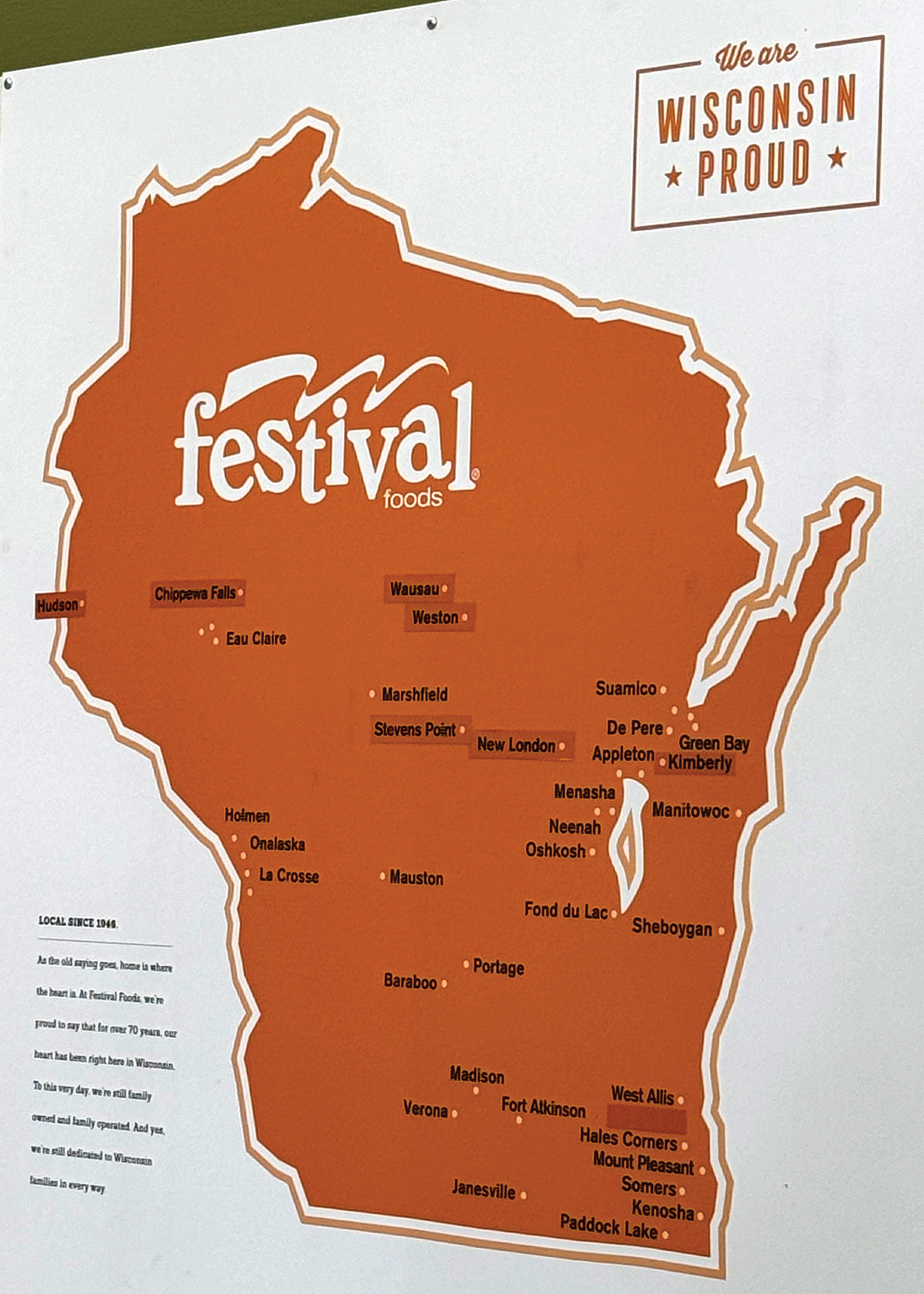
Mark Skogen, CEO of De Pere‑based Festival Foods, which operates nine Hometown Grocers, Inc. and 43 Festival Foods stores in Wisconsin and opened its newest store in Hudson last month, says the grocery industry’s position at the end of the supply chain makes it something of a front door to the nation’s inflation concerns.
“Everybody has to eat, you know,” Skogen says.
When he hears complaints, especially from politicians, that grocery stores are raking in record profits, Skogen says it’s like “nails on a chalkboard.”
“You couldn’t get away with pricing that isn’t fair and sharp; it’s 2% net profit at best in our industry,” he says. “We’ve never had a harder time trying to make a profit than we do right now … with all the challenges that are out there in cost of goods, labor, field prices and all of that.”
Analysts broadly pointed to inflation as the top issue for voters in the 2024 U.S. presidential election, with both major party candidates making the cost of groceries a centerpiece of their campaigns.
Andy Harig, vice president of FMI – The Food Industry Association, released a statement on Nov. 13 stating that “food price inflation remains on a solid path” after release of the October 2024 Consumer Price Index, which showed food-at-home prices increased just 0.1% for the month and fell 1.1% year over year.
Inflation, Semmann says, is “baked into our economy.” The challenge for front-line retailers in Wisconsin is navigating their position on the supply chain, he says, and maintaining healthy competition within their markets.
“There’s global stability, supply chain [issues] within the United States, and then you’ve got other wage pressures as well,” Semmann says. “All of it, unfortunately, is not great for the consumer. I hear from retailers all the time that [they] would like nothing better than to keep prices in a place that keeps consumers happy; they’re doing their best to keep consumer prices at a level they can remain competitive in.”
Kroger has vowed to invest $1 billion into lowering prices if its merger with Albertsons goes through. Retailers including Target and Hy-Vee, which both sell higher-margin hard goods in addition to groceries, have recently announced price-lowering initiatives. Lowering prices is harder to do in a smaller, grocery-focused operation like Festival, Skogen says, and price fluctuations have long been part of doing business.
“We lower thousands of prices and raise thousands of prices every week based on the cost of things that come in,” Skogen says. “[Lowering prices] would be great to be able to do, but I don’t know where those dollars come from.”
The future of shopping
Like every other industry, grocery stores are grappling not just with competition and inflation, but significant technology and labor disruptions. In a 2022 survey conducted by FMI, 88% of food retailers identified workforce shortages as a top concern. Supply chain disruption, evolving consumer behaviors, changing marketplace and societal dynamics, accelerating technology transformation, and rising ESG expectations round out the top six industry issues FMI is tracking.
Because the industry operates on such slim margins, Semmann says, grocers can’t just experiment with new technologies or make sweeping changes.
“We’ve got to be really good at understanding what the consumer needs are before we make an investment one way or another,” he says.
Self checkout is a trend that was broadly adopted in recent years. Contrary to popular belief, the feature was added in retail establishments because a certain segment of customers prefer it — not because of labor shortages. However, some retailers are now finding themselves questioning and even abandoning the practice.
Retail theft is a growing major concern in the grocery industry, Semmann says. A 2018 study published by the ECR Retail Loss Group linked the presence of self checkouts to a 31% increase in shrinkage for a given business.
Hy-Vee is among the grocery chains that have started removing self checkouts, though Potthoff states the company’s reasoning is to improve the customer experience and declines to mention theft. Kroger-owned Pick ’n Save has also piloted self checkout removal in some Wisconsin stores; Target has implemented a 10-item limit on self checkout at most of its locations.
On top of the consumers who prefer self checkout and lament its removal, 11% of shoppers prefer to avoid stores altogether, opting for online ordering and delivery services like Instacart.
Semmann says online competition is clearly a trend that is disrupting the industry, but for that 11% figure to jump to 50% overnight would require a “major event.” Curbside and delivery services were boosted exponentially by the major event that was the COVID-19 pandemic, but Skogen says at least at Festival, demand for those services has come down considerably in the last two years.
The decline of local newspapers and the rise of digital marketing are other trends Semmann and Skogen both say they are eyeing closely. This includes not just reaching individual consumers in new ways, but providing better consumer behavior data for manufacturers.
Skogen says that at Festival, it has been important for the company to stay up to date on trends, but also to focus on what it does well and implement changes at a pace that makes sense for the business. Digital tools in particular are changing too rapidly.
“Retail is fast-paced in general,” he says, “and then when you get a few factors in there making it even faster and you find yourself chasing, you’re not in a rhythm to just be the best you can be.”
Community cornerstone
Despite the changing consumer behavior and rise of the digital marketplace, it’s safe to say the brick and mortar supermarket still has a strong place in New North communities.
Every Sunday morning for the last four years, Bangen and her husband have performed the same ritual: walking the aisles of their local Meijer store, even visiting the same checker every week for more than two years. It’s both a routine and a social occasion, she says.
“Usually, we grab a coffee before we go, so it just makes for a little Sunday morning outing before we go home and do our house cleaning,” she says, adding that she tried curbside service a few times but just didn’t like it: “I like to look at the produce and be able to look at the sales in the store.”
FMI’s 2024 U.S. Grocery Shopper Trends report has shown no decrease in Americans’ number of weekly trips to the grocery store, which has held steady at 1.6 for the past three years. Semmann says there’s no reason to think people are soon to change their behavior in any meaningful way.
“People in Wisconsin still want to go into their grocery store, see the people there, see the people supporting their communities, pick out the goods and services I want and know where I’m getting my product from,” he says. “It’s that price, quality, service trifecta.”