


Sustainability and innovation can be looked at as two sides of the same coin. Focusing on innovation often leads companies to do more with fewer resources, and focusing on sustainability often leads to product and process innovations that better meet the needs of the market.
Executives of companies are realizing this connection with 62% of executives indicating that a sustainability strategy is necessary to be competitive today. Companies focusing on sustainability are also outperforming their competitors. In 2020, Corporate Knights reported that the 100 Most Sustainable Companies increased their stock price 26% compared to 16% for their benchmark. Focusing on sustainability is increasingly important for recruitment/retention with 70% of millennials saying they will stay long term where there is a strong sustainability plan.
WMEP Manufacturing Solutions (WMEP) and the Wisconsin Sustainable Business Council (WSBC) took to heart a seminal Deloitte study finding that sustainability leaders are more likely than average to be innovation leaders. WMEP and WSBC have developed, customized and applied a broad range of tools to create the core competencies of sustainability leadership to unleash the innovation potential in companies and individuals. Below are two recent examples.
Green Bay Austin Straubel International Airport (GRB) became the world’s first airport certified to the Alliance for Water Stewardship (AWS) Standard, a globally recognized certification for water stewardship. GRB stepped out of its comfort zone and engaged with stakeholders and the community to understand and address water quality, water quantity, water governance and important water-related areas.
“When you consider the volume of impervious surfaces that flow into natural waterways and watersheds, the number of aircraft and airfield de-icing chemicals that are used, and the amount of land we own that is farmed, we have a significant impact on water quality,” said Airport Director Marty Piette. “That’s why, in recent years, we really focused on implementing best management practices designed to make us good stewards of our environment, including our waterways and watersheds.” Innovation is coming through the integration of water stewardship into GRB’s business systems, business decision-making and the application of systems thinking.
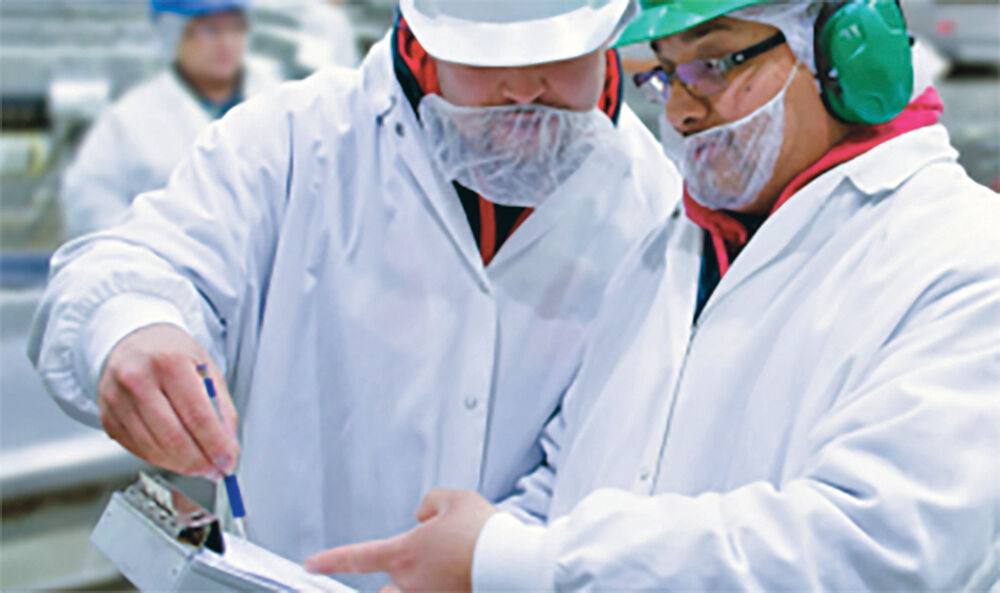
Birchwood Foods, a processor of made-to-order fresh and frozen ground beef products and fully cooked proteins for retail and foodservice customers, went from fielding infrequent general questions about environmental, social and government performance to developing an organized, systematic approach to sustainability.
WMEP and WSBC adapted 21st Century Pathways — a program they developed to strategically elevate sustainability in an organization by better aligning its strategic, organizational and sustainability priorities — to provide Birchwood Foods the tools and documentation needed to conform to two sector-specific standards (U.S. Roundtable for Sustainable Beef and Sustainability Accounting Standards Board).
Carbon, energy, water, resource efficiency, capital expenditures, food safety, employee health and safety, and employee recruitment and retention are now integrated with strategic and tactical decision-making at the company. The company can now take strategic action to reduce emissions and proactively engage with customers in addition to more efficiently responding to inquiries and audits.

Company: WMEP Manufacturing Solutions
Innovation: Helping companies with sustainability efforts
Website: www.wmep.org