

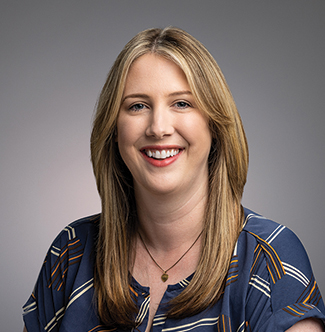
visiJeff Niesen retired as Boldt’s executive vice president of strategic projects at the end of last year after more than 45 years with the Appleton‑based constructio
Jeff Niesen retired as Boldt’s executive vice president of strategic projects at the end of last year after more than 45 years with the Appleton‑based construction firm.
“I’ve seen the company from a lot of different angles — from blue jeans and work boots out in the field to executive offices and everything in between,” says Niesen, who started with Boldt as an intern in 1980.
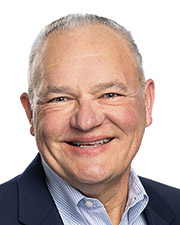
Most recently, Niesen has seen the company evolve from a fourth‑generation family‑owned business to a 100% employee‑owned company — the result of a decade‑long succession plan that The Boldt Group completed Jan. 2, 2026.
Today, 800 of the company’s non-union employees are owners through its employee stock ownership plan (ESOP), a retirement plan that acquires company stock in accounts for employees.
Niesen calls the ESOP “an incredible windfall” to his retirement.
“The thing that’s amazing is that there’s not a penny of my money that went into it,” he says. “It’s like the family was giving the company away because I didn’t have to buy into the ESOP, and yet it was a very significant bump to my overall retirement portfolio.”
Without a fifth generation to steward the business, establishing the ESOP was a decision made by the Boldt family to secure the company’s future and preserve its culture without selling to an outside buyer, says CEO Dave Kievet, the first non‑Boldt family member to lead the 137‑year‑old organization.
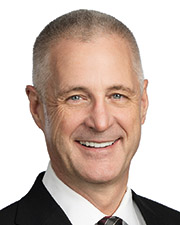
“If [we] sold to an outside entity, we would lose the culture of the organization,” Kievet says. “Because when you’re purchased by somebody, you take on their thought, their values.”
Ownership was transitioned to employees in phases beginning in 2016, when the firm sold 45% of the company to its employees. The Boldt family agreed to finance the remaining 55% purchase over time rather than require an immediate payout.
Rather than employees personally purchasing shares, the ESOP trust — funded by company profits — buys out the family’s stake over time. As that debt is repaid, shares are allocated into individual employee accounts at no direct cost to them.
This allowed the company to avoid taking on debt.
“This has never been about profiting the most,” Kievet says. “It’s always been about how do we ensure the organization continues to thrive for another 137 years and that’s no easy task.”
One of the most challenging tasks, HR leaders say, has been communicating the ESOP’s advantages to job seekers.
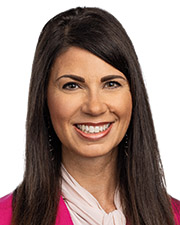
Emily Haupt, vice president of human resources, notes that regulatory restrictions prevent the company from making forward‑looking promises about future share value, “but when you look at the numbers that we were able to share with our employees last year, basically the ESOP contribution was double the 401(k) match,” she says.
“Employees have a tendency to expect a 401(k) match because they know what it means; they know what it looks like,” adds Chief Human Resources Officer & Executive Vice President Holly Lifke. “But for an employee to grow wealth as an owner of the ESOP is substantial. As long as we continue to perform, it’s a multiplier.”
This is why the company has shifted its language, talking less about “retirement” and more about “wealth generation,” a change Lifke believes helps younger employees see the benefit immediately.
Haupt estimates that maybe 40% of employees thoroughly understand the ESOP — a gap the company is working to close through quarterly new employee onboarding sessions, an annual stock‑price announcement call, a communications committee and a growing internal resource hub.
“You just have to continue that [education] like a drumbeat — just repeat, communicate, communicate, communicate,” Haupt says. “This 100% ownership has created more opportunities for education, and it seems like employees are more interested, which I love to see.”
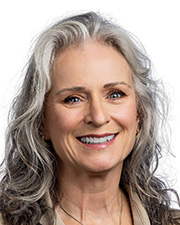
Lifke says the ESOP’s direct impact on retention is difficult to measure, but Boldt’s retention sits at or above its industry goal of 85% and exit interviews with retirees like Niesen consistently mention the ESOP as a top benefit.
In retirement, Niesen is still flexing his construction know‑how by renovating his Northwoods cabin. He and his wife are enjoying new e‑bikes and planning a trip with friends to Croatia this month. And he meets with other Boldt retirees, who affectionally refer to themselves as “The Rusty Boldts,” for a monthly breakfast.
Niesen says the ESOP has played a large part in his ability to fully enjoy this next chapter.
“I feel financially free; I don’t worry about my future,” he says. “[The ESOP] was the frosting on the cake.”
By the numbers
6,411
Number of unique ESOP companies in the U.S.
10.9 million
Total U.S. employees covered by an ESOP, about 8% of the private-sector workforce
17%
Share of all private ESOP companies in the U.S. that are in construction — the third-highest of any industry, behind manufacturing (No. 1) and professional services/technology (No. 2)