

• Interstate 41 Corridor
Brown, Calumet, Outagamie, Winnebago, Fond du Lac Counties
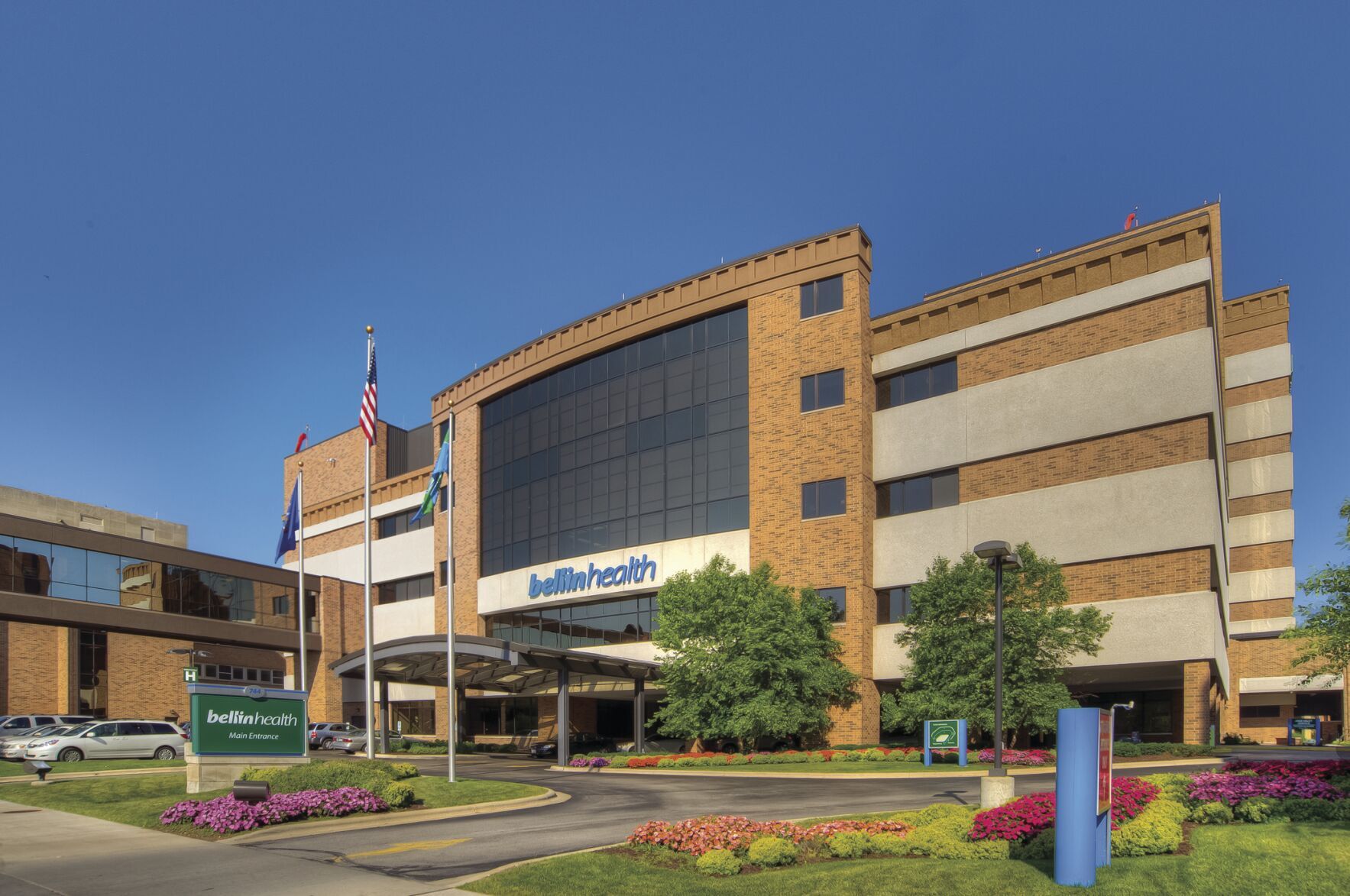
Bellin Health completes merger with Gundersen
Bellin Health and Gundersen Health System have completed their merger of equals and have combined operations.
“Our organizations are coming together with one vision for the future of health care in our communities,” said Dr. Scott Rathgaber, CEO of the new organization formed by the merger, who previously served as CEO of Gundersen Health System. “I’m excited for our patients and their families and for how, collectively, we can influence and lead the future of health care.”
Officials say joining together as one system provides patients and communities a broader network and access to care at 11 hospitals, more than 100 local clinic locations and more than 1,400 providers.
Gundersen and Bellin Health have served patients in the Upper Midwest in their respective parts of Wisconsin, Upper Michigan, southeastern Minnesota and northeast Iowa for more than 100 years.
“Bellin Health and Gundersen Health System have a clear purpose for coming together, and we stand for the same things,” said Chris Woleske, new organization system executive vice president and regional president of the Bellin Region, who previously served as CEO of Bellin Health. “We are trusted patient advocates in the communities we serve.”
While the organizations have joined, their names, logos, locations and people will remain the same.
Additionally, Bellin Health offered a public sale of $130 million of federal and Wisconsin tax-exempt, fixed-rate bonds to help finance the new five-story Bellin Health Surgery & Specialty Center, which will house an ambulatory surgery center, orthopedics, asthma & allergy, ear nose throat, and GI, as well as an inpatient bed expansion of Bellin Memorial Hospital.
Located on land off Interstate 41, Waube Lane and Allied Street in the Village of Ashwaubenon, the new facility is under construction and scheduled to begin a phased opening in 2024.
Appleton Airport sees record year, expects growth
Appleton International, the state’s third-busiest airport, has been reclassified to a small-hub airport, which places it in a separate funding category, officials announced last month. Its more than 850,000 arrivals and departures in 2022 is up from 720,083 in 2021. Airport Director Abe Weber says the increase has been a balance of business and leisure travel, though leisure has led the way. He says customers are driving from Upper Michigan and central Wisconsin to utilize ATW’s services.
In addition, Weber says ATW’s airline partners added four new nonstop flights in 2022, increasing the total nonstop destinations available from the airport to 15, and it completed or commenced $40 million in infrastructure projects for its grounds and facilities, including a major expansion of the concrete ramp used for planes landing and taxiing, as well as construction of a general aviation hangar at the Appleton Flight Center — a facility used by private aircraft. In addition, Gulfstream has started work on a 73,000-square-foot paint hangar that is expected to be completed in 2023.
Outagamie County Executive Thomas Nelson describes the airport as the “crown jewel” of Outagamie County’s service offerings. He said the facility has a strong reputation for a quality passenger experience, and strong airports are key to attracting tourism, talent and business to the region.
“Since I’ve been county executive, we have well over doubled the economic impact of this airport,” Nelson said. “Now we support 3,000 jobs directly and indirectly in Outagamie County and the region.”
Nelson and Weber agree that ATW is on track to reach a total economic impact of more than $1 billion within the next two years.
• The Northwoods
Florence, Marinette, Menominee, Oconto Counties
Menominee Indian Tribe, WisDOT unveil dual-language highway signs
The Menominee Indian Tribe of Wisconsin and the Wisconsin Department of Transportation (WisDOT) unveiled new dual-language signs for placement on state highways. The new signs indicate the Menominee Nation’s Tribal boundaries and other landmarks in both English and the Menominee Language.
“The Menominee Nation, standing alongside our ancestors, are very pleased with the dual-language signs created for our homelands,” said Menominee Chairman Ron Corn Sr. “This is another example of how our state recognizes and respects our lands, sovereignty, language and unique cultural identity.”
The sign unveiling took place at the Menominee Casino Resort and Convention Center in Keshena in November, expanding on a statewide dual-language sign initiative launched by WisDOT in 2021 collaborating with Native Nations in Wisconsin to install road signs on Tribal lands in both English and Indigenous languages.
The Menominee Nation is the third Tribe in the state to install dual-language signs, following the Oneida Nation and the Red Cliff Band of Lake Superior Chippewa.
“Together we are fostering a stronger sense of place and connecting travelers to history by sharing Native American heritage,” said WisDOT Secretary Craig Thompson.
The new Tribal boundary signs feature the Menominee Nation seal next to the Tribe’s name in the Menominee Language, “Omāēqnomenēw Eskōnekan.” Pronounced Oh-Mat-Na-Mah-Nay Esco-Nee-cun, it is the traditional name for the reservation and means “land set apart for Menominee people.”
Wisconsin is home to 12 Native Nations, including the Bad River Band of Lake Superior Chippewa, Forest County Potawatomi, Ho-Chunk Nation, Lac Courte Oreilles Band of Lake Superior Chippewa Indians, Lac du Flambeau Band of Lake Superior Chippewa, Menominee Indian Tribe of Wisconsin, Oneida Nation, Red Cliff Band of Lake Superior Chippewa, Sokaogon Chippewa Community, Mole Lake Band of Lake Superior Chippewa, St. Croix Chippewa Indians of Wisconsin, Stockbridge-Munsee Community Band of Mohican Indians and Brothertown Indian Nation.
• West Central
Shawano, Waupaca, Waushara, Marquette, Green Lake Counties
Ripon College enters first phase of $35M strategic infrastructure plan
Ripon College is moving forward with a $35 million strategic infrastructure plan to address the renovation and expansion of Farr Hall of Science, a new on-campus stadium, and upgrades to residence halls.
The first phase will prioritize a $24.5 million investment in the science center and an $8.5 million investment in the campus stadium, both of which are projected to break ground in the spring. The college hopes to finalize plans for upgrades to the residence halls within the next year.
In February 2022, the Ripon College Board of Trustees authorized the college to begin preliminary exploration of both the science center and stadium. The college has documented $15 million in cash and pledges specifically designated for the infrastructure enhancements, 80% of which is designated for renovation of Farr Hall.
Ripon College President Victoria N. Folse inherited the initial and conceptual infrastructure plan from the previous administration but has led the campus through the critical planning phases since her tenure began July 1, 2022.
“The energy from the internal and external campus community has been palpable, and my colleagues and I will rely on that energy to continue pursuing our fundraising goals for these critical initiatives,” Folse said.
Vice President and Dean of Faculty John Sisko and Athletic Director Ryan Kane have led two separate core planning teams through the multifaceted design and build process with The Boldt Company and Kahler Slater architectural firm.
The 68,500-square-foot renovation and expansion of the science center, scheduled for a fall 2024 opening, will include more than 19,000 square feet of new construction, with innovative laboratory, classroom and collaboration spaces throughout, focusing on STEM learning needs.
New construction of a 157,000-square-foot on-campus stadium will feature a 2,000-seat grandstand and press box, a formal entrance on the corner of Thorne and Union streets, viewing opportunities on Sadoff Hill, lighting for evening programming and a branded game day experience.
After the stadium opens in fall 2023, the college will no longer use the shared field model with the Ripon Area School District; however, discussions are ongoing to continue shared services between the Ingalls Field outdoor track and the indoor track at Ripon College’s Willmore Center.
• The Lakeshore
Door, Kewaunee, Manitowoc, Sheboygan Counties
Johnsonville transitions to former Wigwam Mills facility
In November, Johnsonville began expanded operations from its new 190,000-square-foot Sheboygan facility on Crocker Avenue, purchased from sock maker Wigwam Mills.
The transition from sock manufacturing to sausage production took more than a year, with Wigwam Mills vacating the facility in late 2020 after Johnsonville bought the building. The facility will be called “Lakeside,” keeping with the theme of its three other manufacturing locations in Johnsonville, which include Countryside, Meadowside and Riverside.
Johnsonville’s domestic and international sales of its sausage product portfolio have increased significantly over the last few years, maxing out manufacturing capacity at its headquarters campus in Johnsonville.
The new facility operates on three shifts. New equipment has been installed, and about 50 members will be employed at the Sheboygan plant in production, sanitation, maintenance, and shipping and receiving positions.
The company predicts it will employ an additional 100 members by 2025 to address future growth.
This is the first manufacturing facility in Sheboygan for Johnsonville.
Kohler Power Systems opens new production facility
Kohler Power Systems officially opened its state-of-the-art generator manufacturing facility in Mosel. The project, which began in March 2021, includes a 155,000-square-foot production, testing and warehousing space, as well as a 10,000-square-foot world-class customer experience center.
The plant expansion supports Kohler’s continued growth in key strategic markets, including data centers, health care and other mission critical segments. This is the second major expansion within the last 10 years at the Mosel site to support sustained growth and successful product introductions.
As Kohler’s business continues to grow, so does the demand for Kohler’s KD Series large diesel industrial generators and integrated power systems being designed and built in the factory. Kohler is the only generator set manufacturer to provide factory-built enclosures in this range and supply a completely integrated system from a single facility.

