


Get to know: Kara Homan
Community and Economic Development Director, city of Appleton
After eight years as Outagamie County’s development services director, Kara Homan took over for Karen Harkness as the city of Appleton’s community and economic development director Jan. 4. Community growth, city planning and Appleton’s economic development are the main responsibilities of Homan’s new role.
The UW-Madison alumna received a master’s degree in urban and regional planning from the University of Iowa. Homan says many of the functional areas are the same between her previous and current positions, just “a different flavor.”
“Most of my jurisdiction at the county was in the suburban and unincorporated areas, and here it’s more urban and focused on city development and redevelopment,” she says. “I enjoy all aspects of community development, economic development and planning, but being back in a more urban setting is really exciting.”
What makes the Appleton community distinct, Homan says, is the unique mix of new development and redevelopment areas. “We are a very mature community. We have a lot of historic areas, but areas that are in the process of redeveloping,” says Homan, a Waupun native.
One area seeing significant activity is the College North Neighborhood, which encompasses the Appleton Public Library and downtown transit center. The city of Appleton recently completed its College North Neighborhood Plan, which provides a guide for the neighborhood’s growth over the next two decades.
Homan says this area’s redevelopment is primarily residential with some commercial mixed in — including the 5-story, mixed-use Urbane115 development on the corner of N. Appleton Street and E. Washington Street, the affordable housing Rise Apartments development on North Oneida Street, and the Chase Bank property.
While the College North Neighborhood is one of the city’s current focuses, Homan says many neighborhoods throughout Appleton hold untapped potential.
“I’m really excited to continue focusing on not just the redevelopment of the downtown, but [on] enhancing other neighborhoods and districts throughout the city,” she says. “There’s all these other parts of the city that have their own unique characteristics and culture that can be unlocked for future investment or revitalization.”
— Amelia Compton Wolff
Clean team
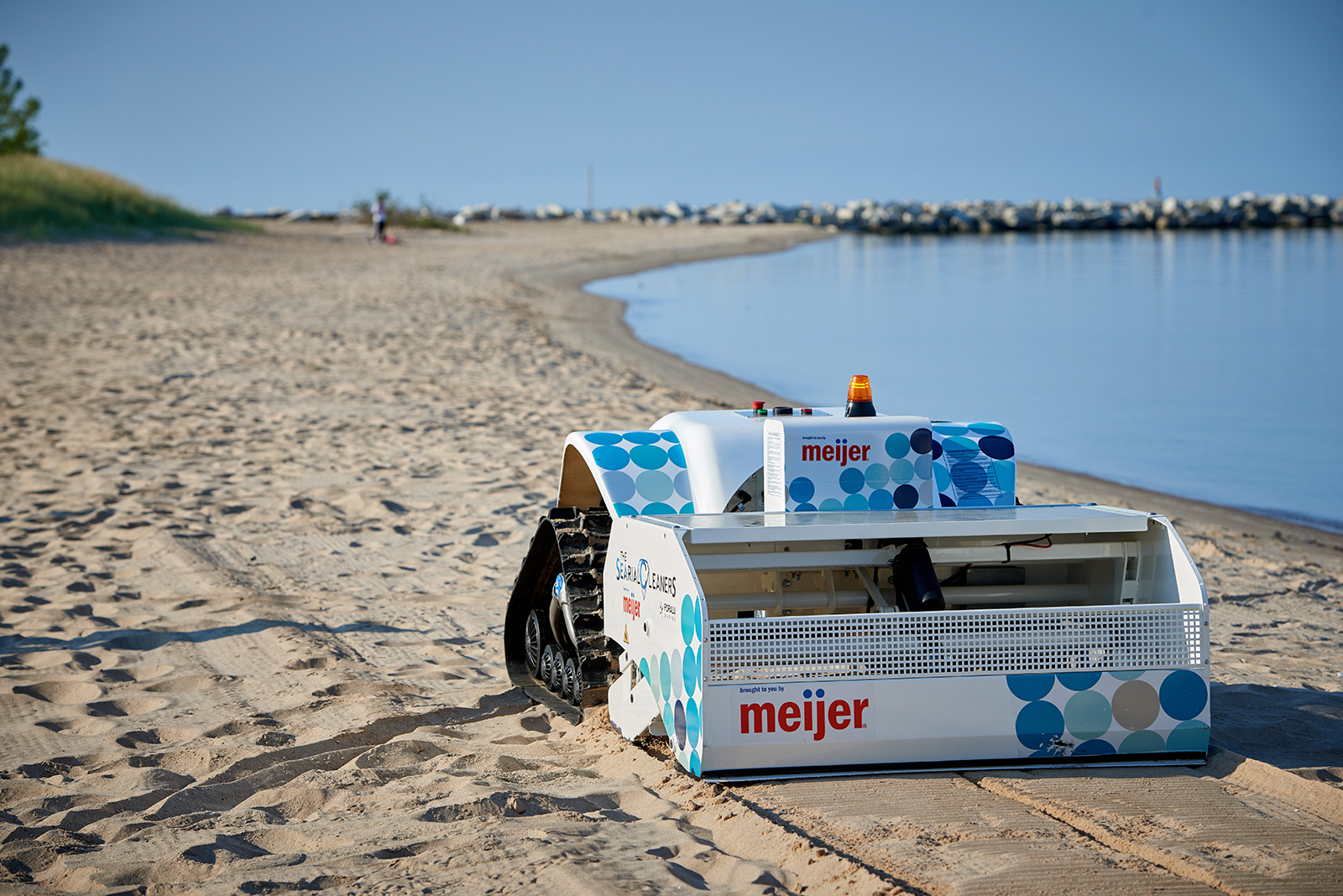
Remote-controlled robots and waterborne drones are coming to Northeast Wisconsin beaches and waterways to clean up trash and collect data. Meijer, a retailer headquartered in Grand Rapids, Michigan, donated $1.5 million to expand a partnership with the Council of the Great Lakes Region (CGLR) that began last year. The council has collaborated with higher education programs including the University of Wisconsin Oshkosh, which will be involved with deployments at 10 locations in Manitowoc, Door and Kewaunee counties this year. “The work we are doing will not only protect the health of these vital waters for generations to come; the data collected will help us drive change when it comes to recycling and building a future without consumer waste,” said Mark Fisher, CGLR president and CEO.
Kitchen comeback
Green Bay’s Cannery Public Market, which shuttered three years ago, is reopening this month as a test kitchen concept. The space will showcase multiple food vendors and restaurant businesses while providing an incubator setting with wrap-around accelerator training for entrepreneurs. The accelerator is designed to provide the tools, technical assistance and strategic support needed to nourish a vibrant food and beverage ecosystem and create long-term sustainable businesses. The Greater Green Bay Chamber has partnered with Proof, a Tennessee company that helps food and beverage entrepreneurs build scalable and sustainable businesses through educational accelerators, coaching and incubator facilities.
Public-private partnership
Construction began last month on 54 single-family homes in Sheboygan Falls, a significant step toward transforming an 11-acre property into a space for middle-income families. The project is a public-private partnership between The Forward Fund, the city of Sheboygan Falls and the Sheboygan County Economic Development Corporation. The Forward Fund, a $10 million community development investment by Johnsonville LLC, Kohler Co., Masters Gallery Foods Inc., Sargento Foods Inc. and Sheboygan County, provides funding to address short- and long-term workforce development barriers and is being used to drive the construction of entry-level homes. “Founders’ Pointe is not a traditional subdivision,” said Don Hammond, board chair of SCEDC. “The SCEDC is proud to take this important first step forward as we are committed to growing our workforce and our communities.”