
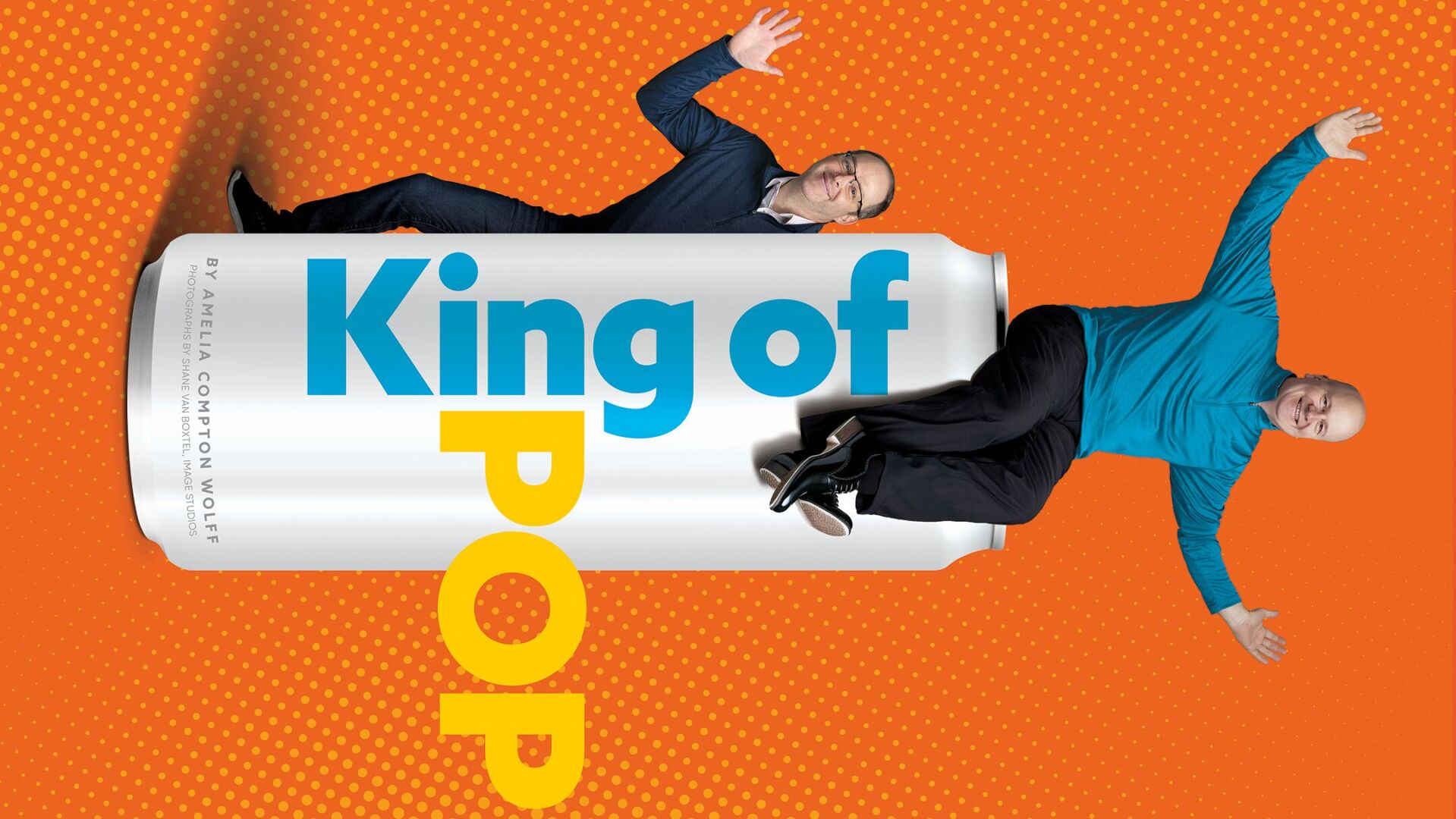

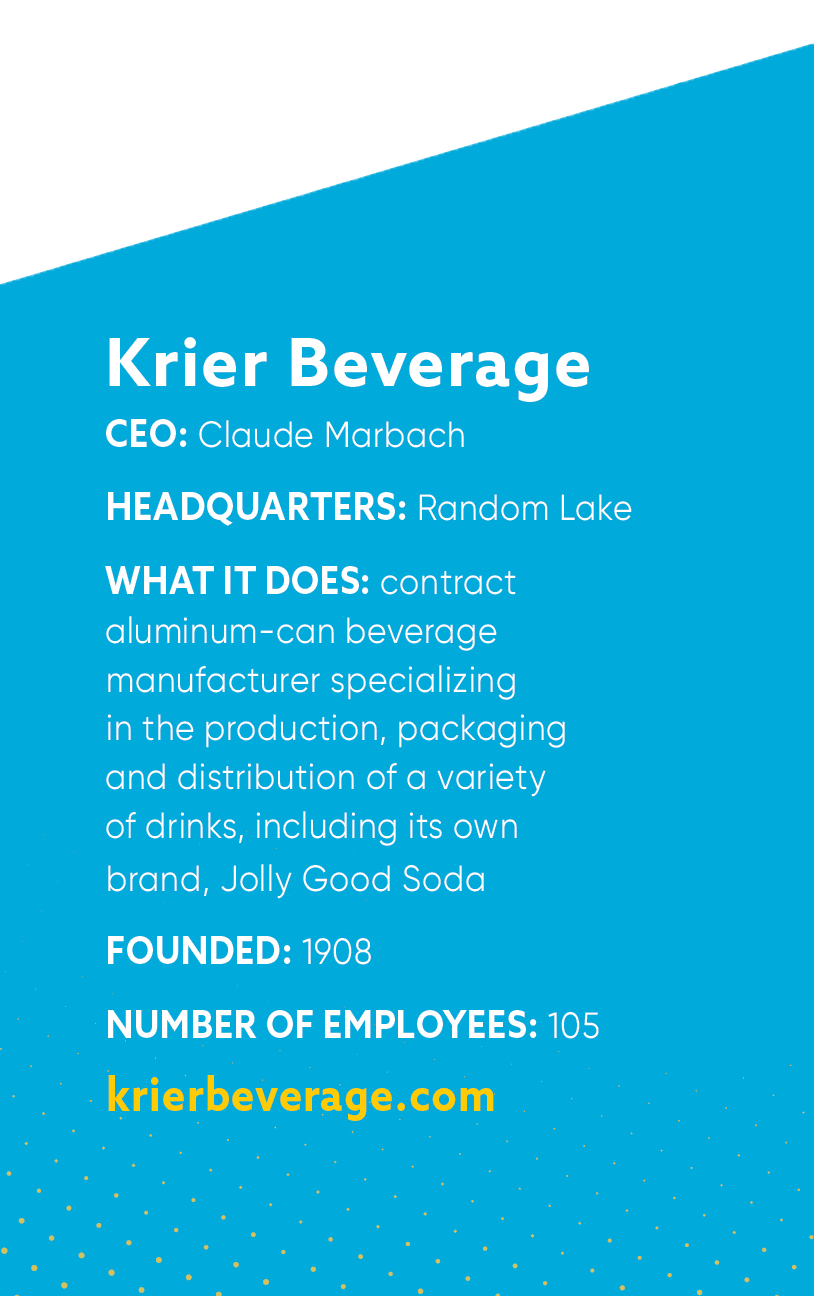
CEO Claude Marbach (top) and Senior Vice President of Business Development Zach Malin (left) are on a mission to grow Krier Beverage’s brand portfolio, adding to its iconic Jolly Good Soda line.
Photographs by Shane Van Boxtel, Image Studios
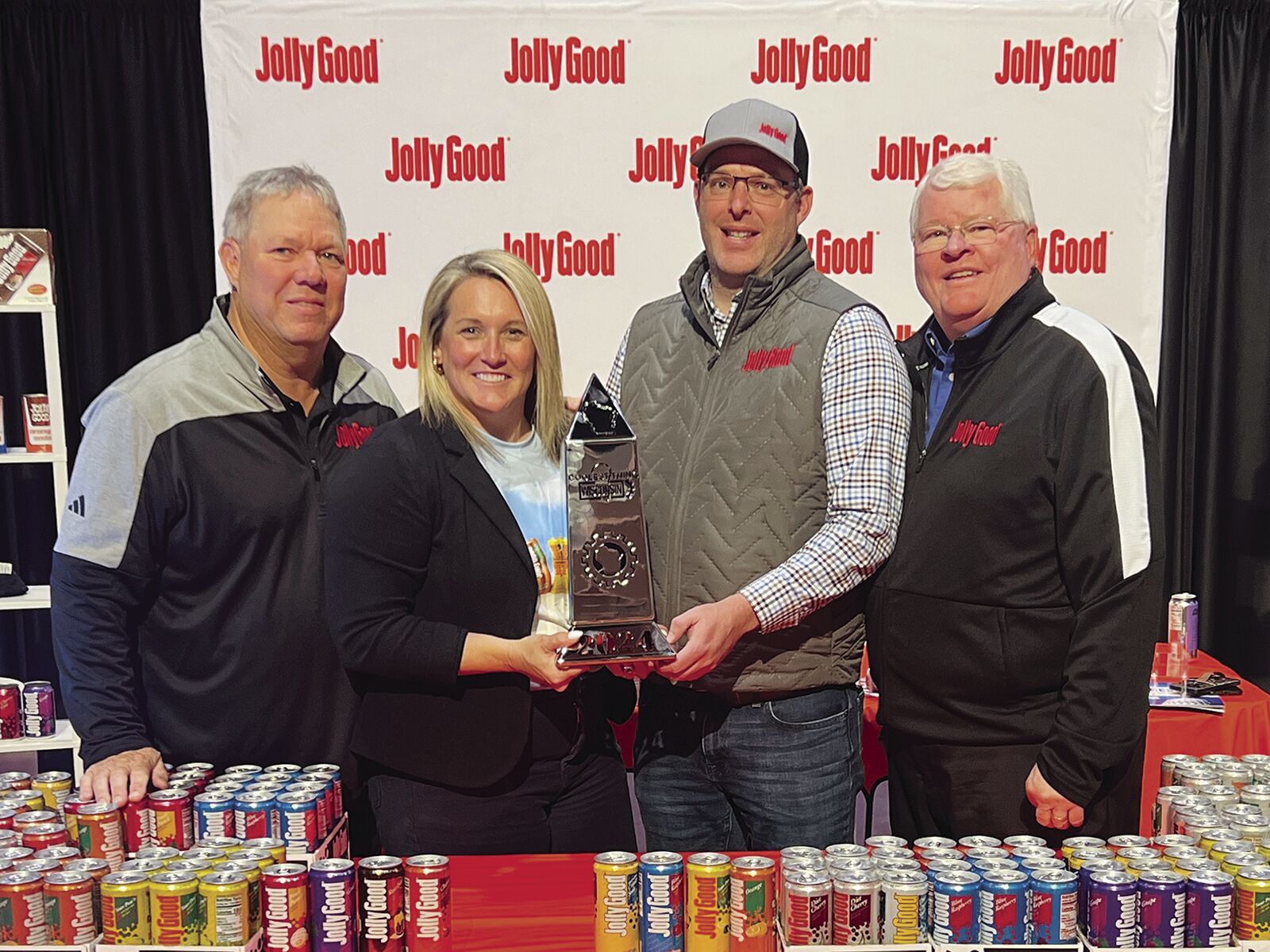
When Jolly Good Soda was announced as the champion of The Coolest Thing Made in Wisconsin contest last October, Random Lake School District students took it personally.
District Administrator Mike Trimberger says students were encouraged to vote in the bracket-style tournament during their study hall periods. Jolly Good, manufactured by Random Lake-based Krier Beverage, competed against roughly 130 nominated products statewide and secured the win by only a few dozen of the 150,000 votes cast.
Krier Beverage is one of Random Lake School District’s most involved community partners, Trimberger says, and offers students “authentic experiences,” be it through youth apprenticeships, plant tours or mock interviews.
“We like to believe we had a hand in them winning, but we all thought they were pretty cool to begin with,” Trimberger says.
And therein lies the magic of Jolly Good — from students to teachers, young and old, so many people hold a personal connection to the nostalgic soda brand that was first developed in 1966.
Heading into a new year, Krier Beverage has big plans to grow the Jolly Good brand that currently makes up only a small percentage of the company’s business, says Senior Vice President of Business Development Zach Malin.
“Jolly Good is a very small portion of our business, but it’s a great product that never really had the horsepower behind it to take it further,” he says. “Now we are taking that brand equity, the history of a brand that’s 58 years old, and proliferating that through other states … to grow the brand for what it really deserves.”
From produce to pop
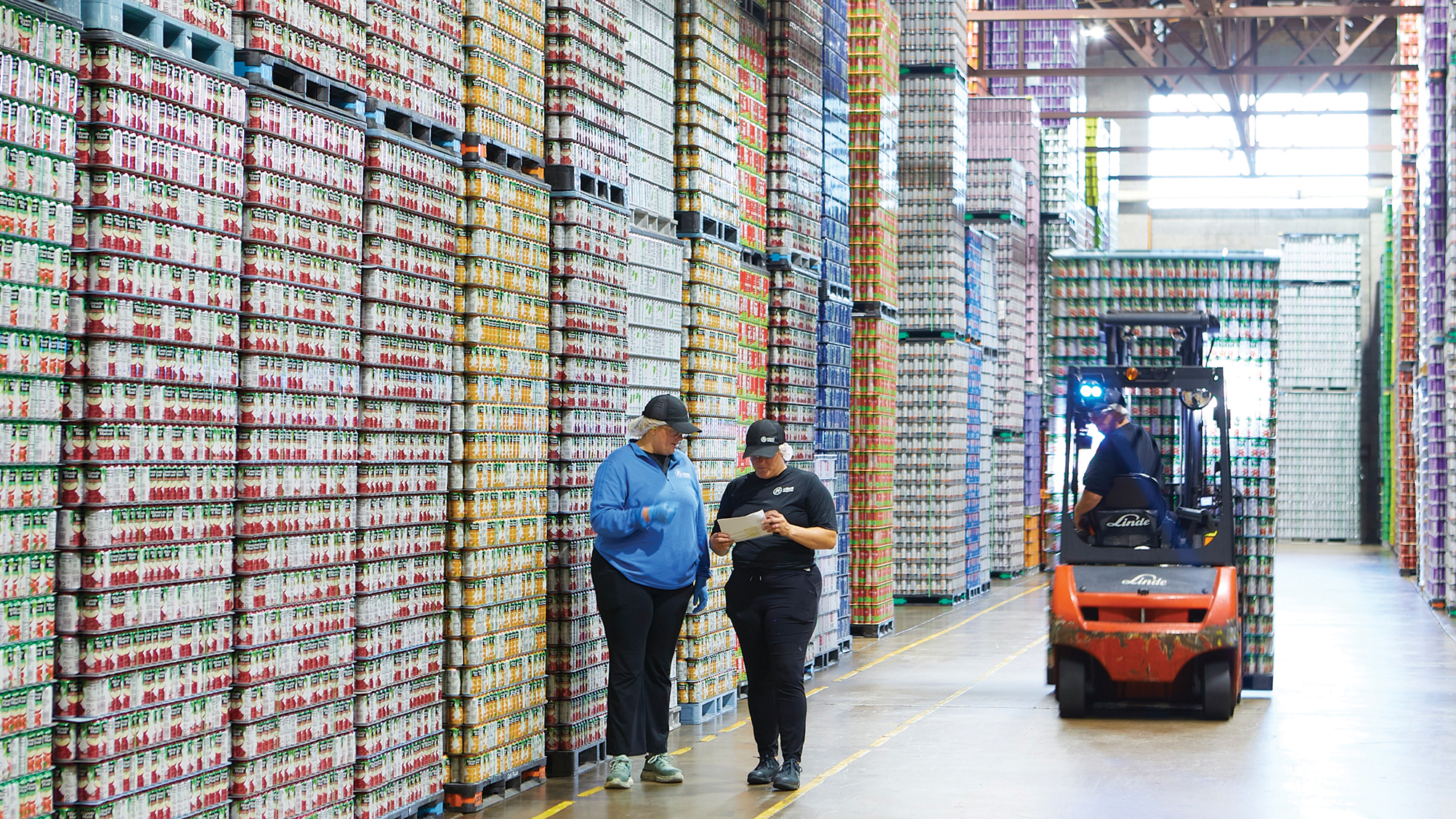
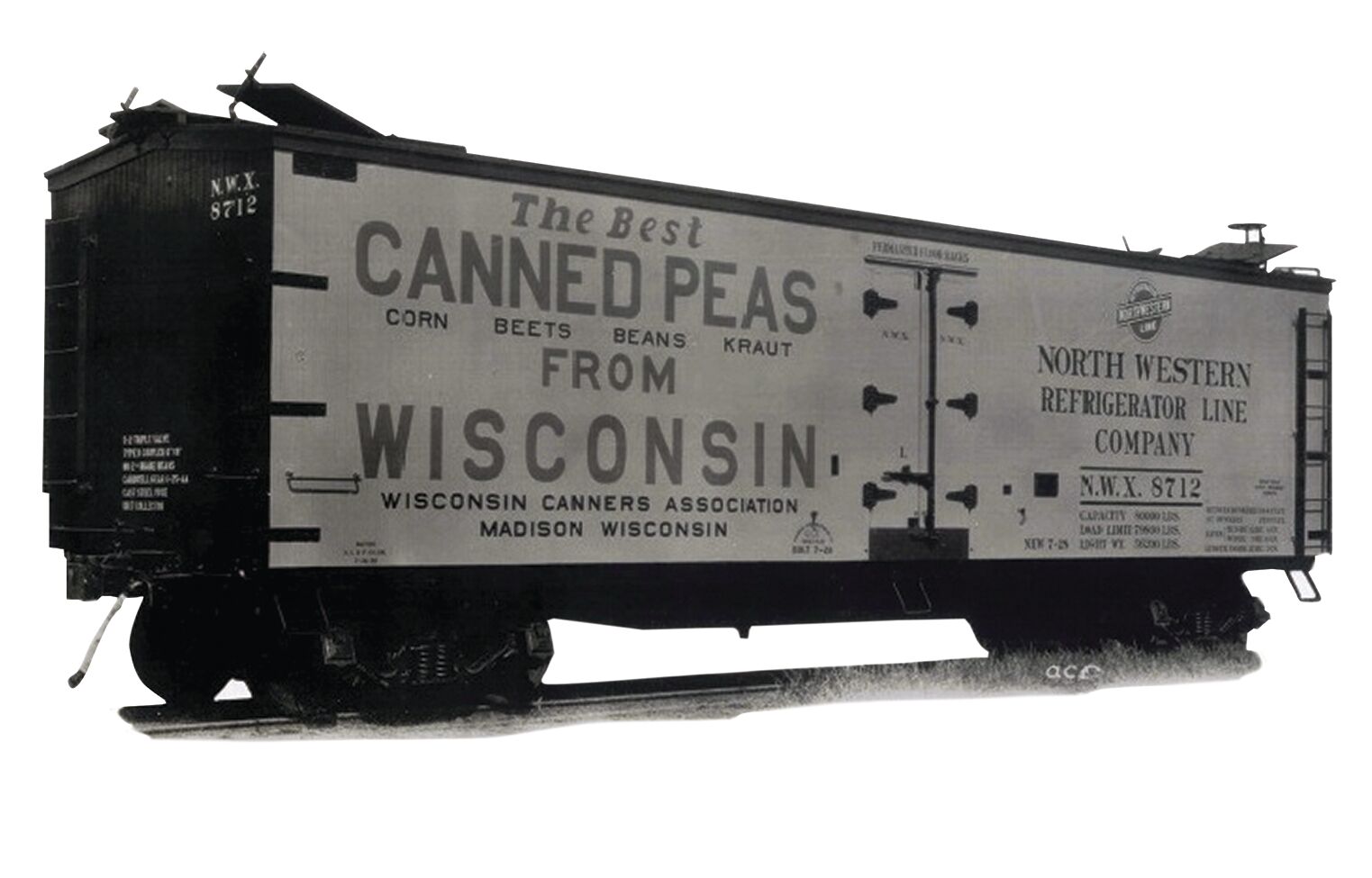
Krier Beverage’s story begins in 1908 in Belgium, Wisconsin — the birthplace of company founder J.B. Krier. In 1913, J.B. Krier grew his small farming company and founded the Krier Preserving Company specializing in canning produce such as beets, peas, sauerkraut, corn and beans. By the 1920s business was booming, which prompted the company to open a new, larger facility in nearby Random Lake, where it is still located today.
By the mid-20th century, Krier had begun packaging sodas for national brands on a contract basis. Nicole Depies, Krier Beverage marketing manager, says the company originally pursued the beverage division to provide work during the vegetable canning off-season, but it quickly grew into much more.
“In the ’50s, a national soda brand came to Krier and said, ‘You’re already canning these other products. Could you put our soda in a can?’” she says. “That’s when we really transitioned to canning beverages. We had the capabilities and then thought, let’s start our own brand.”
After seeing the profitability of the soda business, third-generation owner Ray Krier rolled out Jolly Good Soda in the 1970s as the company’s house brand — a rarity in the contract beverage manufacturing space.
The colorful, slim aluminum cans and the fruity, fizzy soda within became local hits, gaining steam throughout the 1980s and ’90s. At its peak, Jolly Good came in nearly 50 different flavors such as cream soda, cherry, orange and lemon lime and was distributed throughout Illinois, Iowa, Minnesota and Wisconsin.
But Depies says in addition to the growing contract side of the business, competition from large national companies such as Coca-Cola and Pepsi killed many regional soda brands and, by 2007, Jolly Good went off the shelves.
But it wouldn’t be for long.
Pop revival
With the advent of craft beer in the early 2010s, former CEO and fifth-generation family member John Rassel began talks with his uncle and company president Bruce Krier about reviving Jolly Good as a way to capitalize on the craft beverage craze.
Bruce Krier passed away in 2013 and sadly never got the chance to see the revival of Jolly Good in 2014.
“As a way to honor his late uncle, John decided to do a small batch run,” Depies says. “They dropped a pallet at the gas station and people were like, ‘What? How do we get this?’”
Shawn Knoche, director of brand management and revenue for Frank Beer Distributors and La Crosse Beverage, has been working with Krier Beverage on the distribution of Jolly Good for the last two years and is impressed with its rapid growth since relaunching.
“There was a lull where you weren’t seeing it around quite as much, as big soda companies came in and bought up a bunch of space, but Jolly Good has been strong enough to fight back and get some of that space back,” he says. “It’s going to continue to grow as new generations discover it.”
Knoche says Jolly Good and its nostalgic appeal are not hard sells to the retailers he services in the southern part of the state. The partnership with Frank Beer Distributors has helped land Jolly Good in major retailers throughout Wisconsin as well as smaller convenience stores that couldn’t previously order the product directly.
“It’s the original craft Wisconsin soda. When you walk in a store and say Jolly Good, people know it. When you go on social media, you see Charlie Berens drinking a Jolly Good,” Knoche says. “In this state, it’s a product people have seen since they were kids.”
Several consumer trends may be boosting Jolly Good at just the right time. The soda brand may well be benefiting from the viral sensation of “dirty sodas” — sodas spiked with flavored syrups and cream — made popular on TikTok as well as the overall rising popularity of non-alcoholic beverages.
As primarily a beer distributor, Frank Beer Distributors has a small NA beverage portfolio, but Knoche says distributing Jolly Good gives the company an opportunity to grow into the burgeoning market.
A recent Gallup poll found that young adults aged 18 to 34 are drinking less than the previous generation. The study found 62% of adults under age 35 say they drink alcohol, down from 72% two decades ago.
“The younger generation is drinking less alcohol, so as we look to continue growing our business we need to look into that NA portfolio, both NA beer and products like Jolly Good,” he says. “Jolly Good gives us legitimacy in that category. It gives us an ability to take our NA business to another level having a flagship product like Jolly Good.”
Bubbling up
Despite Jolly Good’s growth since relaunching a decade ago, Depies says winning the title of Coolest Thing Made in Wisconsin still came as a shock. The annual contest, put on by Wisconsin Manufacturers & Commerce and Johnson Financial Group, celebrates the state’s $72 billion manufacturing industry during October Manufacturing Month.
It was Jolly Good’s fourth year in the competition, having made it to the Top 16 in 2021 and the Top 8 in both 2022 and 2023 before finally clinching the win in 2024.
“I think the coolest thing about our product is everyone has a story to tell about their experience with our product,” Depies said during her acceptance speech at the awards ceremony in Madison.
Jolly Good may make up only a small portion of Krier’s business, but 100% of its business is beverages. Private equity firm Celerant Capital purchased Krier in 2022 and it soon became clear that the company’s name, formerly Krier Foods, needed to better reflect its focus.
Krier’s exclusive focus on beverage manufacturing is being taken up a notch this month as the company rebrands itself as Krier Beverage.
“The 110-year-old Krier legacy was extremely important, not only to the employees but to the ownership group,” Malin says. “We wanted to preserve that legacy of the Krier family but really focus externally that we’re a beverage manufacturer only.”
Aligning the company’s brand with its true focus will help it better connect with potential customers and achieve other goals, like transitioning Jolly Good from a regional soda to a national brand, Malin says.
In addition to growing distribution, part of the growth strategy includes developing the brand’s e-commerce business. “We can promote on TikTok all day long, but if somebody can’t order it, it doesn’t matter,” Malin says.
Jolly Good launched on Amazon late last year and is exploring other e-commerce retailers.
“Today people can just add it to their cart and can get it delivered by Amazon,” Malin says. “Now that we’ve unlocked the ability to ship nationally, we can start moving forward into 2025.”
Growing the Jolly Good brand is a top priority, but so is growing the contract business. Krier currently produces hundreds of millions of cans annually. In total, U.S. contract beverage manufacturers produce 130 billion cans a year, says Krier Beverage CEO Claude Marbach, who started with Krier a year ago this month. He was drawn to the company mostly by its untapped potential in the market.
“I fully believe that the company and its employees can double or triple the volume over the next two to three years,” he says. “It’s not easy, but it’s really exciting.”
One way Marbach sees that happening is through Krier’s own brand items, whether it’s Jolly Good or something completely new. He says it’s the company’s mission to have a new brand or new product launch this year.
“The fact that we have a platform and a brand [in Jolly Good], we can go to a distributor and add a brand next to it. Now I have a portfolio that we can offer to a retailer,” he says. “That’s huge compared to starting from scratch.”
Most of Krier’s customers are mid-size beverage brands without their own production facilities, but the company works with customers of all sizes, including small business owners who took massive risks to bring their aluminum-canned ideas to life.
“That’s what I love about food and beverage. You get to be on the front end of all this innovation that people don’t really see,” Malin says. “Then these products hit the store shelves and the employees who help make these great products walk around and can be proud because they helped make that.”
Coolest careers
When Trimberger joined the Random Lake School District seven years ago, he saw the need for updates in the district’s tech ed department, including equipment that would offer students real-world learning opportunities to support future careers.
According to Food and Beverage (FaB) Wisconsin, there are roughly 142,000 industry jobs at 3,700 food and beverage companies in the state.
In Sheboygan County, where manufacturing is a cornerstone of the local economy, Random Lake School District and Krier Foods were part of forming the MFG 4.0 Co-op, a collaboration between four manufacturing companies and four school districts. The eight partners pooled their resources to invest $800,000 in the equipment and curriculum that would allow students to gain experience in mechatronics, industrial controls, robotics and more — preparing them for future careers they may have never considered.
“Our four schools share the same equipment and curriculum and rotate each quarter,” Trimberger says. “One quarter we get the FANUC robot and the next semester we get another piece of equipment. We share it to make sure our students in rural communities still get that high-tech equipment.
The participating companies include Krier, along with Sargento Foods, Masters Gallery Foods and Amerequip. Participating school districts in addition to Random Lake include Kiel, Elkhart Lake and Oostburg.
The MFG 4.0 Co-op won the Northeast Wisconsin Manufacturing Alliance’s 2024 Community Partnership Award for its success in raising student awareness of and excitement for future careers in manufacturing.
“It’s easy to take pictures of the equipment and put it in the [newspaper]. But the harder stuff to describe are the relationships we build and how our students look at these companies differently because these companies are investing in them,” Trimberger says.
When the co-op started five years ago, Trimberger says the district had two students apply for youth apprenticeships. This school year, nearly 50% of Random Lake junior and senior high school students applied for youth apprenticeships.
“Students see getting outside the school and getting experience is very important, whether it’s in manufacturing, health care or construction,” Trimberger says. “Our students are realizing these are great ways to make a professional network and build their skills in a pathway of their choosing. And we see this happening more and more.”
But the collaborations with Krier extend beyond the purely academic, Trimberger says. One of Trimberger’s favorite collaborations is a seasonal, district-wide positive behavior incentive called “Be Jolly Good for the Holidays.”
“The weeks leading up to Christmas, we see big behaviors,” he says. “Kids are excited and don’t know how to contain themselves, so we found positive ways to reinforce good behavior.”
The district raffles off prizes for good behavior. For the last five years, Krier has donated a Jolly Good Soda for each of the district’s 750 students to receive on the last day of school before winter break.
“It’s one way to make sure every student is recognized,” Trimberger says. “Any time we come up with a way to show our kids that their community cares about them, Krier is always willing to be creative and do really cool things.”