

I’ve had a few press interviews recently where they asked me if I have had any big challenges in my 30-year career. Of course I said, “you mean besides three recessions, 9/11 and a pandemic”?
But after the meeting, I really thought about that question. What I realized is that while all of those economic factors were challenging, each of those challenges were during a time when everyone in the world was in it together. Which somehow made each challenge easier to bear. You had people to consult who were in the same place. But once I really started thinking about the question, there certainly have been many challenges that were far worse.
What strikes me now, looking back, is how the shared nature of those macro-crises created an almost invisible scaffolding of solidarity. When the market collapsed in 2008, every entrepreneur I knew was having the same brutal conversations with their bankers. There was a grim camaraderie in that. We didn’t need to explain ourselves; the world understood. The challenges that truly test you are the quiet ones, the ones you carry alone into a conference room and smile through while pretending everything is fine. Those are the ones that leave a mark.
Being an entrepreneur can be tough. Many choose this lifestyle thinking it will be just that, a lifestyle. Flexible hours, big money and fulfilling work. And ultimately it can be all of that. But knowing every company started with a business idea and a big dream, it’s not surprising that 20% of new businesses fail within the first two years, 50% within the first five years and 65-70% within 10 years. I read recently that an entrepreneur is the person willing to work 80 hours just to avoid working 40 hours for someone else. All of which is also true.
The statistics are brutal, but they are also clarifying. Most people walk into entrepreneurship believing they are the exception — and in a way, they have to. That belief is the fuel. The problem is that belief alone doesn’t build financial models, manage cash flow, or have the uncomfortable conversation with a key employee who is underperforming. The lifestyle fantasy fades fast, usually in the first six months, when you realize that the business doesn’t run itself — you run it every single day, whether you feel like it or not. The freedom you sought becomes the most demanding boss you’ve ever had.
Honestly, I started ERG ill equipped for what was ahead. While I bought my “book of business” from the search firm I was with, I didn’t know what I didn’t know about running an actual business — heck, I didn’t even know I had to pay the other half of FICA tax! I remember as an employee thinking that my boss was in his office counting the money I had made for him. I had no idea the sleepless nights or challenges that he faced keeping the business afloat for all those years.
That gap — between what you see as an employee and what is actually happening behind the closed door — is one of the great invisible walls in business. Employees see revenue and assume profit. They see the nice office and assume stability. They don’t see the line of credit that’s nearly maxed, the client who is 90 days past due, or the renewal conversation that could go either way. I’ve since made it a point to be more transparent with my team about the realities of business, not to burden them, but because I believe people do their best work when they understand the full picture. Ignorance isn’t loyalty — it’s just ignorance.
“They started before they were ready, failed more than you’d believe, and just kept going. There is no other secret. That’s the whole thing.”
So, when I reflect back on the challenges question, the true answer has evolved as the business has. As a new owner and leader, I can reflect on the honest truth that the biggest challenge early on was me. I thought I would hire employees and they would naturally work exactly like I work (back to the 80-hour comment). Being a farmer’s daughter, I was taught to appreciate “the grind,” and I thought everyone was wired the exact same way. When they didn’t do so, I quickly became disenchanted to the point that they would move on. Not that all people I hired have been a good fit, but I would love to go back to those early days and hand pick a few to be nurtured the right way.
Leadership is ultimately a practice of managing your own expectations before you can manage anything else. The grind was real for me because of where I came from…early mornings, hard physical work, no shortcuts, but that origin story isn’t universal. What I’ve learned over three decades is that people are motivated by wildly different things. Some are driven by security, some by recognition, some by autonomy, and some by purpose. The mistake I made early on was projecting my own motivators onto everyone around me. The most powerful shift in my leadership came the day I stopped asking “why won’t they work the way I work?” and started asking “what would make this person do their best work?” The answers changed everything.
My daughter Katie was 2 when I started ERG and she was 8 when I divorced and she had a front row seat to the late nights. So many times, my assistant would pop her head into my office at 7 p.m. and ask if she should run and get a Happy Meal at McDonald’s since we hadn’t had dinner yet. Not all of this was bad, by the way. Katie has often said that she learned how to work hard from watching me. But a successor in my business I did not create. I do feel a bit bad about that.
The cost of building something is often paid in the currency of presence — and the people closest to you are the ones who feel it most. I’ve talked to dozens of founders over the years who carry a quiet regret that no balance sheet captures: the events they missed, the dinners that never happened, the vacations cut short by a client crisis. I’m not here to moralize about work-life balance, a phrase that has always felt a little too tidy for me. But I do think there is something worth naming: the same relentlessness that builds a business can quietly hollow out the life that was supposed to make the business worth building. That tension never fully resolves. You just learn to hold it more honestly and openly.
“It’s hard going from the person who plans happy hour, to the one who is no longer invited.”
But upon reflection, where I landed on the “biggest challenge question” is one no one can describe or will tell you about. It’s the loneliness. Being a leader is hard. Whether you own the company or are a member of the leadership team, it’s hard to make decisions that are right for the business but may not be popular to the masses. And it is rare that you have a sounding board who can give you the ultimate answer. More so, you have to figure it out as you go. Like I tell my leadership team, “it’s hard going from the person who plans happy hour, to the one who is no longer invited.”
Nobody warns you about this particular kind of loneliness. It’s not the same as being alone. You can be surrounded by people — a full conference room, a buzzing open office, a team dinner — and still feel utterly isolated in the weight of the decisions only you can make. It’s the loneliness of accountability without community, of holding information that can’t be shared, of having to project confidence on the days you feel the least confident. The leaders I most admire have found ways to build small, trusted inner circles — not “yes people,” but honest ones. People who will tell you when you’re wrong, who won’t weaponize your doubt, and who understand the unique weight of the chair you sit in. Once I found this leadership tribe, our business started to scale.
Many sleepless nights are caused by heavy weight of ultimate decisions. Thinking through all the scenarios, wondering what the impact will be overall, if it’s the right thing to do. Sometimes the decisions are out of necessity, and I actually think that makes decisions a bit easier, but they are still never easy.
I’ve come to think of those sleepless nights as a kind of quality control. The leaders who sleep soundly through every hard call worry me more than the ones who don’t. Sleeplessness, at its best, is moral seriousness; it means you understand that your decisions have consequences for real people. That said, there is a version of it that becomes paralysis, and paralysis in a leader is its own kind of failure. The goal, over time, is to build the decision-making muscle so that you can move through uncertainty with greater speed and less damage — not because the decisions get easier, but because your tolerance for ambiguity grows.
One of the things I admire in many leaders I know is their ability to scale. The right people, innovative processes, the right investment at the right time etc. — all decisions that help businesses scale. Tenure in an industry certainly helps this, but one wrong move and you can cripple a business. No one I have met has disclosed the magic bullet. You just learn to course-correct faster if your decision is wrong.
Scaling is not a strategy — it’s an outcome. And the businesses I’ve watched scale successfully have one thing in common that isn’t talked about enough: clarity of purpose at the center. When you’re small, the founder’s vision acts as a kind of gravitational pull that holds everything together. As you grow, that gravity weakens unless you deliberately create a culture that emulates what you stand for, why you exist, and how you make decisions when no one senior is in the room. Culture isn’t a ping-pong table. It’s the answer to “what do we do when something hard happens and nobody is watching?” The businesses that scale without breaking that thread are the ones worth studying.
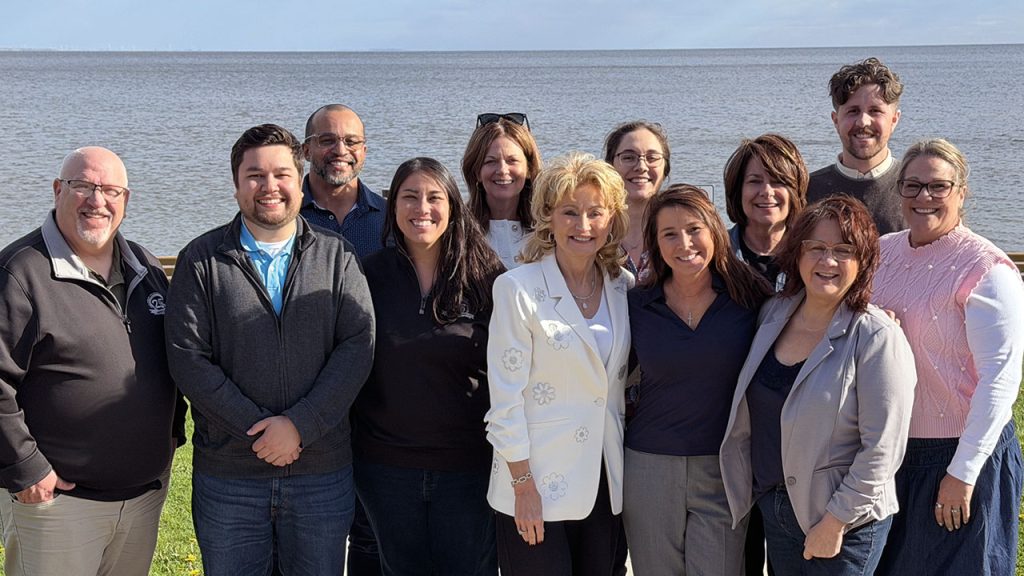
I think about the number of leaders I have spoken with in my 30 years — thousands — and the common theme with people who have built something from nothing is this…they started before they were ready, failed more than you’d believe and just kept going. There is no other secret. That’s the whole thing.
That simplicity is both the most comforting and the most demanding truth in business. Comforting because it levels the playing field, you don’t need a Harvard MBA or a venture capital relationship to build something real. Demanding because it removes all excuses. The world is full of people waiting to be ready. Ready is a myth. Nobody is ever ready for the first hire, the first firing, the first major client loss, the first time they have to make payroll and aren’t sure how. You learn those things by doing them, and the doing is where most people stop. The ones who keep going aren’t always the smartest in the room. They’re the ones who are still there when the room empties out.
Years ago, a mentor of mine described our workforce this way — and I’ve often used this when evaluating talent in my search business. He said, “Sharon, there are three types of people in this world. There are the 85 percenters who earn a living and likely have a nice life. Then there are the 15 percenters who work really hard and do things that normal people do not do — they likely are the entrepreneurs who give their extra and stay in the grind. And then within that 15% there are the 5 percenters. These are the people who go for the gold. They achieve at a level most only dream about, but they also take risks others will not. And when you meet a 5 percenter, you will know it.” He was not wrong. I have met many and it is a gift when you meet one because they are brilliant.
What I’ve added to that framework over the years is this: the 5 percenters are not always the most polished or credentialed people in the room. Sometimes they show up rough, underestimated, and hungry in a way that makes cautious people uncomfortable. I’ve hired people who looked perfect on paper and delivered average results, and I’ve hired people who had no business being in the role on paper and went on to become some of the most impactful professionals I’ve ever worked alongside. The differentiator is rarely résumé — it’s drive, adaptability, and a willingness to be wrong out loud. When you meet a 5 percenter, you feel it before you can explain it. There’s a velocity to how they engage, a refusal to be small in their thinking. Surround yourself with as many as you can. They will raise your ceiling in ways you cannot manufacture.
Thirty years is a long time to be in the arena. Long enough to know that the question “what was your biggest challenge?” can never really be answered in a single sitting, because the challenges that shape you most are rarely the ones you’d tell a journalist about. They’re the ones you held at midnight, alone with your doubts and your spreadsheets and your stubborn refusal to quit. They’re the ones that made you sharper, more honest, and — if you’re lucky — a little more compassionate toward everyone else still in the early rounds of their fight.
About the Guest Author
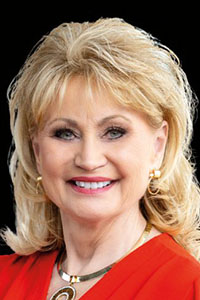
Sharon K. Hulce, CSM, President, CEO, and Visionary Employment Resource Group, Inc.
Background: Sharon Hulce is the President and CEO of Employment Resource Group, Inc. (ERG), a nationwide executive search firm based in Appleton, Wisconsin. In 2026, she celebrates her 30th anniversary in the executive search industry. She founded ERG to innovate the traditional search process. Her leadership ensures that the firm surpasses mere resume presentation, instead providing comprehensive thought leadership and ensuring mutually successful placements for companies and candidates alike.
ERG prides itself on understanding the key attributes needed for candidates to excel within their roles, from competencies and knowledge to social skills and personality. This unique approach has garnered praise and emotional intelligence accolades from clients and candidates.
Accomplishments: Sharon is a best‑selling published Forbes author; her book, “A Well‑Done Professional Midlife Crisis,” is widely available. She is recognized as a dynamic keynote speaker, sharing insights from her life and career at numerous corporate events, national conferences, and even a TEDx talk.
Sharon’s extensive accolades include the 2025 Stevie Award for Best Female Entrepreneur – Business Services, 2025 Wisconsin Titan 100 CEO Hall of Fame, 100 Women to KNOW in America, Enterprising Woman of the Year Honoree, Top Women in Construction Award, and the Lifetime Achievement Award from Insight on Business’s Women of Influence program. She is also a Platinum Chapter Member of the Women Presidents Organization and was chosen to attend Harvard Business School. She has received numerous local business and community service awards for her pro‑bono work with local non‑profits totaling over $7 million in donated fees.
Furthermore, Sharon is actively involved in leadership roles across various boards, including the UW‑Green Bay Schreiber Institute of Women’s Leadership Advisory Board, demonstrating her commitment to fostering leadership and development to young women in her community.
Unique Approach to Business: “A business and community’s most valuable asset are the people within. For our clients, our role is to understand the necessary competencies, knowledge, social interaction, and personality critical for integration and outstanding performance within their organization. For our candidates, our purpose is to help them define their purpose, attain goals, and find their life’s vocation. We are proud of the emotional intelligence we have been able to share with our clients and candidates alike.”