
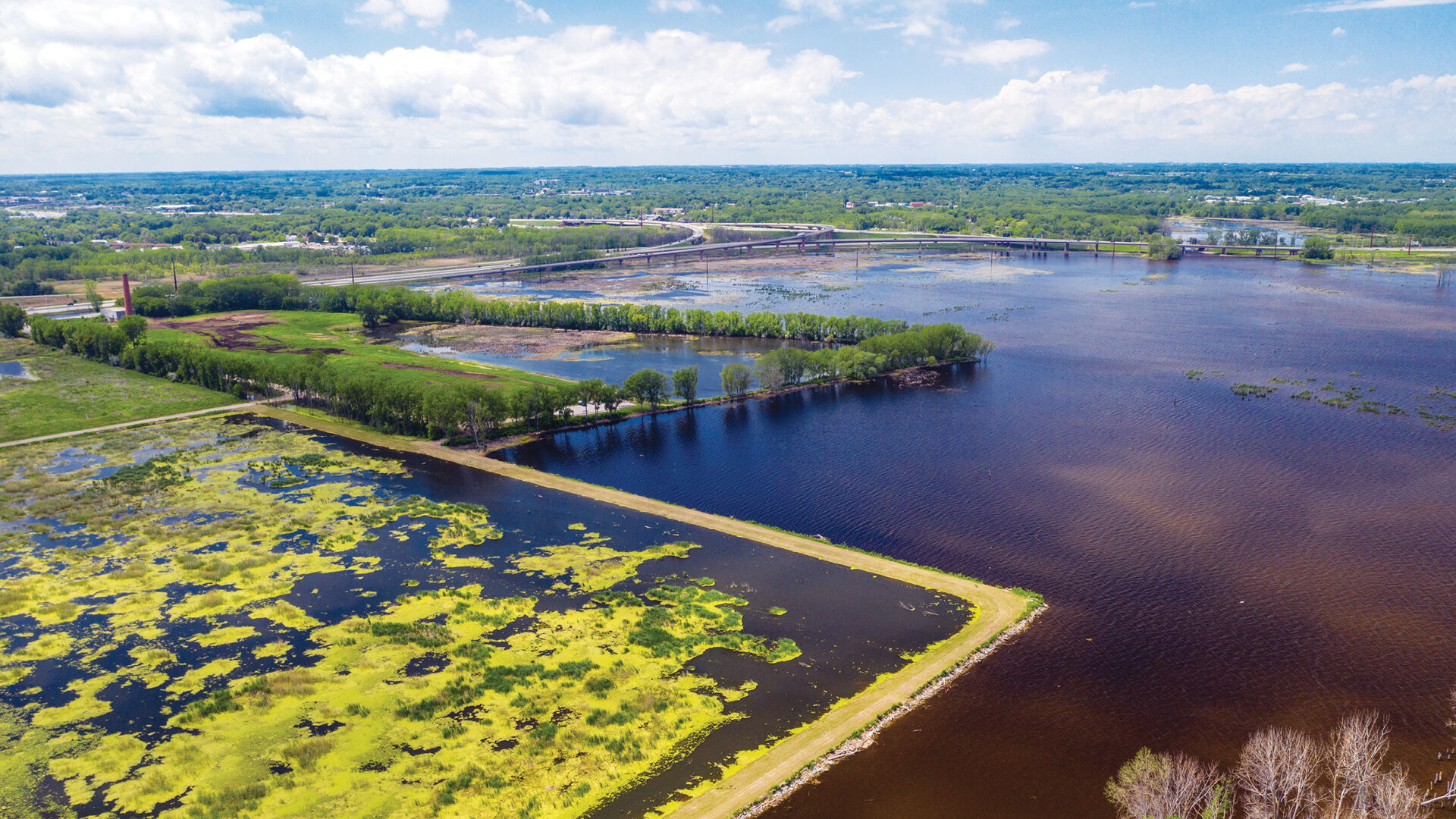

Photo by Ben Young, courtesy UWGB
Most people in Northeast Wisconsin take having the world’s largest freshwater estuary in their backyard for granted. The exception: a large group of cross-entity representatives inching closer toward National Estuarine Research Reserve (NERR) designation from the National Oceanic and Atmospheric Administration (NOAA) — and all the benefits that come with that.
It’s work that has been several years in the making toward a designation described as being both locally relevant and nationally significant.

The Green Bay ecosystem is the world’s largest freshwater estuary, referring to a location at which rivers meet a different body of water. This creates a unique habitat for many species of fish, birds and other animals, and features different ecological impacts there, says Emily Tyner, director of freshwater strategy at the University of Wisconsin-Green Bay and state lead on the designation.
Obtaining NERR designation will raise the visibility and prominence of this globally unique freshwater resource, says Matt Dornbush, dean of UWGB’s Austin E. Cofrin School of Business.
“We sit on the shores of roughly 20% of the world’s accessible freshwater, a source of recreation and high-quality life, a driver of industry, transportation and a moderator of climate,” he says. “The importance of freshwater and the resulting benefits to water-rich communities are certain to only increase with time, so long as the resource is used sustainably.”
The NERR system is a national network designed to aid in that, protecting and studying estuaries and their coastal wetlands. Pursuing NERR designation for the bay has been a years-long undertaking, but it will bring with it a wave of benefits.
Where it began and where it’s headed
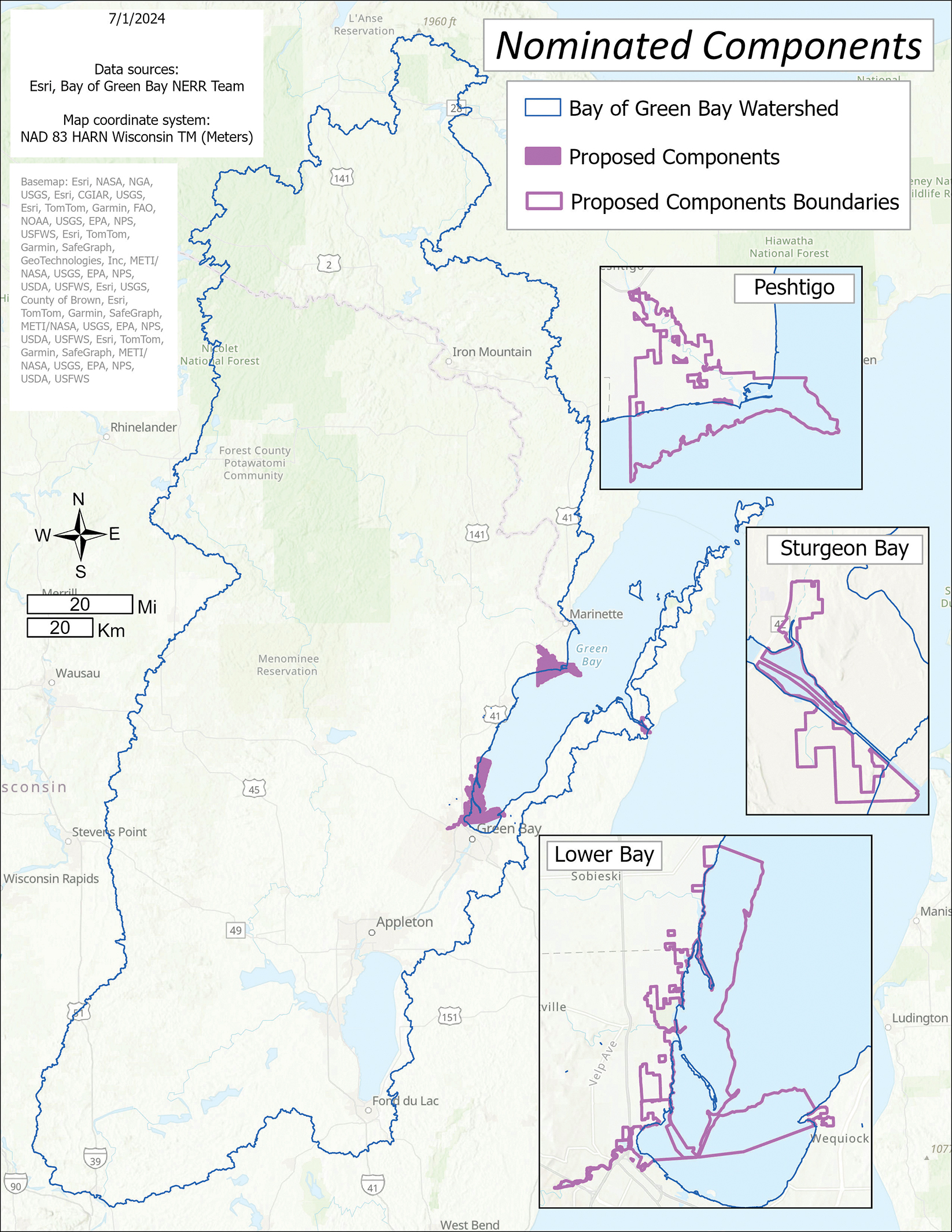
The idea of exploring a Bay of Green Bay NERR dates back to 2016, with work beginning in earnest in fall 2020. In particular, committee members have spent the last two years identifying natural areas to be part of the NERR — publicly-owned lands that stretch from the bay to the north on both shores. Identifying natural areas is one key step toward NERR designation.
“It’s a multicomponent reserve because there is a component in the Peshtigo area, a Lower Bay component and [natural areas] near Sturgeon Bay,” Tyner says. “It’s even bigger than the bay’s footprint, however, because the Green Bay watershed is quite large, and anything that happens in the watershed can potentially impact what’s happening in the bay. While we want to focus on [areas] close to the bay, our programmatic footprint is to encompass the full Green Bay watershed.”
For Northeast Wisconsin, the NERR site selection process involved three committees with members with diverse interests, professional expertise and geography doing the work: A steering committee kicked things off in fall 2020 to provide leadership and oversight to state designation, oversee committee activities and build statewide support. The steering committee is at the helm of creating a management plan.
In 2021, the site development committee began its work in drafting site selection criteria, prescreened and evaluated geographies for consideration as natural area sites, and identified optimal candidate sites. In 2022, the site evaluation committee took that legwork under consideration to evaluate and recommend natural area sites to the steering committee.
In March, the steering committee kicked off the partnership with NOAA to provide context and information for the necessary environmental impact statement and to create a management plan draft.
“The management plan is important, as it will guide operations for the first five to 10 years, including what kinds of programs we want to run, who to partner with to reach school groups, what relationships we want with the land owners…key priority issues,” Tyner says.
The committee’s goal is to submit everything so it can achieve the designation in spring 2025, but exact timing is contingent on the partners, including the federal government, reviewing the documentation. Upon obtaining the designation, UWGB will be eligible to receive some of the federal funding to support the NERR so that, by fall 2025, Tyner says the university can begin hiring staff, developing programs and building capacity.
“It’s our hope to bring the management plan to life operationally and with programming then,” she says.
Many reserves include a visitor center — an advantage for residents, tourists, educators and researchers alike. UWGB’s timeline for a visitor center isn’t definitive; work on it may begin concurrently with execution of the management plan pending its formal approval.
“A visitor and education center will act as the front door to the water and recreation in the region to increase access to the water for all of Northeast Wisconsin, regardless where we place the center,” Tyner says.
Committee-led, community- and partner-driven
Various steps of the designation process include community outreach to groups as well as county boards. To date, that’s included 135 presentations with 2,700 community members as well as securing nine resolutions of support.
There is much collaboration among committee members and other entities in the process of the work for good reason. Tyner says the Wisconsin Department of Natural Resources owns about 8,000 acres within the reserve property, so that requires working with the manager of those properties, Dave Halfmann, a wildlife biologist for the Bureau of Wildlife Management – Fish, Wildlife and Parks division at the DNR. Halfmann says working as part of this collaborative effort is an opportunity to focus on the bay in terms of research, education, stewardship and training — all facets of the NERR designation.
“We already have some pretty fabulous partnerships around Northeast Wisconsin, but it’s an opportunity to enhance cooperative relationships, collaborations and partnerships,” Halfmann says. “Natural resources managers have done a great job in the last 30 years cleaning up issues such as contamination and restoring habitats in the area to provide a better habitat for wildlife and an overall quality of life for us with birdwatching, water quality, et cetera. NERR pools resources and expertise and increases the opportunity to secure funding at a national level that we need to continue to do the work.”
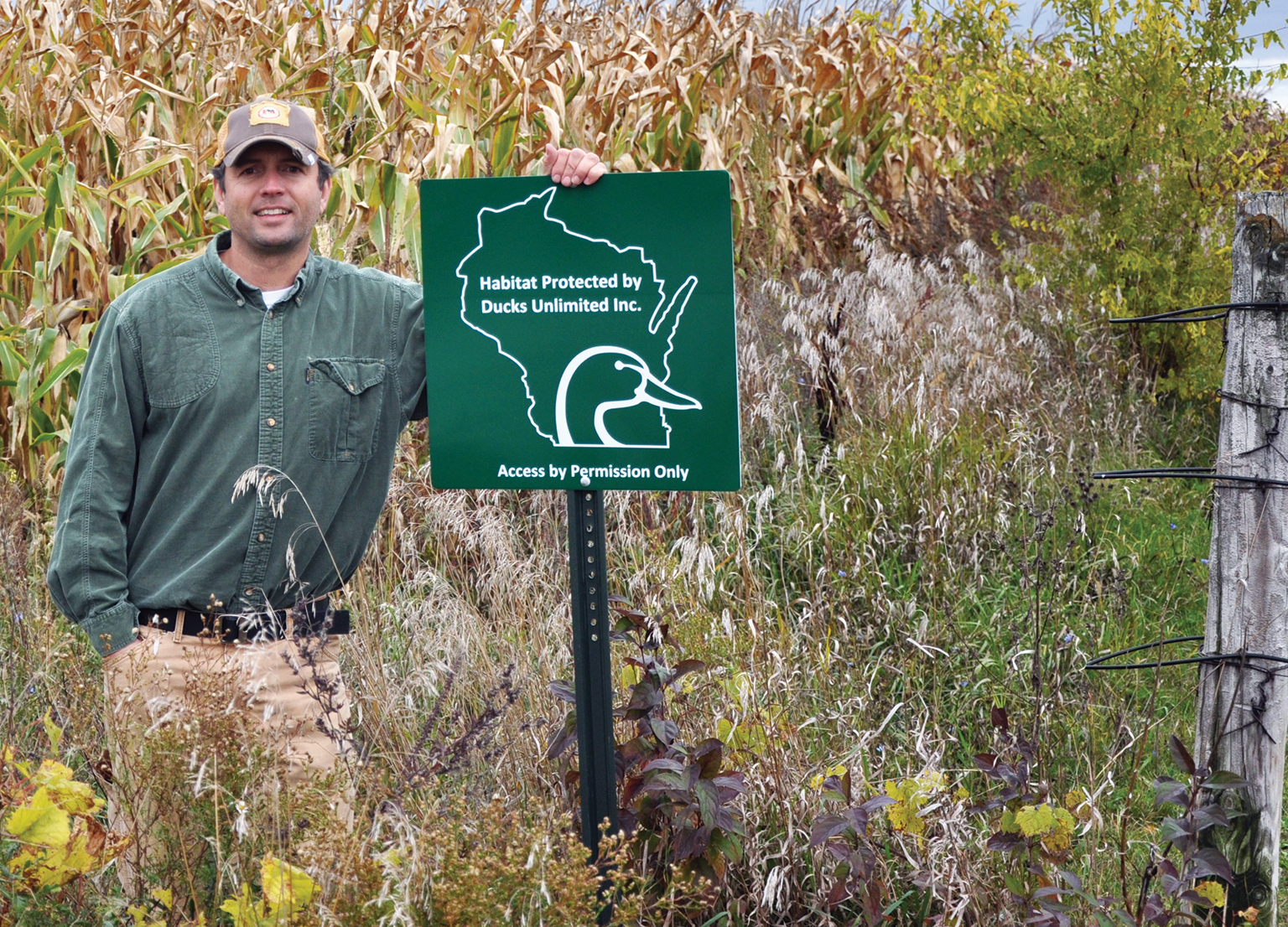
Brian Glenzinski, manager of conservation programs for the Great Lakes Initiative at Ducks Unlimited Inc. and NERR site development committee member, concurs. He says Ducks Unlimited has had a long partnership with UWGB, including the university doing some monitoring of wild rice restoration projects. The NERR is going to offer an opportunity to boost the feedback loop on monitoring, re‑evaluation and restoration and improve Ducks Unlimited’s work, he says.
“Wild rice is an incredibly important food source for waterfowl and has pretty big water quality benefits as well,” Glenzinski says. “While we focus on waterfowl, NERR will be able to tell [the broader] story. NERR will not only help track the long-term results of the work we are doing in the watershed, but amplify it to the benefit of the health of the system.”
Federal and state money will help create a “living lab” for research purposes. Those dollars benefit the work of other aligned entities to tackle problems including changing water levels, erosion and algae blooms.
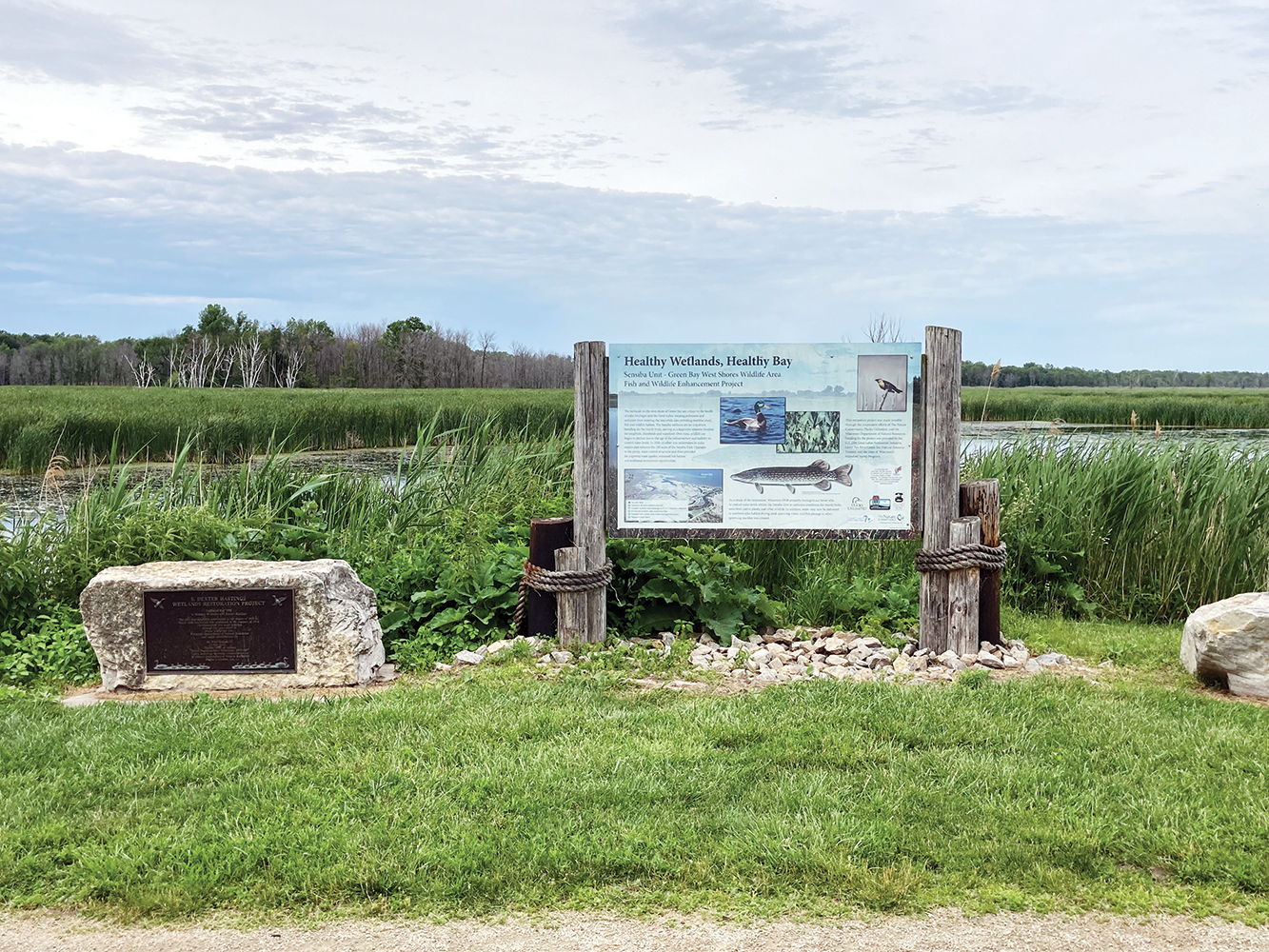
“There are a lot of organizations working on the bay in different capacities, for different reasons, and a NERR can be an organizing force around those entities, and be a convening force around environmental and land/water issues,” Tyner says.
While Ducks Unlimited’s work is already reaping benefits for the hunting and fishing community, that is a bonus, Glenzinski says.
“We don’t necessarily do what we do to provide economic benefit; we do it because it’s what’s right for the habitat,” he says. “What’s probably seen in the community more than anything is what a good, healthy ecosystem brings with it — healthy fishery, new musky fishing opportunities, excellent waterfowling, and, hopefully, a reduction of harmful algal blooms.”
NERR designation has great potential to not only leave a lasting impact on the environment, but on the region. In a 2021 study contracted by NOAA, its reserves reported contributing anywhere from 60 to more than 600 jobs and $6 million to $60 million in annual revenue (calculated based on direct operational spending, spending by reserve visitors, employment and spending associated with partner organizations and their visitors). It also will provide access to additional research dollars specifically for preservation and restoration.
“Clearly, the Green Bay NERR has significant potential as a meaningful addition to the regional economy,” Dornbush says.
NERR designation also will provide access to additional research dollars specifically for preservation and restoration, including reducing coastal erosion.

“With the future addition of a physical center, it will increase tourism spending and highlight the natural beauty and importance of water resources as an important business and recreational asset,” says Barb LaMue, president and CEO of New North, Inc.

From a business and quality of life perspective, NERR designation is priceless, says Chip McDonald, president of the McDonald Companies that own bayfront property.
“The NERR can be one of the key inflection points in our area’s economic, environmental and community success for the next century. It can help us create an industry center focused on the study of protecting, creating and developing sources of one of the most critical elements of our development around the world: fresh water,” he says. “Fresh water will be a crucial resource for the growth of any area, and the NERR — combined with existing industrial and intellectual capital in our area — can be the start of creating a hub of businesses, people and innovation … needed for sustainability and prosperity.”