
It would be a bit of an understatement to say it’s an exciting time to be affiliated with the city of Green Bay. In May, U.S. News and World Report ranked it America’s best place to live, citing quality of life, affordability and jobs. Later that month, the National Football League announced that the city would be the host site for its 2025 draft. Business is on a steady growth trajectory; Kelly Armstrong, vice president for economic development with the Greater Green Bay Chamber, says her organization is already tracking 28 business expansions as of the middle of the year, up from 26 and 22 total, respectively, in 2022 and 2021. Unemployment is under 2% — a figure that outpaces both the state and nation.
So what Green Bay needs most right now is talent to bolster its thriving business community and, first and foremost, places for that talent to live.
Amaad Rivera-Wagner, chief of staff to Mayor Eric Genrich, says housing is an intersectional issue that touches on so many aspects of community, including safety, transportation, talent attraction, diversity and inclusion, business expansion, and education.
“That’s why housing is central for this administration,” Rivera-Wagner says. “The mayor’s trying to meet the moment and say ‘what can we do to make sure we’re not stepping in the way of talent, of growth, of engagement’ — and recognizing that the market on its own is not building enough, fast enough at the diverse range that we need it.”
Enter the public/private partnership. “Most of our biggest challenges are not solvable by one entity — particularly things like housing and child care,” Armstrong says. “The JBS development by the city of Green Bay is a great example of a public/private partnership that is taking into consideration diversity, culture and trends.”
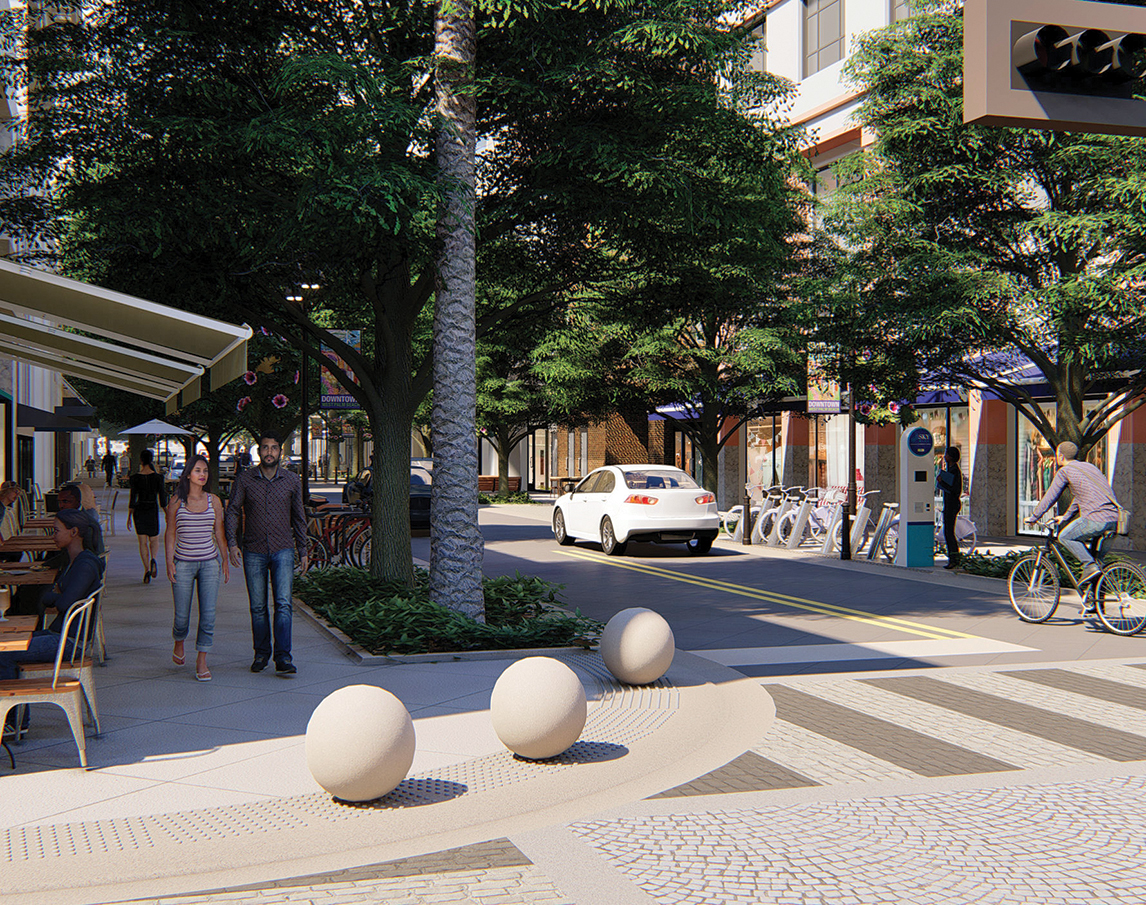
Rivera-Wagner describes the project, which is underway on the 26.5-acre parcel behind the Kroc Center near the JBS meatpacking facility, as the first of its kind in Green Bay. The mayor’s office negotiated a donation of the land with JBS in 2021, and plans were just finalized at the end of July to develop the site with a programmed park, a boulevard and up to 200 dwelling units of different types. Rivera-Wagner says the project is becoming a reality because of collaboration with 40 area business and nonprofit leaders, the Bloomberg Harvard City Leadership Initiative, meetings and public input, and, most importantly, American Rescue Plan Act dollars from both the state and federal levels.
“We’re really excited about this project because we think it shows off one of the incredible things about Green Bay: that we can work together across all kinds of different arbitrary boundaries on something we can all agree on, which is that we need more housing for everyone across every income spectrum, every demographic, and we can do that together. I’m really proud of that,” says Rivera-Wagner, who adds the project should be “shovels in ground,” weather-permitting, by April.
As Green Bay works to attract more diverse residents and businesses, Armstrong says the type of communal living and amenities that are offered by the yet-to-be-named JBS development are exactly what Green Bay needs to reflect its existing population and attract new, diverse talent. “Green Bay is growing in every demographic, but the Latino population is our largest area of growth, where you see more demand for multigenerational living — though multigenerational living is growing across all ethnic demographics,” she says.
“We’re being intentional at the outset that we want to build neighborhoods with positive community impact at the center of them,” Rivera-Wagner says. “We don’t want this to be an unattainable neighborhood. We know the mixture is where the magic is.”
Rivera-Wagner says he knows the ideas behind this development formula are resonating, as similar, smaller-scale versions of the model have come to fruition this year — including the new Brown County United Way office, which will be constructed in the City East neighborhood with 43 units of affordable housing surrounding it.
“Obviously, scaling up and scaling down will depend on the partners,” he says. “But we see a future where the city is working in collaboration with different sectors and different partners to provide the kind of housing that works across the income spectrum.”
Football in focus
As reported by Nikki Kallio in last month’s Insight tourism and hospitality report, Green Bay is bracing for a unique boon to economic development that will put all eyes on Titletown, U.S.A. in April 2025. For the first time, the National Football League Draft will be held in one of America’s most notorious football cities, and officials say it should bring nearly a quarter-million people and $20 million to Green Bay over a three-day period.
The draft, which for nearly 50 years was held regularly at New York’s Radio City Music Hall, will come to Green Bay’s Resch Expo for 2025 thanks to efforts by Discover Green Bay and the Green Bay Packers that date back to 2019.
“There’s a lot that goes into bidding on [the draft],” said Brad Toll, president and CEO of Discover Green Bay, whose proposals were turned down a handful of times before Green Bay finally scored the big win this year. “And of course most all of the franchise cities would love to host the draft in their city. So it’s gotten very, very competitive as well. We’ve gotten very good at putting the proposals together.”
Toll said the event will fill hotels not just in Green Bay, but as far away as Madison and Milwaukee, with an overall statewide economic impact expected to number around $94 million. The announcement has already inspired other economic development investments in the New North region, including a hangar expansion announced this summer by Appleton International Airport.
“We’re a community owned team, so for us, this is really our sweet spot,” said Packers CEO Mark Murphy, who noted that the draft will have more than six times the impact of a single, regular-season game. “This is gonna be a tremendous benefit for the community.”
“It’s going to have a huge impact on the state of Wisconsin,” Toll said. “We know what a beautiful state this is, and soon a lot more people will know as well.”
— Kate Bruns and Nikki Kallio