
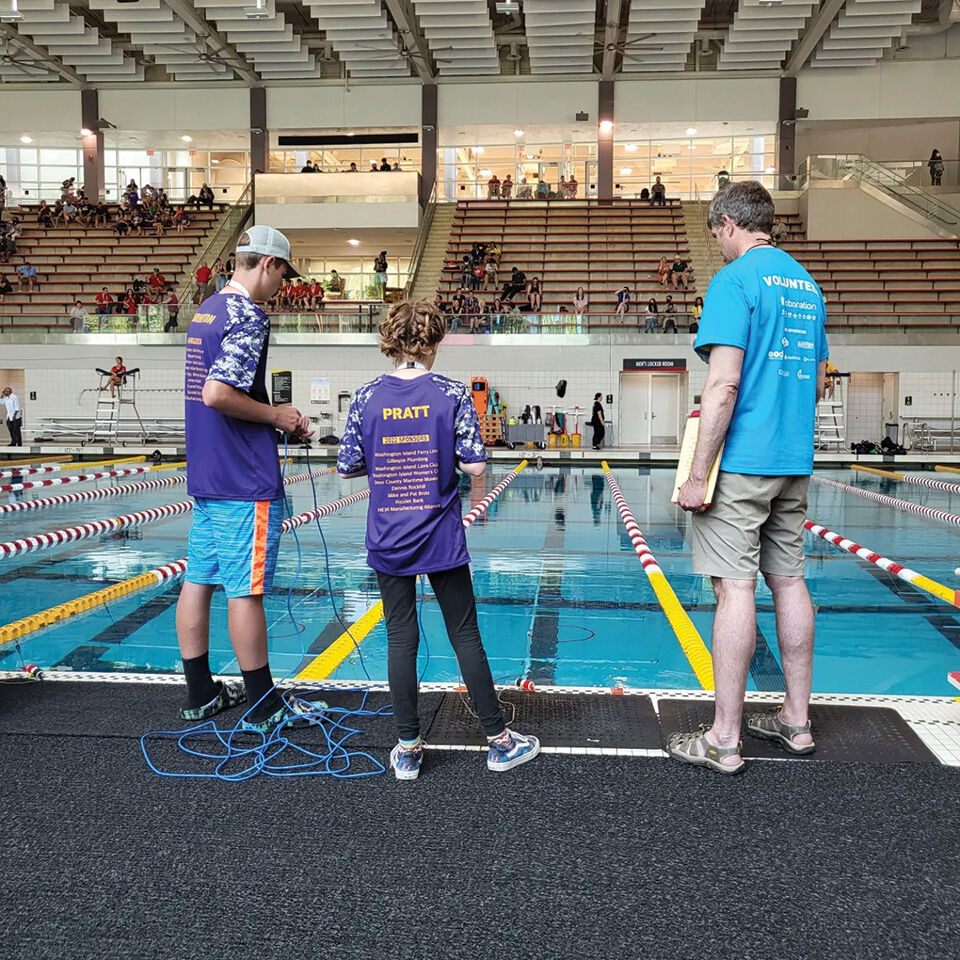

It’s not often that a group of VIPs receive a police escort to Door County’s Washington Island Ferry, but this summer four Washington Island middle school students and a tangle of PVC pipes named Dory arrived for their trip with rock-star credentials.
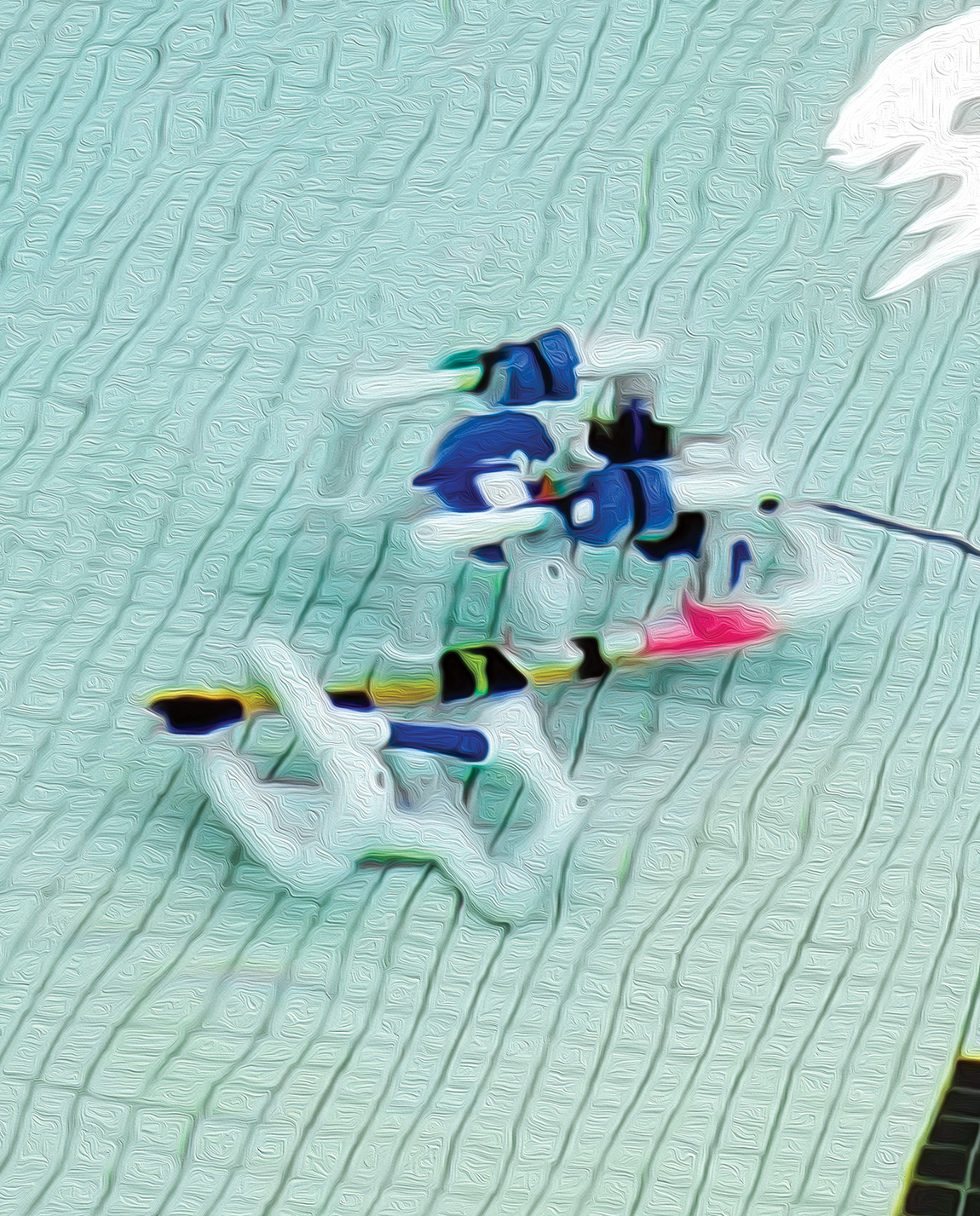
Julia Pratt, Magnus Purinton, Collin Verboomen and Allison Bennett put their tiny school on the map when they qualified for the 2022 International SeaPerch Challenge this June at the University of Maryland. The team of young engineers had spent months building Dory, their underwater remotely operated vehicle (ROV), and qualified for the global contest after strong showings at the local and state competitions.
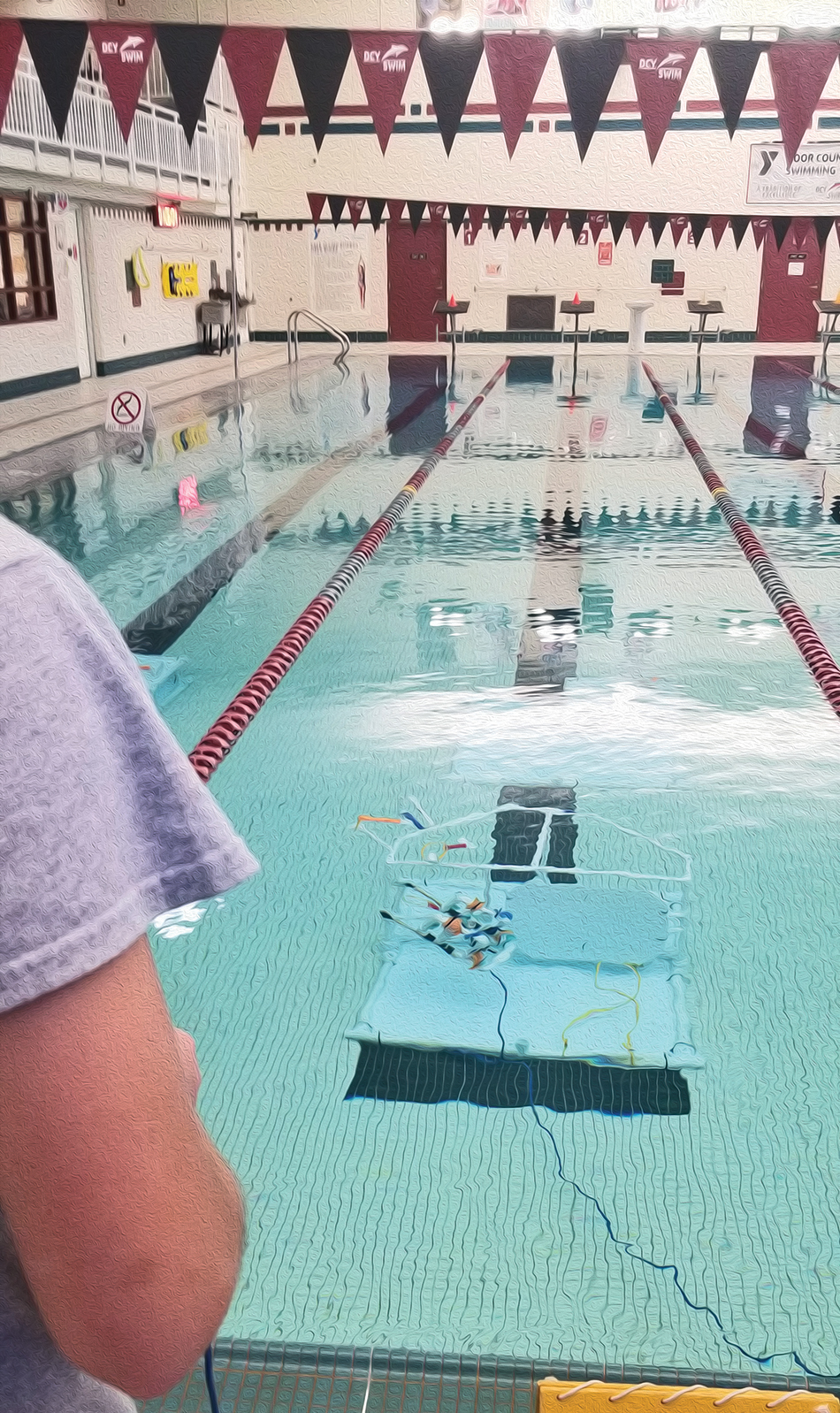
Dory was put through the “mission course” and “obstacle course” paces in the pool at Maryland’s Eppley Recreation Center, and the students also prepared a video and live presentation about their engineering work for a panel of judges. In the end, Team Dory finished 14th overall in the 60-team middle school division, including an eighth-place finish in the mission course and a 12th-place finish in video.
“There’s over 250,000 SeaPerch teams from schools around the world that competed starting at the local level this year,” says Miranda Dahlke, the Washington Island SeaPerch coach who has taught at the school for six years. “So I just kept telling [the students] that even if you get last place I want you to take away from this experience that you were in the top 6% of SeaPerch teams in the world.”
Small school, big goals
With a total K-12 enrollment just north of 50, students, parents and teachers describe Washington Island School as a unique environment with limited opportunities. After being approached by the Door County Maritime Museum about SeaPerch, the school adopted the program into its curriculum. That meant all of Washington Island’s middle schoolers would participate — last school year, that was a total of 17 students.
“We’re trying to, like a lot of other schools, integrate more STEM, robotics and engineering because that’s where future jobs are going to lie,” Dahlke says.
But Washington Island’s remote location is not without its challenges. The local competition was held in Green Bay in the wintertime, for example, requiring Dahlke’s five teams to depart the day before because of the ferry schedule. In short, community support has kept them in the game.
Kevin Osgood, director of the Door County Maritime Museum, says his organization began working with schools to implement SeaPerch programs starting in 2019. He says prior participants had largely been private schools with significant financial resources at their disposal. The U.S. Navy League leaned on the museum to help distribute kits to Door County public schools, including Washington Island.
“I am so proud of that team,” Osgood says. “Just to see their personal growth and excitement.”
Pratt was one of those students who participated in the original Washington Island SeaPerch program — making her the veteran member of Team Dory. While SeaPerch chose her, not the other way around, Pratt says she would do it again and again.
“It sounds crazy, driving an underwater robot of all things,” she says, adding that her dream of being an astronaut may have started evolving into aspirations of working in robotics for NASA. “I’m really into STEM and building things.”
Careers calling
The Washington Island Ferry is just one example of an organization that utilizes underwater robotics, Dahlke says, meaning the skills her middle schoolers are gaining are directly applicable to jobs as far away as outer space and as close to home as the island shores.
“It’s not just driving an underwater robot,” says Osgood, adding that the museum’s participation in the Northeast Wisconsin Marine Manufacturing Alliance was a key driver behind its adoption of SeaPerch. “They have to do a presentation about the challenges they faced in the design and how they overcame those challenges. It’s a huge opportunity, and knowing the organization I work for helped bring this together is humbling.”
And even if SeaPerch students aren’t currently planning future careers in robotics like Pratt is, the skills they are gaining are translatable in myriad ways.
“It’s an experience that lets them get as creative as they want,” Dahlke says. “We do a little bit of planning and preliminary stuff, but really all the time they’re driving [the ROV], modifying it, constantly iterating to get better designs.”
And, most of all, the experience is a great lesson in teamwork.
“It might sound cheesy, but it’s true you’ve gotta have teamwork,” Pratt says. “If your team’s fighting the whole time, it’s kind of going to be a disaster.”
Teamwork and dividing up responsibilities are integral parts of the competition at all levels. Different team members are responsible for driving the ROV through the courses, but also the presentation elements.
“I got to learn things like cutting PVC, but presenting was my favorite part,” Bennett says. “You get to talk to people with this big colorful diagram.”
Trip of a lifetime
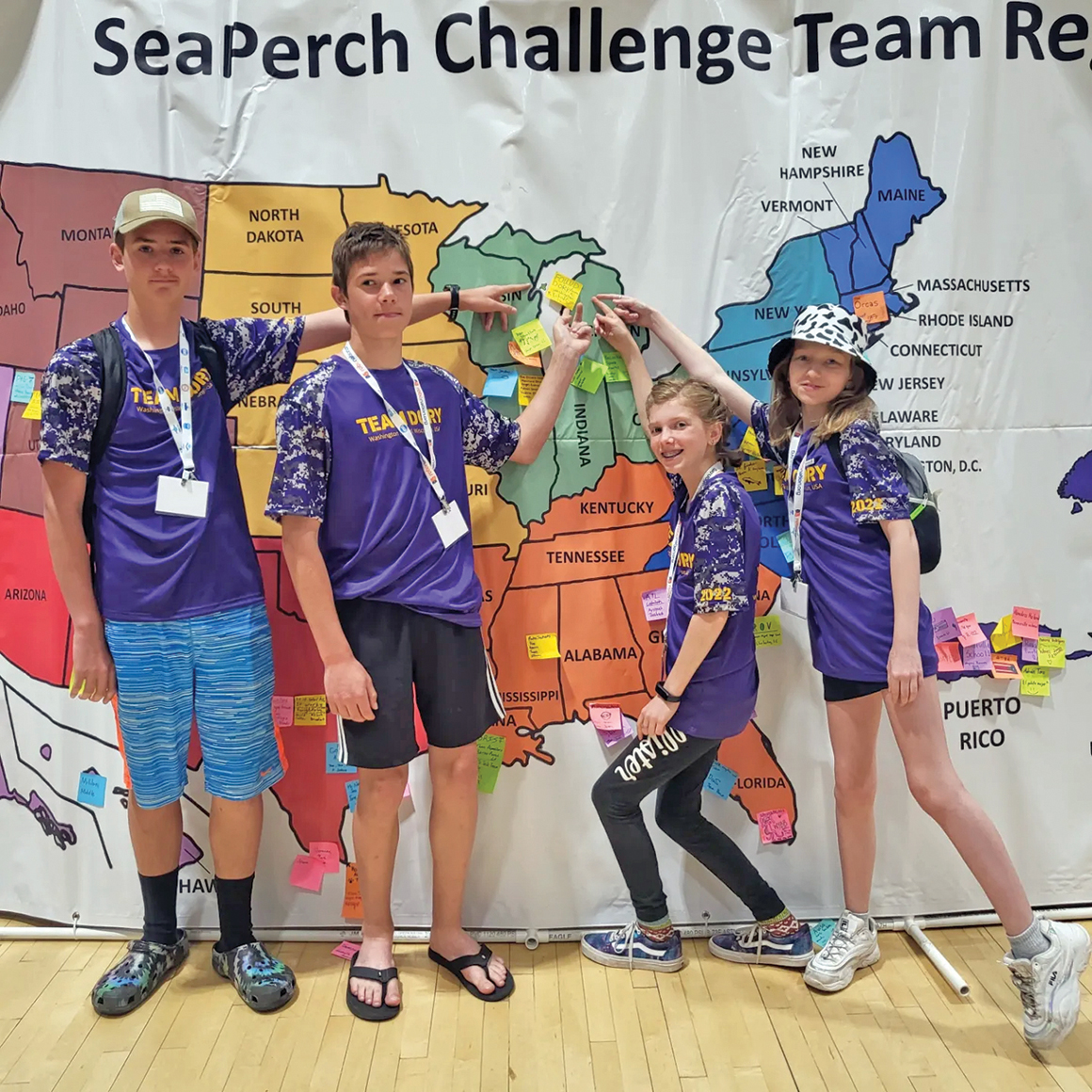
“Talking to people” was a theme of the Maryland trip.
“We’re not used to seeing that many kids,” Pratt says, noting that the competition allowed the Washington Island students to meet friends from places like Qatar, China, India and New Zealand — and eat lunch with them in a cafeteria that Dahlke says made quite an impression.
“Our kids are super friendly. I mean, any opportunity they have to go off the island, they are like the friendliest kids you will ever meet,” Dahlke says.
Other highlights of the trip included visiting Washington, D.C., a tour of the Maryland Robotics Center and an encounter with Spot, Boston Dynamics’ infamous robot dog. When competition day came, the students said they were nervous. But Dahlke says it didn’t show.
Dahlke says it also helped to know there was a whole little island back in Wisconsin cheering them on. The team’s Maryland trip was funded through donations from the community. At an open house event prior to the international competition, Washington Islanders got an up-close and personal look at SeaPerch and embraced it. Pratt’s mother, Liz Pratt, says a police officer who helped with the team’s ferry escort en route to internationals didn’t leave until he had successfully secured the link to watch “our kids” in the competition livestream.
It’s that close-knit, family atmosphere that draws families to Washington Island. And while some outsiders may consider the small-town students underdogs and marvel at what “little Washington Island” could do, Bennett challenges the notion that small means a disadvantage.
“I think of it as more of an advantage,” she says. “Living in a small town, you get to know people better and it’s very nice because you feel like the whole island’s your family.
“That’s why we work together so well.”