
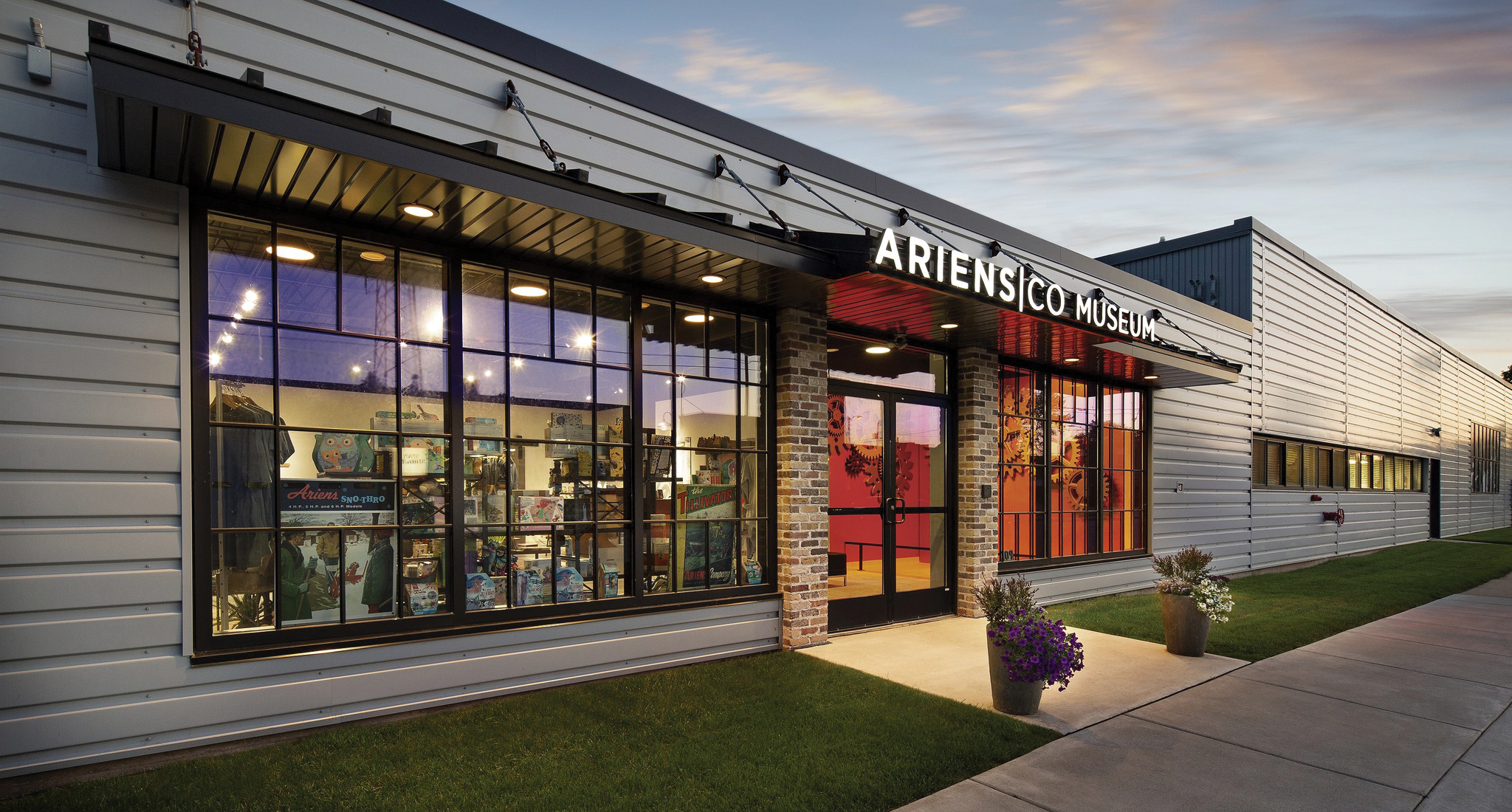

After production ceased at the original 1933 AriensCo factory at 109 Calumet Street in Brillion, the building went through a number of functional transformations.
“Over time, this building has housed engineering and manufacturing and sales and marketing,” says Bree Boettner, AriensCo’s museum manager. “And then over the last 30 years, it kind of just became the ‘ifs, ands, and buts’ for the company, and a storage facility.”
In 2003, she says, “we had a core group of almost-retired employees that were like, ‘Hey, how cool would it be if we made that building into a museum?’”
That discussion led to the space being put back to work. Now, it’s both a way to showcase the history of the influential company and an educational tool for next-gen STEM innovators.
In the years just prior to the pandemic, “Dan Ariens, our marketing team and our hospitality arm of the company really decided to revamp the entire facility and make it a hands-on engaging experience,” Boettner says.
Then COVID struck, but it at least “gave us an opportunity to close down and really be intentional in how we did all of these spaces,” she says.
Artists were brought in to create themed spaces, including a bright “snow room” with an artistic representation of how far an Ariens snowblower can throw snow and the Midwest’s only life-sized snow globe, which is a social media reel-maker’s dream.
“We wanted to make everything very tactile, hands on,” Boettner says. “And so we have snowmobiles that we produced in the ’70s that are on display for people to sit on and engage with, and are conversation starters too, for multi-generational visitors.”
With the pandemic continuing for several years, the museum has had soft openings but never really had an official launch, Boettner says. “But over the course of the last year … we’ve been doing some dedicated marketing and events to really bring in families, bring in kids, bring in staff and throw those doors open, if you will.”
In May, the Northeast Wisconsin Manufacturing Alliance’s Taps & Tours series gave visitors a chance to explore the 14,000-square-foot museum space in the 25,000-square-foot building.
One gallery is constructed to resemble a 1933 garage. There’s a 1960s display showcasing the post-war boom of AriensCo residential products, including original TV ads on a retro TV console.
“We’re firm believers in immersive museum experiences, so it takes you into that space and place of time, engages you with the history and humanizes it,” Boettner says. “That’s how people connect with the ‘old stuff.’”
One of the oldest artifacts is a ledger book from Brillion Iron Works, founded by Henry Ariens, operating under Ariens’ ownership until 1933, following the Great Depression.
One fascinating display involves an “exploded” Gravely zero-turn compact mower, with every piece of the equipment separately suspended midair. The display was built by an Ariens model shop employee over about 500 hours.
The museum also has recreated an unusual early invention at one-fourth scale: Henry Ariens’ first official patent in 1894, a dog-powered cream separator that operates kind of like a big hamster wheel. It helps students to connect problem solving with invention, Boettner says — one of the core missions of the museum.
The STEM education programs also highlight the engineers, designers and technicians who have led company innovations since AriensCo began making outdoor power equipment and machines, starting with the gas-powered roto-tiller Henry Ariens built in his garage.
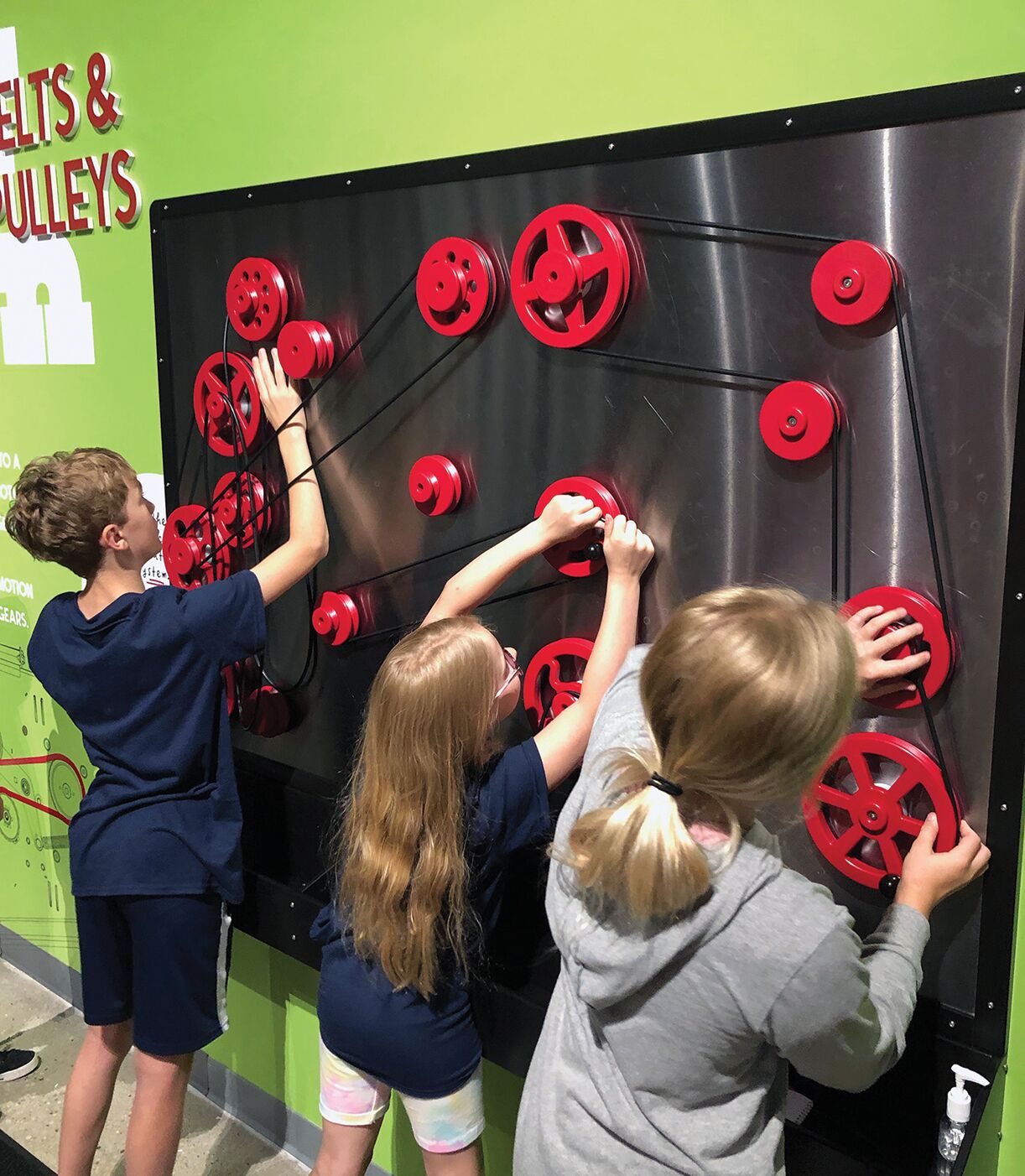
“We’ve been launching our K-12 education programming over this last year, with hands-on immersive STEM tours in the galleries that are then complemented with hands-on workshops,” Boettner says. “We go into coding and robotics and the engineering process with our students. And it aligns with curriculum that teachers are already teaching in the classroom.”
Over its first year, the museum has offered close to 50 guided school tours and STEM workshops to more than 1,100 students in area school districts, as well as an open house for educators.
“STEM education continues to evolve in the classroom, and we like being a resource for educators to come here and see it in person,” Boettner says.
The museum also works with pre-K students at the Brillion Early Learning Center, a KinderCare location, bringing programming to the smallest children.
“STEM is a huge priority for any of our centers,” says Lindsey Krahn, Brillion Early Learning Center director. “It was really exciting to hear that they would be interested in coming here to help our younger children with STEM.”
The museum began working with the center in summer 2022. “It’s been a huge advantage for our children to be able to utilize some of the tools that they bring in. …They don’t even realize that [STEM is] in their everyday life already,” Krahn says. “They’re already trying to build block towers and learning how to balance things and make things work. This is just building upon those skills.”
STEM is a natural fit for young children because they already have curious mindsets. It also helps get them ready for jobs that haven’t even been created yet.
“It’s just throwing open the doors to imagination,” Boettner says. “Obviously, they’re a few years out from applying for their first job, but the idea of tinkering and innovating designs and understanding what it means to fail, learn and redesign is a huge concept that will make them quite successful.”