
By Lori Kaye Lodes
Talent challenges keep most employers up at night as they face the workplace exodus of baby boomers and not enough candidates to replace them. Manufacturers face additional battles, both to change the often-negative perception of manufacturing and to make students aware of the field’s viable, well-paying opportunities.
Just one of the many ways the educational and business sectors have come together on behalf of students — and perhaps prospective future employees — in an exercise of ingenuity is found in Clintonville. This rural town with just 4,600 residents is known for its industrial history — the birthplace of four-wheel drive technology and home to diverse manufacturing industries.
Here the business community, high school and Fox Valley Technical College have built an innovative partnership.
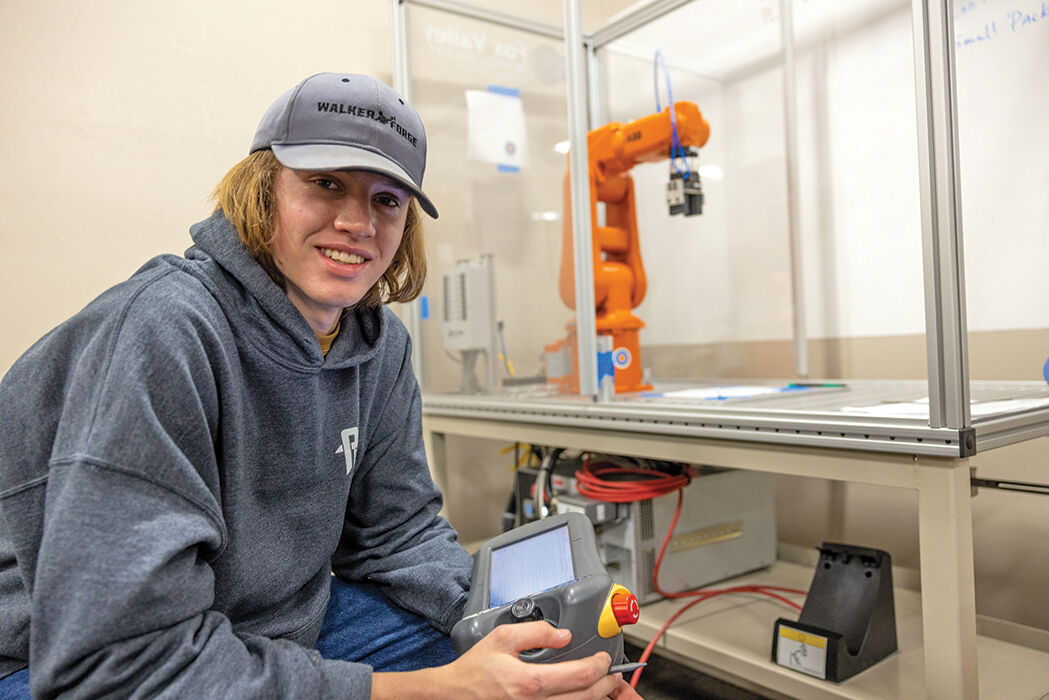
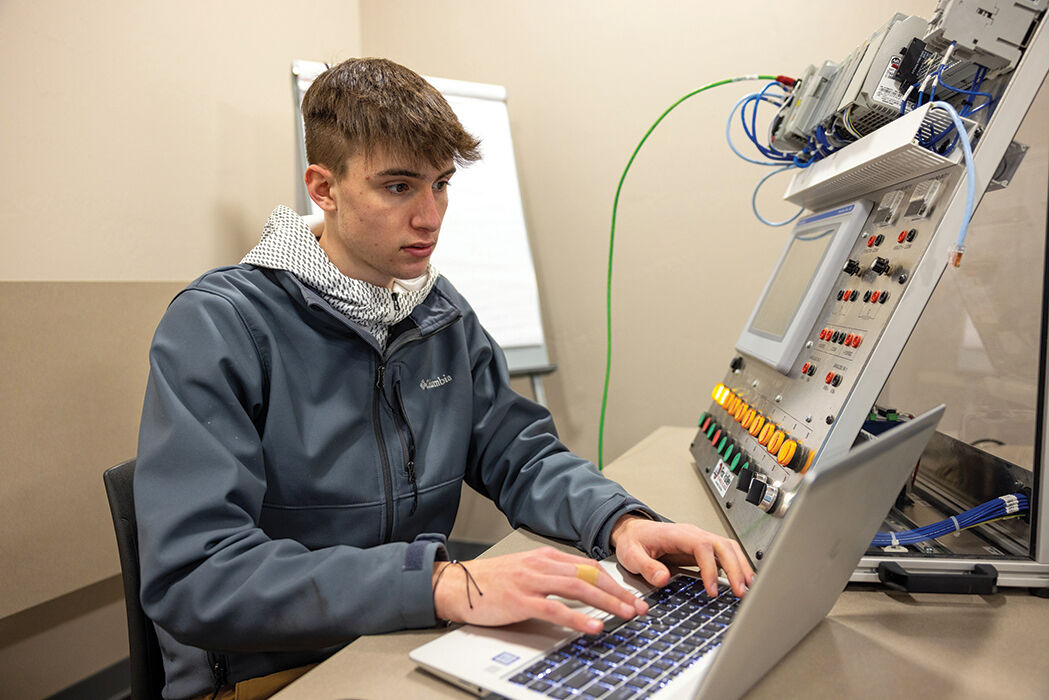
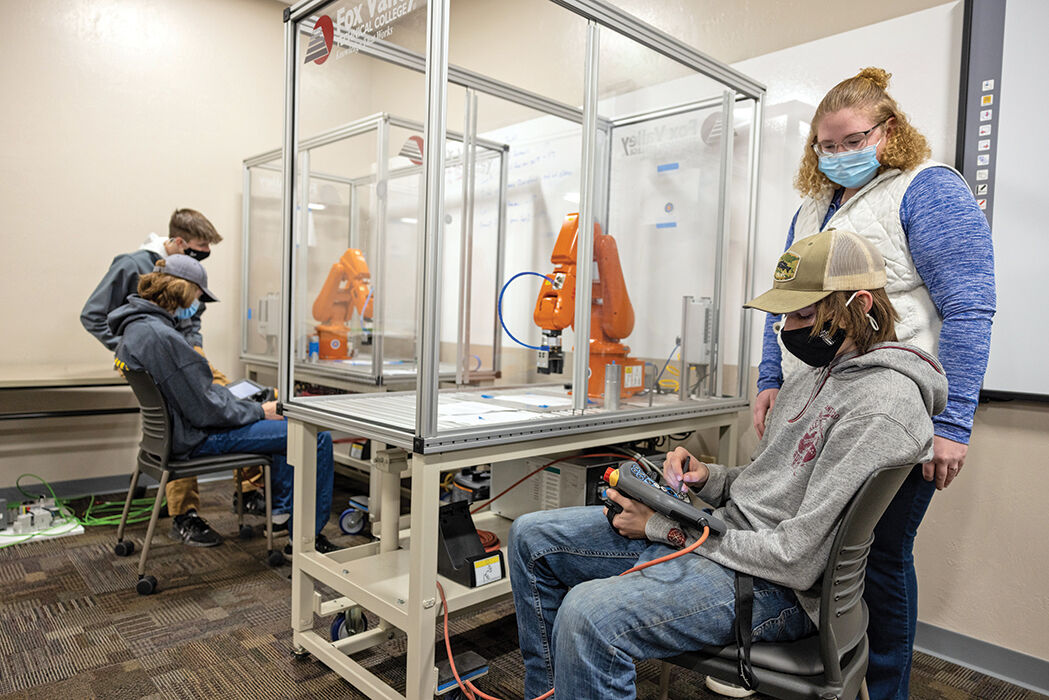
Now in its third year, the Automation & Engineering Academy has Clintonville High School juniors and seniors attend classes at the Fox Valley Technical College Clintonville Regional Center, which is located a mere six minutes away from the school. There they learn valuable hands-on skills in industrial maintenance and automation technology, earning college credit at the same time. In the end, students receive industrial maintenance foundations certificates that can be used to obtain full-time jobs right after graduation.
Where it began
FVTC Clintonville Regional Center Manager Kim Manteuffel says the program started with conversations. Local businesses were seeking ways to engage more students in learning about the manufacturing industry.
Representatives of Walker Forge, Creative Converting and Deluxe Plastics — manufacturers with more than 100 years in business in the local community — sought solutions to workforce challenges. Manteuffel and Jason Vosters, FVTC’s automation technology department chair, pitched the solution to Clintonville High School. The school welcomed the program to its list of school-to-work options alongside opportunities such as youth apprenticeships.
“With the academy, students experience a much ‘deeper dive’ into their career path versus just a taste,” Manteuffel says. “They participate in college-level courses and work on [significant] projects. This last class of students made 3D printers they took home.”
FVTC contracts directly with the district to pay for all the courses comprising the certificate, including books and supplies. It requires high school juniors and seniors to make two-year commitments, during which they earn upwards of 21 credits in coursework. Classes include introductions to electrical motors and safety, control devices and power systems, blueprints, rigging and lifting, and computer-aided design.
“Depending on how they’re learning, they can advance as needed and even accelerate,” Manteuffel says. “We have one student who will have 29 credits through the program, and that student is going to work at a local employer.
“It’s a great opportunity for students to have a chosen career path when they graduate high school while also helping employers with staffing needs,” she adds. “Plus, students are receiving a wonderful education at no cost.”
Employer perspective
Walker Forge’s efforts to work with the school district and FVTC dates back 19 years, when Amy Goerlinger began working for the fabricated metal manufacturer.
“I grew up in Clintonville and didn’t know what Walker Forge was, and I made a plan to make sure that didn’t happen with other kids,” Goerlinger says.
Today, Walker Forge conducts outreach that ranges from fifth-grade tours to participation in the academy program. Four of the academy’s graduates now work for Walker Forge. One is currently pursuing a four-year degree in engineering “with hopes to come back and be an engineer at Walker Forge,” Goerlinger says.
The workforce pipeline is a huge benefit to the company, but Goerlinger says that’s not the only reason for Walker Forge’s participation in the academy.
“We do it because the program is such a good foundation for youth to consider a career in any aspect of manufacturing,” she says. “The kids who chose it did so because they found the opportunity to continue down their path. For us, it’s opened up a lot of opportunities for kids to see that careers in manufacturing can be cool and to see there are good jobs here.”
Clintonville and beyond
Manteuffel says the program is repeatedly hitting goals, creating connections and retaining workforce in Clintonville.
“We want students to realize there are careers in Clintonville that are phenomenal, overcome some biases people may have about manufacturing and bring more females into manufacturing,” she says. “We hit all of these goals, and I’m ecstatic.”
The program recently earned Clintonville Public School District the Education Innovation Award from the NEW Manufacturing Alliance. Mary Hansen, director of K-12 partnerships for FVTC, says Clintonville’s success stems from tying the programming to the community’s industrial heritage. She and Manteuffel say discussions are underway with other school districts to gauge interest in additional academies throughout the region.
“We could do an academy in about 50 different areas, but you can imagine the coordination and collaboration it takes to make this happen,” Manteuffel says. “The planning really begins two years ahead of a student taking any courses because we want this to be a positive stepping stone for students.”
Hansen says FVTC is working to review high-demand fields and how they align with the needs and resources in various communities, noting the possibility of a medical assistants’ academy in Wautoma and leveraging the “great successes” FVTC has seen at its regional campuses.
“The academy is one more step in providing seamless experiences in a student’s pathway leading them to a career — one that puts them in control of being a consumer of their own education in an area that’s the smartest fit for them,” Hansen says.