
Photograph By Shane Van Boxtel/Image Studios
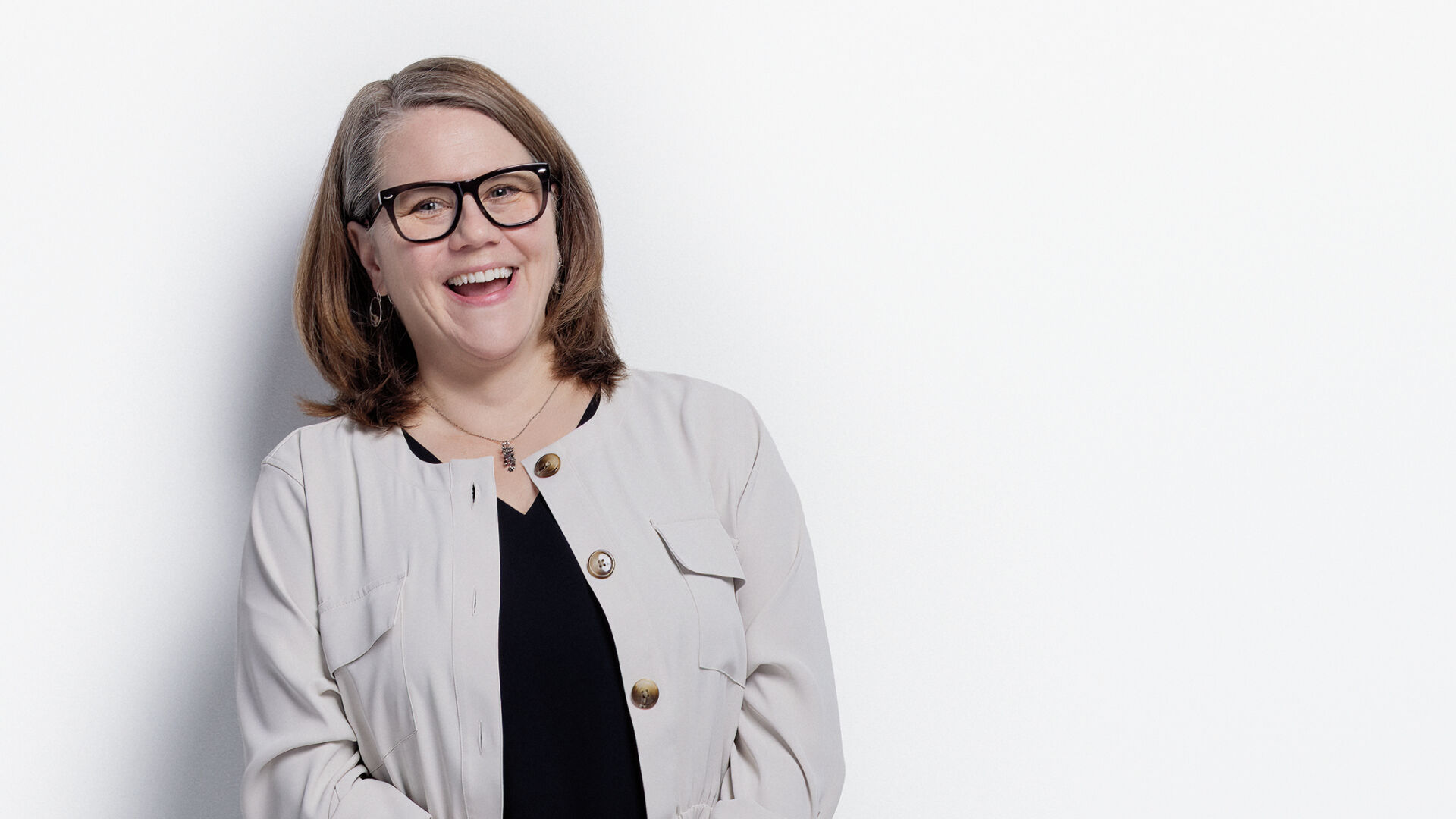
Colleen Rortvedt believes the Appleton Public Library of today is firing on all cylinders — it has a strong staff, engaged partners and, now, a new building that sets the stage for even greater community collaboration.
The Madison-area native originally came to Appleton as a Lawrence University student studying music, but her part-time job shelving books changed her course. It gave way to a two-decades-long career with the Appleton Public Library, where Rortvedt has been serving as director for the last 14 years.
Rortvedt sat down with Insight to share the latest on the library’s $40.4 million renovation and how the upgrade is an investment in building a more connected community.
Insight: You’ve been with the library for 20 years, but originally you envisioned your career as a musician. When did that change for you?
Rortvedt: I knew that this was the thing I really wanted to do for my life when I was working as the teen librarian and we did the first community read with the book “Speak” by Laurie Halse Anderson. It’s about a girl who is raped and progressively loses her ability to speak. It’s just a phenomenal book. We worked with schools and got it included in the curriculum. We had community read buttons made and I would be wearing mine around town and the cashier at the grocery store or the little neighbor kid would say, “Hey, I read that book.” It was a really powerful experience. The author came and I watched it happen multiple times at her speaking events, where young girls just needed to talk to her. They finally felt like somebody understood their experience, so that just clicked for me. This isn’t just about the books on the shelf, which are important and powerful tools, but there’s actual life-changing things that happen because of a program or service that the library offers. From that point on, I was hooked.
How have you seen the public library experience change over your career?
Libraries have always been gathering places, but I think the real difference has been moving from the transactional spaces of the past to the experiential spaces of today. The books are still important, but because we have this great space with great resources and great people and everybody’s welcome, we can leverage that space itself to provide a more relationship‑ and experience-based library. Old libraries are like grocery stores — you come in, you check something out and you take it home. New libraries of today are like an experimental test kitchen — you get to try stuff and you get to stumble upon things. It’s that serendipitous experience that exists like it did before, where you could stumble upon a book, but now you can stumble onto a service or a program or an activity that you may never have known could change your life.
Congratulations on the official opening of the new building back in February. Are there spaces in the new building that you are the most excited about?
I have five I keep going back to. The Boldt Learning Stairs are when you walk in the front door. It’s actually the opening that’s the old atrium. It’s got a lot of sneaky things built into it like a lightwell that helps bring light down to the children’s area. It creates this kind of transformational journey into the John and Julie Schmidt Children’s Area, which is the entire lower level. It’s a 90% increase from our old children’s area. It has two program rooms — one for traditional storytime programming and then one for hands-on STEAM learning. It has this large play structure, which is visually amazing, but it’s also just transformed the way families use the space. Having the children’s space enclosed frees up parents to let their guard down. The Vira Stoner Flex Box is near the teen area, but that’s a space that actually has a large garage door on it so we can have that open for programs. We wanted that sense of discovery throughout the building. That garage door creates flexibility. The Mary Beth Nienhaus Community Meeting Room is another great space that offers free access for meetings with a public purpose. There’s one other really special space, which is our un-conference room that is set up more like a living room. There’s a sofa, there’s chairs, there’s poufs that you can move around. We get a lot of support groups at the library, so to have a space that doesn’t feel so institutional is great.
How has the new building helped transform the College North neighborhood?
Libraries are really key anchors in neighborhoods now. We were an anchor in this neighborhood before, and a lot really sat in waiting while there were decisions lingering about where the new library was going to [be located]. It was difficult to have any developments happen around us when you didn’t know if this big piece was going to be there or not. We can now see evidence of decisions that weren’t made and properties that weren’t acquired, but as that focus came into place and the library said we’re going to be here, everything around it exploded. We have people living in the neighborhood. It used to be just the library, the transit center and a parking ramp. Now we have residential almost all around us, and with everything happening downtown I think that really helps. It needed that diversity of residential and commercial, with public institutions as anchors.
What has the new space allowed for that the old one didn’t?
We’re seeing a library that’s allowed us to think more creatively and expand what we could do. We have an initiative in the front of the library that is kind of like office hours for community organizations. The first week we were open, Valley Transit had a table and you could learn how to read a bus schedule. Feeding America will have a regular presence in that space. We can be another door to accessing important services in the community. When the space accommodates that, that’s when I think really special things happen. Right now the building is the thing we talk about a lot, but the building is the tool for our staff and our community to accomplish whatever they can co-create. The real magic in the library is the dynamic between the staff and the community and how we can make things come to life. We don’t try to do everything ourselves. We’re experts in libraries. We’re not experts in all these different, important areas of people’s lives, and we’re certainly not experts in their hopes and dreams and values. But we try to meet everybody where they are and figure out what they need, and, hopefully, help them accomplish what they need.