
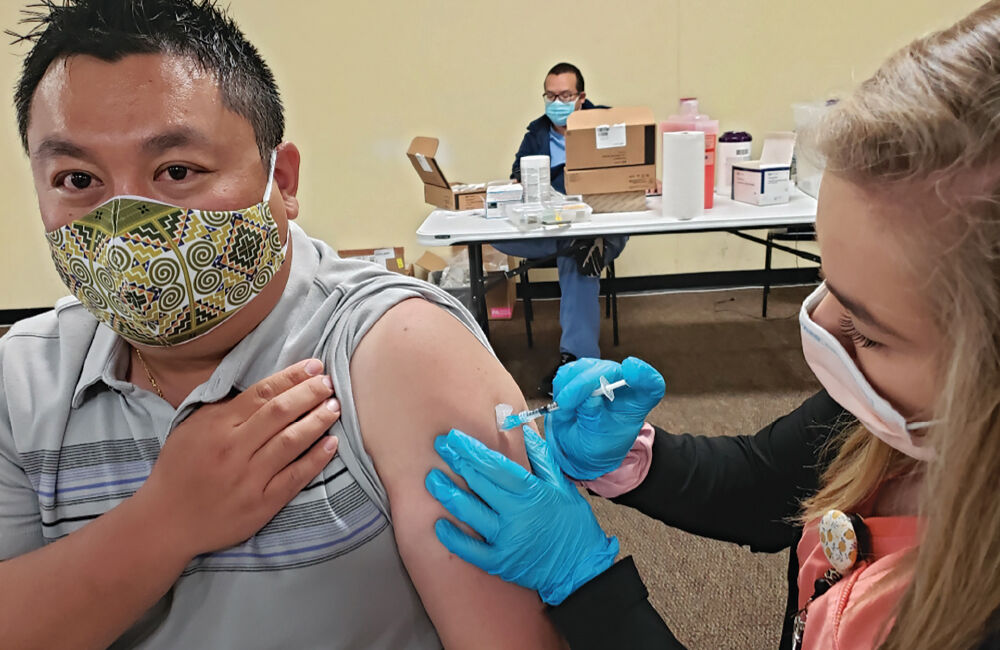

For Dr. Pam Her, it was a sight to behold: More than 200 members of the local Hmong community attending a free pop-up COVID-19 vaccination clinic held at Appleton’s Long Cheng Marketplace.
“It was wonderful for us to connect and be able to help so many,” says Her, principal consultant at 4Chi Business Solutions LLC and founder of Northeast Wisconsin Hmong Professionals. “We had to overcome so many barriers — language, technology, concerns about Asian hate — to encourage people to get the vaccine. There was so much urgency in what we needed to do and connecting with people at a place they are familiar with was vital. We needed to move from intent to impact.”
Meeting people where they’re at and communicating information in different ways to a variety of communities has been the goal of the Multicultural Communications Committee (MCC) since it launched last fall. Created from a committee started by the United Way Fox Cities to address community needs related to COVID-19, the group began meeting to focus on communication efforts for marginalized communities in Calumet, Outagamie and Winnebago counties.
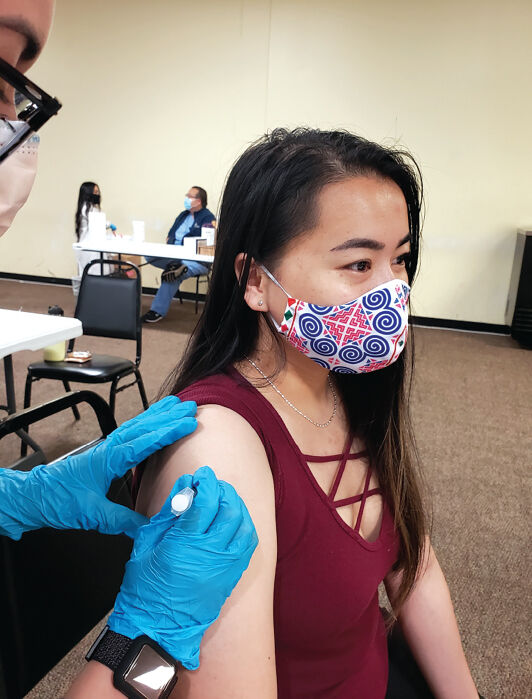
Clinics have been held in multiple locations including businesses, schools and churches.
Lisa Cruz, president of Red Shoes Inc. in Appleton, was tapped to help with organizing the communications and worked with committee members, including Her, to get the word out about the pop-up clinics aimed to reach targeted populations.
“I took the concept of what I focus on for crisis or emergency situations, which is people, process and channels. I’m not sure I coined this, but it’s providing inclusive communications and it’s more than the written word — it’s also about who is delivering the information,” she says.
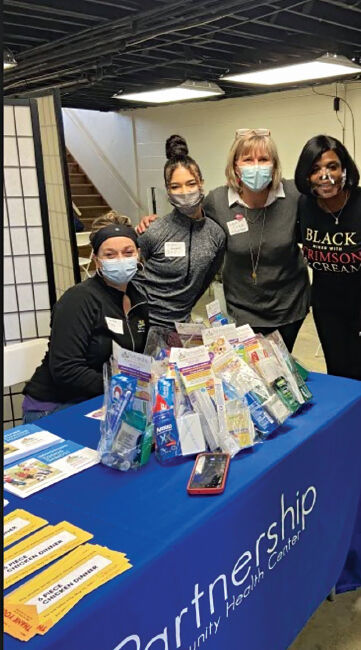
Communication lapses extend beyond the COVID-19 vaccine. Patricia Savela, development director for the Partnership Community Health Center and another MCC member, says resources are available in the community to help people get food, medication, transportation and other services, but the people needing the information often didn’t get it.
“As we looked at that at the broader community, we knew that the communities of color, non-English-speaking communities and those living in rural areas weren’t getting the information they needed,” she says.
To make that happen, it was important to draw people from different ethnic and racial communities to find out their perspectives and discuss the best way to reach people.
“When the pandemic first hit, everyone was told to isolate, and for members of the Hmong community, that was opposite to how they live,” Her says. “We do everything
as a community, so suddenly everything was turned upside down.”
Her says the MCC had to address additional barriers along the way. For example, not all Hmong community members can speak or read English, some are unable to read Hmong, and some lack computers and email, so signing up online for an appointment at a local drug store or county vaccination site was difficult.
In the Hispanic community, it was vital for the MCC to realize it couldn’t just use the Spanish taught in school since there are more than 20 countries that speak Spanish and each one is a little different, says MCC committee member Mayra Pasayes, the coordinator for the Scholars for Success program at Fox Valley Technical College.
“Different words can mean different things whether you’re from Mexico or from Honduras,” she says. “We also discovered people were so worried about getting to work, making sure there was enough food or worried about deportations that COVID-19 wasn’t near the top of their lists. They had so many other concerns to just make it day by day.”
Holding the pop-up clinics in a location familiar to ethnic or racial minorities was key in getting buy-in from the targeted populations, says Kristin Gondek, co-founder of People of Progression. For example, to increase vaccine rates among Black and African Americans, one clinic was held at Taperz Barber Shop, a Black-owned business in Appleton.
“We’re coming from a no-judgment zone. With the pandemic, there are so many diverse points of view and we just wanted to provide a safe place for people to get their vaccines,” she says.
Her adds some ethnic communities feel like they can’t trust the information they’re receiving. “They may have been promised something in the past that didn’t come through so they question the information they were getting from the government,” she says. “We had to get into those communities and discuss family to family about what was needed.”
Measuring impact
Holding a pop-up clinic requires a lot of work, from securing the location, vaccines and personnel to administer the vaccines to making sure the message is getting to the right people and encouraging them to attend. Ascension, ThedaCare and local health departments have partnered on the clinics, providing the necessary vaccines.
While Cruz from Red Shoes keeps track of how many people attend the pop-up clinics, she says it’s not important if 20 or 120 people come.
“It’s really the stories behind those numbers. Each clinic we have, there is always one story that stands out and tugs at those heartstrings,” Cruz says. “It goes way beyond just those who attended. Attendees tell other people in their community and the word spreads, so they may come to the next clinic.”
Savela credits the clinics’ success to understanding what each community needs. “You just can’t translate a brochure or flyer with some graphics on it,” she says. “You need to talk to people where they’re at and encourage them that this is something they need to do.”
It’s also important to erase as many barriers to the clinic as possible, Her says. Some people may not have insurance or worry about not having the right documents, so “we don’t require them to show us any formal documents since some worry if they do, they’ll be deported. We also have to get past the misinformation about the vaccines and reinforce that the shot will help them, not hurt them.”
Savela says it’s important to note that individual ethnic and racial communities are leading the MCC’s efforts.
“I think we were very connected to making sure we weren’t overstepping. People were engaged in the process and engaged in the solution,” she says. “And the community could come together around this because we knew that our multicultural communities were disproportionately affected by COVID-19.”
Going forward, Gondek hopes other organizations take the MCC’s lead in communicating to diverse populations.
“To reach everyone, you need to communicate in different ways. It’s not a one-size-fits-all situation,” she says.
Making the business case
Her, who has a Ph.D. in organizational development and management, says businesses can learn a lot from what the committee is doing. “Business owners may talk about diversity and inclusion, but what does that really mean? You need to dive in and learn what’s important to your employees and not paint everyone with a broad stroke.”
Pasayes, who fled a civil war in El Salvador, shares a personal example. Criminals in her home country often wore bandanas, and seeing people wearing them now causes her a lot of anxiety. When some co-workers began wearing bandanas to work instead of masks, Pasayes thought about working remotely to ease her anxiety but instead went to her manager and explained her concerns.
“He was so good. He put it out there why I felt this way and explained it in such a way that I didn’t feel embarrassed,” she says. “It’s important to hear each (employee’s) voice.”
Business leaders need to shift their lens and realize not all people look at something the same way, Her says. At a time when organizations are struggling to attract and retain workers, looking at situations a bit differently can make a big impact.
“Organizations are not buildings, they’re people and those people are making the decisions,” she says. “If the lens of those individuals doesn’t shift or change, how do you expect change to happen? Diversity builds truly authentic, creative and innovative teams that will help your business grow and compete effectively.”
Creating an inclusive workplace requires everyone’s effort, Her says. “We can have all of the passion in the world for this, but it needs to be the work of the organization. Everyone needs to go on this journey,” she says. “Shifting your lens is uncomfortable, but you need that to grow and change.”