
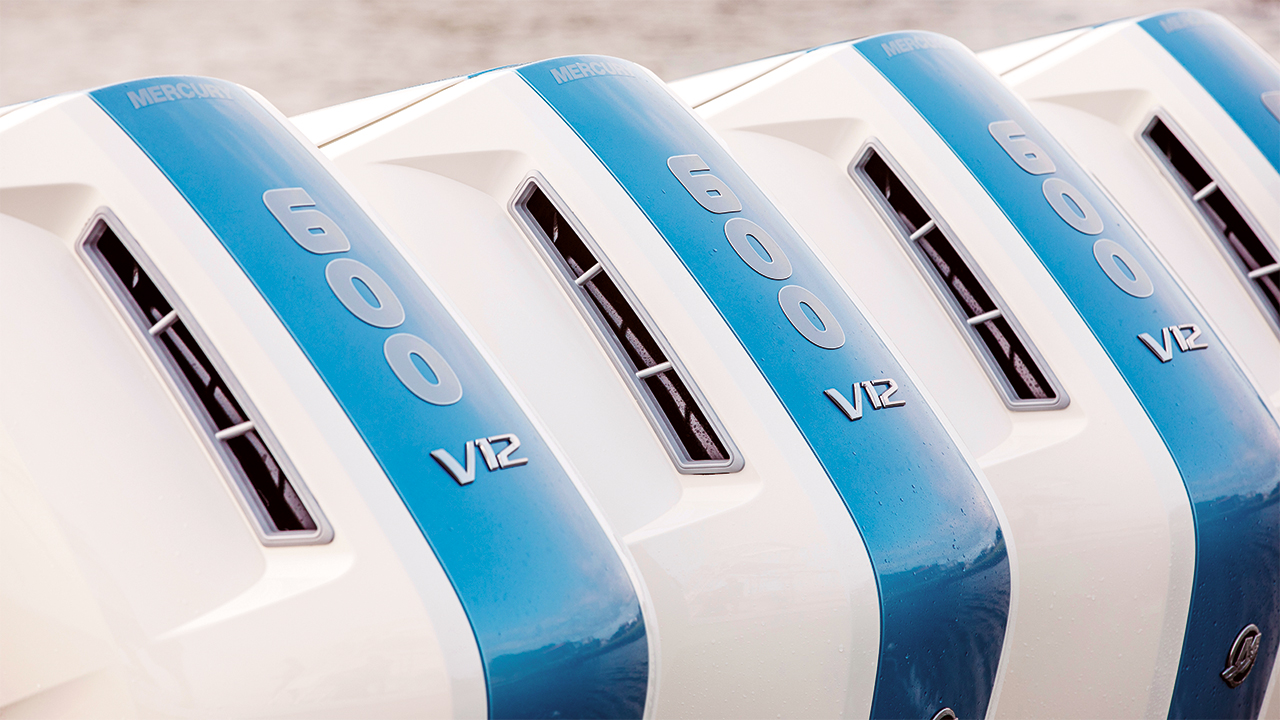

When Florida entrepreneur Bob Book came out to the Wall Street Journal this summer as a boating sicko, he admitted his Valhalla sport yacht powered by four 600‑horsepower Mercury Marine engines can help him get to Bimini and back over lunch.
WSJ’s July 28 story “Boaters are splurging to make fishing yachts run like supercars” is in some ways a portrait of decadence, but it’s also a profile of engineering marvel.
There’s currently only one place in the world putting out the kind of boating superpower described in the article: Fond du Lac, Wisconsin, where Mercury manufactures a naturally aspirated V12 that delivers 600 horses — and it has already showed a concept for an 808‑horsepower motor, reveals CEO John Buelow.
“We’re not slowing down,” Buelow says. “We continue to innovate at a very rapid pace, continuing to make sure we’re setting new standards for boating.”
Customers like Book aren’t slowing down, either. As the WSJ article posits, the outboard motor is “having a supercar moment.”
People are indeed starting to think about their boats more like cars, Buelow says, and the expectations are higher than ever as cars add increasingly sophisticated technologies for comfort, connectivity, ease of operation and digital tools.
“It’s just a more refined and elevated experience than in the past,” says Buelow. And he should know; Buelow is a lifelong boater who has been with the company 22 years and seen the evolution of the industry up close.
Buelow says Mercury is always working to bring new people to boating.
“We want to give you the best experience on the water, but we are also competing with other ways you can spend your free time,” he says. Features like joystick controls and autonomous docking, engineered in close partnership between Mercury Marine and major boat manufacturers, make the hobby “easier, more enjoyable and less stressful.”
Outboards like the 600 are increasing in popularity, replacing inboard or stern drive options because of their performance, fuel efficiency, ability to maneuver and ease of service, Buelow says. The higher‑horsepower models obviously satiate those with a need for speed, but they also offer benefits like freeing up space on the transom and increasing the comfort of cruising as boats get larger and heavier over time.
The 600 itself is no shrinking violet, standing more than 7 feet tall and weighing 1,260 pounds, and all of them are made within Mercury’s 3 million square feet of manufacturing space in Fond du Lac.
“Some may be surprised at the amount of vertical integration that we have,” Buelow says. “Not only do we design our engines [here], but we’re manufacturing within our four walls.”
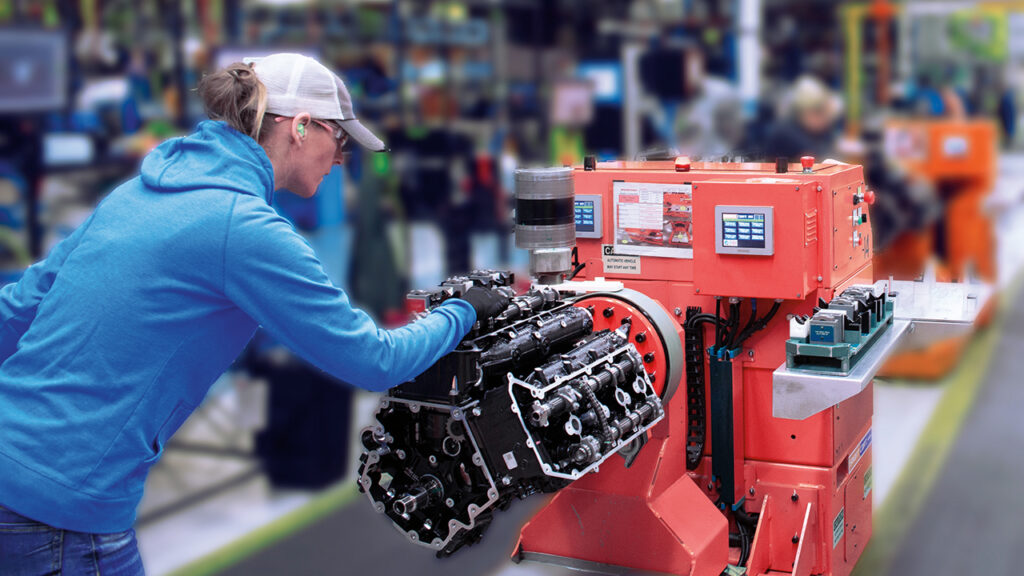
That includes high‑pressure die‑casting, coating and assembly, he says, all of which is completely automated.
“We’re using technology to mitigate and manage the size of these engines,” Buelow says. “The engine is positioned and attached to an automatic guided vehicle, which moves it down the assembly line. It will turn, rotate, lift and lower these engines to be in the sweet spot for the operator.”
In‑process validations and quality checks are even built into the automation process, he adds: “It’s a very sophisticated, highly automated, leading‑edge technical process.”
Buelow says he considers it an honor to work for an iconic company that is leading the way in boat technology, and Mercury’s innovations are always driven by the consumer.
“Where is boating going? We will make sure we design the right solution for boaters,” he says. “And all of it’s done in Wisconsin.”
On the web: mercurymarine.com