

After a deadly accident caused Baltimore’s Francis Scott Key Bridge to collapse March 26, the North American supply chain braced for impact. As one of the U.S.’s 20 busiest ports, the Port of Baltimore being even partially closed has a devastating impact on commerce. Enter the Great Lakes, which Port of Green Bay Director Dean Haen says consistently stands ready to respond in times of crisis.
“Great Lakes ports, though often overlooked in the past, are a critical part of the nation’s supply chain, connecting the heartland to the rest of the world,” Haen said.
In the wake of the bridge collapse, manufacturers 1,000 miles away were watching to see how they could help. This included Green Bay’s GLC Minerals, a Port of Green Bay terminal operator and leading supplier of limestone, dolomite, magnesium and gypsum with an 84-year history operating at the mouth of the Fox River.
Of all U.S. ports, Baltimore leads the way in handling gypsum, much of it arriving from Canada. Also known as calcium sulfate, the mineral is a key ingredient in products like cement, paints, coatings, sealants, caulks and adhesives, and it’s also essential for animal nutrition and agronomy — placing it in a critical position on the food chain.
GLC Minerals President Holly Bellmund says it was relatively easy for her company to be a stopgap amid the port crisis; its core value of “Keep Businesses Running,” or the “KBR Promise,” means the firm’s 50 employees prioritize customer needs and appreciate the role they play in bolstering industry.
“Companies are relying on our inputs to make their product; there really aren’t substitutions,” Bellmund says. “I’m just really proud of the group of people that were here and rallied around ‘KBR.’ Our team actually really likes the challenge and understands the importance of getting these ingredients to our suppliers.”
Bellmund says GLC Minerals worked closely with the Port of Baltimore and affected businesses to meet the gypsum demand, all the way up through the port’s full reopening in early June. GLC had been ramping up its procurement of gypsum from across the Great Lakes over the last few years, and plant investments and optimization strategies positioned GLC well to meet the temporary need.
“[Customers] were pleased to know there was a second option for them, so their vulnerability goes down,” Bellmund says.
While GLC Minerals has been supplying mineral products to Midwest customers since 1940, the company’s roots actually stretch back to 1871, when entrepreneur Fred Hurlbut Sr. started a business to supply dry goods. Today, the company is run by the fifth generation, Wesley Hurlbut Garner II.
As a mineral products supplier, GLC supports the making of glass, plastics and rubber sealant, and it is also an essential partner with Wisconsin’s farms, producing animal feed for a variety of livestock and agronomy products that fortify soil for crops like potatoes.
“During COVID, we were declared essential workers because of our role supplying feed,” says Bellmund, who has served as company president for eight years. “We’re proud especially to be part of the dairy industry here [in Wisconsin], to support so many animals being fed that require calcium.”
Brian Lani is GLC Minerals’ director of marketing. He says the service the company provides, not just during a time of crisis but to its customers every day, is somewhat of a well-kept secret in the Northeast Wisconsin business community.
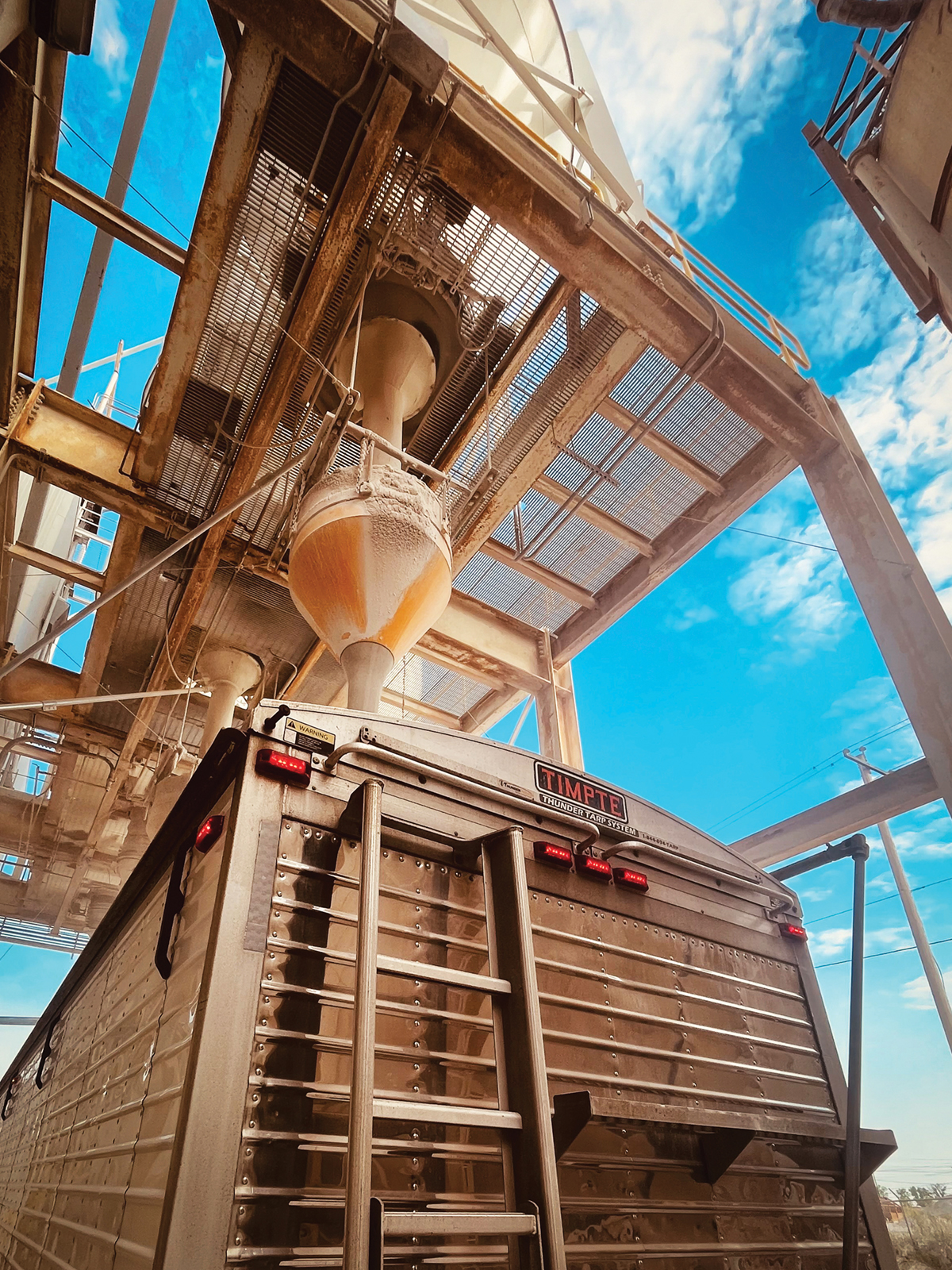
“It’s a very positive effect that [we] have on these businesses,” Lani says. “We keep them running day to day. It never stops, whether it’s truck or rail, this product is going in and out every single day.”

