
Talking about depression and suicide is never easy and it can be even harder when you have to overcome stereotypes and stigmas attached to the topics.
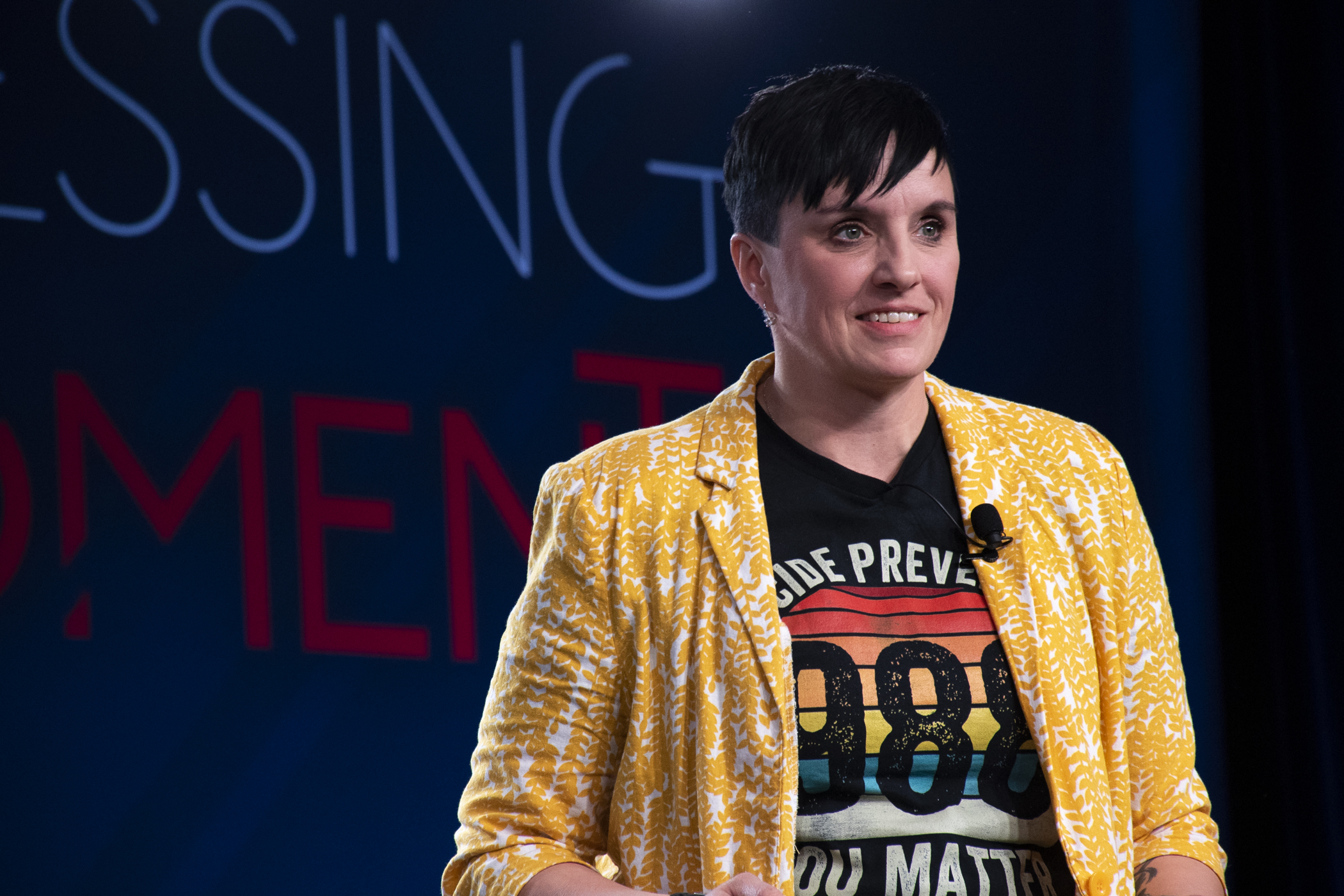
But Wellness Coordinator Meredith Baciak has made it her mission to change the conversation at Miron Construction and build a supportive culture that helps detect people at risk and prevent suicidal behavior. This week, during Construction Suicide Prevention Week, Miron will have those conversations during its daily excellence huddles and will share personal experiences, videos and prevention related resources in daily newsletters.
“My goal is completely break down the stigma barriers,” Baciak said.
In 2021, Miron surveyed staff and found some depression and anxiety. Baciak said burnout, stress from COVID pandemic disruptions and some stereotypical attitudes among the largely male workforce contributed to the challenges.
There also has been growing recognition that construction workers die by suicide at a much higher rate than the general population. In fact, there are 53 suicide deaths per 100,000 people in the construction industry while the U.S. rate is about 14 per 100,000.
“We have so many processes at work to help with risk prevention,” Baciak said and adding a process for suicide prevention is important.
Baciak became certified by the QPR Institute, a Seattle-based organization that trains people to “Question, Persuade and Refer” in order to detect and prevent suicide.
Miron partnered with the National Alliance on Mental Illness, Fox Valley to introduce suicide prevention and QPR training at Miron’s annual summits held in January.
That has been followed up with two-hour training sessions to teach coworkers how to become gatekeepers. More than 450 Miron team members have been trained and Baciak said the feedback has been 99 percent positive.
While the training is practical and helps manage risk, breaking down barriers to start the conversation has relied on lived/shared experiences. Baciak said having coworkers who talk about their personal struggles or the losses they have experienced as a result of suicide is a powerful way to get past stigmas.
She hopes to build on the success so far and wants to continue helping people share their personal stories.
“I feel like this is my calling at Miron,” Baciak said.