
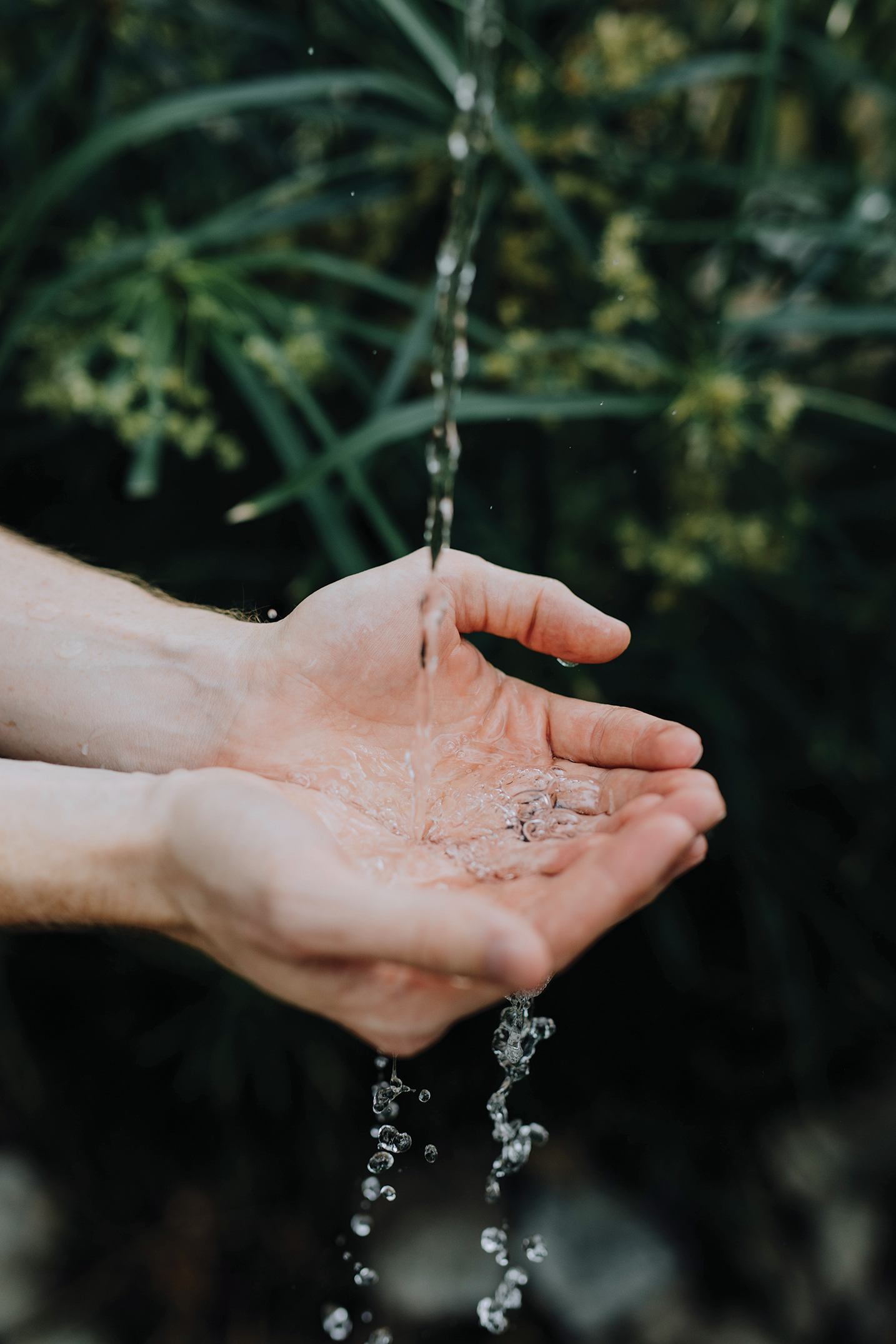

In March, the Environmental Protection Agency proposed the nation’s first drinking water standard to limit six per- and polyfluoroalkyl substances, known as PFAS. The announcement represents the latest move to combat PFAS pollution under the EPA’s PFAS Strategic Roadmap.
Alyssa Sellwood is a geological engineer and a remediation and redevelopment program project manager with the Wisconsin Department of Natural Resources (WDNR). Wisconsin was one of several states that had already set its own maximum contaminant limits on certain PFAS in drinking water, but Sellwood says the proposed EPA standards would help unify the approach of individual states.
“With the federal government taking more action, there is a bigger, consistent umbrella we can all work under,” she says.
“An evolution of knowledge”
From stain-resistant fabric and non-stick cookware to firefighting foam and fast food packaging, PFAS are a group of human-made chemicals used in the manufacturing of a variety of consumer, commercial and industrial products.
PFAS — often referred to as “forever chemicals” due to their persistence in the natural environment and human body — have been used since the 1950s, but understanding of their impact is ongoing. This is why PFAS standards can seem ever-changing. They evolve as does the research.
While PFAS offer some desirable consumer properties such as water and flame resistance, because of their strong carbon-fluorine bonds, they don’t break down naturally once in the environment.
“That persistence becomes a problem when it mixes with toxicity. And not all compounds are known to be toxic, but many within that suite of PFAS do have negative health impacts,” Sellwood says. “They’ve been linked to various kinds of cancer, high cholesterol and low birth weight, but it’s a growing area of study.”
PFAS are especially prevalent in firefighting foams like those used between 1960-2017 at the Tyco Fire Technology Center and Stanton Street Campus in Marinette. Besides the chemical manufacturing sites themselves, Sellwood says facilities that used firefighting foams for training and testing are the next biggest sites of concern.
“The length of time, the amount of the chemical used and then the local geology of shallow groundwater allowed [this] to become a big area of contamination,” Sellwood says.
Sellwood, who joined the WDNR in October 2020 as the lead project manager for the PFAS contamination in the Marinette and Peshtigo area, says consuming contaminated drinking water and fish has the biggest impact on humans.
“The most significant risk really comes from if you’re eating or drinking things that have PFAS in them, and it’s at pretty low levels, unfortunately,” she says.
PFAS contamination in Wisconsin was first discovered at sites in Marinette and Peshtigo. There are currently 27 open PFAS contamination sites in Northeast Wisconsin on the Bureau for Remediation and Redevelopment Tracking System, the WDNR’s database of contaminated properties and other cleanup activities.
Tyco Fire Products, a subsidiary of Johnson Controls, has implemented several strategies to address PFAS contamination concerns, which include implementing a significant groundwater extraction and treatment system and installing deep wells for residents in the Potable Well Sampling Area.
In a Feb. 16 letter to the WDNR, Tyco’s Senior Director Of Remediation And Strategy Denice Nelson outlined how the company has “invested in expansive efforts first to capture and truck wastewater out of state to a facility specially licensed to treat for PFAS … [and] invested $11 million to build a state-of-the-art Advanced Research and Testing facility inclusive of a best-in-class water treatment system.”
Efforts underway
While individual businesses are responding to PFAS pollution, efforts are also growing on the state level. The Wisconsin PFAS Action Council, made up of designees from 17 state agencies and the University of Wisconsin System, developed the PFAS Action Plan to guide the state’s efforts to address PFAS contamination.
Mimi Johnson, director of the office of emerging contaminants for the WDNR, says the action plan was finalized December 2020 and released as a set of recommendations within eight focus areas and 25 different actions that can be taken to advance the work on PFAS in the state. One of the action plan’s recommendations was the development of a PFAS-containing firefighting foam collection, disposal and replacement program.
Fire departments statewide have been switching to PFAS-free foam alternatives. In October, the WDNR launched a collection and disposal program for PFAS-containing firefighting foam waste after the 2021-23 biennial state budget provided $1 million for administration of the program.
North Shore Environmental Construction, Inc., with offices in Fond du Lac and Germantown, has collected and disposed of at least 27,000 gallons of PFAS-containing firefighting foam waste from fire departments in more than 60 counties around the state, Johnson says.
“One of the greatest successes that has come out of a lot of the PFAS work has been the partnership with the firefighting community and the leadership from the firefighters to really educate themselves and their communities and work to reduce their exposure and the exposure they would put on their communities to PFAS,” Johnson says.
Another area of focus has been the development of standardized water sampling protocol and the collection of samples from public drinking water systems. Johnson says last summer WDNR sampled about 150 public water systems across the state.
“That is really useful information. Now that we have the drinking water standard in the state, we will be sampling about 1,900 public water systems by the end of this year,” she says. “Now we have a better understanding and can better model for what we think we’re going to find as we pull in data from those 1,900 systems.”
NEW Water, the brand of the Green Bay Metropolitan Sewerage District, wanted to better understand PFAS as an emerging contaminant, so the water resource utility initiated voluntary sampling at its Green Bay and De Pere facilities in March.
“NEW Water is working with a consultant on sampling method techniques, and to review the data. The data will be published on the NEW Water website on an annual basis after quality assurance/quality control,” NEW Water wrote in a statement. “NEW Water is collaborating with industries on pollution prevention strategies, to cost effectively address PFAS through source reduction.”
NEW Water is in the early stages of working on pollution prevention strategies with partners including the EPA, the National Association of Clean Water Agencies, the Water Environment Federation and WDNR.
Moving forward
Standardization will continue to be key as communities affected by PFAS contamination decide how to best treat the issue. While Wisconsin now has drinking water and surface water standards, it is still in the process of setting groundwater standards.
“All of those things are very important so that we have markers and numbers that we can use when we’re having conversations,” Johnson says. “And it puts the requirement out there for monitoring so that we can continue to get information about where we may or may not see PFAS, and how we can target our interventions.”
If finalized, the EPA’s newly proposed drinking water standards would limit two common PFAS compounds to four parts per trillion. This is lower than Wisconsin’s current standard, set in 2022, of 70 parts per trillion for the same compounds.
Many municipalities would face significant investment in water treatment and filtration systems to meet these new guidelines. In April, Wisconsin announced it would be receiving $139 million in Bipartisan Infrastructure Law funding to upgrade its drinking water infrastructure, with a targeted focus on PFAS issues.
PFAS pollution occurred over many decades, so it won’t be remedied overnight. But Johnson believes the steps taken in the last five years have set Wisconsin, and the nation, on a more informed path.
“Knowledge is powerful. The more that we can all work together to find solutions and get [PFAS] out before it gets into the water stream and into the environment, will make all of our lives easier. Prevention can go a very long way,” she says. “We can be leaders in Wisconsin in terms of PFAS and how we address it.”
Learn more: dnr.wisconsin.gov/topic/PFAS