


Wisconsin’s median age continues to gray, topping 40 in a recent Wisconsin Manufacturers & Commerce Foundation report. And as the number of employees marching toward retirement age rises, more people are asking, “What do I do next?”
Employees are not only questioning whether to continue working past age 65, but also whether to remain on a business’ health insurance plan, pursue Medicare or consider other options for health coverage — whether they continue to work or not.
Much is at stake; in 2022, an average retired couple age 65 was anticipated to need approximately $315,000 saved (after tax) to cover health care expenses in retirement, according to Fidelity Retiree Health Care Cost Estimate. That was up 5% from the 2021 estimate and nearly double what it was 20 years ago.

“Health care costs continue to rise, and Medicare is daunting to individuals, many of whom have had an HR department to make some of the health plan decisions [in the past],” says Coreen Dicus-Johnson, president and CEO of Network Health. “As you enter retirement, it’s on you to figure out what it means, how do I even go about applying for Medicare, when should I do it, how do the benefits work, etc.”
It doesn’t help that there is a lot of confusion about Medicare, from “I have to be retired to be on Medicare” to “Medicare is free.” (False; Part A covers hospital costs after a deductible is met but Part B is optional coverage for medical expenses that requires an annual premium.) Add to that people are becoming eligible for Medicare but also choosing to work. Others are retiring earlier than expected. Yet others are retiring from one position and re-entering the workforce elsewhere. Throughout all of that, there are different opportunities with regard to employer-sponsored health insurance and Medicare.
“Navigating all that comes with some stress, including who do I trust; who do I go to?” says Bec Kurzynske, director of employee benefits for M3 Insurance. “We find a lot of success bringing those resources into employers.”
Two sides of the equation
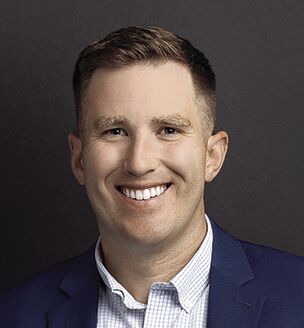
As questions abound, the answers affect not only Medicare-eligible employees but also their employers. For example, if a Medicare-eligible employee is on an employer’s health plan and the premium is $600 per month per employee, that is not the true cost, explains Tony Goebel, owner and CEO of 5G Benefits & Insurance.
“It doesn’t cost $600 for a 65-year-old on your plan; it’s significantly more than that. Someone who is 65 is paying $600 a month because of the benefits of the younger and healthier employees on the plan,” he says. “It’s costing [the employer], regardless of the size of the business, because they generally have more claims than someone younger.”
Simultaneously, the Medicare-eligible individual who remains on the payroll may discover that Medicare is more advantageous cost-wise or benefit-wise than their employer-sponsored plan.
“‘I don’t want to lose my private insurance’ is sometimes the belief,” says Goebel. “But [going on Medicare] can be better for them financially. It’s a very individual thing.”
That’s why experts agree it’s important for employers to do their due diligence through a Medicare analysis, even if an employee plans to continue working.
“A lot of people age 65 remain working and often just keep rolling on their [employer] plan’s benefits because they don’t have an HR person or broker looking out for that,” says Goebel. “But what that [means] behind the scenes for the company and employee is that there is no proactiveness or assessment. A Medicare analysis provides a win/win for the employer and the employee on what’s best.”
Dicus-Johnson agrees.“In many instances, Medicare can be the most cost-effective plan for a 65+ person who is still working,” she says. “It’s helpful to have an employer provide an overview and then bring in an expert where individuals can have a consultation about Medicare as an option. It is individual in every aspect.”
By default, that’s often the employee benefits consultant, agent or broker. But Dicus-Johnson is seeing a particular group of mid-sized to small group employers that aren’t doing this.
“We are in an environment where it’s hard to recruit and retain, and employers should look at every benefit they can provide. This is a free one,” says Dicus-Johnson. “The only thing it costs is time, and they don’t have to be the expert but act as the convener for the experts to come in and support their employees.
“What we hear time and again is that employees are so grateful to have a place where that resource is brought to them versus having to scour and figure that out on their own,” she says.
Kurzynske says connecting employees at age 60 with a Medicare specialist creates a lot of goodwill, even though they don’t need the resources yet. Businesses engaging their Medicare-eligible employees in the conversation is no different from educating them on other resources, be it the employee assistance program or adult day services.
“Engaging someone who knows your benefit plan is advantageous and allows for more thoughtful consultation, including what is important to that individual,” she says.
Goebel says 25% of the time his agency shares information at a broad level and then at a more specific individual level and nothing happens. The other 75% of the time, taking action makes sense.
“Those other times, we find a significant advantage for the employee to pursue Medicare or even look at an alternative [to the employer health plan],” he says.
The complexities of Medicare make it a ripe topic for employer lunch and learns or other informational sessions.
“When you think about it, employers do all this work to get you ready fiscally with 401(k)s, but what are they doing to get you thinking about how much it will cost to maintain health care coverage after retirement or what options you may have as a working Medicare enrollee?” Dicus-Johnson says.
“It’s helpful to have an employer provide an overview and then bring in an expert where individuals can have a consultation about Medicare as an option. ”
— Coreen Dicus-Johnson, president and CEO, Network Health
Realities in the workplace
The Green Bay Area Public School District has made concerted efforts to educate its retirement-eligible population as well as retirees still on the district plan about Medicare. But they have always encouraged Medicare-eligible employees to do an analysis with M3 Insurance, the district’s employee benefits consultant.
“We had one former employee saving over $30,000 in premiums going on Medicare. That’s huge,” says Jessica Cortes, HR benefits specialist for GBAPSD. “Many of them say, ‘We are set in our ways,’ but once they realize what they can save, they say they wish they had done that years ago.”
GBAPSD welcomed M3 on site to host Medicare educational sessions for its retirees, and the district plans to host regular educational sessions for those becoming Medicare-eligible in addition to promoting Medicare resources on their intranet benefits page.
Wolf River Community Bank has become a source of information by teaming up with their insurance and benefits agency, 5G Benefits.
“There is some paradigm shifting in the workplace, with employers looking to focus holistically on the employee,” says Jessica Utecht, human resources director for Wolf River Community Bank. “Those of us in HR need to meet people where they are in their lives, and with the workforce demographics we’re putting more focus on people [approaching retirement age].”
For Wolf River Community Bank, which has four locations in the rural Fox Valley area, that has entailed adding conversations about Medicare to its annual open benefits enrollment in conjunction with 5G Benefits. The bank has also added information to its company intranet, including the educational Medicare webinars offered by 5G Benefits, and connected qualifying team members to the 5G team for more in-depth conversations.
“It’s a multipronged approach like anything in the benefit space,” Utecht says. “Until someone recognizes they need a service, they don’t necessarily come and see you. Being able to guide them to the answers to their questions is key.”

