


Literacy is the most important bridge for moving people from misery to hope.
That’s how former United Nations Secretary‑General Kofi Annan described the importance of literacy programs in breaking the cycle of poverty and violence in developing nations around the world.
For many adults in Northeast Wisconsin, there are still barriers on the road to that bridge. Maybe they struggled in school and never really mastered reading to learn or other basic skills. Perhaps they are new to this country and struggle with the language. It could be a challenge with the digital skills needed to navigate modern banking or healthcare or the education technology to help with a child’s homework.
Those are some of the literacy barriers preventing adults across Northeast Wisconsin from fully participating in the social, civic and workforce life of their community, according to a State of Literacy study recently released by Fox Valley Literacy.
“Certainly, the root of literacy is about words, but there are so many other types of literacies that exist out there and we wanted to understand and we wanted to help people see there is so much more to it than reading and writing,” says Brian Leone Tracy, FVL executive director.
“If you are having a hard time reading or writing, it stands to reason you will have a hard time managing your finances or understanding a digital screen,” he says. “There are a lot of functional barriers out there that people face every day.”
It’s a silent specter slowly eroding the region’s quality of life.
Across Wisconsin, more than 1.5 million adults qualify for literacy services, and more than 50% of adults read below a sixth‑grade level, according to the National Center for Education Statistics. More than 21,000 people in Northeast Wisconsin speak a language other than English at home, according to the Census Bureau, and nationally, 21% of adults in the U.S. have difficulty with basic literacy, including reading short texts, following instructions or comparing information.
Leadership at FVL knew those numbers didn’t tell the full story. If the agency was going to raise awareness of the diverse literacy challenges in the community and create partnerships and programs addressing the core obstacles, it needed a clearer picture of literacy in Northeast Wisconsin.
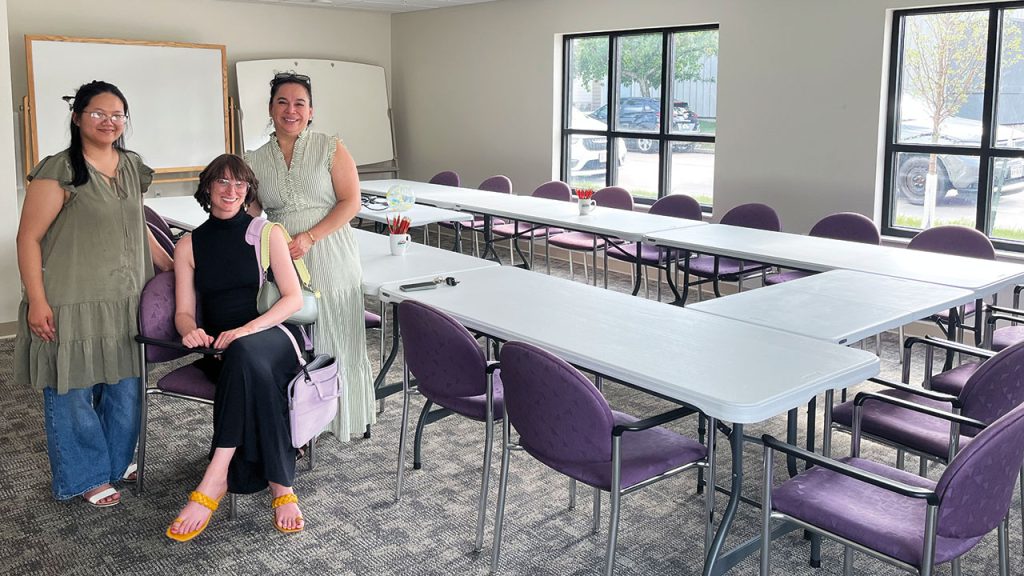
“People who specialize in literacy have for the past few decades been defining it as more encompassing of all the different types of skills we need to interpret and communicate,” says Heather Chantelois‑Kashal, FVL program and operations director. “We know that we live in very complex systems in most societies, and that creates a lot of barriers and requires a lot of adaptability that is hard to keep up with. We are creating many new types of literacy.”
Using a grant from the David L. and Rita E. Nelson Family Fund within the Community Foundation for the Fox Valley Region, FVL commissioned the region’s first‑ever literacy study.
As Leone Tracy explains, they wanted to quantify the trends FVL has been experiencing with real data to ensure its services were aligned with need, to seek out new partnerships and to measure program success.
Some of the barriers to everyday life discovered after surveying nearly 800 individuals and conducting four focus groups included:
- 37% struggle reading everyday documents
- 48% struggle managing finances
- 41% struggle with technology
- 47% struggle with healthcare information — much of which is delivered online and through apps
- 49% struggle to understand their rights, responsibilities and official procedures
Many of those who reported facing these literacy obstacles are native English speakers. These obstacles result in a diminished quality of life, Leone Tracy says, as these hurdles create social and economic roadblocks.
Aiding job seekers
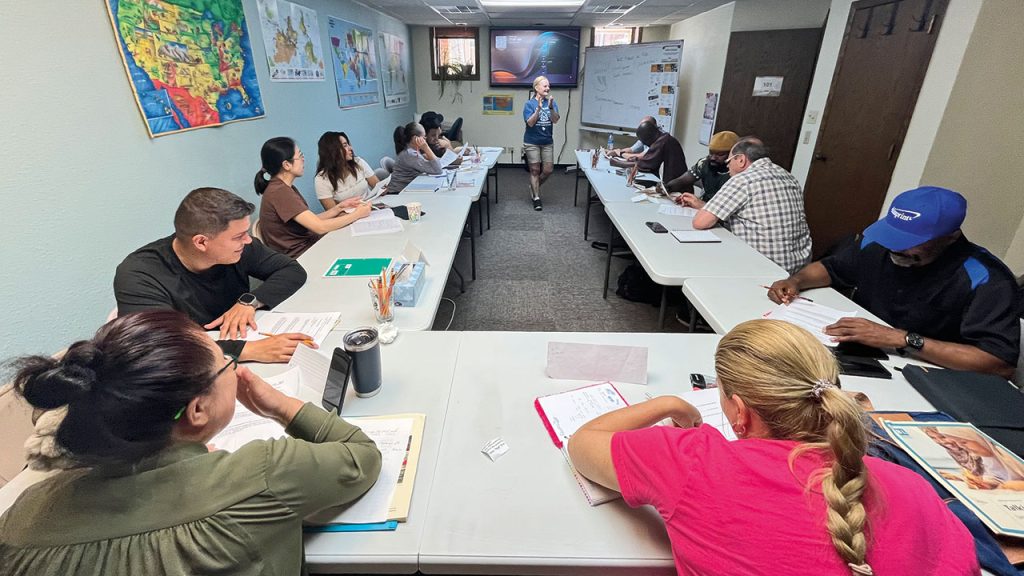
Many of the jobs in the region’s manufacturing economy depend on employees who can handle both textual and numeric information presented in a digital format or require moderate computer skills. Literacy challenges make it harder to gain a foothold in the workforce, or for employers to retain them when they do.
While employers are open to training, they would prefer to train the skills employees need to advance within the company rather than focus on remedial skills. It’s a challenge, particularly given the intense demand for skilled labor in the region.
Employers have stepped up where they can with several unique solutions, says Bobbi Miller, business solutions manager with the Fox Valley Workforce Development Board. There are times, however, when employers are not aware there is a problem.
“A lot of times people who struggle with written and verbal communication can make it appear that they do understand, at least at first,” Miller says. “It becomes really hard for the employer to understand what they really need for retention as a worker.”
There are issues beyond the production floor. Miller says many companies are experiencing problems with employees who do not know how to access their health insurance or their pension information. Another is employees in crisis who don’t understand how to communicate about the problem until after missing several days of work.
“These are real things that are happening,” Miller says. “Employers have initiated some successful targeted programs to help, but it’s always a balancing act for them.”
When the results of the literacy study were introduced, Chantelois‑Kashal told the story of “Cecilia” as an example of the determination these adults must possess to overcome obstacles.
Cecilia had not been able to attend school beyond the sixth grade in her country, and when she came to the U.S., she worked hard to master English. She was very proud to get a job, then on her first day stared blankly at a computer screen when asked to fill out her employment paperwork because she did not have the digital literacy skills.
Now, she has mastered those to the point where she volunteers to teach them to others, Chantelois‑Kashal says.
“You want some resilient, adaptable, creative thinkers who can analyze things from different perspectives? You’re not going to find a better group,” she says.
It’s also important job seekers understand what’s credible and how to protect themselves online, says Jennifer Marks, director of operations for Forward Service Corporation, a nonprofit organization helping job seekers.
“We see job seekers getting hacked because they don’t understand what the application they are looking at really is,” Marks says. “If you don’t know, you can be taken advantage of.”
One of the positive steps Marks has seen in the past few years is employers utilizing in‑person sessions to help potential employees complete application paperwork and schedule interviews. She has also seen many employers add benefits such as financial education for their workers.
“Not everyone can admit they are having a struggle, but there are resources out there and we are seeing more partnerships aimed at helping these people more fully participate,” Marks says.
Next steps
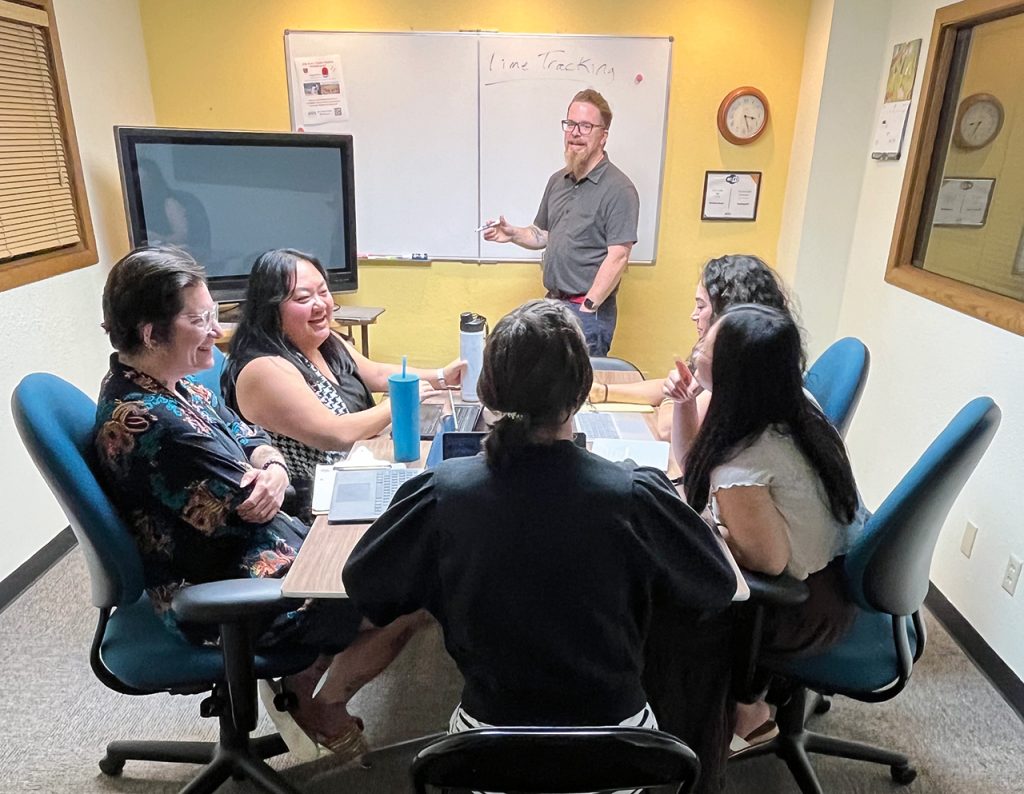
New partnerships are one core next step for FVL now that it has put real data into the literacy anecdotes that have been shared the past several years. FVL is engaging in conversations with organizations such as New North, Inc., and other regional groups and employers.
“Having literacy programming in workplaces, or in other organizations — because that’s where people are and that’s where they are using the skills — you really get a much higher return on the time when you can use it right away, and it’s relevant and practical immediately,” Chantelois‑Kashal says.
One example is Appleton‑based pickle manufacturer Oh Snap!, which partnered with FVL to launch a customized onsite workforce program last month. The voluntary 12‑week program provides English‑language instruction for Spanish‑speaking employees, focusing on basic conversational, reading and writing skills.
“Our employees are at the heart of everything we do, and we’re always looking for ways to support them both at work and in their lives outside of work,” says Oh Snap! CEO Ryan M. Downs. “We saw an opportunity to bring valuable learning resources onsite to our employees in a way that is convenient, comfortable and tailored to their needs.”
Downs hopes the program will help employees build confidence, strengthen communication skills and pursue personal and professional opportunities.
“When our employees feel supported and have the tools they need to succeed, the whole organization benefits,” he says. “We believe this partnership is another way we can build a stronger, more confident workforce.”

