
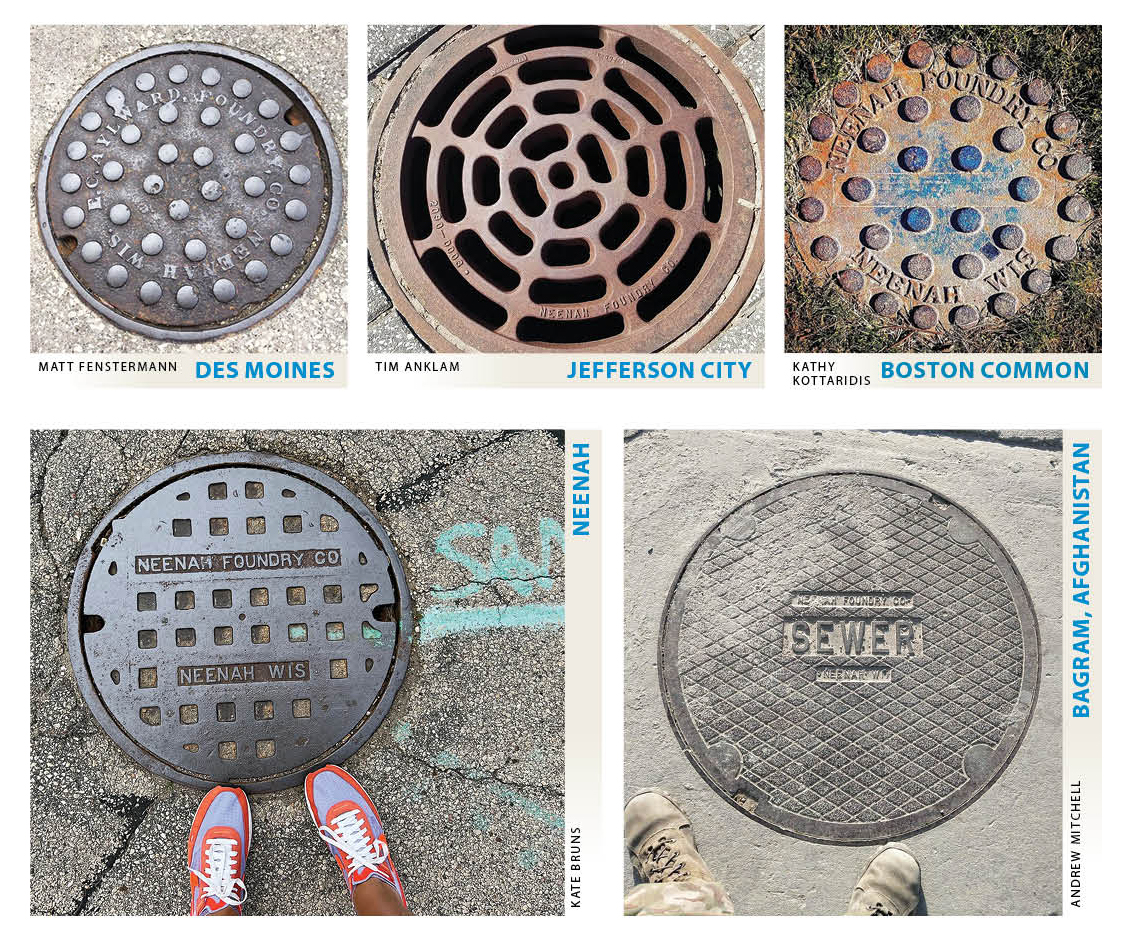

When Keri Pollock travels, she spends a lot of time looking down.
“People from Neenah are very hunched over,” she jokes.
The Neenah native, who has lived in Seattle for more than two decades, says Neenah Foundry manhole covers have become a passion that reminds her of home. She even started a Facebook group called “Neenah Foundry Manhole Covers” where enthusiasts the world over — albeit many from Neenah — share photos of manhole covers, tree grates, and sidewalk warning plates they have found in every corner of the world.
She even received a photo of a cover on the southeast side of Des Moines, Iowa, that reads “Aylward Foundry Co.” — which was the company’s name before 1922.
“That alone says something to me,” Pollock says, surmising that the cover is more than a hundred years old. “How is it not bent or cracked?”
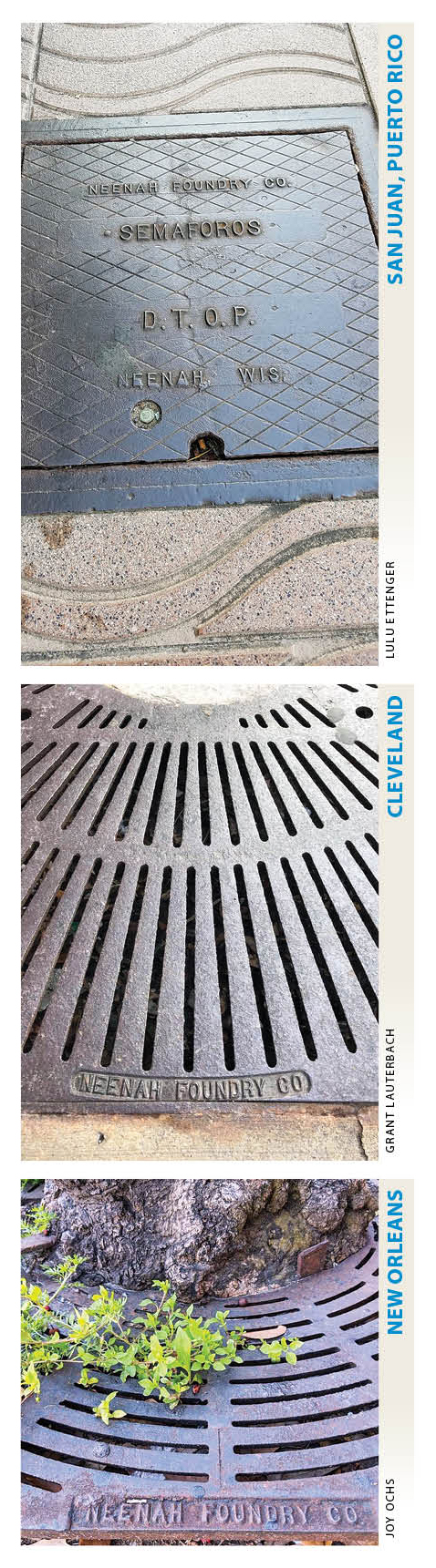
While seeing the Neenah name on streets and sidewalks is a source of pride for Pollock, Neenah Foundry products have even become a national symbol to Americans abroad.
A display in the lobby of Neenah Foundry’s headquarters tells the story of a manhole cover in Kuwait, where members of the U.S. Army intentionally stepped “to feel as if they are standing on a piece of home while deployed in the Middle East.”
Joe Falle, director of research, development and application engineering for Neenah Foundry’s infrastructure group, says it’s no surprise that the objects have become a point of social connection, an inspiration for art projects and even a de facto logo.
“A lot of infrastructure products are buried underground and you don’t get to see them,” Falle says. “We made our first manhole cover in 1904, and now they’re everywhere in the world.”
“It has high utility value — it’s something we step over, drive over,” Pollock says. “But when you’re from this area, you can go anywhere in the world you might just end up running into something that has your hometown name on it. It’s just like a little badge of Neenah pride.”