


As school bells get ready to ring again, America is grappling with a teacher shortage the Washington Post recently labeled “catastrophic.”
In a recent National Education Association survey, 80% of members said their workloads have increased because of staff shortages, and more than half say they plan to leave the field sooner than planned because of stress and other pandemic-related issues. According to Gallup, K-12 teaching currently has the highest burnout rate of any profession at 52%.
Throughout the New North region, the impact of teacher shortages has been somewhat mixed. Headlines this summer included the loss of more than 50 employees from the Shawano School District and a $5.5 million budget surplus for the Appleton Area School District — largely due to unfilled teaching positions.
But Jim Strick, director of communications for the Neenah Joint School District, says Neenah’s teaching vacancies this year are on par with the district average. And in Green Bay, officials say unique foresight by leaders who saw the shortage coming about five years ago, even before the pandemic, has helped the district navigate the issue.
“It was easy to see on the horizon that there was going to be a teacher shortage, so we were trying to be really proactive,” says Lori Blakeslee, director of communications for the Green Bay Area Public School (GBAPS) District, citing the district’s implementation of a building-based substitute teaching model and a workforce development grant that helped her district train and upskill education professionals before the pandemic hit. “I feel optimistic, but I feel like we really did the legwork here.”
Messaging the moment
Wisconsin’s declining population, heightened political and social pressures, curriculum and legislative changes and a global pandemic have combined to create the shortage, according to Ted Neitzke, CEO and executive director of the Oshkosh-based cooperative educational service agency CESA 6. To solve the problem, Neitzke says, districts must change their approaches and even do something they have never tried before: marketing.
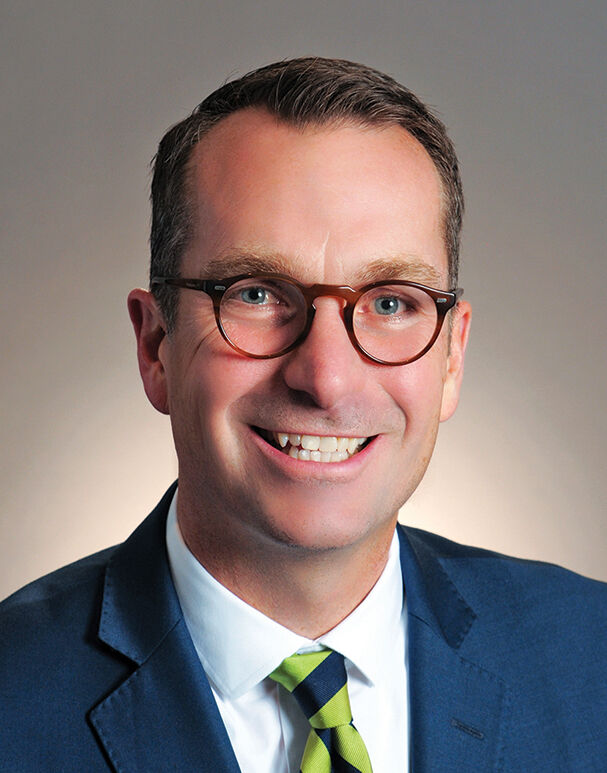
“Attraction … retention, employee experience — these are things we never talked about in education because you didn’t have to,” Neitzke says. “Now talent pools have a much stronger negotiating position. Teachers are able to go between districts like never before, and that’s creating new dynamics that we’re not used to.”
GBAPS Human Resources Director Mike Friis says he has worked with Blakeslee on projects like billboards, targeted digital advertising and participating in the Greater Green Bay Chamber’s talent attraction campaign.
“It used to be that we don’t market; we post,” Neitzke says. “And 300 people would apply and we’d get the best of the best. Now you see the Green Bay school district advertising on billboards. You never saw that 20 years ago.”
A changing field
Even putting aside the pandemic, Bonnie Johnson is far from surprised that teacher numbers are declining nationally. Johnson, a visiting professor and director of teacher education at St. Norbert College as well as the author of “Misplaced Blame: Decades of Failing Schools, Their Children, and Their Teachers,” has been writing and speaking about the issue for nearly 40 years.
“I was a classroom teacher for many years. What has happened to the profession sickens me,” Johnson says, noting that she believes education has been drowning in useless standards since the 1980s. “Teachers are creative individuals, and that is a big reason why, I believe, America has led the way in innovations. With the monitoring going on these days, it’s almost as if being creative is a negative thing.”
“Educators today are now being asked to think more like politicians,” Neitzke says. “You compound that with the pandemic and there’s high emotional strain, high levels of concern for your well-being and most of the decisions are being taken away from you.
“You’ve really got to be a passionate person about service to choose this pathway.”
The rewards of teaching
The good news, Neitzke says, is that the nation’s future workforce is crawling with idealists. St. Norbert College Associate Professor of Education Erica Barnett-Southworth agrees.

“The wonderful thing about working with 18-to-20-somethings is they are wildly optimistic,” Barnett-Southworth says. “When they come into the program it’s a lot of personal or intrinsic motivation that drives them: the love of learning, the desire to embody the positive qualities of their favorite teacher. Many of them also want to pay it forward — return to their hometown or home city, work in the same district that they graduated from.”
Neitzke says that, despite the challenges, teachers really are changing the world — and for that reason the profession will continue to attract great people.
“There [are] high levels of service and purpose. Companies work hard every day to explain to people, ‘Hey, you’re welding those two pieces of metal together and that’s going to change somebody’s life because they’re going to take that vehicle to the beach,’” Neitzke says. “Well, in a classroom, through your own actions, leadership and modeling, you get to change the direction of a child. I don’t know how you quantify that with cash.”
The teacher experience
Improving salaries and benefits for teachers is a critical need, but according to Gallup, employee engagement is a leading predictor of teacher retention.
“More teachers need to be heard at all levels,” Johnson says. “They know where the problems are, and they know how to fix them. They aren’t being given these opportunities.”
Barnett-Southworth says teachers are at the highest risk of career burnout at the three- and five-year marks. She agrees that restoring a level of respect for the profession is key to combatting burnout. Teachers are highly trained, meet rigorous standards and are entrusted with our most precious resources, she says: our children.
“Entry level jobs, there are none in teaching,” Barnett-Southworth says. “The moment you are hired as a teacher you are expected to perform admirably, effectively, efficiently — on day one. Having that support and respect, that collaboration, is extremely important for teacher success. And if we have teacher success, you know we’re going to have student success.”
Reducing barriers
Barnett-Southworth and her colleagues at St. Norbert have the important job of preparing teachers for day one. She says the college has a post-graduation placement rate above 90%.
But getting students to graduation can be a heavy lift, and earning the degree carries a heavy financial burden. While college interns are frequently compensated for their work, most student teachers are paying tuition for the opportunity to student teach. Barnett-Southworth says many students take on evening or weekend jobs on top of student teaching, just to pay the rent. She says St. Norbert is currently investigating strategies for creating a teaching internship program that would be beneficial not just to the college students, but to the school districts.
In his role with CESA 6 Neitzke advocated for what is now Wisconsin Act 236, which allows undergraduate students who meet certain requirements to earn substitute teaching licenses — another way to help ease the pain of the substitute shortage.
“Get them in, get them paid and get them building relationships,” Neitzke says. “Then districts will say, ‘You’re really good at this; we want you to work here.’ The intentionality of recruitment strategies is changing.”
A game changer at CESA 6
As education enrollment drops at colleges and universities, CESA 6 is working to increase interest in teaching within a different population: career changers.
Nancy Jaeger oversees RITE, which stands for Residency in Teacher Education, at CESA 6. Through RITE, she has helped turn an electrical engineer from Mexico into a bilingual Wisconsin math teacher and a school cafeteria worker into a licensed paraprofessional.
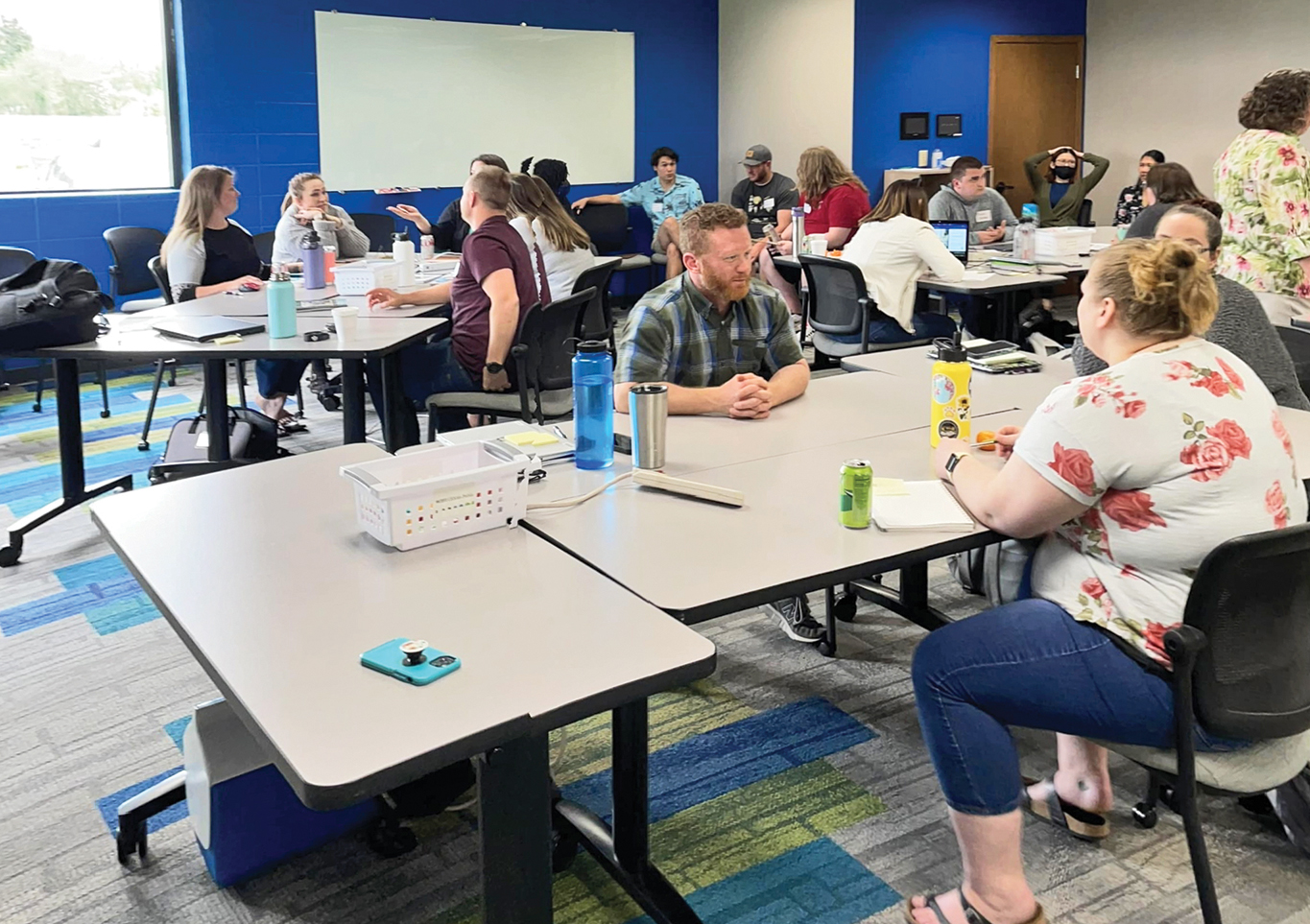
The RITE program admits professionals who already have college degrees and gives them the additional, accelerated training they need to become teachers through a combination of virtual night classes, monthly weekend in-person courses and customized independent study modules. Jaeger says she frequently receives inquiries from superintendents and principals who have already identified great candidates and want CESA 6 to make it possible for them to be hired. She says RITE currently partners with 14 Northeast Wisconsin school districts that also provide financial support for the process, and interest is increasing along with the demand for teachers — particularly in the fields of special education, world languages and science.
Jaeger says it’s rewarding to see motivated individuals blossom into teachers.
“They want to give back to society; they want to make an impact in the world,” she says.

