

After a year with a lot of question marks surrounding interest rates and tariffs, commercial real estate and development looks to be on the upswing for the foreseeable future.
Commercial real estate, whether it’s the industrial/warehouse, office or retail segments, has seen robust growth as available spaces have filled up, according to local experts. If demand continues to grow, a building boom is sure to follow.
Demand for warehouse and industrial space remains strong in Northeast Wisconsin, says Manny Vasquez, partner and vice president of business development at Pfefferle Companies in Appleton.
“In quarter two of 2025, the demand decreased due to the uncertainty around tariffs, but demand is coming back. In Northeast Wisconsin, the concern is that we don’t have enough suitable, existing space, especially for rent to help local companies expand and grow,” he says.
Vasquez points out it can be a challenge if a company is looking for space to rent since there is so little available — “although we hope to see some space to come available in 2026.”

Mark Pucci, a partner with Colliers’ Fox Valley office, says traditional warehouse and manufacturing spaces remain the area’s strongest market. He says customers are looking for more places to store supplies to ensure they have them available when needed.
“There’s also more companies storing their products on site themselves. There are also companies out there looking to acquire buildings rather than just renting space,” Pucci says.
Office space is also in demand as more employers promote return-to-office initiatives, Pucci says. Even if employees are not in the office full-time, they still need a place to sit when they’re in the office, even if it’s just two or three days a week.
“You’re seeing a lot of the higher quality assets staying quite full,” he says.
Vasquez says today’s office space may look a bit different than it was pre-pandemic — think more collaboration spaces where people can gather when they are in the office — and employers still need that home office where employees can go.
“As a company, Pfefferle averages one commercial real estate deal per day and a big percentage of that total transaction volume in 2025 was office,” he says. “That tells me that office space is coming back. When we look at well-located Class A office space, that’s doing really well. Companies figure if they want to encourage employees to come back to the office, they want to make sure it’s a quality space with amenities nearby that people can walk to and that the office has the right technology.”
Buildings that are a bit older or were built for one tenant are a little harder to rent, Pucci says. He points to Thrivent Financial in Appleton, Humana in De Pere and UnitedHealthcare in Howard, which all decided they no longer need their large corporate headquarters.
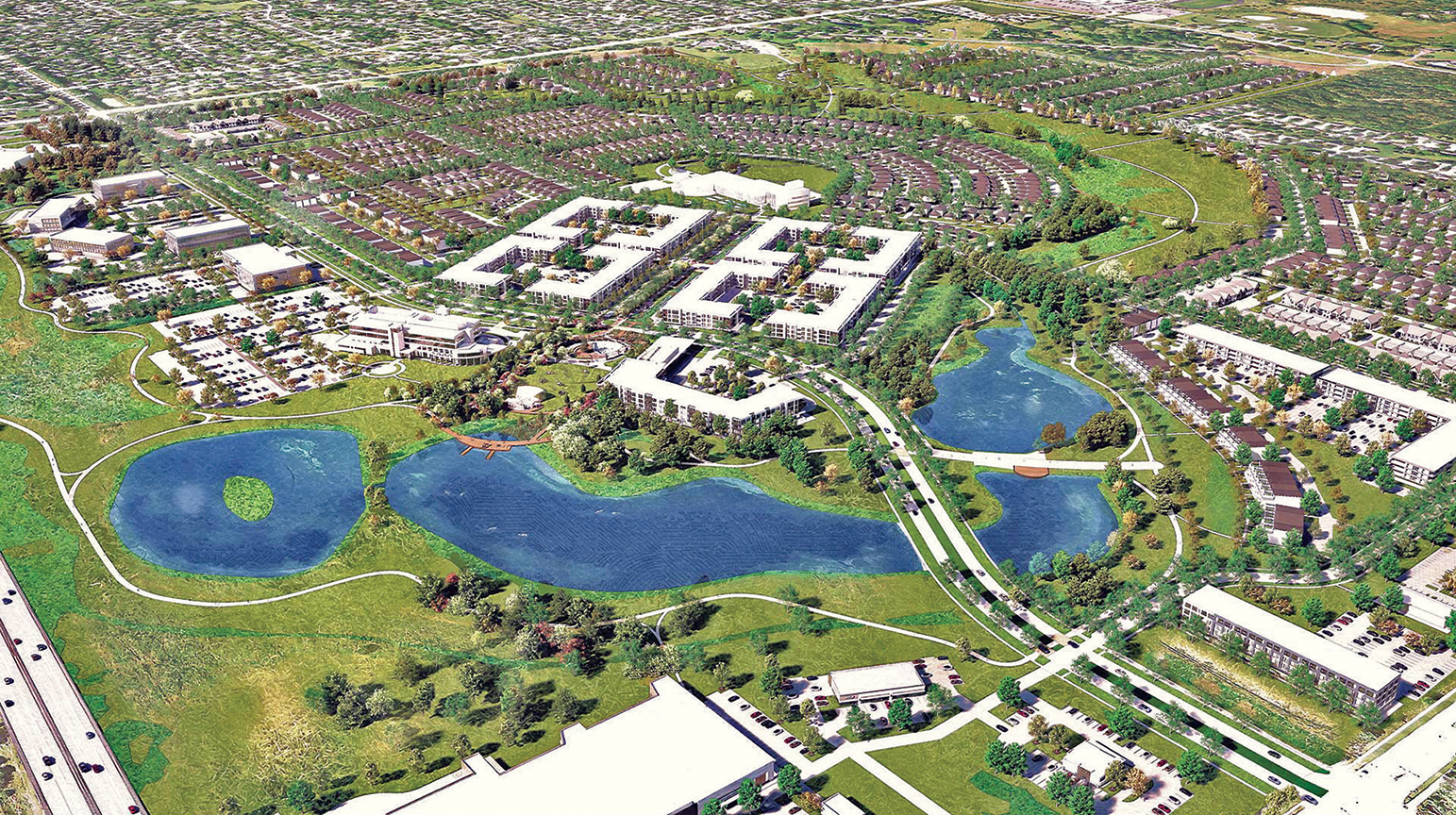
In Appleton, Thrivent is redeveloping its 580-acre property under the moniker of Wilden Portfolio Park and building a smaller, 155,000-square-foot corporate headquarters. As part of the plan, their current 680,000-square-foot headquarters will find new life either as office, community or commercial space.
“We’re really excited about the Thrivent project since it will have retail, office and residential development,” Pucci says. “There will be a lot of opportunity there.”
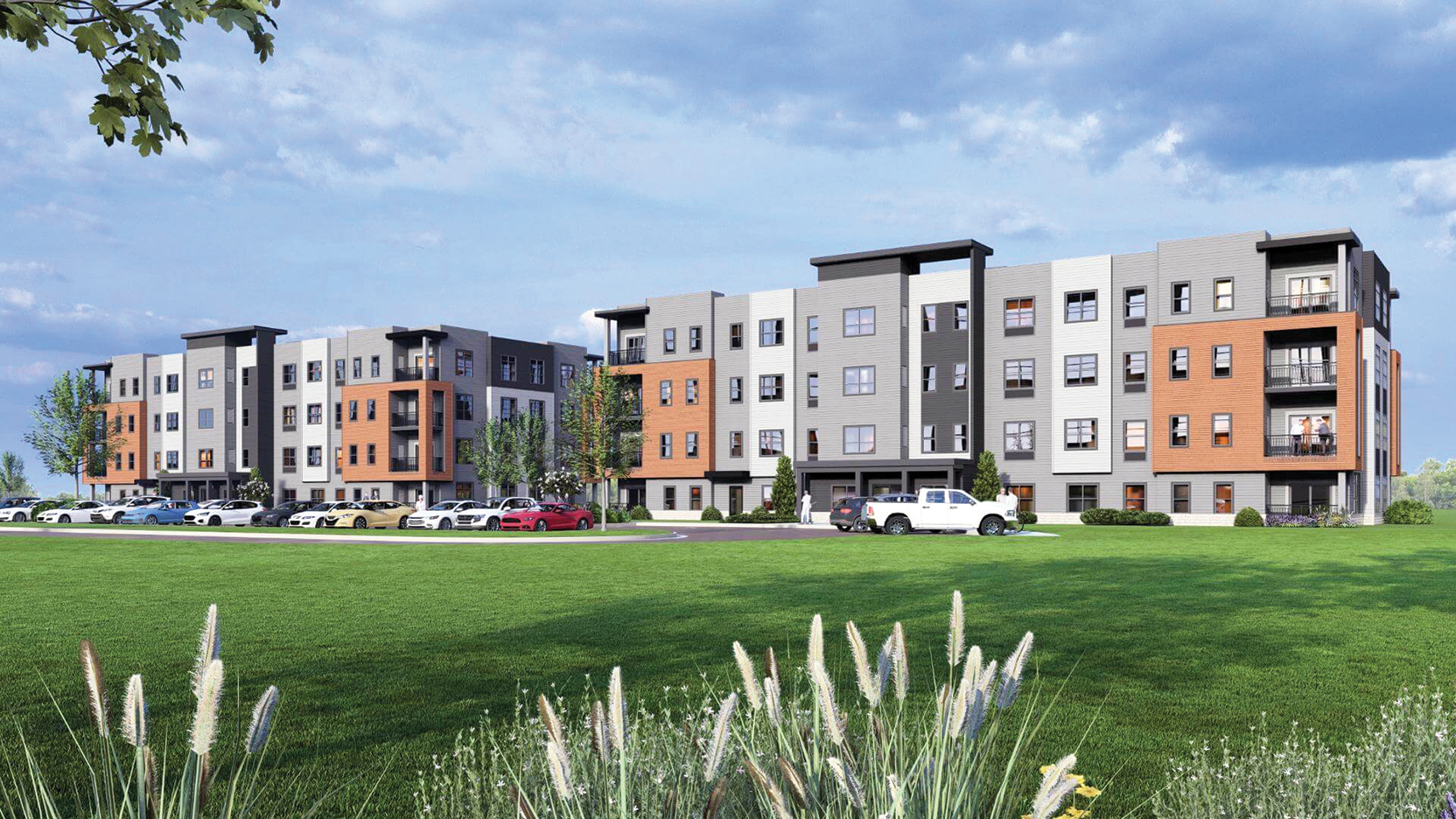
In Howard, UnitedHealthcare left its 300,000-square-foot complex for a smaller building in De Pere. Its former building was torn down, and the land is being redeveloped into housing and some retail space, including the Grid-Iron District apartment complex by T. Wall Enterprises.
Humana sold its property in De Pere but kept some of its space through a long-term leaseback arrangement. The rest of the property is being redeveloped into residential and mixed-use spaces, including Humana Sports Park, which is leased to the City of De Pere.
Retail space at premium
When it comes to retail spaces, Vasquez says most empty big box spaces are now occupied, which will make the rest of the year interesting if new retailers come to the market or current retailers look to expand.
“A lot of the empty big boxes have been filled, if not by a single store, but by a couple of stores,” he says. “The former Sears and Younkers buildings at the Fox River Mall are still empty, but the outlot spots have been filled.”
Pucci says strip centers filled with three or four businesses along with popular chains like 7 Brews or quick food chicken restaurants have been popular development projects that he expects to continue.
When retailer Shopko declared bankruptcy and closed all its stores in 2019, it created a lot of vacant retail real estate. Pucci says many of those spaces have been redeveloped or are in the process of being redeveloped.
Many were used to house multiple tenants with the original store in De Pere being redeveloped as a mixed-use project that will contain a hotel, apartments, commercial space and parking.
The Shopko anchor at Bay Park Square in Ashwaubenon was redeveloped into a Hy-Vee grocery store, which opened in November 2022.
“That was a nice addition to the area and a great reuse of the space,” Pucci says.
Construction costs
Earlier this decade when interest rates were lower, some construction companies and developers partnered on speculative industrial/warehouse buildings to get in front of demand.
Vasquez says that while it was successful — Pfefferle partnered with Consolidated Construction on a spec building in Wrightstown — the market is not there now for spec building.
“The lending and economic environment when those were built was different than it is today,” he says.

After a few years of hard-to-predict pricing for construction materials, costs have stabilized, says Joe Harvey, vice president of construction at Hoffman Construction in Appleton.
“Prices are a bit higher, but we know what to expect. That cost uncertainty is gone,” he says. “That has made it easier to plan projects.”
Stability in prices, combined with a slight decline in interest rates and more stability now that suppliers know the impact of tariffs make it a good time to build, Harvey says.
“Some clients have put the brakes on a few projects due to financing or unknowns involving tariffs, but now that interest rates have come down a bit — I don’t think we’ll ever see them go back down to 2% — I think more people will begin moving forward with their projects,” he says.