

Wisconsin manufacturers have long been the backbone of the state’s economy. And in today’s economic climate, their global pursuits through programs such as the Wisconsin Economic Development Corporation’s (WEDC) Global Trade Missions are more relevant than ever.
“It is critical that we continue to engage with the world. And during a time of global uncertainty, people‑to‑people and state‑to‑state relations are the best ways to maintain a sense of community and security with our trading partners,” says Missy Hughes, WEDC secretary and CEO.
Why go global
Approximately 75% of the world’s purchasing power and 95% of consumers exist outside the U.S., offering businesses willing to “go global” an immense opportunity to take their business to the next level, says Hughes. Global Trade Missions — whether virtual or in-person — offer the opportunity to build the relationships necessary to increase or pursue international sales.
Different regions hold different appeal for manufacturers, but WEDC offers a variety of destinations. In 2025, it hosted trade missions to Dubai, Mexico, China, Germany and Canada. Past trade missions have journeyed to the United Kingdom, Australia, Benelux and other destinations. By default, many mission participants are smaller businesses looking to experience next-stage growth.
“[In contrast], many larger companies have an international division or something like it,” says Hughes. “Many smaller businesses simply don’t have access to those kinds of resources, which is where our trade missions are really valuable.”
Hughes says the value of each trade mission is really contingent on a business’ goals: Some simply want to learn more about a country, lay a foundation or build long-term relationships. Others may have established those connections and are ready to enter a market or complete a deal.
“Because our team is so focused on meeting the needs of our participating businesses, what’s most gratifying for us is their feedback and the value they feel they derived from the trip,” Hughes says.
All abuzz about a broader reach

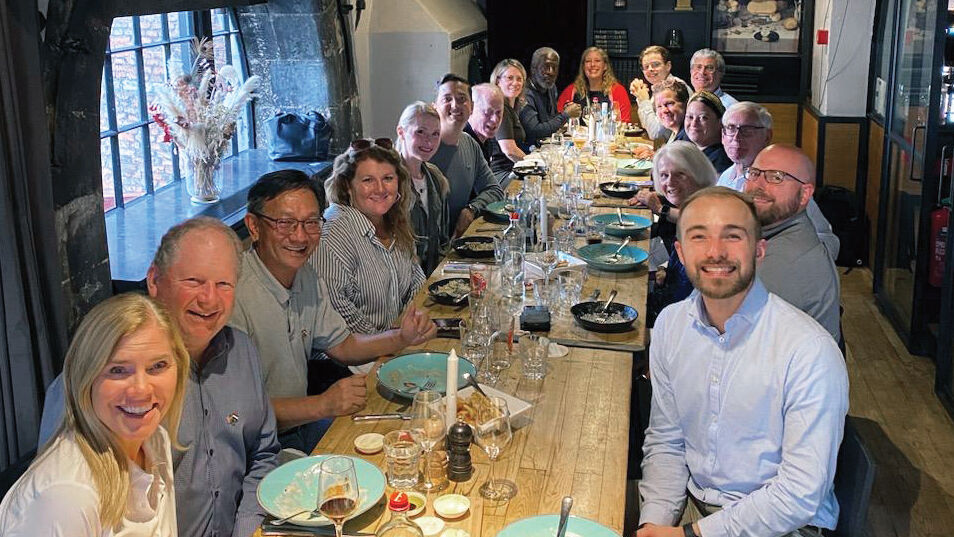
That’s something Jon Dudzinski, co‑founder of Oshkosh-based Bee Bella, LLC, explored as part of a Global Trade Mission to the Benelux area — including Belgium, the Netherlands and Luxembourg — in September 2023. Bee Bella had reached a point of having enough cash flow to justify investigating overseas distribution as a next stage for the business that sells its lip balm product through 4,000 U.S.-based retailers.
Dudzinski’s participation in a Global Trade Mission was prompted by awareness created through his participation in the ExporTech program offered by WEDC in partnership with the Wisconsin Manufacturing Extension Partnership.
“It’s remarkable, as a U.S.-based manufacturer with a goal of exporting, how much support is available,” Dudzinski says.
Benelux appealed as a potential sales channel for a number of reasons.
“That region was well-suited to us as we sell a high-end lip balm with all‑natural branding and were looking for countries with the type of disposable income per capita and culture where our product would be the right fit,” Dudzinski says. “The other major reason to go there was that the region has some of the largest ports in the world that are often the ports of entry for manufacturers shipping into the EU and expanding into the rest of Europe.”
Before companies like Dudzinski’s even embark on their trade missions, WEDC’s market development directors meet with them to understand their product/service offerings, determine the right market for them, set goals for the trade mission and more. In-country trade representatives then perform a partner search on behalf of the company. WEDC provides participating business leaders a high-level country briefing before embarking on a tour of strategically chosen markets and handles all the details.
“WEDC takes care of the logistics so you can just focus on work, including the most valuable part: the matchmaking with potential suppliers, customers or whomever you’re interested in meeting with,” says Dudzinski.
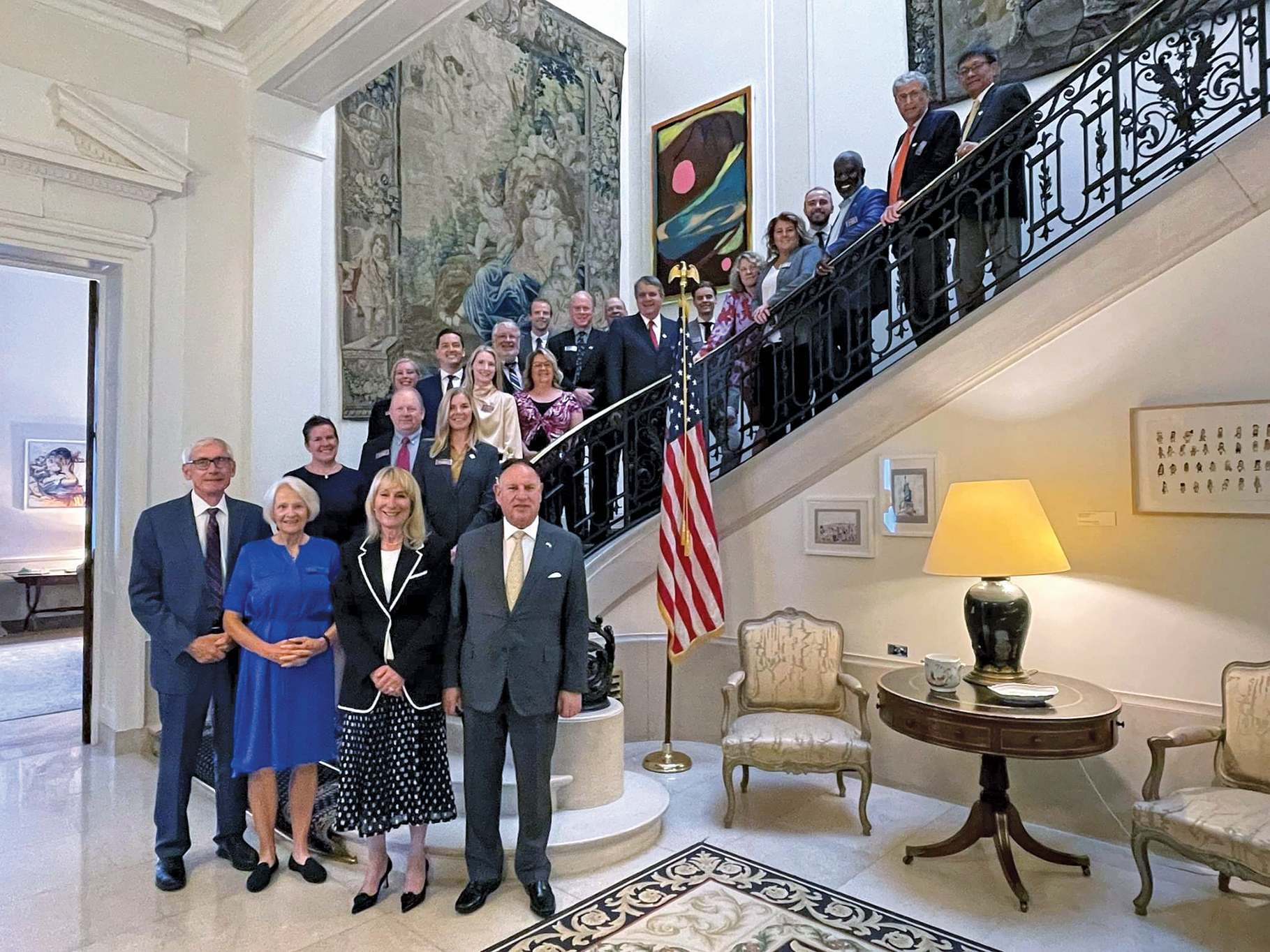
During the mission, participants attend pre-arranged, customized meetings with companies whose needs or capabilities align with their export objectives. That’s exactly what Dudzinski did, immersing himself in the meetings, business operations and culture of the countries he visited as well as enjoying an afternoon in Belgium. During the five-day trip, he met with distributors interested in creating relationships to serve their region — something Dudzinski said was invaluable.
“We saw it as a great opportunity to learn some nuances of the EU region and whether regulatory-wise or business practice-wise, what would be expected of us to take off in that market,” says Dudzinski. “I would assume that hiring those in-country consultants would cost tens of thousands of dollars if we were to pay for them outright, but it wasn’t because we leveraged [WEDC’s offering].”
Upon returning stateside and continuing research, Bee Bella simultaneously pursued the potential to sell internationally in Japan. In the process, it discovered that the market was an even better fit. Dudzinski says the pursuit process is similar, from the regulatory approvals to sell in the country to establishing a distributorship for domestic self-distribution. With Bee Bella’s trade mission learnings, the company has been able to proceed through a number of regulatory processes quickly and efficiently.
“In a world of limited resources, we have decided to shift our focus on Japan,” Dudzinski says. “Japan appreciates the product’s craftsmanship and is willing to pay a premium for a premium product.”
In addition, Bee Bella’s limited SKU count and product breadth didn’t make it the right business fit for the Benelux region.
“We are just [offering] lip balm for right now, although we are considering broadening the product line and will do that. At the moment, it makes more sense to double down on our proven product and take that as far and wide as we can,” he says. “But that isn’t to say we won’t come back to the EU later as we still have a lot of those connections we made during the mission.”
European-inspired innovation
Dudzinski also credits learnings from the Global Trade Mission with prompting Bee Bella to accelerate its innovative mindset and practices.
“Exploring the international channel has helped us innovate our products in ways that would have taken longer if we had just stayed stateside,” he says. “Folks in different parts of the world have different expectations and thoughts of what a product should do for them and how it should be displayed, and we brought some of those insights back [and applied them] to our U.S. operation.”
He also says he appreciated the cultural enrichment he received during the Global Trade Mission, experiencing a bit of Brussels before attending meetings, for example.
Dudzinski is the first to encourage any Wisconsin manufacturer contemplating participation in a Global Trade Mission, but he says its value is directly related to a business’ willingness to follow through.
“[WEDC] will provide a lot of opportunities for you, but it will be based on your bandwidth when you get back from that to determine if it was worthwhile to you,” he says, adding that the formal and informal connections he made have been invaluable. He remains in contact with a variety of the companies that participated in the mission, discussing taxes, import issues or other aspects of international business and navigating challenges.
“Networking with other Wisconsin-based manufacturers, and brainstorming with them, was a great experience,” Dudzinski says. “We have kept those relationships and continue to have the conversations we had there when we got home. I’m able to discuss these things with people who are working through similar issues that, if you’ve never done it before, can be a really big deal.”