
Photograph By Shane Van Boxtel/Image Studios
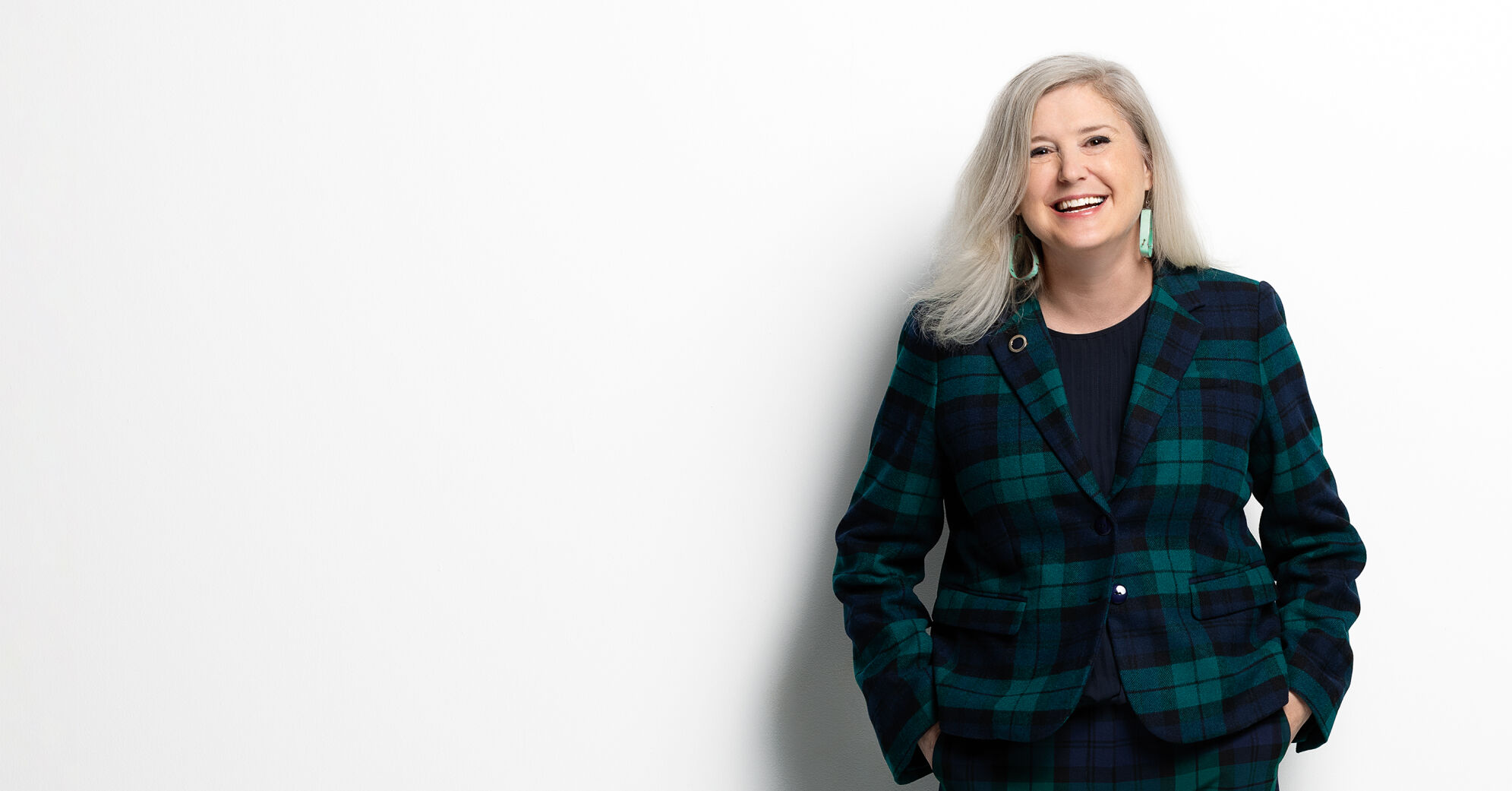
If you don’t think librarians can be a little bit rock and roll, you’ve never met Sarah Sugden, Brown County Library’s executive director who came to her photo shoot wearing winged eyeliner and Doc Martens.
Sugden oversees Brown County’s Central Library, eight branches and bookmobile, which together circulate more than 2.3 million materials annually.
The Maine native has worked in 10 libraries across six states over the past 34 years — the last four of which have been in Brown County — and she speaks about disrupting Northeast Wisconsin’s declining reading proficiency rates with the same punkish persistence you’d expect from Debbie Harry.
Insight: In October, the library and other partners hosted a Reading Success Summit to create action around declining reading proficiency rates. How big of an issue is it?
Sugden: This is such an important issue for our community. It’s a national issue. In Brown County, we have been experiencing a four-year decline in reading proficiency rates. We have almost 40 supporting organizations with whom we’ve been working over the past year in planning the summit, which was the first step and call to action. Only 27% of our students are reading proficiently by the end of third grade. Reading proficiency at third grade is a key indicator for life success, career success, school success. Kids who don’t reach that proficiency rate by the end of third grade are four times more likely not to graduate from high school. In some states, they look at third grade reading proficiency rates to predict prison beds. I remember in my first year here working, sitting in a budget meeting with the county when they approved $14 million to build a new jail. What if we took that $14 million and invested it into prevention? Let’s fix the problem. Let’s not continue to feed the pipeline; let’s disrupt it. Public libraries are great problem solvers. They are great organizations to convene partners and really leverage that power of collaboration, to harness community resources and really get focused on issues. We’re really hyper-focused on reading proficiency.
How has the role of public libraries in communities changed over time?
We aren’t just book warehouses. I’m not interested in guarding books on a shelf. What I’m interested in is measurably improving the lives of humans in our community through connecting folks with whatever they happen to need. A connected community is a healthy community, so we think about ways that we can really foster connections. We are facing a loneliness epidemic. The negative health impacts of social isolation really concern me — it can have as negative an impact as a pack of smokes a day. I love that libraries are places where you can come be around other people. As we go through system-wide training on customer service, we are acknowledging that we want to be a place of belonging where people really feel that they are connected. We are focused and intentional about the ways in which we are designing spaces, offering services, and all aspects of our organization are really focused on that. Libraries exist to connect people with each other, with community resources, with stories and information.
This must have been tricky the last few years with COVID.
COVID was an extraordinary opportunity for our team to prove to ourselves that we can do hard things. We were really focused on ensuring our community had continued access to those life critical services — particularly when it comes to “techquity,” or digital equity, which is another area in which public libraries are essential. When everything shut down, if you wanted to apply for anything you had to go online. As quickly as we could, we figured out how to connect people with technology via the open Wi-Fi outside of our building. Digital access really is life-changing. As we move forward, we’re continuing to really think about these issues of techquity. We’ve done some work in the Denmark community helping rural seniors stay connected through technology. For those seniors who might be living alone, learning basic [smartphone] skills was profound for matters of safety. That’s a rich part of what libraries are doing — whether it’s circulating hotspots or laptops for people to use at home or providing training sessions for folks to learn how to use their smartphones.
Design plans for the east branch library were just approved, as part of a larger $20 million library system revitalization project. What else is in the works?
We aren’t just fixing up our buildings — we are moving our library into a space where we can be that agent of opportunity, that engine of development. I love the opportunity to ensure that our communities have spaces that are accessible, rich with technology, and community- and people-focused. We are extraordinarily lucky in Brown County that we got this securement of $20 million from the county from their sales tax initiatives to invest in our capital building projects. These building projects include our flagship Central Library, which is ready for a complete overhaul and has already had $3.2 million in additional funding approved from the county board to replace the HVAC as well as convert storage space into flexible meeting rooms. The east branch had been searching for a new home for 20 years. The library board has purchased through sales tax funding a facility right next to the old building, which will almost triple the size of the facility and allow us to offer a beautiful new green space, community meeting rooms, gathering spaces, study rooms and a mother’s wellness room. I can’t wait for you to see the children’s space. I get goosebumps just thinking about it. Awareness and understanding of the world are where literacy begins, so the opportunity for us to create special family spaces in our libraries is, as we say in Maine, wicked exciting.
Where does your passion for this work come from?
I love people, and the diversity of the human experience is extraordinary. I once heard someone say, “Everyone has a story and every story matters.” And it’s an amazing opportunity to tell the library’s story. It’s beautiful work.