

When the 21st season of the Emmy-nominated reality competition show “Top Chef” debuts this spring, viewers will get a glimpse of a culinary scene they may not be used to seeing in prime time. “Top Chef: Wisconsin” promises to deliver big on the flavorful food and world-class restaurants that can be found right here in the Badger State.
And with millions of eyeballs on the show, Americans increasingly choosing to invest personal dollars into experiences over things, and demand for farm-to-table cuisine on a steady rise, our state and its many table-adjacent farms are positioned to capitalize. The National Science Foundation recently awarded WiSys a $1 million grant to create a regional innovation engine around sustainable agriculture; the ag industry contributes $104.8 billion annually to the economy of Wisconsin, which leads the nation in production of both cheese and cranberries.
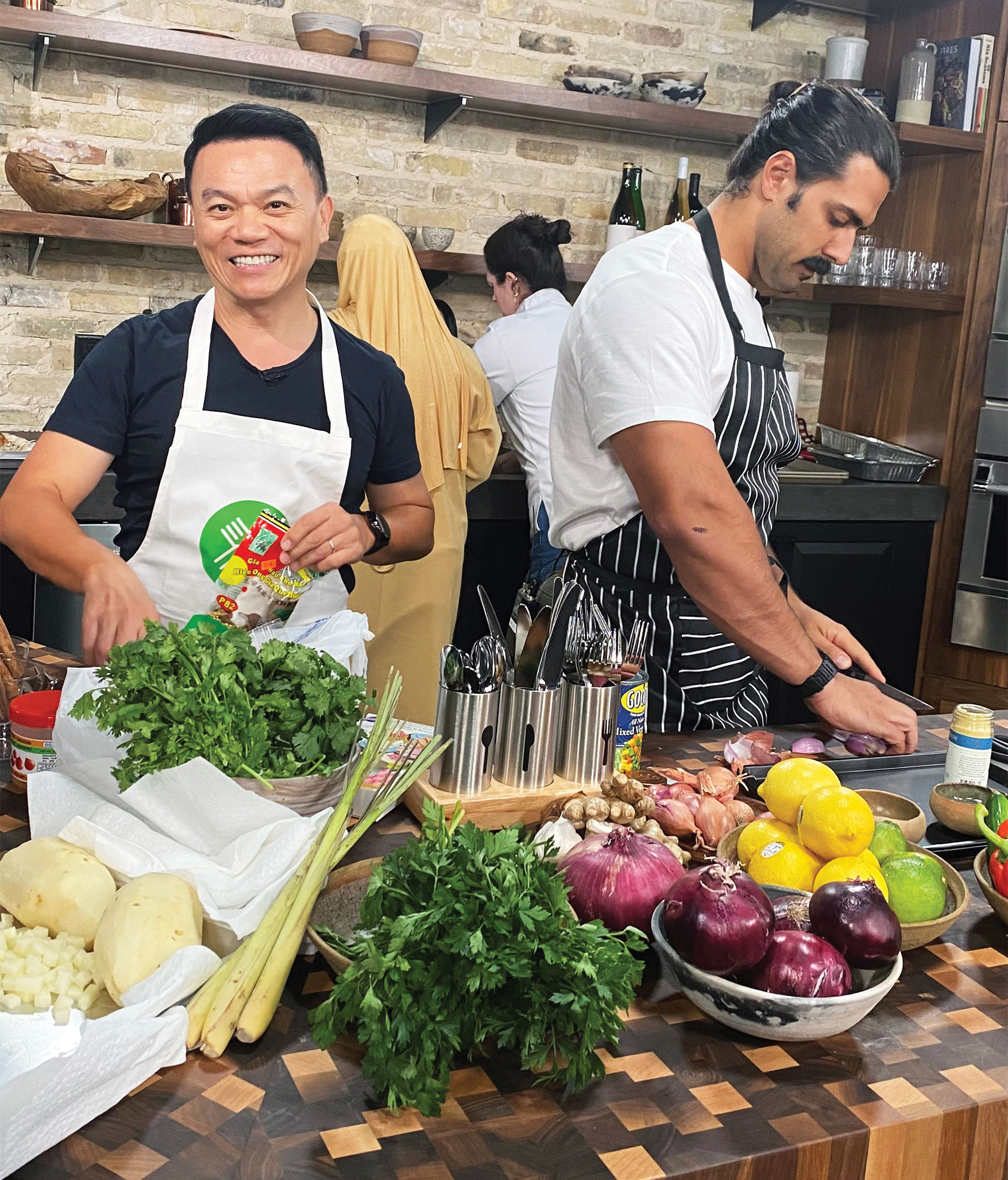
It was in that spirit that 15 chefs and food influencers from nine different countries visited the New North region last August as part of the Wisconsin Department of Agriculture, Trade and Consumer Protection’s (DATCP) International Chef and Food Influencer Tour. Barb LaMue, president and CEO of New North, Inc., helped facilitate the northeast portion of the tour.
“We only had them for three days, but we could have spent three weeks,” LaMue says. “Northeast Wisconsin has long been recognized as having a dense concentration of food producers. Even our name of the Green Bay Packers comes from meat packaging and production.”
On the tour, participants from Qatar, El Salvador, the United Arab Emirates, South Africa, Thailand, Algeria, Argentina, Turkey and Kuwait had the opportunity to meet with some of the region’s biggest names in food manufacturing, including Sartori Cheese and Lakeside Foods, as well as agricultural leaders from the Wisconsin Potato and Vegetable Growers Association.
But there was also the opportunity to tour TitletownTech, including a conversation about vertical farming with Fork Farms’ Alex Tyink. There were meetings with the Stefano Group in Sheboygan and Kohler Hospitality in Kohler. The visitors were wowed by a cooking demonstration at Green Bay’s LiveX and a tour of the Oneida National Indigenous Foods division, where they were exposed to ingredients like buffalo and white corn.
“This trip has been a learning experience,” Thailand’s Iron Chef Ian Kittichai, who admits he has always been a “big cheese lover,” told Wisconsin Public Radio of his visit. “I have so much passion [for] learning about ingredients.”
Cultivating local talent
While drawing stars of TV shows is a boon to New North farmers and food manufacturers, it’s the focus on developing culinary talent in our own backyard that will ultimately benefit the region when it comes to talent retention and attraction, LaMue says.
For the Greater Green Bay Chamber, the re-opening of The Cannery last July at 320 N. Broadway was an opportunity to focus on exactly that: investing in and strengthening a culinary scene that is linked to a variety of economic development priorities.
Through a partnership with the nonprofit organization Proof, the chamber re-envisioned The Cannery as a test kitchen and restaurant incubator concept that allows early-stage food and beverage businesses to operate in a low-cost, turn-key, educational environment for 18 to 24 months with the goal of spreading their wings and flying solo at the end. Kelly Armstrong, vice president of economic development for the chamber, says the nonprofit/private arrangement is fairly unique nationally and that it benefits everyone, from the up-and-coming chef tenant to the global corporation next door.
“[A person] might be a great chef or have a [culinary] specialty, but that doesn’t always equate to knowing how to run a business. In fact, for a lot of small business owners, if they knew ahead of time what it took to pull it off, they wouldn’t do it,” says Armstrong, who believes one of the most prevalent common denominators of successful growth cities is a strong food scene. In the wake of COVID-19, she believes Americans are culturally centered around food.
“Restaurants got pretty innovative during COVID, and people are still looking for that creativity when they go out,” Armstrong says. “The Cannery is always going to be changing and evolving, and I think that’s great.”