
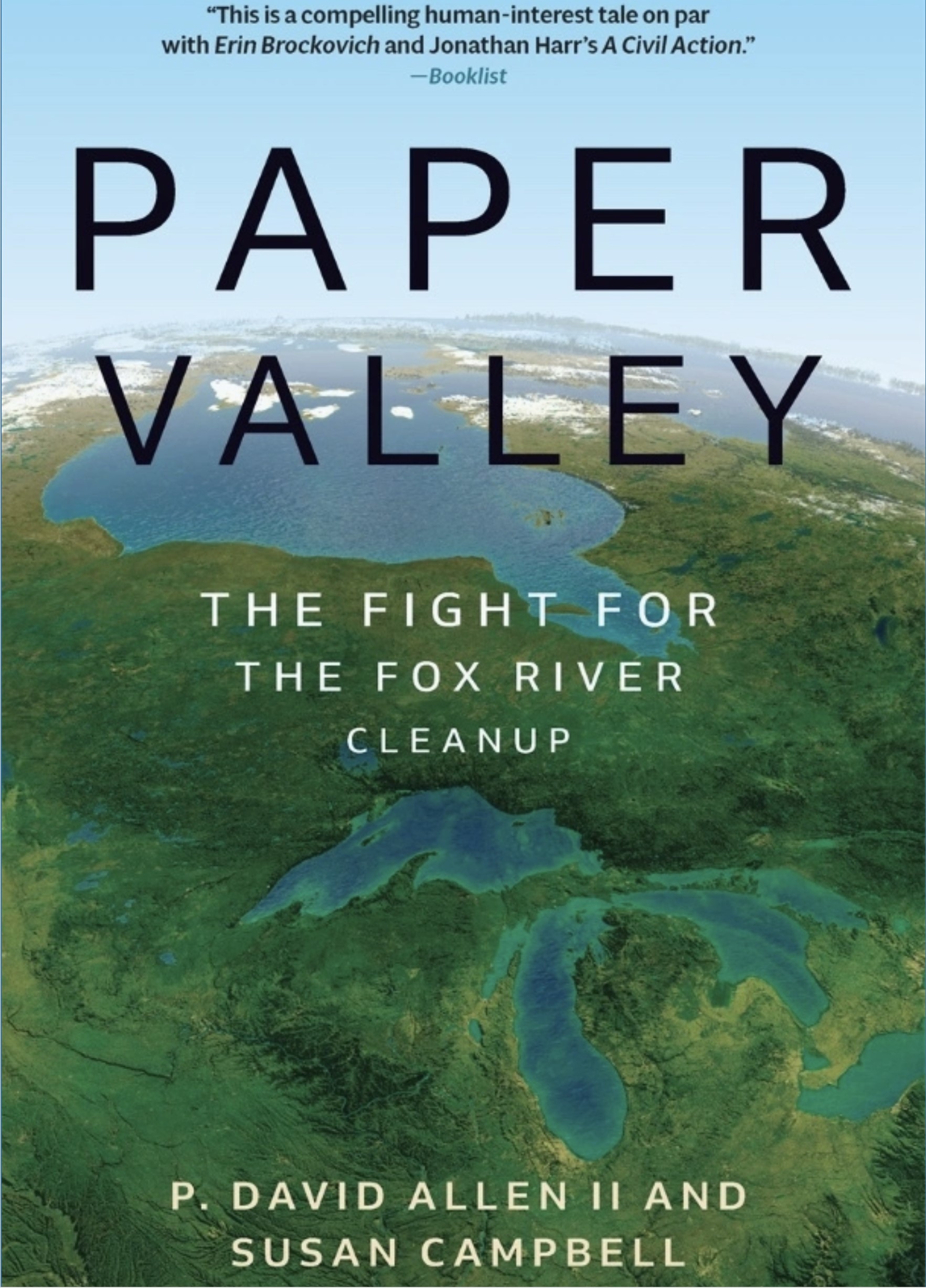

The authors of a new book chronicling the decades-long effort to clean up PCB contamination in the Fox River and Green Bay said the long-term economic benefits are worth the $1.3 billion price tag.
The book, “Paper Valley: The Fight for the Fox River Cleanup,” was written by David Allen and Susan Campbell.
Allen, now retired, was a scientist for the U.S. Fish and Wildlife Service who assessed environmental conditions in the Lower Fox River and Green Bay from 1992-2001. Campbell is a journalist who extensively covered environmental issues and specifically those of the Fox River and Green Bay clean up from 1995 through 2000.
Allen’s work demonstrated the damage caused by polychlorinated biphenyls that were being used by the paper industry based along the Fox River in the “Paper Valley.” He said documenting the pollution would not have been enough to force change.
“Without the public groundswell started by the press, we wouldn’t have gotten the results,” Allen said.
The results were a $1.3 billion cleanup that involved dredging and removing contaminated sediment as well as other cleanup and containment strategies. Most of the cost was borne by paper companies who were named in a federal Superfund lawsuit.
Allen kept extensive notes while he was working on the issue and said about six years ago, he had talked with some former colleagues about their experiences in the 1990s. He decided to revisit his notes and realized that he had enough information to write more than a summary for his friends.
He recalled Campbell’s work and reached out to her to see if she wanted to co-author a book. Campbell said hearing that Allen had 2,000 pages of notes that she could supplement with her own reporting piqued her interest.
They found a formula through the writing process that Campbell said resulted in a “page turner.” The book has been compared to other environmental works such as “Erin Brockovich” and “A Civil Action.”
The authors said the hope is that telling the story will inspire others to tackle environmental challenges in the face of long odds.
Although the paper industry objected to being forced to pay for the cleanup, when the legal matters were settled companies provided much-needed expertise.
The paper industry was entrenched and powerful, employing thousands in the region. There were worries forcing a cleanup would cost jobs and have negative effects on the economy.
“Now that the river is clean … there’s all sorts of benefits,” Allen said.
He pointed to reports of record tourism and thriving recreational and entertainment development along the river. An avid angler, Allen said he anticipates fish consumption advisories will be lifted in the coming years leading to even more growth.
For more about the book and where to purchase it visit papervalley.org.