

The logistics of getting an item like a pair of scissors into the hands of an elementary school student has long been an endeavor many took for granted. As we’re all painfully aware, we can no longer expect well-stocked store shelves or an endless variety of products.
For Andy Houtz, director of transportation for School Specialty, getting those scissors to schools has become an ordeal. The headaches begin with trying to secure purchase orders with Chinese vendors that are experiencing greater demand and longer lead times, continue through the dizzying journey those products must take to reach the United States and end only when — and if — they reach the company’s Greenville facility.
“All of those are making that perfect storm for us right now,” Houtz says.
Once School Specialty places a PO, it might wait six weeks or more just to get its items onto a vessel from China. From there, it only gets more tangled as ships reach North American ports. The Port of Los Angeles has garnered the most attention. At its worst in October, as many as 100 vessels were backed up waiting to enter the port — many of those large cargo ships each carrying thousands of containers.
Houtz says once a ship reaches a port, it can take another three to four weeks to get into a berth and get it unloaded. From there, the goods might transload in LA or travel to another destination, such as the Joliet Intermodal Terminal in Illinois, which is where many of School Specialty’s goods terminate.
When containers reach Joliet, a whole new set of issues can arise. There’s no guarantee that companies can get at their goods right away. Thanks in part to a shortage of chassis — the trailers that transport shipping containers — railroads might just as likely take containers to an offsite lot, where they get buried among many others and can sit for months.
Because School Specialty is in the school supplies business, it’s trying to get items to schools that have been in session for a couple of months already. The difficulties the company is facing in getting goods mean it’s often not able to get orders on time and in full to customers, and that’s hurting its bottom line.
“We may be waiting on one or two products that may be in one of these containers to complete the order for a customer,” Houtz says. “Oftentimes, schools aren’t going to pay for the PO that is not complete. We may have sent them thousands of dollars’ worth of school supplies, and they’re waiting on $100 worth of product.”
To help see the company through some of its shipping challenges, Houtz and School Specialty turned to GKM WI Global Supply Chain, a supply chain solutions provider. GKM worked with School Specialty to route 26 containers to a small intermodal port in Iowa, where it then drayed them to GKM’s facility in Joliet to unload there.
GKM CEO Garry Moss describes the myriad of issues, from port congestion to labor shortages to fees companies must pay for storage of goods they can’t access, as an “ongoing catastrophe.” To help companies navigate the situation, GKM puts people on the ground at ports throughout the country and gives customers options of where to ship their products.
While many businesses are finding workarounds, the situation is taxing. “The bottom line is, how do you add (extra fees) to your cost of goods sold? How do you tell a customer you’re going to increase the cost of a product two or three times?” Moss says.
‘A black swan event’
Ryan Skiver, assistant professor of supply chain management at the University of Wisconsin-Oshkosh, says in addition to chaos at the ports, the pandemic continues to cause shutdowns in other parts of the world that lead to difficulties getting certain components, and consumers and businesses are compounding the problem with panic buying and ordering, respectively.
“This is what we call a black swan event, where it’s something that doesn’t usually happen and shouldn’t be happening but is happening. And the length of it is just completely unprecedented,” he says.
Panic buys come in waves for consumers, and when they do, it strains the supply chain. As for panic ordering, Skiver says it’s natural that manufacturers would want to hold more safety stock, but if many companies are simultaneously trying to increase their quantities, it accumulates. On this front, taking a more measured approach is warranted, he says. “Most likely, you’re just going to be holding 10 percent more safety stock than you did to begin with.”
Increasing product complexity has also contributed to the situation companies are facing, Skiver says. A manufacturer might be waiting for one small component to finish a product.
One of the most high-profile examples of this is microchips. The shortage as it relates to automobiles has gotten the most attention, but many products, from hairdryers to electric toothbrushes to LED lights, can rely on chips, Skiver says.
For Wisconsin manufacturers, one of the biggest concerns right now is demand planning. Businesses must figure out what components they need and when as well as how to get hard-to-procure items. Beneath all of that is the ever-present issue of labor shortages. If a company can get what it needs, it might still struggle if there are fewer people filling trucks and then driving them to their destinations.
Joe Girard, senior business developer in the manufacturing and distribution area for Wipfli, agrees labor is a huge problem. It’s part of the reason he’s skeptical that the October decision to have the Port of LA operate around the clock will be enough to ease supply chain issues. It’s only adding hours, not people, efficiencies or additional space to unload.
Girard also points to upheaval in the trucking industry, where the spot market is paying so much that even if a company has a contract for a load, the trucking company might cancel it and take a more profitable load with a day’s notice. In addition, a lot of trucking companies might want nothing to do with going to the Port of LA.
“Yogi Berra used to say, ‘Nobody goes there anymore. It’s always too busy.’ A lot of these trucking companies don’t want to send additional trucks to that port because it’s just going to be pure chaos for a while, and they don’t want their trucks to get stuck trying to get loaded. There are going to be a lot of inefficiencies out of the gate,” he says.
To help navigate some of the toughest trials right now, Girard says companies can look at investing in technology such as artificial intelligence and power business intelligence platforms. These tools use algorithms that can help businesses optimize shipping routes, get a quote and lock in freight more quickly.
Managing through
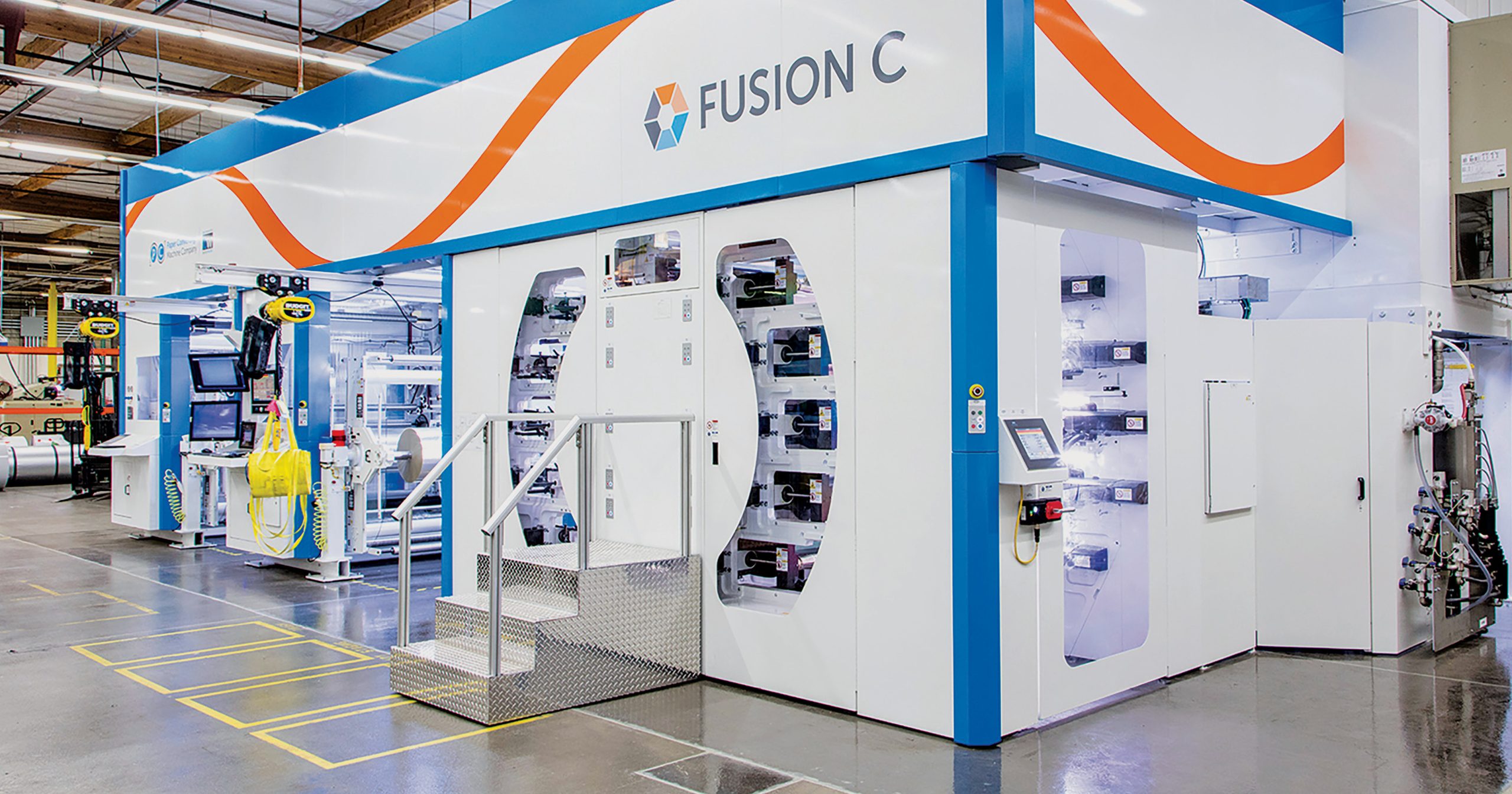
Paper Converting Machine Co. in Green Bay is one of the many companies that relies on microchips for certain components and is having a near-impossible time getting them. Rich Faber, vice president of global operations for the manufacturer, says if he wants to order a programmable logic controller for a machine, some vendors won’t even give a confirmation date on when they can ship.
Other chokepoints have emerged around resources including copper, magnets and steel. Faber says he used to be able to put in an order for steel and receive it in a couple of days to a week, and that lead time has extended to five to seven weeks.
The copper shortage impacts electric motors, and as a cost-effective material used as a conductor, there’s no good substitute for it. For PCMC, this translates to troubles getting the multiconductor cabling it uses for building its machines.
“Copper is like the new oil right now. Prices are going up, and I think China is probably consuming about 50 percent of the world’s copper right now,” Faber says.
All the unpredictability and volatility make it difficult for PCMC to plan. Joe Hruska, director of supply chain, says problems have gotten worse since the beginning of summer. At first, when shortages only affected a few parts, he worked with PCMC’s engineering teams to find alternatives, but now the challenges have become widespread.
“It’s one thing to have a longer lead time if it’s predictable. We can generally manage around that. What is challenging is the unpredictability. The supplier confirms an order and then it doesn’t ship and you’re wondering why and when we’re going to get the parts, and they say they don’t know,” he says.
While the past several months have been trying, PCMC managed to have cost savings last year, so it had some tailwinds this year that are allowing the company to devote more time to managing its supply base, Hruska says. Demand for its machines is high, so it also has a strong backlog.
To navigate the adversity, Faber and Hruska say both internal and external communication and managing supplier relationships have been key. The team creates a demand forecast report that helps them identify critical parts to make sure they order them with plenty of lead time. They also work with the engineering team to determine if they can wait for parts to come in or if they need to look for alternatives.
“That integrity is very important. If we have our dates accurate within our system, it helps us plan around some of those delays,” Faber says.
In the long term, Hruska says PCMC will continue to evaluate supplier choices. People are increasingly realizing it’s also important to understand a supplier’s reliability and how well it can manage its flow. It’s critical to know whether a partner has control over its own supply chain or is at the mercy of a third-party supplier, he says.
Barb LaMue, president and CEO of New North, Inc., has heard from many businesses like PCMC that have had to get creative in the face of supply chain challenges.
“If they had always depended on one or two (they’re) looking at how they can be prepared for alternative suppliers to meet their needs,” she says.
Companies can turn to the Wisconsin Supplier Network, developed by New North and now run by the Wisconsin Economic Development Corp. It can help identify suppliers in the region, state and Midwest. Longer term, LaMue says businesses need to try to bring manufacturing closer to home, so they aren’t so dependent on products made elsewhere.
Predicting the future
On next spring’s renegotiations of the contract for the International Longshore and Warehouse Union, which primarily represents dock workers on the West Coast: “I’ve got it on my calendar to make sure I’m keeping track of it. Let’s just hope that it’s not an issue. At this point, I think the union could ask for whatever they want and probably get it.” —Andy Houtz, director of transportation, School Specialty
On the effect of bottlenecks on the upcoming holiday season: “Retailers took a huge bath in 2021 because of COVID, and they were expecting to kind of make it up this year. Because of these delays on the shipping and receiving, it’s possible that retailers may not have as good a year as they expected because they may not be able to get the products they need when they need them.” — Joe Girard, senior business developer, manufacturing and distribution, Wipfli
On what’s needed to remain resilient: “The more you can think about what could happen, the more you can prepare yourself, the better you’re going to be as a company if something like this or something different were to happen in the future.” — Ryan Skiver, assistant professor of supply chain management, UW-Oshkosh
On the web
Wisconsin Supplier Network:
wisconsinsuppliernetwork.com
GKM WI: gkmwi.com
Wipfli Manufacturing & Distribution:
wipfli.com/industries/manufacturing-and-distribution