


Phoenix-Aid SNAPSHOT
|
Industry |
Biotech/advanced manufacturing
|
|
Venture capital investment Advertisement
|
$650,000
|
|
U.S. staff size |
3 full-time, 3 part-time Advertisement
|
|
Year of origin |
2021
Advertisement
|
|
Headquarters |
Neenah
|
|
Potential |
Wound care product
|
|
Business |
C-Corp. |
Growing up in Oshkosh — the home of air show and aviation convention EAA AirVenture — Ashwinraj Karthikeyan thought his future lay in aerospace engineering. But it turned out his knowledge and skills were needed on the ground, and closer to home.
Karthikeyan’s ambitions included graduate school, but two pivotal experiences during his undergraduate years at the University of Virginia thrust him in a new direction, prompting him to found a startup focused not on air- or spacecrafts, but wound care.
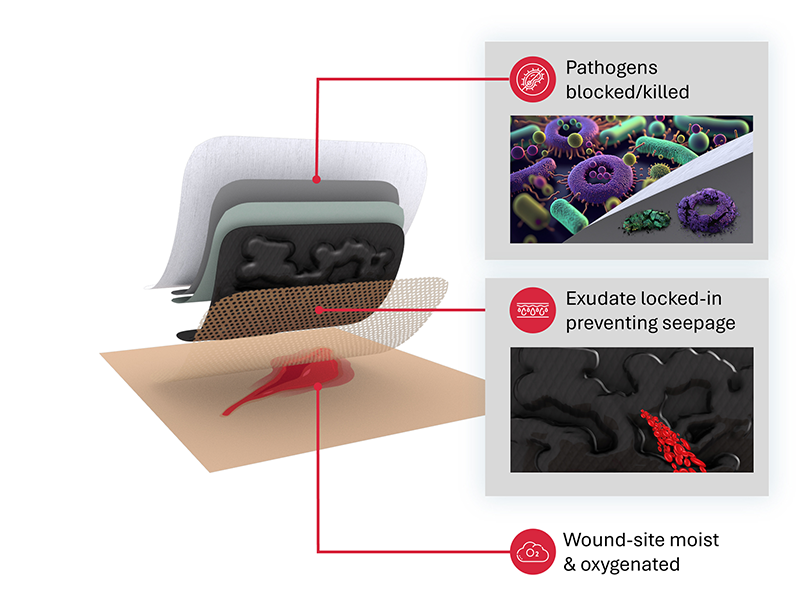
He went on to develop a new kind of wound dressing with the potential to boost positive health outcomes for patients across the globe.
“My goal was to get a Ph.D. in something related to materials,” he said. “My mom thought I was never moving back.”
As classes were beginning his freshman year, Karthikeyan’s former coworker was having surgery, which he characterized as a “typical procedure.” While it was initially successful, and he said the woman had no conditions that would point to a negative outcome, she passed away unexpectedly from a surgical site infection it is believed she contracted at home.
“My first thought was, how does this happen with arguably the best health care in the world?” said Karthikeyan.
Then his grandmother, who lived in India, developed a diabetic foot ulcer that ultimately led to her death.
“So even though I was doing aerospace stuff in school,” he said, “I was also on the side looking into … how do these things happen?”
Karthikeyan said he found in both America and India that care for some wounds, like his grandmother’s, tends to rely on gauze and ointments that require frequent changing and, often, the assistance of a health care professional — none of which come cheap.
For that reason, some patients, particularly in underserved populations, do not change their dressings enough, increasing risks of infection and complications.
“I started talking to doctors, podiatrists, people here who deal with these types of wounds … and realized it’s a global problem,” said Karthikeyan. “And it’s not just foot ulcers — it’s most of these types of chronic wounds.”
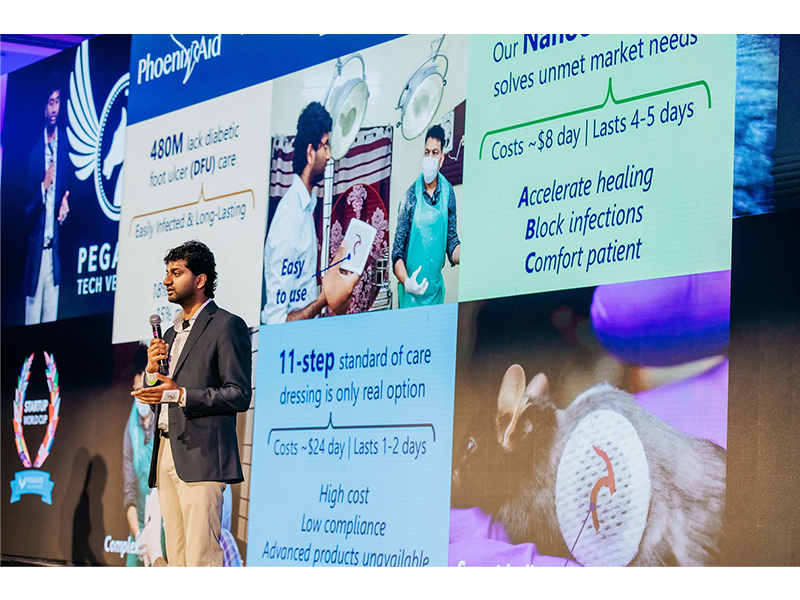
Karthikeyan founded Phoenix-Aid in Neenah near his home in 2021. He patented an innovative technology designed to last longer than traditional gauze dressings and “maintain the ideal healing environment,” using activated carbon to absorb excess moisture, expedite healing and prevent infection.
The dressing is planned to come with a lower price tag to increase its accessibility in the U.S. and abroad.
With a lab space in Madison’s University Research Park, Phoenix-Aid plans to officially relocate here after its next funding round, citing the thriving biotech scene, talent pool and more.
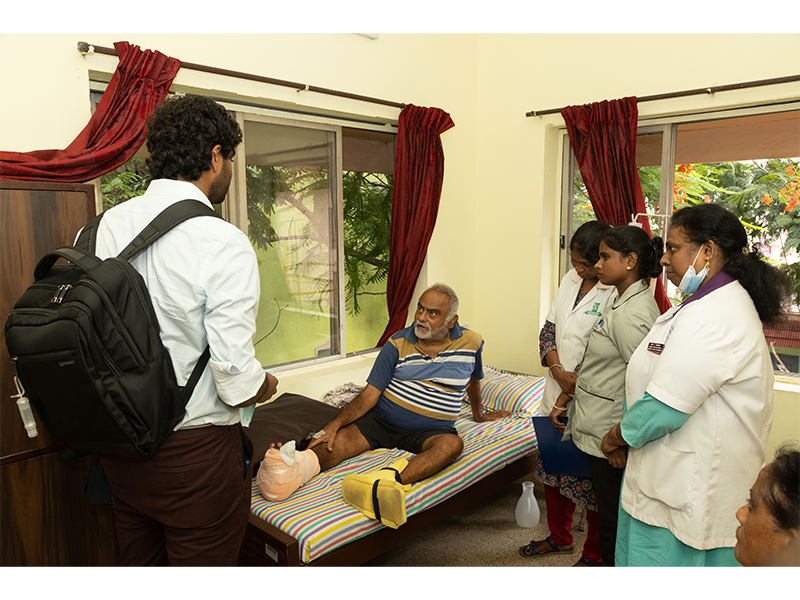
And as the company wraps up an animal study with local Woodburn Laboratory, it’s also gearing up for a 120-150 patient clinical study in India.
Like father, like son
Karthikeyan’s choice to create a dressing that uses activated carbon has family roots that trace back to his father’s startup, Clarus Carbon.
“My dad is a material physicist,” Karthikeyan said, “so I kind of grew up with him doing science-y stuff. … When I came back from school, I’d help him out with (Clarus), learn more about it. I got a lot of interest in material sciences.”
Karthikeyan explained that, among other things, activated carbon is used commerically for filtering purposes, like water or air filtration. In hospital settings, carbon tablets can treat drug or alcohol overdoses and aid patient detox.
“I started thinking, ‘I kind of like this startup thing,’” he said, adding that assisting his father in a production process for specialty carbon is “what led to a lot of the development of Phoenix-Aid. …No one knows this carbon better than I do, simply because we made it.”
While bootstrapping the business, his grandmother’s death prompted Karthikeyan to visit India to discern patient needs and the potential market for enhanced wound care.
“We started talking with patients and hospitals… and learning about the reality that people were facing,” he said.
“Not only is (current wound care)kind of expensive — in India, it can cost up to $8-12 a day… but then you’re spending another $10-20 a day to hire someone to come to your house and (change) it for you, or travel to a nurse or hospital or clinic to get the dressing changed.”
The cost kept some people from changing their dressings for as many as six days, he said, but they are not designed to last that long and infections can develop. He belives his product could change that:
“If it works in India, a lot of that translates to how it would work in America for certain segments of the market, especially the underserved markets that we’re really trying to target. That could be people at the VA hospital, or rural areas … people on reservations.”
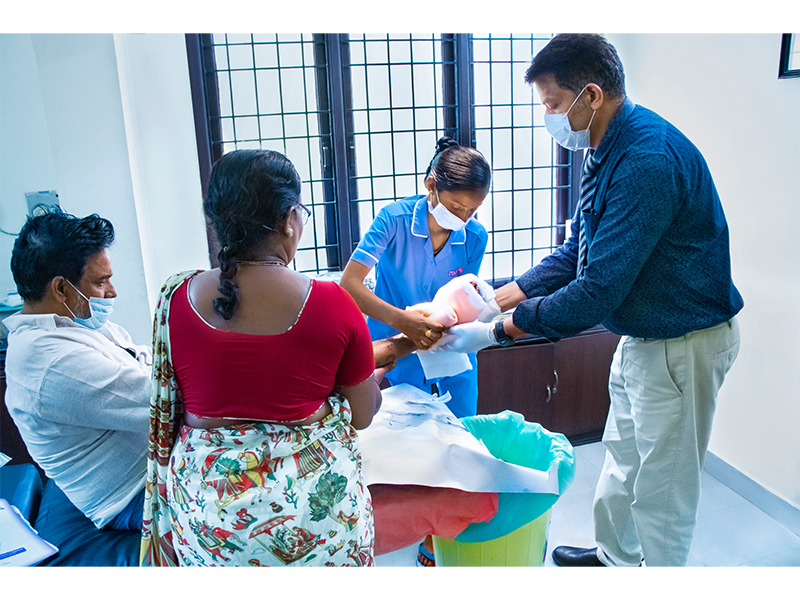
Dr. Robert Weber, an Oshkosh surgeon who works for the Ascension health system and helped establish its wound clinic 25 years ago — and coincidentally performed gallbladder surgery on Karthikeyan’s mother before meeting the entrepreneur again years later through UW-Oshkosh’s Small Business Development Center — confirmed a cheaper, longer-lasting dressing could benefit patients.
“It could stay on longer than typical dressings would now, and that could decrease the number of face-time interventions with the medical industry, which is really expensive,” Weber said. “There’s also some unique benefits in activated charcoal.
“The gig with activated charcoal is simple. It’s absorption … not just for water but potentially for endotoxins or bioburden that happens in a wound — that biologic breakdown of cells and toxins.”
Diabetic foot ulcers — which most often result when patients with sensory neuropathy incur a minor trauma that goes undetected and untreated — have been a key focus for Karthikeyan in building Phoenix-Aid.
Weber emphasized the prevalence of such ulcers and the dangers they pose for patients.
“The end point for one in five of those patients is some form of amputation,” he said.
Karthikeyan noted that Phoenix-Aid’s product will apply to other wounds, too.
“It could be burns, or one we’ve had a lot in Wisconsin is (in) elderly care,” he said. “You have a lot of bed sores, and the product can be easily modified (for use) in those markets.”
Karthikeyan developed Phoenix-Aid’s core product — a “nanocomposite carbon-polymer technology” — as a multi-layered wound dressing that aims to replace gauze and ointment, block or kill pathogens and keep the site of the wound oxygenated and moist. Moisture can aid wound healing and comfort.
However, he said even the best product, if too costly, won’t reach patients, so the key is creating something effective and affordable.
The next frontier(s) in wound care
Phoenix-Aid has quickly gained visibility on Wisconsin’s startup landscape and established business and health care connections across the state — and the world.
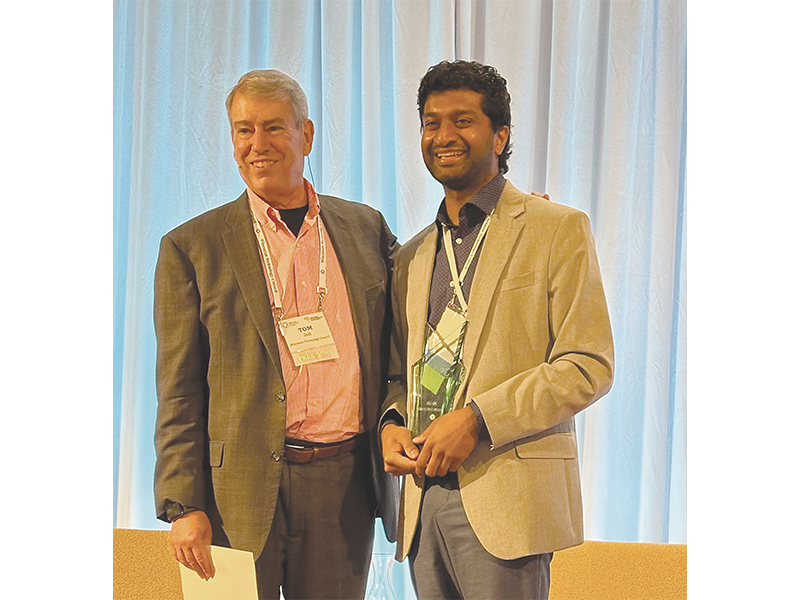
The company won this year’s Governor’s Business Plan Contest — which highlights statewide tech-enabled startups and helps connect them with community resources, mentors and potential sources of capital — and it was named the Wisconsin Regional winner for the 2025 Startup World Cup, a global entrepreneurial competition.
Last February, Phoenix-Aid raised its first half-a-million-dollar investment round, led by Golden Angels Investors of Brookfield, followed by Milwaukee’s BrightStar Wisconsin Foundation, Milwaukee Venture Partners and multiple Wisconsin individuals.
Karthikeyan said interest from angel investment group Wisconsin Investment Partners prompted him to reopen the round and expand it to $750,000 — $650,000 of which has now been raised.
“Technically the round is still open,” he said, “but we’re already well past what we wanted to raise for this portion.”
In October, Karthikeyan also began the Creative Destruction Lab startup program in Madison, which provides seed-stage, science-based companies with mentorship from entrepreneurs, angel investors, economists and scientists.
Mentors like Gary Frings, the director of data consultancy firm 7Rivers and an adviser to Exact Sciences, and Laura Strong, who has a doctorate in organic chemistry and 20 years of experience in biotech startups, cited Phoenix-Aid’s business potential and promise for global health outcomes.
“Startups are my background,” said Frings. “I had started a couple companies out in California before I moved back to Wisconsin, so I … can empathize with founders and have some experience that’s really relevant and helpful for them.
“I like the fact that (Karthikeyan) has a background working with his dad on the carbon technology that they take advantage of for their wound care treatments. … I feel like they’re tackling a big problem.”
“The fact that (Karthikeyan) is going after this diabetic foot ulcer application in both (the Indian and American) markets I think is smart,” added Strong. “When you look at a product like this, and how much money it takes to get it to market … how you fund it and how you develop it can really impact whether you’re able to address those underserved markets.
“Rural health care is one of those things that has become more challenging, particularly as hospitals shut down, the (lack of) access to physicians, etc.”
Karthikeyan said he’s planning for at least one $1 million fundraising round in the near future followed by another $3 million-$3.5 million round about 18 months after that. Phoenix-Aid will also apply for grants from the National Institutes of Health.
“We don’t want to raise too much,” Karthikeyan said. “We could raise a lot of money … before we ever sell one product. … But the alternative (is), how do we actually help a patient first?”
He said, originally, the clinical study Phoenix-Aid will start in India at the end of January was not in the budget for the current round — that was planned to fund only the animal studies in Madison.
“We’ve now pushed it,” he said. “It was a lot of budgeting and finagling and negotiating with people … but the fact that we were able to do that is great. We’re doing a pretty detailed study.
“Patients will be monitored every single week. We’re paying for all their travel expenses, all the other stuff.”
The data from that trial, which will include at least 120-150 patients, has the potential to pave the way for Phoenix-Aid’s growth in India and the U.S., and to shed light on patient outcomes.
“The goal… is to launch in India and then use that data to refine the American product, and also launch in America, ideally next year or early 2027,” Karthikeyan said. “The reason we went to India (first) is it’s just faster and cheaper to get clinical data, but at the same time we can use that data for America.”
Ascension’s Weber said, “everything about American medicine is expensive, so there may be an advantage” to starting the trials in India.
And focusing on clinical data is smart, he added: “I live by data. I’m a science guy. If you’ve got good data, that cushions all the other hurdles that you have to get over.”
Some of these hurdles, he said, could include FDA approval and getting into the buying systems of large health care or health insurance companies.
Karthikeyan plans to meet with the FDA and file for approval early next year. He said a few factors should help expedite the process for Phoenix-Aid, including the use of predicate devices, which are similar to Phoenix-Aid’s product but are already FDA approved.
Weber added the data from the clinical trial could provide evidence that gives Phoenix-Aid’s wound care product an edge over others.
“There are lots of people throwing different kinds of dressings at (infections),” he said. “I use a ton of them. Some of them are appropriate in certain situations, and others wouldn’t work in that situation.
“What if (Phoenix-Aid’s product) is better? … I noticed Ashwin’s cost data puts (his product) under the prices… of a lot of other products.We’ll see. It all comes down to whatever the sticker on the box says at the end, but wouldn’t that be cool? That would be a big boon. There’s a potential here for a really great product, science pending.”
Big moves ahead
As Phoenix-Aid readies for the first human trials, Karthikeyan is already mapping out the company’s expansion.
The startup has three full-time and three part-time staff in America, and some additional employees in India. Some of its operations rely on strategic partnerships with companies like Clarus, which, for example, coordinates with Phoenix-Aid for materials procurement.
“We’re a young startup,” Karthikeyan said. “We need to be smart about how we spend on things.”
He said the company’s next investment round should support additional staff, as well as the company’s relocation of its headquarters to Madison, where it has a permanent lab space in University Research Park.
“We’re planning to shift to Madison. … Neenah is great for manufacturing, but for a lot of other things, Madison makes more sense.
“For us, it’s about the startup scene, the biotech scene. The University (of Wisconsin-Madison) is there, which I think is a great resource for hiring.”
Phoenix-Aid has already hired two interns from UW-Madison, and many of Phoenix-Aid’s investors and mentors are Madison-based as well.
“(Karthikeyan) is very likely to find other good collaborators here in Madison,” added Frings of 7Rivers. “People on the coasts would say, ‘Well, you’ve got to come to the coasts if you’re going to do these things,’ right? But we feel like we can be pretty successful here.
“I’m very bullish on the company and Ashwin as an individual leader. I think they’ve got a very bright future.”