

The Boldt Co.
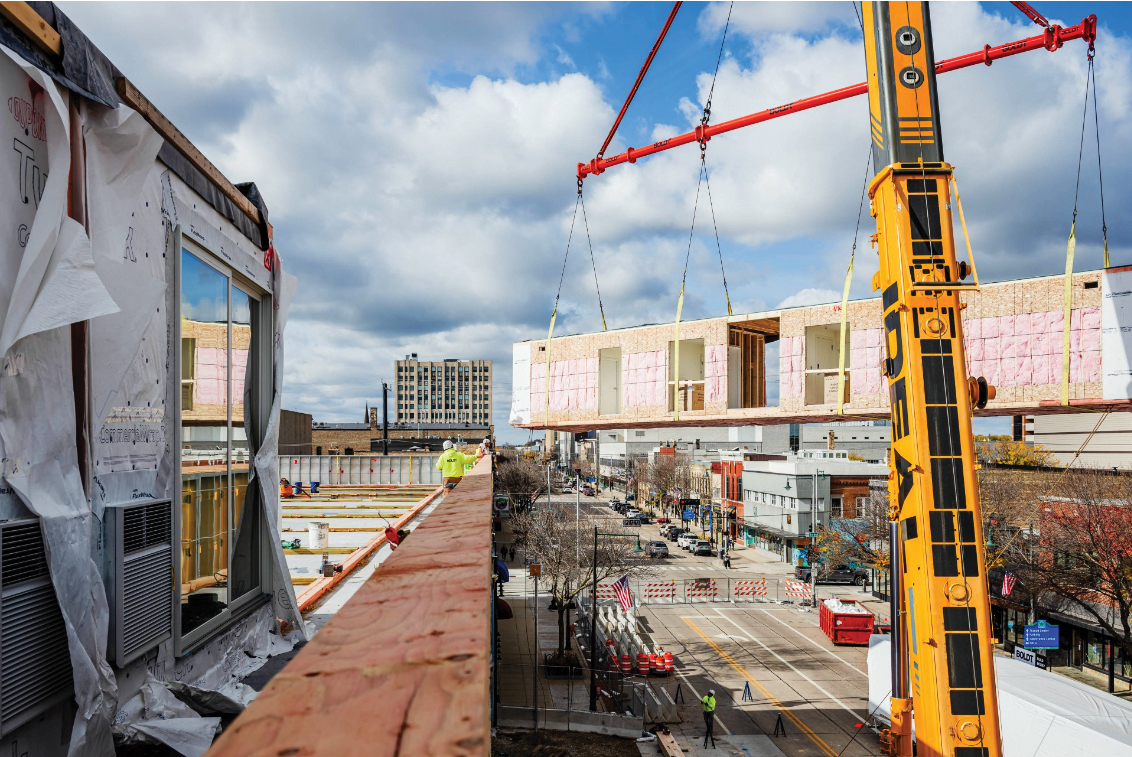
Visitors to downtown Appleton last November had a front row seat to see modular construction in action as the Boldt Co. worked on the new Trout Museum of Art building on College Avenue.
The first two floors were constructed using standard methods, but when it came time to add two floors of apartments to the building, Boldt had them built offsite and used a massive crane to put them into place. Placing the modular units took about seven days — cutting weeks and months off the project deadline.
Once the modules were in place, construction crews “stitched” the units together and connected the door frames, flooring and electrical components. The building’s exterior was then finished.
Modular construction is a growing industry trend. According to Grand View Research, the modular construction market size is expected to grow from $103.55 billion in 2024 to $162.42 billion by 2030. The growth is attributed to increased demand for affordable housing coupled with increasing development of health care and commercial infrastructure.
Boldt became more interested in modular construction during the pandemic when health care facilities turned to the Appleton-based firm to quickly build exam rooms and other medical facilities. To get it done, Boldt utilized modular construction, making the pods onsite and then delivering them to the health care facilities ready to go — just needing the final hook-ups for plumbing, HVAC systems and electricity.
That success inspired Boldt to get more involved with modular building and create Bildt, a modular and prefabrication manufacturer, in January. Bildt manufactures modular buildings and slide-in room and bathroom pods for markets that include health care, industrial, education and commercial.
“By spinning Bildt out on its own, we have the opportunity to work with other general contractors,” says Ben Bruns, Bildt’s vice president of modular. “Modular work is about optimizing construction and making it as efficient as possible while keeping the highest level of quality.”
He says working with Bildt brings customers speed, standardization with customization and quality on their projects.
Boldt is not alone in embracing modular construction. Rice Companies, a national construction firm with offices across the Midwest, also uses modular construction, which is also known as prefabrication, on both its residential and industrial projects.
“Working ahead with prefabrication [can] shave weeks off the construction schedule. It also improves quality since the construction is done in a warehouse setting,” says Kip Golden, president of Rice Companies’ Appleton location.
Manufacturing principles
Modular construction requires an interior setting where the different components are put together.
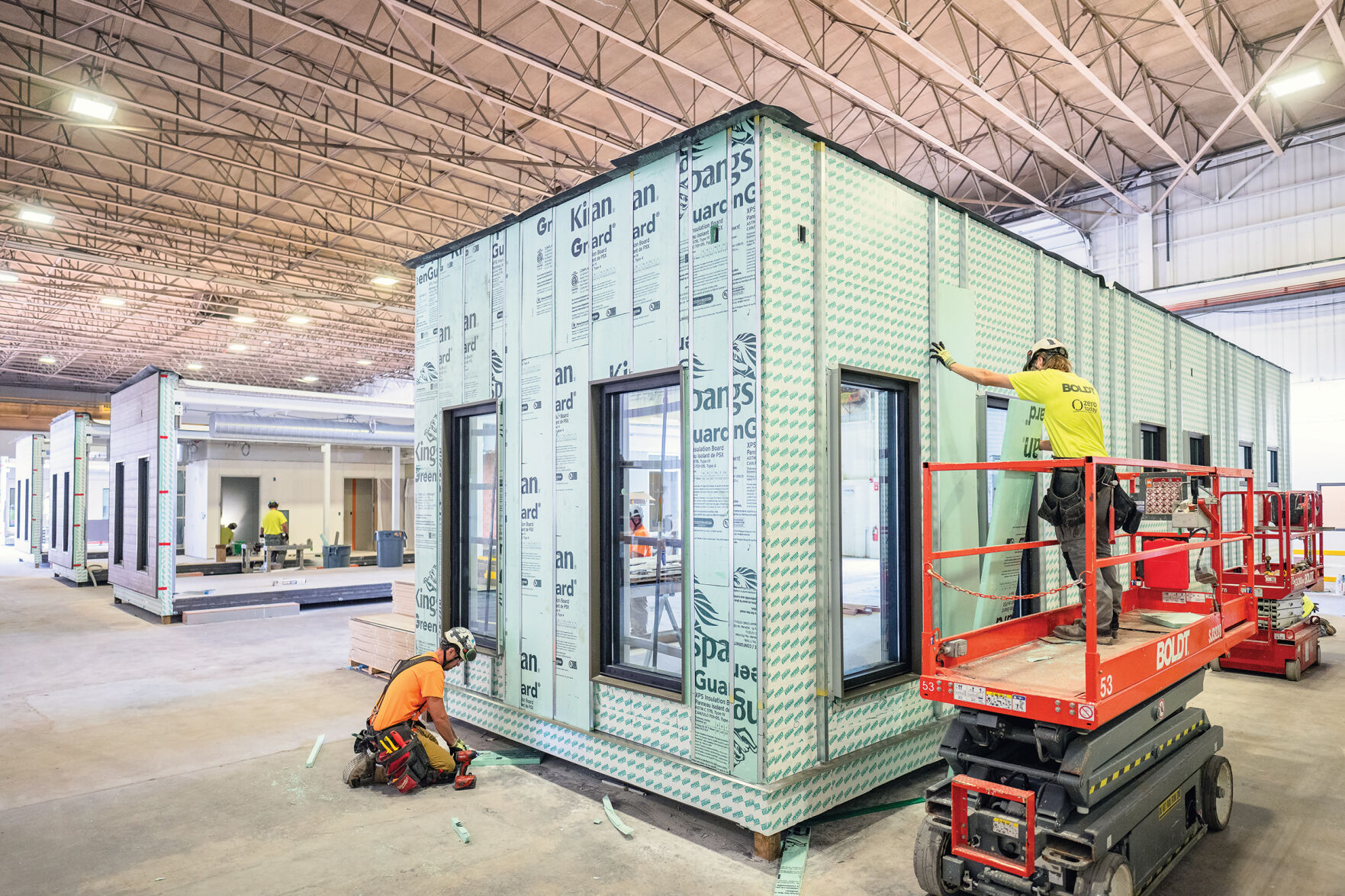
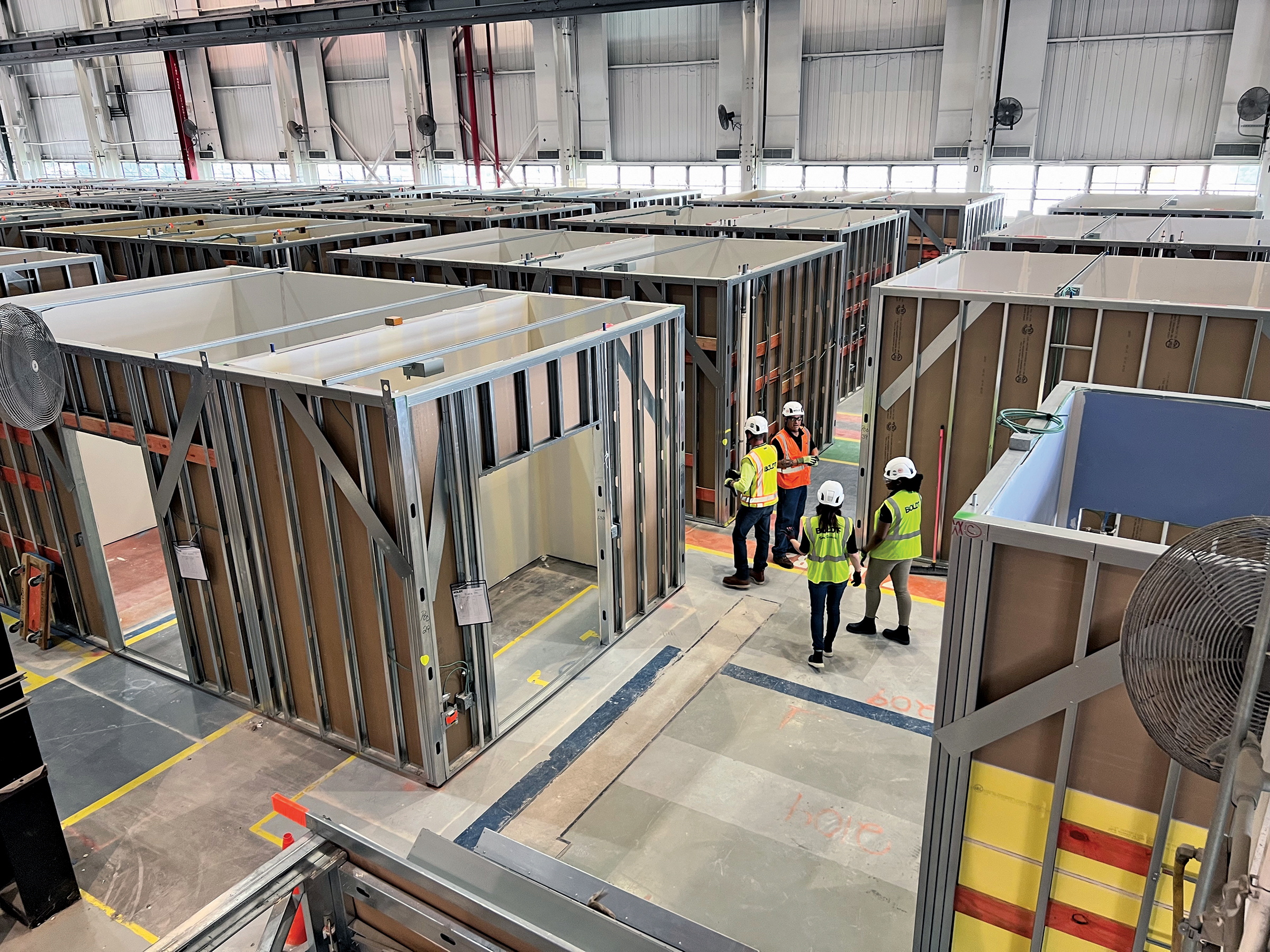
Boldt opened a 78,000-square-foot building in Oshkosh in 2022 to serve as its manufacturing facility for its modular pieces. Bruns says the facility makes three types of products: component parts such as interior or specialty walls; slide-in pods, such as bathrooms or exam rooms that can slide into place in a larger construction project; and structural modules, which can be used for specialty clinics, free-standing emergency rooms, ambulatory service centers or apartments.
In addition to permanent modular units, Bildt manufactures prefabricated panels and components, including headwalls, exterior wall panels and systems, steel wall studs, and interior framing assemblies tailored to project specifications.
Bildt uses an innovative approach to design for manufacturing and assembly, integrating manufacturing and prefabrication techniques and fostering collaboration among teams, including trades modeling their work. This eliminates requests for information and change orders.
Bruns says one challenge Bildt faces is that customers perceive the prefab units as trailers, but he says that’s hardly the case.
“We have customers or prospective customers walk into one of our units and they’re impressed. They see high-quality commercial construction,” he says. “Some people tell us they wouldn’t know the facility wasn’t built onsite since it’s such good quality.”
That quality can be traced back to the Oshkosh manufacturing facility, which utilizes lean manufacturing processes.
“One benefit of modular construction is we’re building in a controlled setting where the temperature is always the same and all the materials are right there,” Bruns says.
Rice Companies partners with Butler Manufacturing to make pre-cut and pre-punched industrial walls for its construction projects that utilize prefab construction, Golden says.
“Butler’s newest product is ReFrame stud walls. They come pre-cut, pre-punched, dimpled, part-marked and delivered onsite,” he says. “It’s very innovative for the industry and goes to show that prefab use is only going to continue to grow.”
Golden predicts continued growth in modular construction. “It just makes sense,” he says.
Bildt is currently working on a 500-bathroom pod project for a health care provider in the southeast United States. While Bildt primarily works in health care, Bruns says the manufacturer has a roadmap to grow into other industries.
Bruns says a customer will send a project sketch or a photo of a similar project to see if it can be constructed in their industrial facility.
“We look a lot at how [modular construction] will improve a project’s timeline,” Bruns says. “You can’t use it in every project.”
Building a workforce
The growing popularity of modular construction has led to its inclusion into the curriculum of Fox Valley Technical College’s construction programs. Rich Cass, department chair of FVTC’s Construction Management Technology program, says it’s important to keep up with the latest industry trends.
“There are a lot of benefits to using modular construction, and more companies are going in that direction,” he says. “There’s improved quality control and safety. For example, if you’re building a six-story apartment building, you can do it one floor at a time and only be one story above ground.”
Students in the materials and methods class begin learning about ready-to-build construction before progressing to panel systems and then a complete modular structure.
“Working in a controlled environment is a big benefit and once you get to the job site, everything goes more quickly,” says Cass, adding the students tour the Bildt manufacturing facility once a semester. “Gaining this experience helps make our students job ready.”
Bruns says prefab construction opens the construction industry to a wider range of workers, creating a more reliable worker pool. Some people may be interested in construction but may shy away from traditional jobs since work schedules and locations change frequently and not everyone enjoys working outside, he says.
“It’s no secret that there is a need for more construction workers, but with this kind of manufacturing environment, people report to work at the same time and same location every day and they don’t need to worry if the weather will cooperate with what they need to do since there’s a roof over their head and the temperature is constant,” he says.
Bruns says Bildt can recruit and train talented workers, providing them with construction experience. If a project needs tiling work, the workers learn how to do it in a controlled setting, he adds.
“We’re working with people who might not otherwise be in construction,” Bruns says.
Rice Companies’ Golden agrees the prefab construction helps with the shortage of construction workers.
“Having parts made in a manufacturing facility means you don’t need as many workers in the field,” he says, “which is key when there aren’t enough construction workers.”